Posted on June 19, 2026
10 Obscure Retro Games That Feel Like Lost Treasures
Disclosure: Some of the links in this post are affiliate links. This means if you click on the link and purchase an item, we will receive an affiliate commission at no extra cost to you. All opinions remain my own. We only recommend products or services we believe will add value to my readers.
Some obscure retro games feel less like “hidden gems” and more like forgotten relics pulled from the back of a dusty game-store glass case.
Not every great retro game became a household name. Some arrived too late in a console’s life. Some were trapped on systems with smaller audiences. Some were overshadowed by bigger mascots, flashier sequels, or the simple reality that most kids only had so much rental money on a Friday night.
This list is not about crowning one universal winner. It is about celebrating Obscure Retro Games that still feel special because they preserved something rare: a strange mechanic, a bold art style, a weird mood, a brilliant level idea, or that unmistakable feeling of discovering a game nobody at school seemed to know about.
The picks here were chosen for underappreciated status, distinct personality, replay value, cultural memory, and that “how did more people not play this?” energy. Some are easy to recommend today. Others require patience, original hardware, or a collector’s budget. But every one of them feels like a lost treasure worth remembering.
10. Plok
Platform: Super Nintendo
Released: 1993
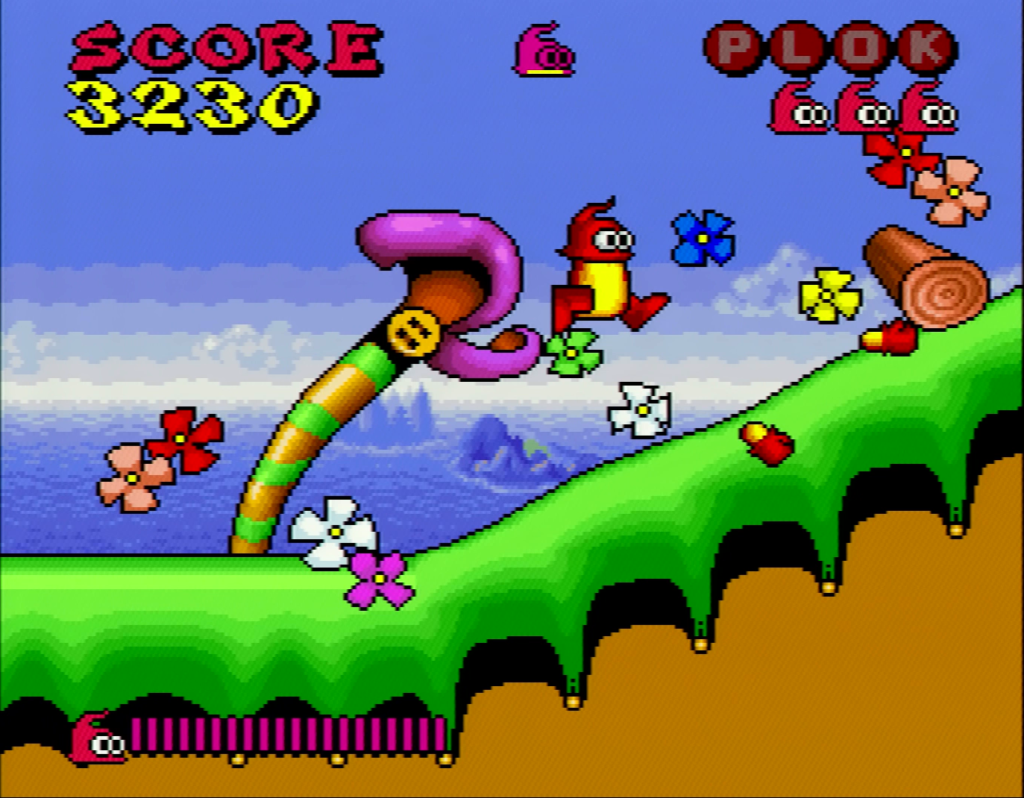
Plok is what happens when a platformer looks at Mario and Sonic, then wanders off into its own wonderfully bizarre corner of the 16-bit universe. Released for the SNES in 1993, it starred a red-and-yellow hero who could literally throw his limbs at enemies, turning the standard jump-and-bop formula into something stranger and more elastic.
What makes Plok memorable is how restless it feels. One moment you are flinging arms and legs across a colorful stage, the next you are dealing with vehicle-style segments, oddball enemies, and music that punches harder than expected. The whole game has that “rental wall wild card” energy: bright box art, weird mascot, and just enough attitude to make you wonder why nobody talked about it more.
It is not as instantly polished as Nintendo’s first-party platformers, and some of its difficulty can feel sharp around the edges. But that is also part of its identity. Plok feels like a studio swinging big during the mascot-platformer gold rush, and even when it gets weird, it is never dull.
Worth Revisiting If: You love 16-bit platformers that feel colorful, challenging, and slightly unhinged.
9. The Firemen
Platform: Super Nintendo
Released: 1994 in Japan; 1995 in PAL regions
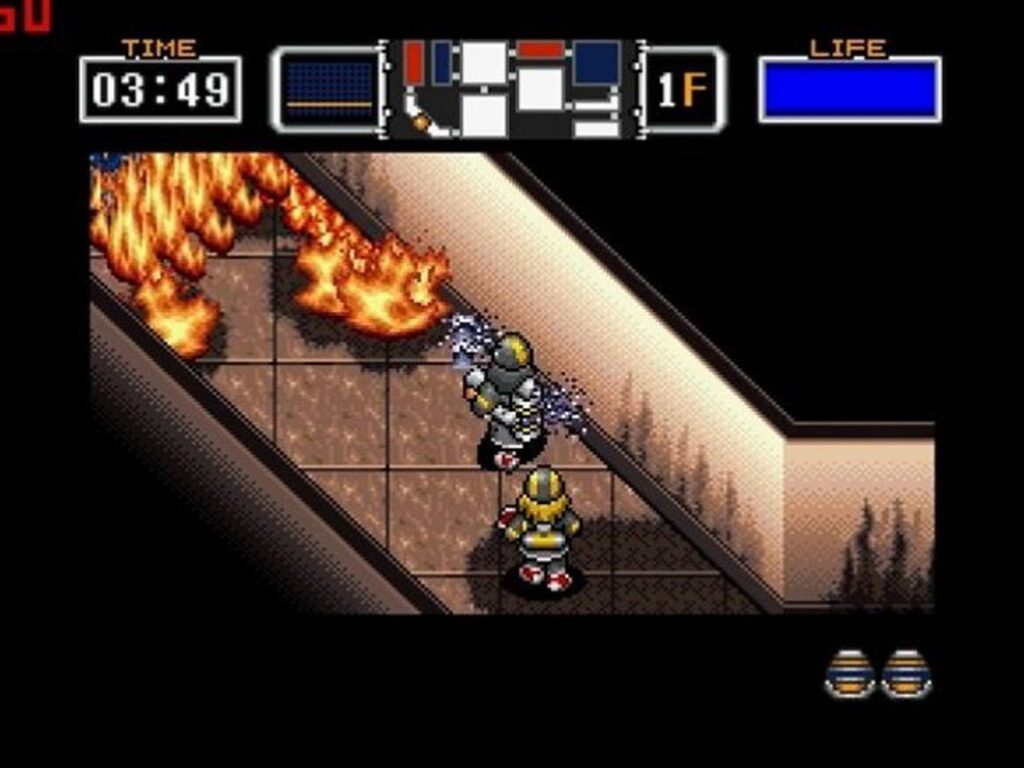
Most action games ask you to blast monsters, robots, aliens, or enemy soldiers. The Firemen asks you to fight fire itself. Developed and published by Human Entertainment, it originally appeared on the Super Nintendo in Japan in 1994 before reaching Europe and Australia in 1995.
That premise alone makes it stand out. Instead of another fantasy quest or sci-fi shooter, you guide firefighters through burning buildings, using water streams, quick movement, and rescue-focused objectives to survive. The tension comes from flames spreading, rooms becoming unsafe, and the player needing to think more like a responder than a warrior.
There is something wonderfully specific about The Firemen. You can almost imagine seeing screenshots in an import section of a magazine and thinking, “Wait, is this really a firefighting action game?” That is exactly the kind of oddball concept retro gaming was built for — the kind publishers could try before every release had to fit neatly into a proven global franchise template.
Worth Revisiting If: You want a retro action game with a premise that still feels unusually fresh.
8. Mischief Makers
Platform: Nintendo 64
Released: 1997
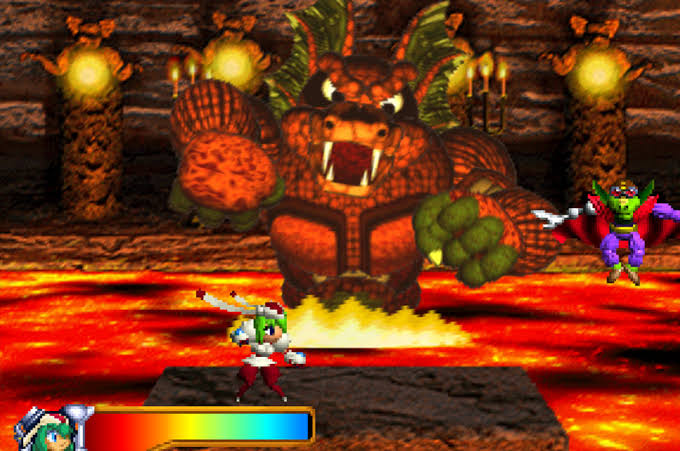
On a console remembered mostly for 3D worlds, Mischief Makers proudly stayed 2D — and somehow felt even stranger because of it. Developed by Treasure and released for Nintendo 64 in 1997, it follows Marina Liteyears through a side-scrolling adventure built around grabbing, shaking, and throwing almost everything in sight.
The magic word is “Shake!” That one mechanic gives the game its personality. Marina shakes objects, enemies, NPCs, and even the rhythm of the levels themselves. It feels like a game from a parallel universe where the N64’s future was not only analog sticks and camera controls, but bright 2D experiments full of speed, slapstick, and mechanical weirdness.
Players who remember Mischief Makers usually remember how different it felt from the rest of the shelf. While friends were talking about GoldenEye 007, Mario Kart 64, and Ocarina of Time, this one was off to the side doing its own thing — loud, twitchy, and proudly eccentric.
Best Way to Play Today: Original N64 hardware gives the full nostalgia hit, but be prepared for collector pricing to vary. Check current prices before buying.
7. Rocket Knight Adventures
Platform: Sega Genesis
Released: 1993
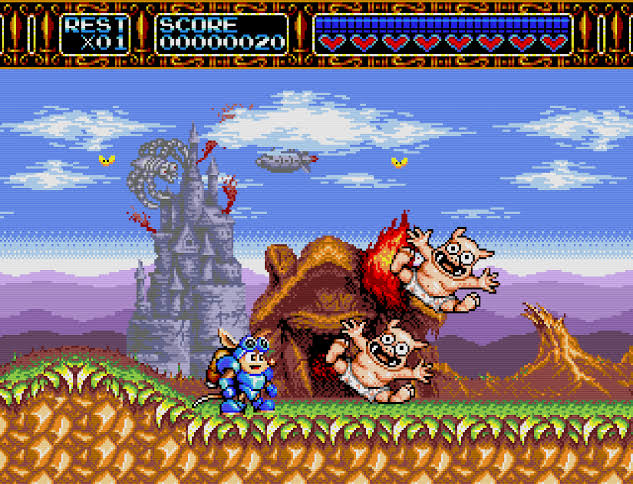
Rocket Knight Adventures may not be completely unknown, but compared to Sega’s biggest names, Sparkster still feels like a hero who deserved a much louder victory lap. Konami released the Genesis original in 1993, introducing a jetpack-wearing opossum knight battling an invading pig army across colorful side-scrolling stages.
The rocket pack is the hook. Sparkster can charge up and blast across the screen, ricochet around tight spaces, or launch into action with a satisfying burst of momentum. It gives the game a punchy rhythm that feels different from standard run-and-jump platformers. The whole thing has that 16-bit “Saturday morning anime nobody localized” vibe — swords, mechs, castles, airships, and dramatic boss fights all jammed into one energetic cartridge.
What makes it a treasure is how complete it feels. The controls have snap, the visuals pop, and the tone lands right between cute and heroic. It is exactly the kind of game you could rent once and spend years trying to remember by describing it badly: “the one with the rocket animal knight.”
Worth Revisiting If: You want Genesis action-platforming with speed, charm, and serious Konami craft.
6. Metal Warriors
Platform: Super Nintendo
Released: 1995
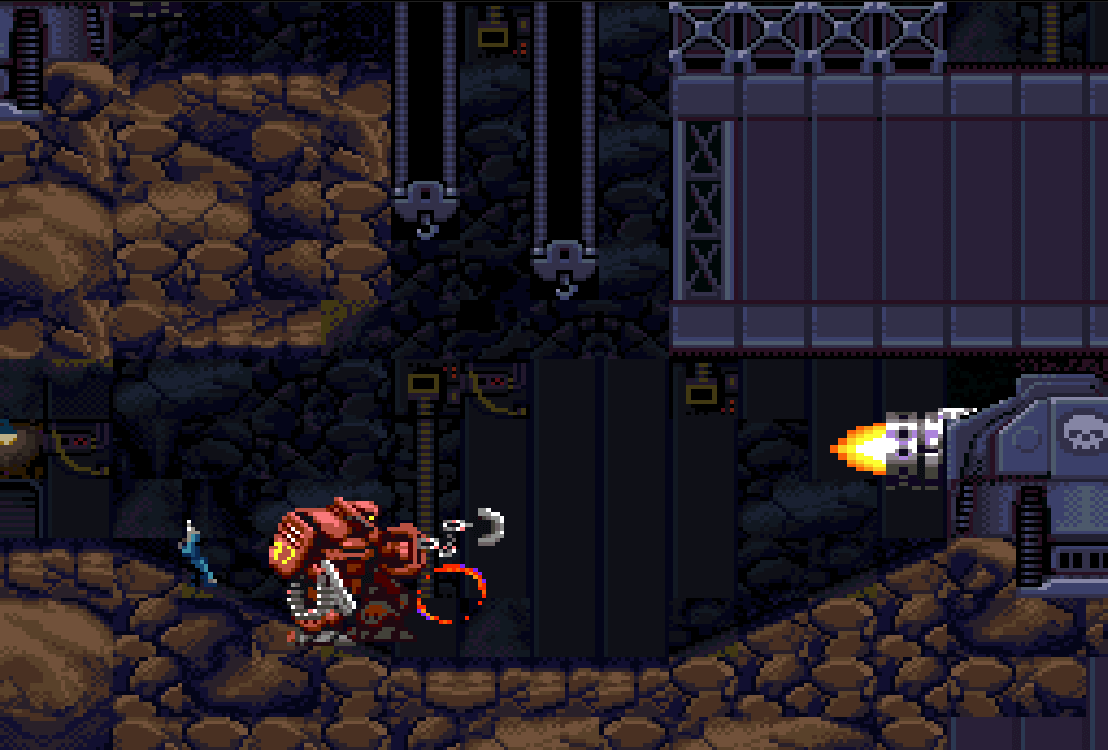
Metal Warriors is the kind of SNES game that makes you wonder how many people missed it simply because it arrived when the industry was already looking toward the next generation. Developed by LucasArts and published by Konami, this 1995 side-view mech action game supports one or two players and blends platforming, sci-fi combat, and giant robot chaos.
The killer detail is that your pilot can eject from a mech and scramble around on foot. That changes everything. Suddenly, the machine is not just a sprite with a health bar — it feels like equipment. You can abandon it, steal another, or feel genuinely exposed when you are outside the cockpit. For a 16-bit action game, that little shift adds a surprising layer of drama.
And then there is the multiplayer. Two-player mech duels on a CRT, with both players trying to outmaneuver each other in heavy machines, sounds exactly like the kind of thing that should have become a sleepover staple. Instead, Metal Warriors became one of those titles retro fans whisper about with reverence.
Collecting Note: Original copies can be costly depending on condition and market swings, so verify current pricing before chasing it.
5. Einhänder
Platform: PlayStation
Released: 1997 in Japan; 1998 in North America
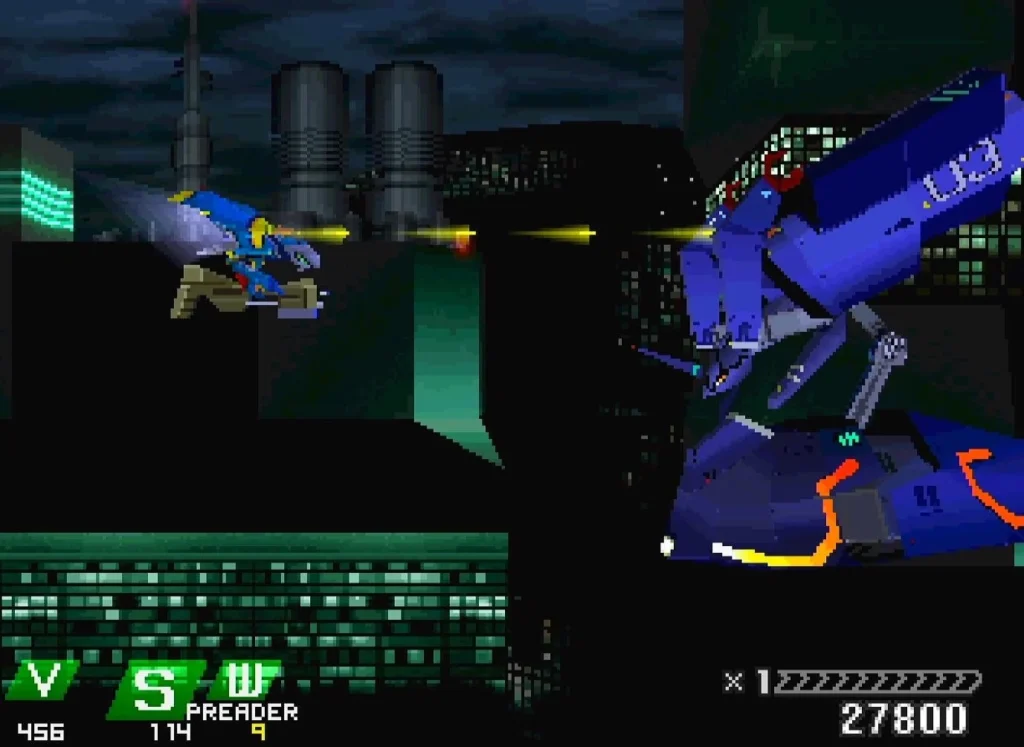
Square was known for RPGs in the PlayStation era, which is part of what makes Einhänder so fascinating. Released for PlayStation in Japan in 1997 and North America in 1998, it is a scrolling shooter built around a spacecraft with a manipulator arm that grabs weapons from defeated enemies.
That weapon-grabbing system is the soul of the game. Instead of simply collecting power-ups, you rip tools from the battlefield and decide how to use them. It makes every encounter feel a little more tactical and a little more desperate. The industrial sci-fi look, heavy mechanical bosses, and moody presentation give it a harder edge than many shooters of the time.
Einhänder feels like the PlayStation era distilled into one overlooked experiment: cinematic, stylish, mechanical, and slightly too cool for the mainstream lane it never really occupied. It is not the easiest shooter to casually stroll through, but fans of the genre will recognize its confidence fast.
Worth Revisiting If: You like shooters with atmosphere, weapon strategy, and that late-’90s Square experimental streak.
4. Little Samson
Platform: NES
Released: 1992
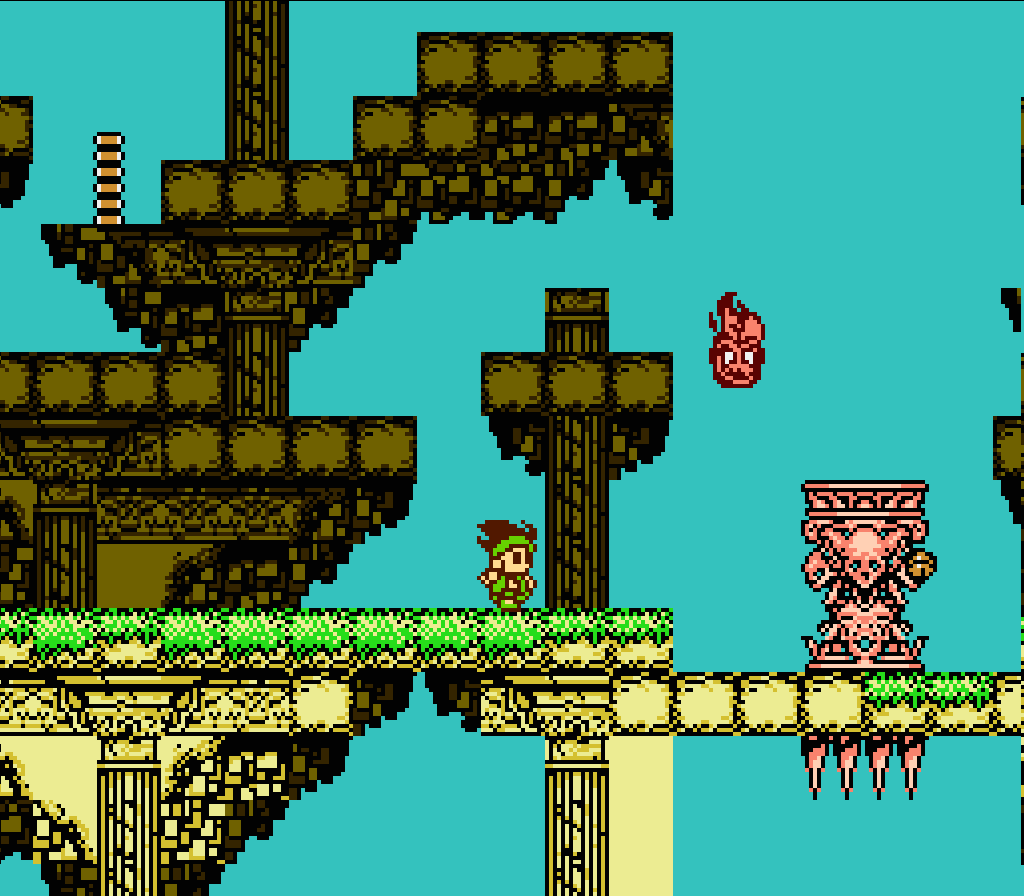
By 1992, the NES was no longer the shiny new king of the living room. That is part of why Little Samson feels like a lost treasure. Taito’s action-platformer arrived late in the NES era, bringing polished animation, colorful visuals, and a four-character swapping system that felt far more ambitious than many players expected from the aging hardware.
The party is the point. You can switch between Samson, a dragon, a golem, and a mouse, each with different abilities. That gives the game a puzzle-box feel without slowing down its action. The mouse can climb walls, the golem can tank damage, the dragon attacks from range, and Samson brings the balanced hero energy. It is easy to imagine a kid discovering it late and wondering why this was not sitting next to the usual NES legends in every conversation.
The downside is practical: this is not a casual pickup for collectors. Little Samson is widely known among NES fans as a desirable late-era title, and original copies can be expensive. For most readers, it is better approached as a “learn the history, play responsibly, and do your homework before buying” kind of treasure.
Collecting Note: Check current market data before buying. This is not the game to impulse-purchase from a blurry listing.
3. Klonoa: Door to Phantomile
Platform: PlayStation
Released: 1997 in Japan; 1998 in North America and Europe
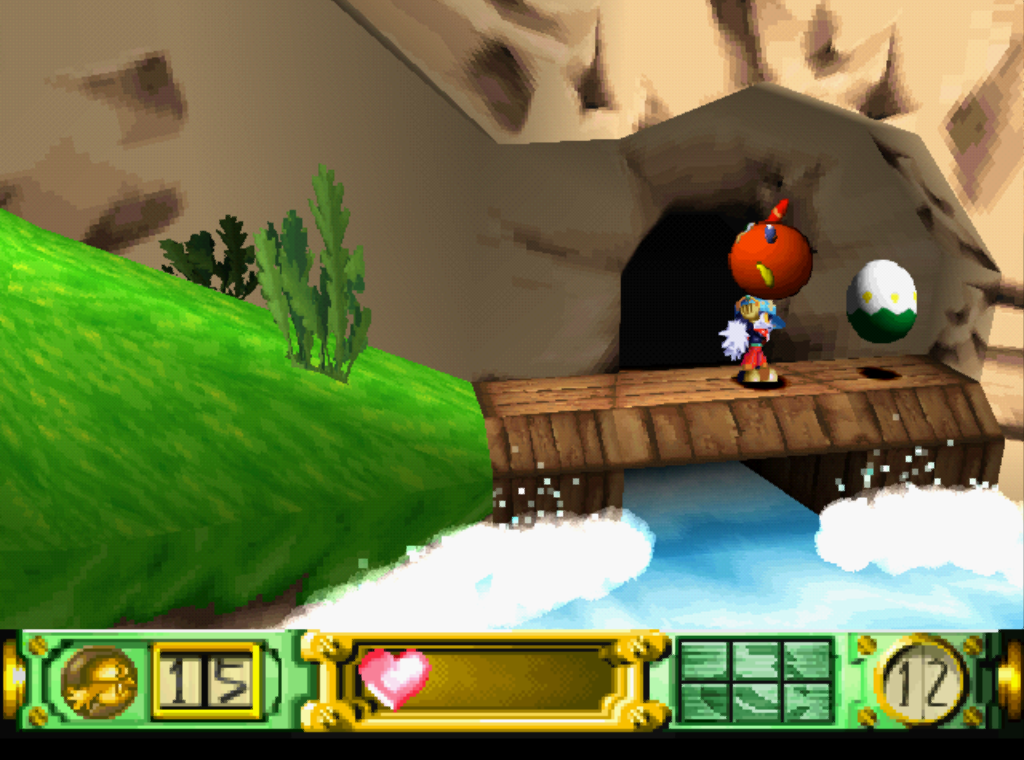
Klonoa: Door to Phantomile is one of those games that seems cute until it quietly breaks your heart. Namco’s PlayStation platformer launched in Japan in 1997 and came west in 1998, bringing 2.5D platforming, dreamy music, expressive characters, and a fairytale mood that made it stand apart from the louder mascot games around it.
The central mechanic is simple and brilliant: Klonoa grabs enemies with his Wind Ring and uses them as tools, projectiles, or double-jump helpers. That gives the platforming a soft puzzle rhythm. You are not just running through stages; you are reading them, figuring out where to carry an enemy, when to throw it, and how to reach that one suspicious ledge in the background.
What players remember most is the feeling. Klonoa has a dreamlike sadness beneath its bright colors, the kind of emotional texture that made the late PlayStation era so special. It looked like a children’s adventure, but it carried itself with surprising tenderness.
Best Way to Play Today: Klonoa Phantasy Reverie Series brought the first game and Klonoa 2 back for modern platforms, making this one easier to revisit than many games on this list.
2. Soul Blazer
Platform: Super Nintendo
Released: 1992 in Japan and North America; 1994 in Europe
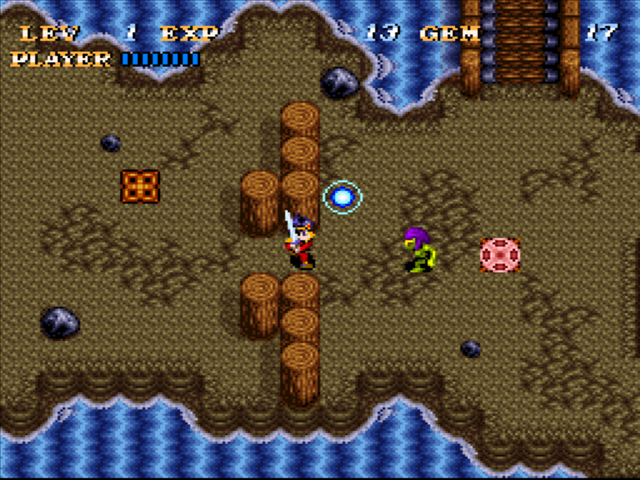
Before Terranigma became the name collectors and action-RPG fans spoke about with longing, Soul Blazer laid down its own beautiful foundation. Released for the SNES in 1992 in Japan and North America, and later in Europe, Quintet’s action-RPG sends the player through monster-filled lairs to restore towns, people, animals, and pieces of the world itself.
That restoration loop is what makes it unforgettable. You defeat enemies, release souls, and watch empty spaces become lived-in again. A house appears. A villager returns. A dog comes back. The world slowly remembers itself. It is a small mechanic on paper, but emotionally, it gives the game a warmth that many bigger RPGs never quite touch.
Soul Blazer is not obscure in hardcore SNES circles, but it absolutely feels under-discussed compared to the system’s biggest RPG names. It is also important because it shows how retro games could make saving the world feel personal, one restored life at a time.
Worth Revisiting If: You like action-RPGs with simple combat, heartfelt progression, and an unusually gentle sense of purpose.
1. Terranigma
Platform: Super Nintendo
Released: 1995 in Japan; 1996 in Europe and Australia
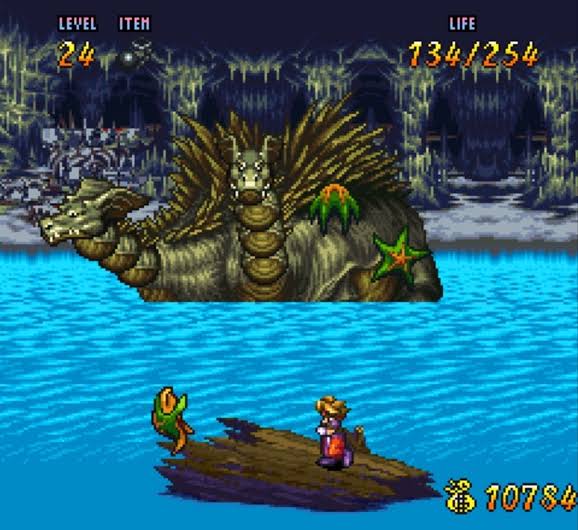
If this list has a crown jewel, it is Terranigma. Released for the SNES in Japan in 1995 and later in Europe and Australia, Quintet’s action-RPG famously never received a North American release. That absence helped turn it into one of the great “wait, how did we not get this?” stories in 16-bit history.
The game’s scope is enormous. You play as Ark, a boy from Crysta, and the adventure expands into nothing less than the resurrection of the world. Towns grow. Continents change. Civilization unfolds. Where many retro RPGs focus on saving an existing kingdom, Terranigma makes you feel like you are helping the world wake up from a long sleep.
Specific moments give it its power: the eerie quiet of early areas, the gradual return of life, the way the story keeps widening until it feels mythic. It has action, mystery, melancholy, and that unmistakable late-SNES confidence — the feeling of developers squeezing one last grand statement out of 16-bit hardware.
For North American retro fans, Terranigma carries an extra layer of longing. It is not just a great game. It represents the games we read about, heard about, imported, emulated, or discovered years later and thought, “We were robbed.”
Worth Revisiting If: You love SNES action-RPGs, world-building, and games that feel bigger than their cartridge.
Best Way to Revisit These Obscure Retro Games Today
The best way to revisit these games really depends on what kind of retro experience you want. Some players want the full ritual: original cartridge or disc, real hardware, a wired controller, and the soft glow of a CRT. Others just want a clean, convenient way to enjoy the game without turning their living room into a cable-management boss fight. Both approaches are valid.
For games like Klonoa: Door to Phantomile, modern collections make the path much easier. Klonoa Phantasy Reverie Series is the most convenient option for most players because it avoids the cost and hassle of hunting down an original PlayStation disc. That is especially helpful if you mainly want to experience the charm, music, and dreamy platforming without building a full retro setup around one game.
Other titles on this list are trickier. Little Samson, Metal Warriors, Soul Blazer, Terranigma, and Einhänder may require original cartridges, original discs, import copies, or deeper research before buying. Before spending real money, check current prices across multiple sources, confirm region compatibility, and be careful with listings that are vague, damaged, incomplete, or suspiciously cheap. For cartridge-based games, a protective case is also worth considering if you are buying for a collection rather than casual play.
If you do choose original hardware, your display setup matters. A CRT television still delivers the most authentic look, especially for NES, SNES, Genesis, and PlayStation games designed around scanlines, lower resolutions, and old-school video signals. But CRTs are heavy, aging, and not practical for everyone. For most modern players, a good HDMI adapter, quality retro gaming upscaler, or console-specific video solution can make these games look much better on a modern TV while keeping the setup manageable.
This is where it pays not to go too cheap. Basic HDMI adapters can work for casual play, but low-quality converters may add lag, blur the image, or make fast action games feel worse than they should. If you are revisiting precision-heavy games like Rocket Knight Adventures, Plok, Mischief Makers, or Einhänder, input delay matters. A dependable retro upscaler or well-reviewed HDMI solution can make the difference between “this game feels old” and “oh, now I get why people love this.”
Controllers are another piece of the nostalgia puzzle. Original controllers still feel right for many of these games, but worn-out buttons, loose D-pads, and aging cords can quietly ruin the experience. Depending on your setup, a replacement controller, controller extension cable, wireless retro controller, or controller adapter may be worth adding — especially for SNES, Genesis, N64, and PlayStation titles where the feel of the pad is part of the memory.
The goal is not to prove retro purity. The goal is to experience these games in a way that feels good, respects the original, and does not make the setup more frustrating than the game itself. If original hardware and a CRT make your heart happy, chase that full nostalgia hit. If a modern HDMI setup, a reliable controller, and a legal re-release get you playing faster, that is just as valid. The treasure is the game — not the hassle surrounding it.
Conclusion: The Best Retro Treasures Are the Ones That Still Surprise Us
The beauty of obscure retro games is that they remind us the past was never as simple as the greatest-hits lists make it look. For every famous mascot, blockbuster RPG, or arcade-perfect port, there were dozens of strange, heartfelt, ambitious games trying something different.
That is why these lost treasures still matter. They preserve the weird corners of gaming history: the late-life NES miracle, the SNES firefighting game, the N64 2D oddity, the PlayStation shooter from an RPG giant, the PAL-region masterpiece North America never got.
Retro gaming is not only about replaying what everyone remembers. Sometimes, it is about finding the games that slipped through the cracks — and realizing they still have something to say.