Posted on July 20, 2026
Final Fantasy X at 25: The PlayStation 2 RPG That Made a Generation Feel Everything
Disclosure: Some of the links in this post are affiliate links. This means if you click on the link and purchase an item, we will receive an affiliate commission at no extra cost to you. All opinions remain my own. I only recommend products or services I believe will add value to my readers.
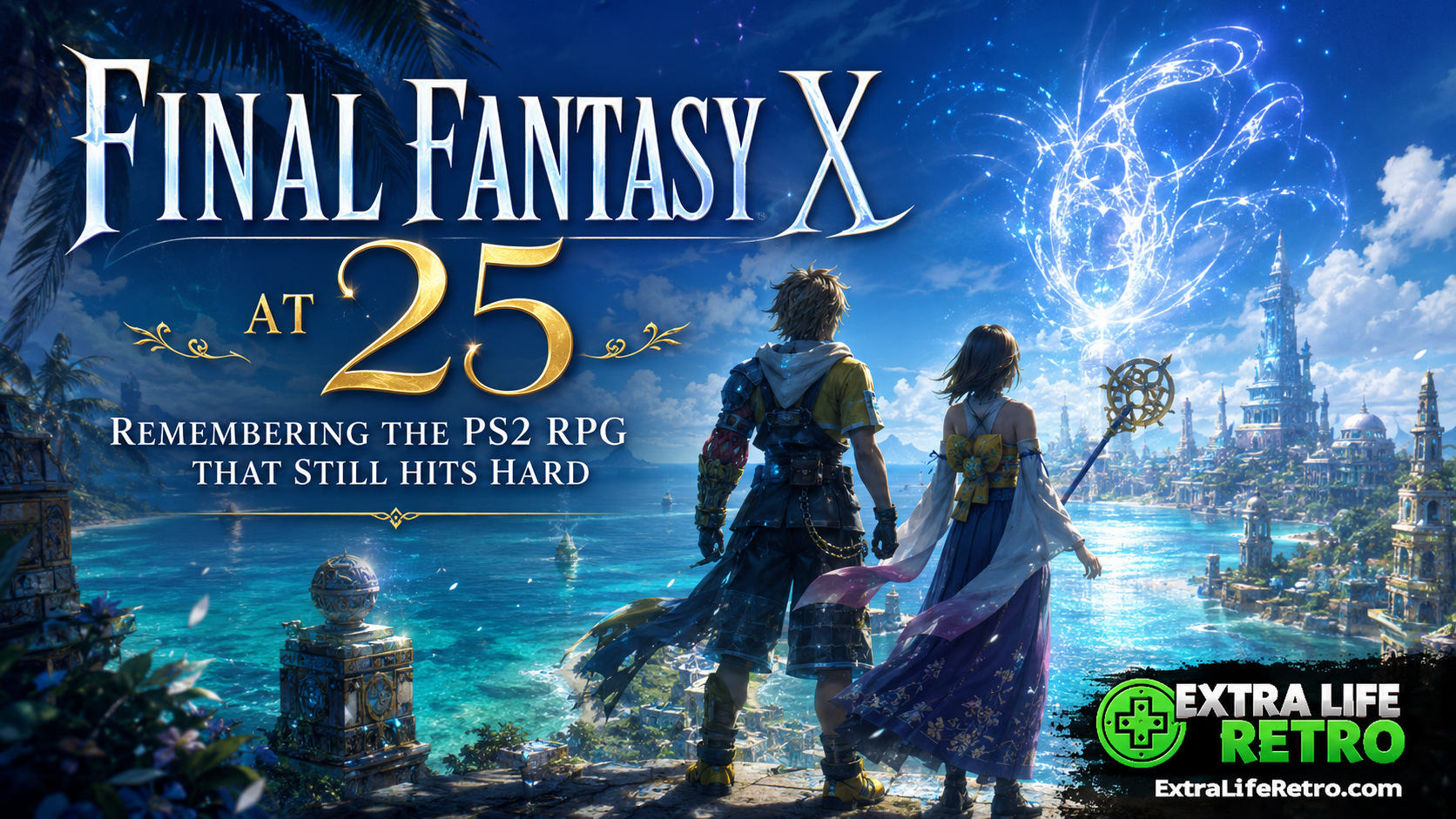
Twenty-five years after Tidus first arrived in Spira, Final Fantasy X remains an unforgettable journey through faith, sacrifice, grief, and hope.
Twenty-five years ago, Final Fantasy X arrived in Japan on July 19, 2001, bringing Square’s flagship RPG series into the PlayStation 2 generation with fully rendered environments, spoken dialogue, cinematic storytelling, and one of the most emotionally ambitious adventures the franchise had attempted.
For players in North America and Europe, the journey began a little later as the game reached additional regions across late 2001 and 2002. But regardless of when we first stepped onto the shores of Besaid, many of us remember the same things: the glow of a CRT television, a PlayStation 2 controller in hand, a memory card firmly inserted, and that feeling that Final Fantasy had suddenly become larger, more expressive, and more human.
The Final Fantasy X 25th anniversary is not simply an excuse to replay a beloved RPG. It is a chance to remember the moment the series crossed a technological threshold without abandoning the turn-based strategy, musical identity, emotional storytelling, and strange fantasy worlds that made Final Fantasy special in the first place.
Final Fantasy X Release History at a Glance
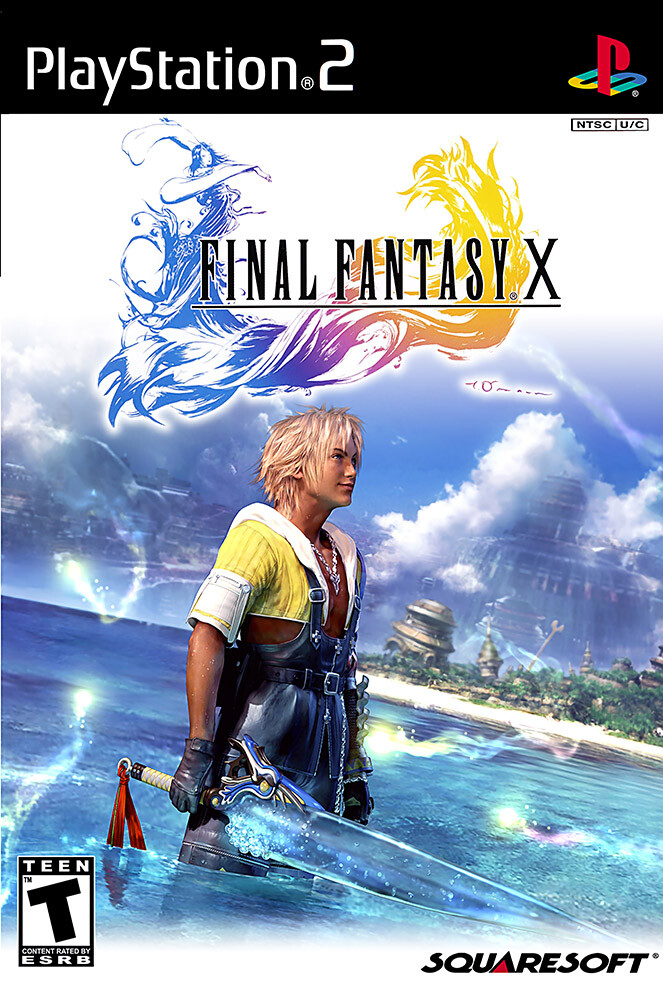
Final Fantasy X was developed and published by Square for the PlayStation 2. It originally launched in Japan on July 19, 2001, making July 19, 2026, the game’s official 25th anniversary based on its first release. Square Enix has previously recognized that Japanese launch date when commemorating the game’s earlier milestones.
The game was the tenth numbered entry in the main Final Fantasy series and represented several major changes. It was the first mainline installment released on PlayStation 2, the first to make extensive use of voice acting, and the first to replace the familiar Active Time Battle system with the Conditional Turn-Based Battle system.
A direct sequel, Final Fantasy X-2, followed in 2003—the first direct narrative sequel to a numbered Final Fantasy game. The two titles were later combined in Final Fantasy X/X-2 HD Remaster, initially released for PlayStation 3 and PlayStation Vita before reaching PlayStation 4, Windows PC, Nintendo Switch, and Xbox One.
What Made Final Fantasy X Special?
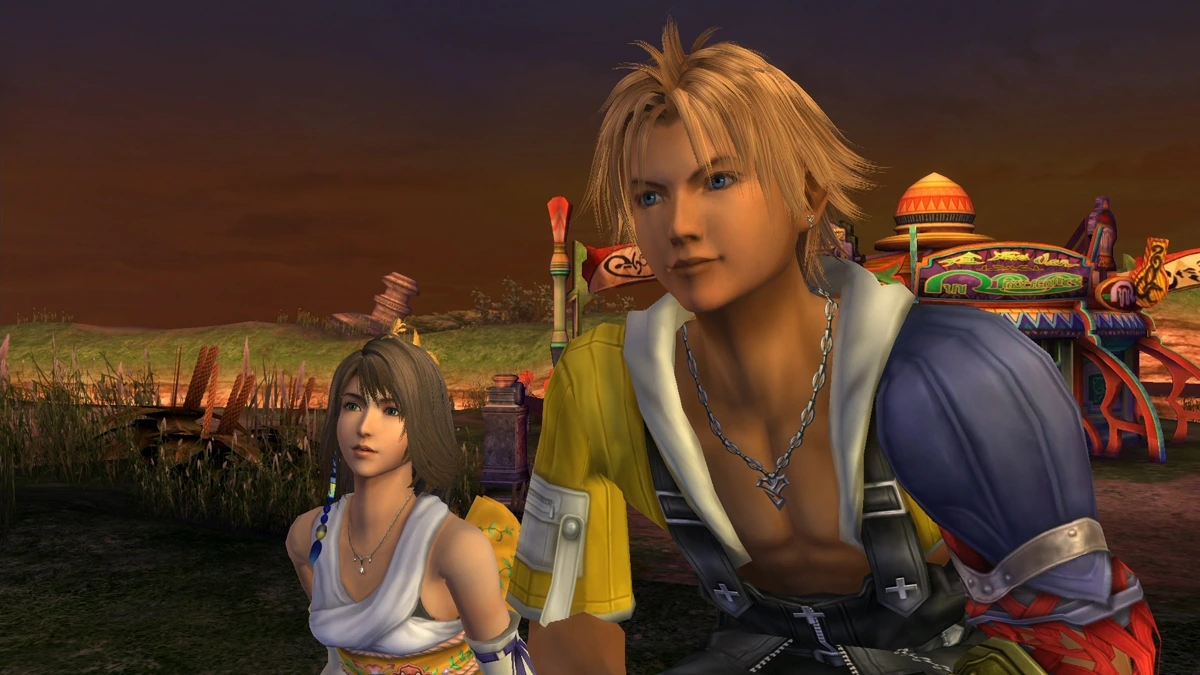
Final Fantasy X told the story of Tidus, a famous blitzball player from the futuristic city of Zanarkand. After a catastrophic encounter with the colossal creature Sin, Tidus awakens in the unfamiliar world of Spira.
There, he meets Yuna, a young summoner undertaking a pilgrimage to defeat Sin and provide Spira with a temporary period of peace known as the Calm. Tidus joins her guardians, gradually learning that the journey carries a price no one has properly explained to him.
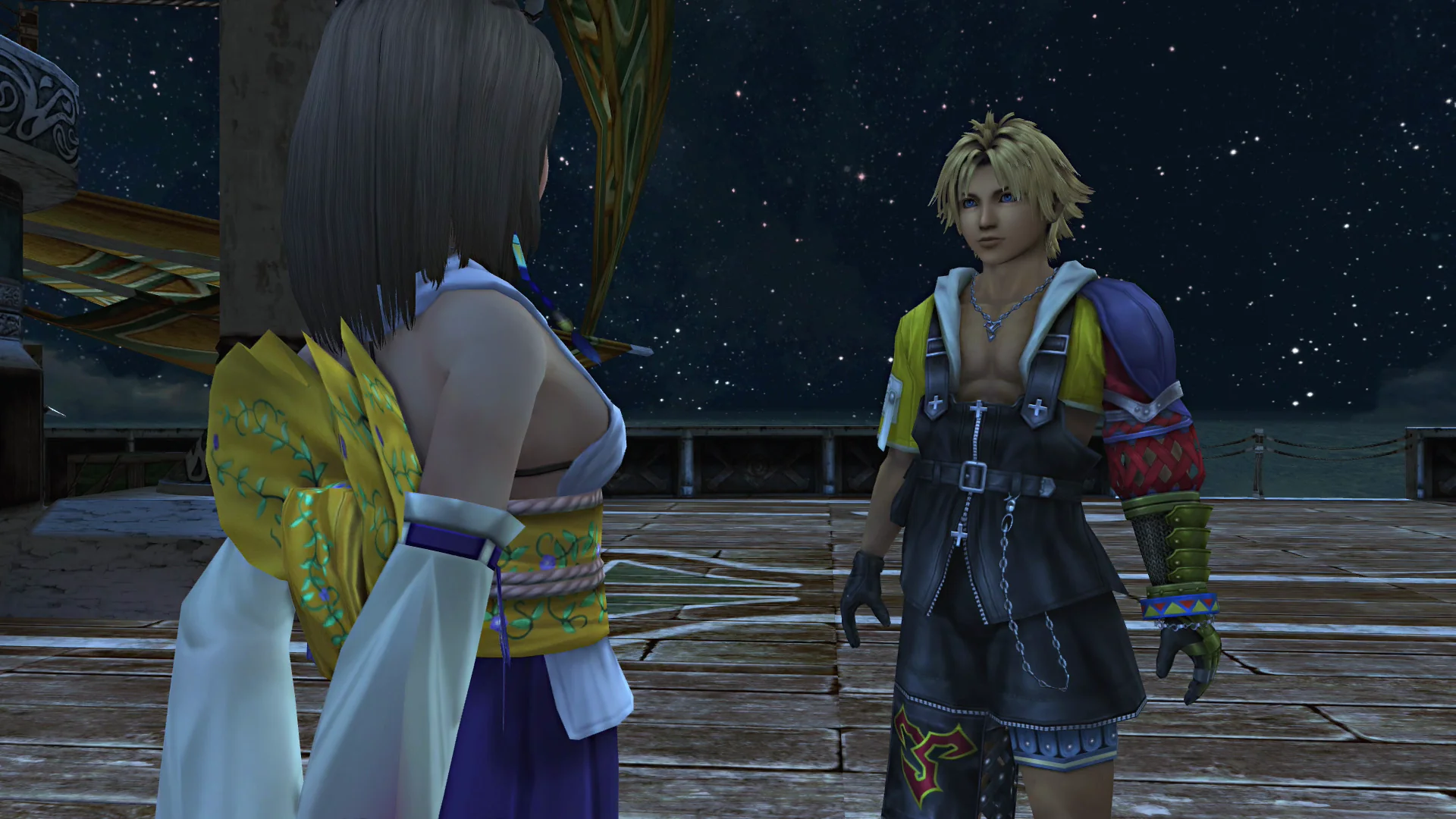
That setup gave Final Fantasy X something many role-playing games struggle to achieve: a clear forward journey with a growing sense of dread.
You are almost always moving toward the next temple, village, or destination. Yet every step brings Yuna closer to the end of her pilgrimage. The player gradually understands Spira alongside Tidus, allowing the world’s customs, prejudices, religions, and painful traditions to unfold naturally.
The emotional power does not come from a single shocking scene. It comes from realizing that nearly everyone in the group understands the cost of the journey except Tidus—and perhaps the player.
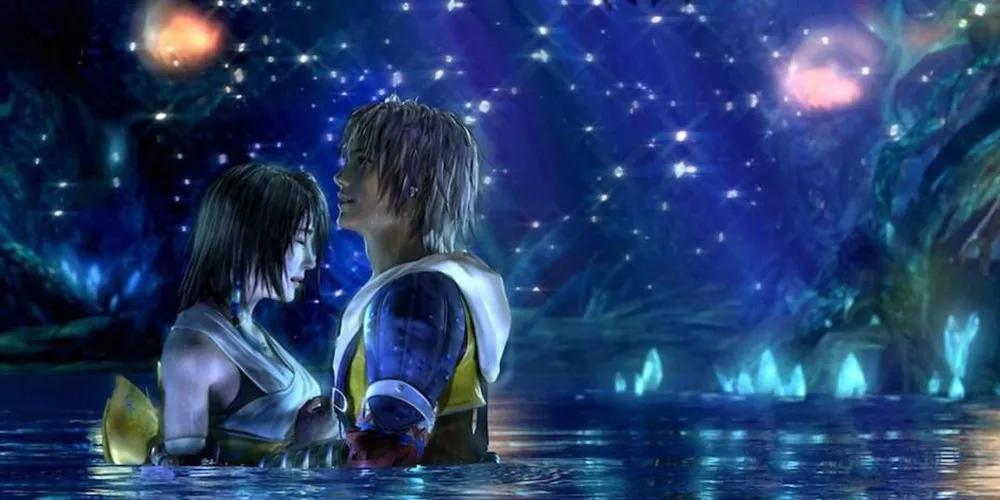
That is why moments such as Yuna’s sending in Kilika, the group’s quiet conversations around campfires, the arrival at the ruined Zanarkand, and the famous lake scene continue to resonate. Final Fantasy X earned its emotion patiently.
A Final Fantasy Built for the PlayStation 2 Era
The transition from the original PlayStation to PlayStation 2 felt enormous in 2001.
Final Fantasy VII, VIII, and IX had used detailed pre-rendered backgrounds, blocky or stylized character models, text boxes, and cinematic sequences to create worlds larger than the hardware could render in real time. Final Fantasy X arrived with three-dimensional environments, expressive character faces, elaborate costumes, visible lip movement, and spoken dialogue.
Today, some character animations and facial expressions look unmistakably early-2000s. At the time, however, watching Tidus and Yuna speak to one another felt like seeing a familiar genre learn an entirely new language.
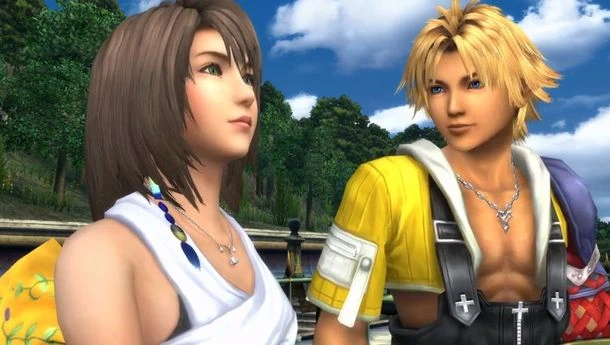
This was also an era when games were increasingly marketed as cinematic experiences. The PlayStation 2 was battling the Dreamcast, GameCube, and the newly arriving Xbox, while publishers were experimenting with larger worlds, DVD-scale presentation, orchestral soundtracks, and more elaborate storytelling.
Final Fantasy X demonstrated what a major Japanese RPG could look like on the new hardware without transforming itself into an action game. It remained menu-driven, strategic, party-based, and proudly dramatic.
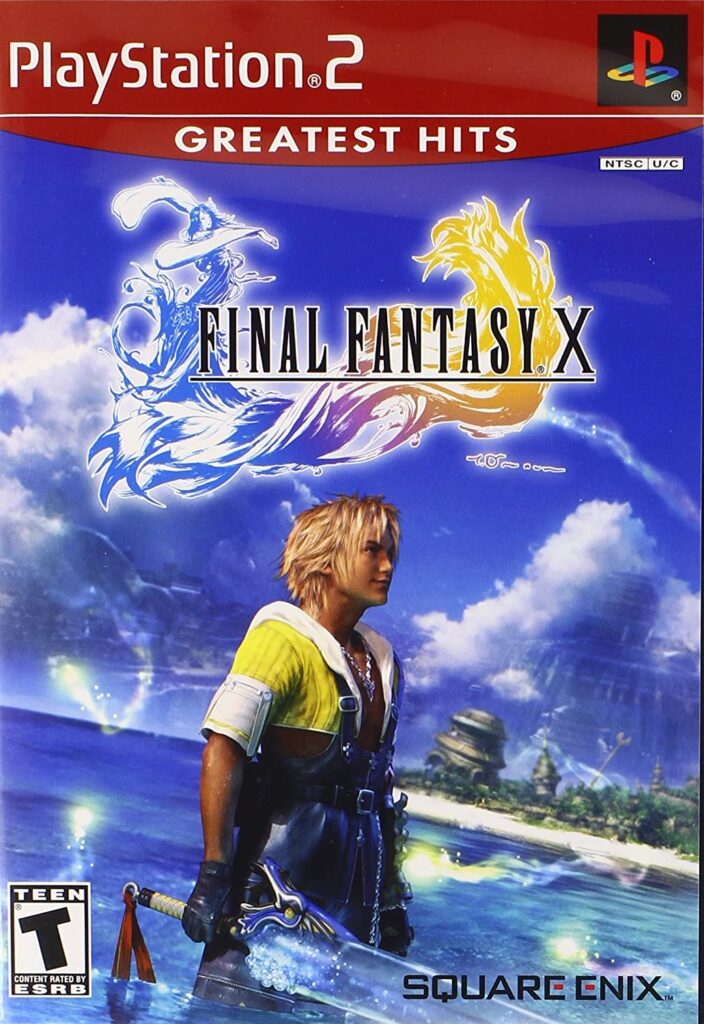
For anyone who discovered it through a magazine preview, a television commercial, a store demo, or that instantly recognizable blue-and-white box art, it looked like a genuine next-generation event.
Combat That Still Rewards Thought
Final Fantasy X’s Conditional Turn-Based Battle system remains one of its greatest strengths.
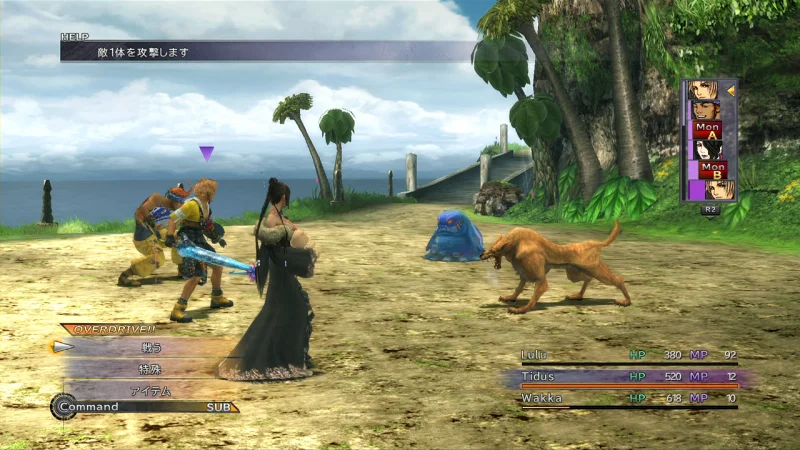
Unlike the Active Time Battle systems used by several earlier entries, combat pauses while the player selects an action. A turn-order display shows when party members and enemies will act, allowing you to plan several moves ahead.
Certain actions can delay enemies. Faster characters may act more frequently. Powerful abilities may push a character’s next turn further down the order. Switching party members does not consume a turn, encouraging players to use the entire group rather than relying on three favorites.
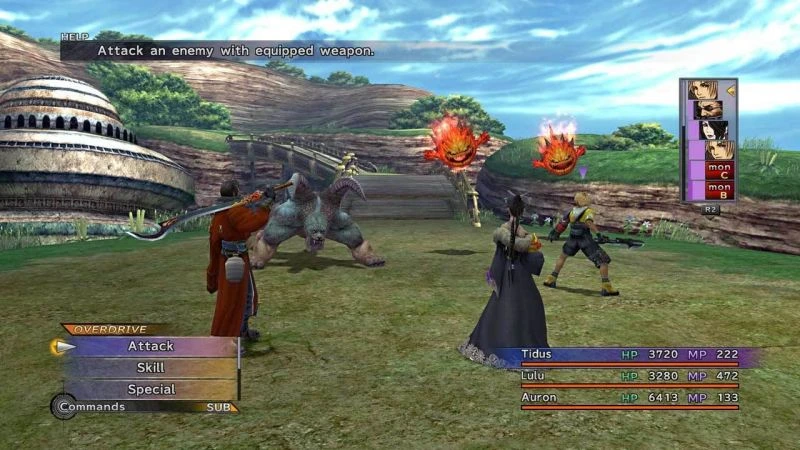
The characters also begin with clearly defined tactical roles:
- Tidus is fast and effective against agile enemies.
- Wakka can strike flying creatures reliably.
- Auron breaks through armored defenses.
- Lulu exploits elemental weaknesses with black magic.
- Yuna heals the party and summons aeons.
- Rikku uses items and dismantles mechanical enemies.
- Kimahri can develop in several directions depending on how the player navigates the Sphere Grid.
The system can feel almost puzzle-like during ordinary encounters. The game presents an enemy composition, and the player identifies the appropriate party member or ability needed to dismantle it efficiently.
It is accessible enough for newcomers but offers considerable depth through status effects, turn manipulation, equipment abilities, Overdrives, summons, and optional late-game challenges.
The Sphere Grid Made Character Growth Visible
Instead of traditional automatic level-ups, Final Fantasy X introduced the Sphere Grid.
Characters earn Sphere Levels through battle and move across a network of interconnected nodes. By spending different spheres, players unlock improvements to strength, magic, agility, health, spells, and special abilities.
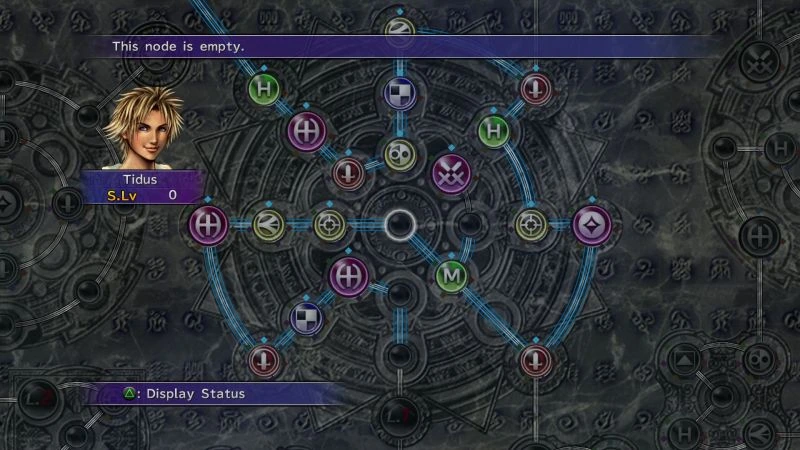
The system gives progression a satisfying physical quality. You can see where a character has been, where their intended route leads, and where another character’s abilities might eventually become accessible.
During a standard playthrough, most characters follow paths that reinforce their expected roles. Later, the grid opens enough to create unusual combinations. Yuna can become an unexpectedly powerful black mage. Tidus can move into Auron’s strength-focused territory. With enough dedication, almost every character can learn almost every ability.
Modern players accustomed to enormous skill trees may not find the Sphere Grid revolutionary, but its mixture of guidance and customization remains remarkably effective.
Its biggest weakness is the amount of menu management required during extended sessions. Activating individual nodes can become repetitive, particularly when several characters gain multiple Sphere Levels at once. Even so, the constant sense of visible progress remains rewarding.
Spira Still Feels Unlike Any Other Final Fantasy World
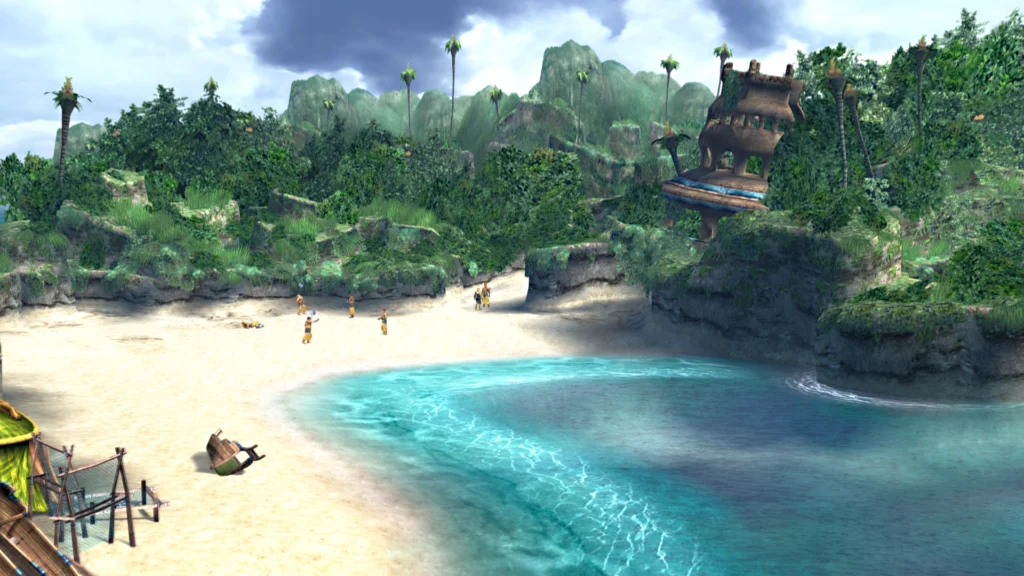
Final Fantasy X abandoned the medieval-European atmosphere associated with some earlier games in favor of a setting filled with tropical islands, coastal villages, monumental temples, ruined machinery, and cultures shaped by fear of destruction.
Spira is beautiful, but its beauty is fragile.
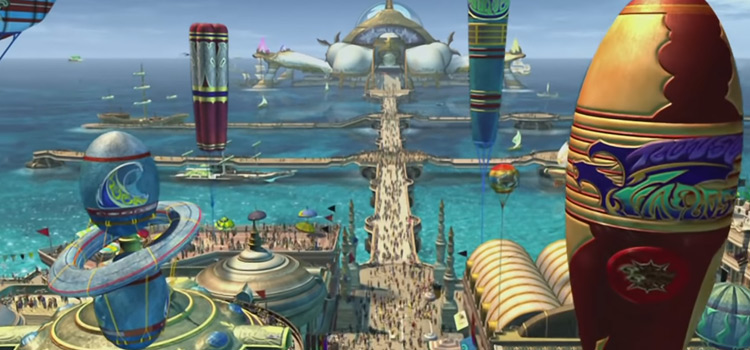
Bright water, colorful clothing, lively settlements, and peaceful music exist beneath the constant threat of Sin. Every community understands that destruction may return without warning. That contrast gives the world its identity.
Religion also occupies a central role. The teachings of Yevon influence technology, government, social order, and the way Spira understands its repeated suffering. The story does not treat faith itself as simplistic or foolish. Instead, it asks what happens when institutions protect harmful traditions, when people confuse obedience with virtue, and when fear prevents a society from challenging the cycle that controls it.
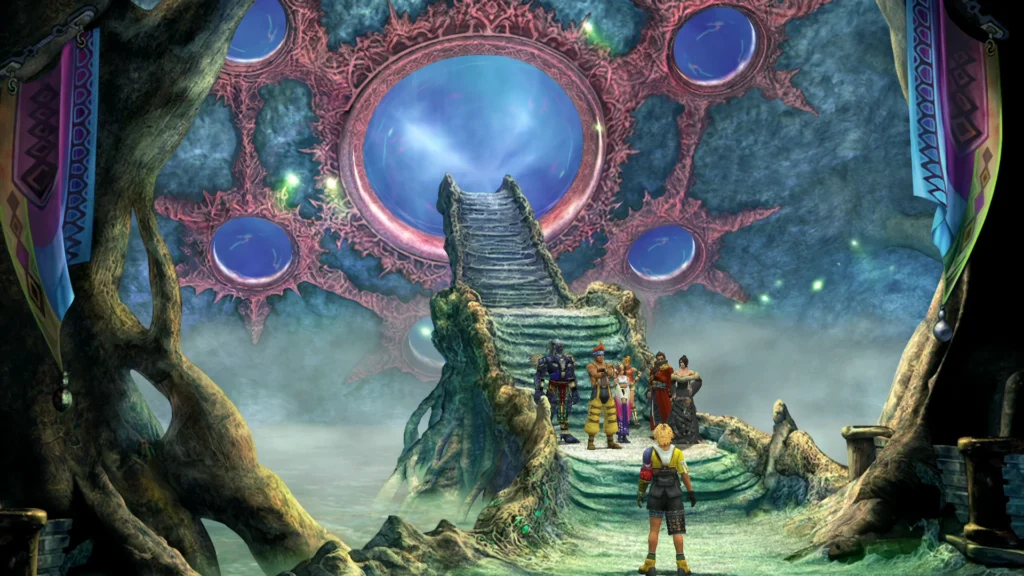
Twenty-five years later, that thematic tension remains one of Final Fantasy X’s strongest qualities.
The game is ultimately about people inheriting a broken system and finding the courage to imagine that suffering does not have to be permanent.
A Soundtrack That Carries the Weight of the Journey
Final Fantasy X’s music was composed by Nobuo Uematsu, Masashi Hamauzu, and Junya Nakano, marking the first mainline installment whose score was not composed entirely by Uematsu.
The result is one of the series’ most varied soundtracks.
“To Zanarkand” establishes the game’s melancholy before the adventure has even properly begun. “Besaid” captures the calm warmth of island life. “Otherworld” brings aggressive rock energy to the opening blitzball sequence. “Suteki da ne” gives the central relationship between Tidus and Yuna a musical identity that is tender without feeling disconnected from the wider tragedy.
The soundtrack understands when to become grand and when to pull back.
Many of Final Fantasy X’s most powerful moments are supported by quiet piano, restrained ambience, or melodies that feel as though they are already mourning something the characters have not yet lost.
The original soundtrack remains a major reason the game’s locations and scenes are so easy to remember decades later.
Why Final Fantasy X Still Matters
Final Fantasy X matters because it successfully bridged two eras of Japanese role-playing games.
It embraced cinematic presentation, voice acting, real-time environments, and increasingly sophisticated character animation. Yet beneath that technological leap was a carefully structured turn-based RPG built around party composition, elemental weaknesses, equipment customization, optional bosses, hidden aeons, and methodical character growth.
It also helped establish the PlayStation 2 as a home for ambitious console RPGs. The system would eventually host games such as Dragon Quest VIII, Persona 3, Persona 4, Kingdom Hearts, Shadow Hearts, Rogue Galaxy, and Suikoden V. Final Fantasy X arrived early enough in the console’s life to show what the generation could become.
Its influence is also visible within its own franchise. Fully voiced storytelling became standard. Direct sequels became possible. More linear narrative structures would return in later installments. The desire to blend cinematic spectacle with accessible combat continued shaping Final Fantasy long after the journey through Spira ended.
Most importantly, the game demonstrated that a turn-based RPG could feel technically modern without discarding deliberate combat.
That lesson still matters in an industry that too often assumes older mechanics must be replaced rather than refined.
How Does Final Fantasy X Hold Up Today?
Final Fantasy X remains surprisingly approachable, although it does show its age.
The combat is still excellent. Battles move quickly, party switching is painless, and the turn-order system clearly communicates the consequences of your choices. Players who enjoy strategic RPGs may find it more immediately satisfying than several newer Final Fantasy titles.
The world design is much more linear than the overworlds of earlier games. Spira is largely a chain of connected paths, towns, temples, and combat zones. That structure serves the pilgrimage narrative, but players expecting broad exploration may find the first half restrictive.
Some minigames have aged far less gracefully.
Blitzball has devoted fans, but its opening tutorial can overwhelm new players. The Chocobo race, lightning-dodging challenge, butterfly hunt, and several Celestial Weapon requirements remain notorious. They provide long-term goals, but they can also feel like relics from an era when games expected players to repeat demanding tasks with limited assistance.
The voice performances are earnest and often effective, although the direction can sound stiff by modern standards. The frequently mocked laughing scene is intentionally awkward within the story, but several other conversations reveal the limitations of early voice synchronization and localization.
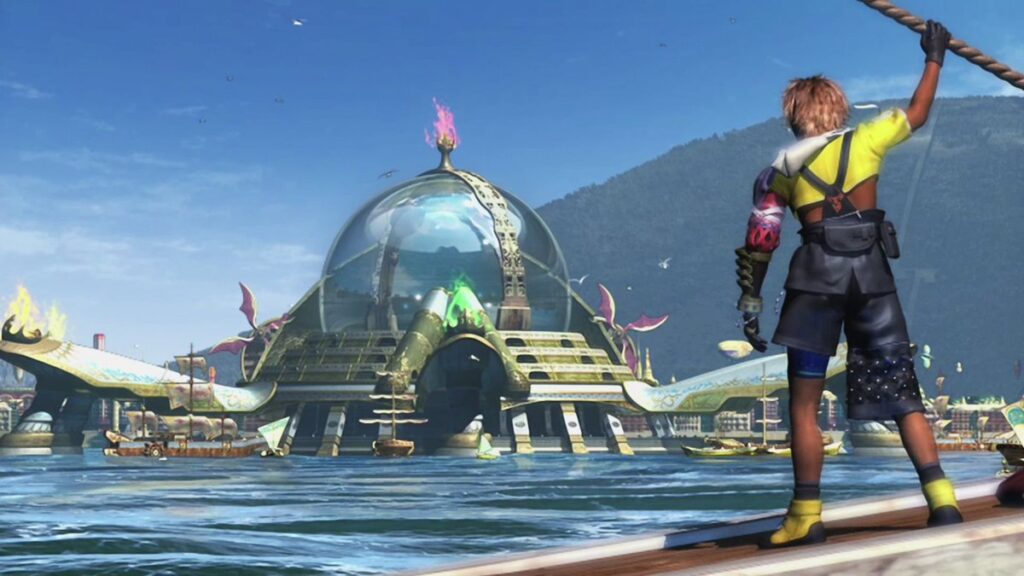
Visually, the environments, creature designs, spell effects, and pre-rendered cinematics retain considerable beauty. Some remastered character faces remain a matter of personal preference, especially for players attached to the expressions of the PS2 models.
Despite these limitations, the central story still works. Yuna’s quiet resolve, Tidus’s growing understanding, Auron’s guarded sorrow, and the party’s determination carry more emotional weight than the technology surrounding them.
Nostalgia helps, but nostalgia is not doing all the work.
What the Anniversary Means for Players and Collectors
The original PlayStation 2 disc remains widely circulated compared with genuinely scarce RPGs from the same console generation. However, condition, region, edition, manual inclusion, disc quality, and packaging can all affect asking prices.
We previously featured Final Fantasy X among our most affordable Retro RPGs, and it remains one of the easiest major PlayStation 2 role-playing games to recommend to collectors on a reasonable budget. Unlike several increasingly expensive RPGs from the era, complete PS2 copies can still be relatively approachable, although condition, edition, and current market demand will affect the price. That accessibility makes Final Fantasy X especially appealing at 25: it is not merely an important game to read about or remember—it is still a realistic addition to a working PS2 collection.
Collectors should check recent sold listings rather than relying on a single marketplace listing. A clean complete copy offers the strongest nostalgia hit, particularly when played on original hardware with a memory card and either a CRT television or a quality modern display solution.
The North American Greatest Hits edition, regional PAL releases, Japanese editions, Final Fantasy X International, strategy guides, soundtracks, and promotional material provide additional collecting paths without requiring everyone to chase the same version.
Casual players do not need the original disc to appreciate the game. The HD Remaster includes Final Fantasy X and Final Fantasy X-2, incorporates content based on previously expanded international versions, and is available across several modern platforms.
Players should still verify platform compatibility and physical-edition details before purchasing. Depending on the platform and region, portions of a collection may be delivered through a download rather than being entirely stored on the physical media.
Best Way to Play Final Fantasy X Today
For most players, Final Fantasy X/X-2 HD Remaster is the easiest and most practical way to revisit Spira.
The collection is available through the PlayStation ecosystem, Xbox, Nintendo Switch, and Steam. The PlayStation edition offers enhanced graphics and access to both games, while the PC version includes additional settings and convenience features. The Nintendo Switch version is especially appealing for players who want to move between a television and portable play.
A separate version is also listed for Nintendo Switch 2. Nintendo notes that the Switch 2 release is distinct from the original Switch edition and that save data is not interchangeable between them, so buyers should choose carefully.
The best version therefore depends on what you value:
Choose the HD Remaster on a modern console or PC for convenience, cleaner presentation, and easy display compatibility.
Choose the Nintendo Switch version for portable play.
Choose the original PlayStation 2 disc when the hardware, controller, memory card, and CRT experience are part of the appeal.
There is no need to overpay for the original merely to experience the story. The modern collection is the sensible recommendation for most newcomers, while the PS2 release remains the version collectors and preservation-minded fans will most enjoy owning.
Twenty-Five Years Later, the Journey Continues
Final Fantasy X is not flawless.
Its world can feel narrow. Its minigames can be infuriating. Its early voice direction occasionally reveals the age of the production. Completing the Sphere Grid can become tedious, and some endgame challenges demand far more patience than many modern players will want to give them.
But none of those flaws erase what the game achieved.
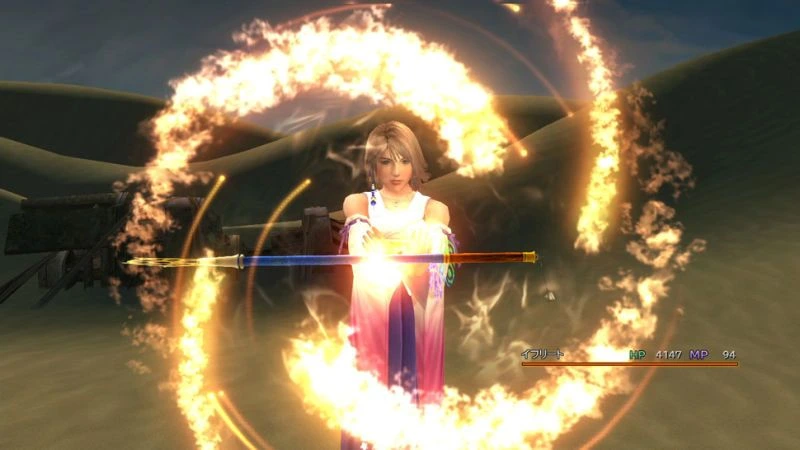
Final Fantasy X gave the PlayStation 2 generation a world filled with color and sorrow, a battle system that still feels intelligently designed, music that can summon memories within seconds, and a story about refusing to accept suffering simply because previous generations considered it inevitable.
Twenty-five years after Tidus washed ashore in Spira, players continue to return to Besaid, walk the Mi’ihen Highroad, descend into the Via Purifico, confront the truth in Zanarkand, and watch a group of young people challenge a cycle the world had been taught was eternal.
Some games are remembered because they were technically impressive.
Others survive because they gave us characters, places, and feelings we never completely left behind.
Final Fantasy X did both.