
Posted on September 15, 2026
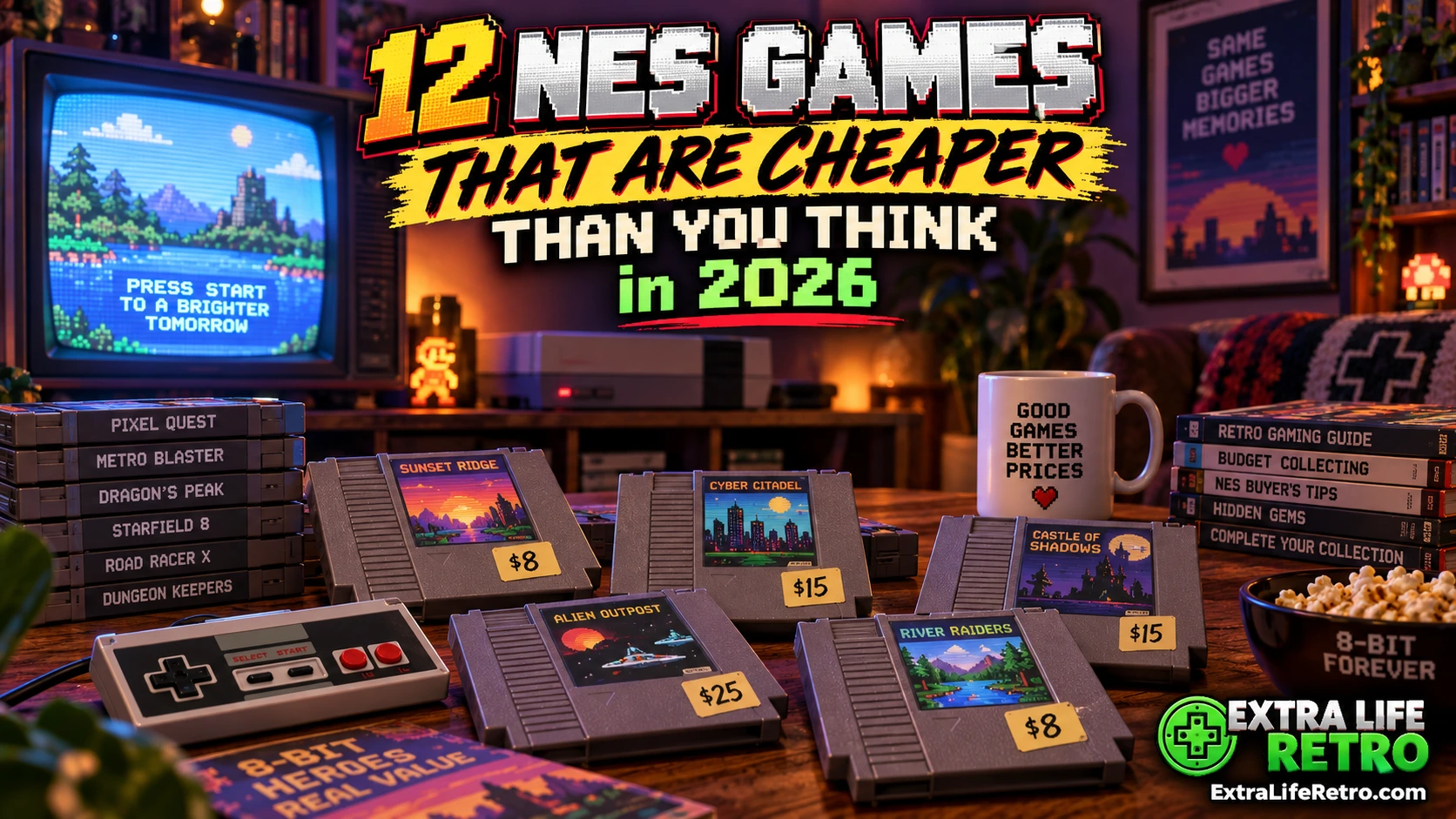
12 NES Games That Are Cheaper Than You Think in 2026
You don’t need a collector’s budget to put some genuinely great NES games back on your shelf.
Spend enough time looking at retro game prices online and it can start to feel as though every good NES game has become a three-digit collectible.
Thankfully, that isn’t true.
Yes, there are expensive NES cartridges. There are rare games, late releases, cult favorites and complete-in-box copies that can make you wonder whether somebody accidentally listed a used car instead of an old Nintendo game. But underneath all that collector noise is something much more encouraging: a surprising number of excellent NES games are still affordable.
Read More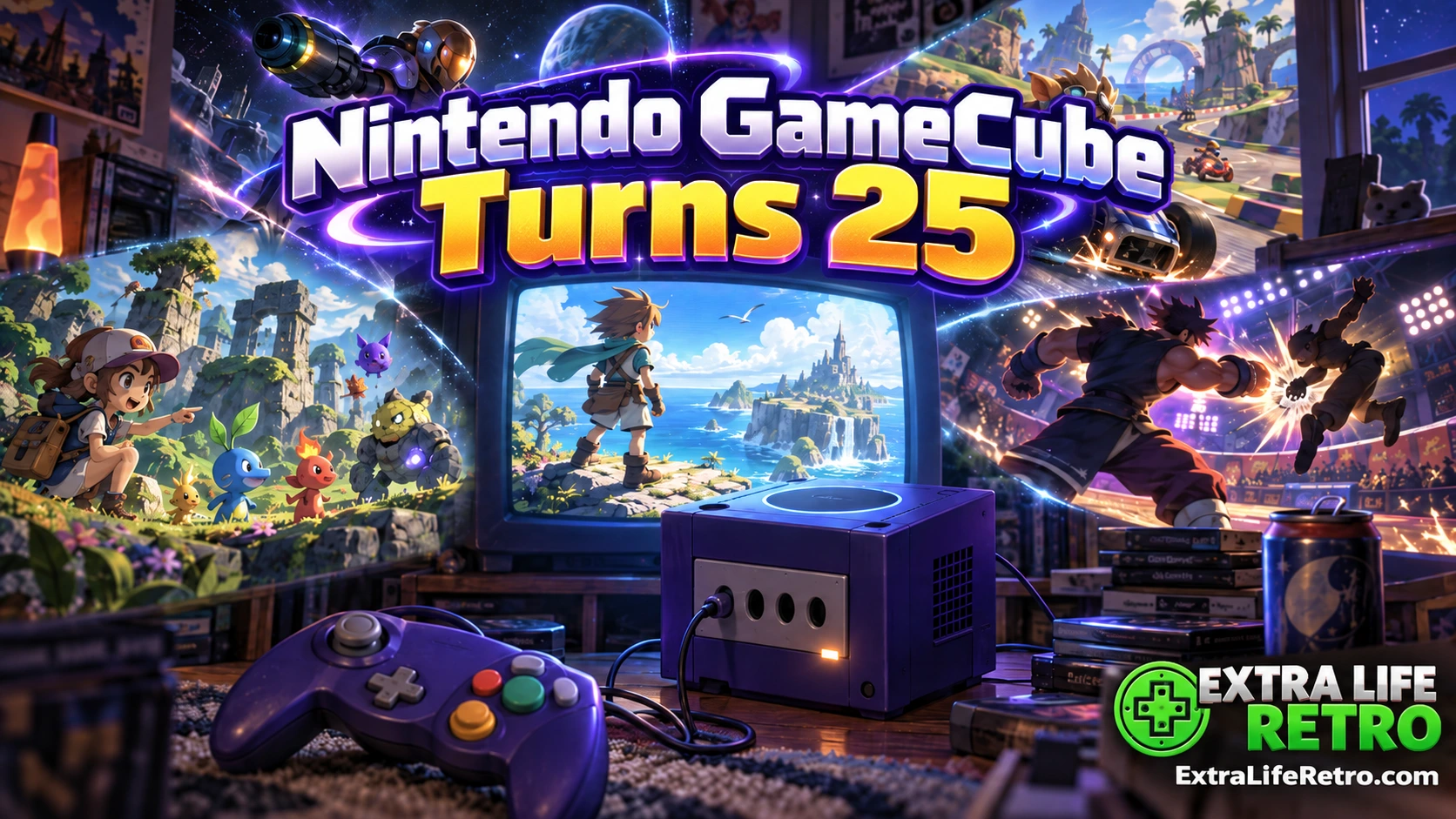
Posted on September 14, 2026
Nintendo GameCube Turns 25: The Little Purple Console That Refused to Play It Safe
Twenty-five years after its Japanese debut, Nintendo’s compact sixth-generation console remains one of the most distinctive machines the company ever made.
On September 14, 2001, the Nintendo GameCube launched in Japan, which means Nintendo’s little purple box officially turns 25 years old today. North American players would get the console on November 18, 2001, while Europe followed on May 3, 2002.
And somehow, 25 years later, the GameCube feels less like an old console than a wonderfully strange artifact from a moment when Nintendo seemed perfectly comfortable doing things its own way.
Read More
Posted on September 11, 2026
25 Retro Shooters That Still Test Your Reflexes And Your Nerves
From arcade cabinets that ate quarters to cartridge-era shooters that punished one bad jump, these games can still make your thumbs sweat decades later. There is a particular kind of tension that only great retro shooters seem to produce.
The screen fills with enemies. Something starts blinking. Bullets arrive from three directions at once. Your brain knows there is probably a safe route through the chaos, but your hands have about half a second to find it.
And then you die.
One more try.
Read More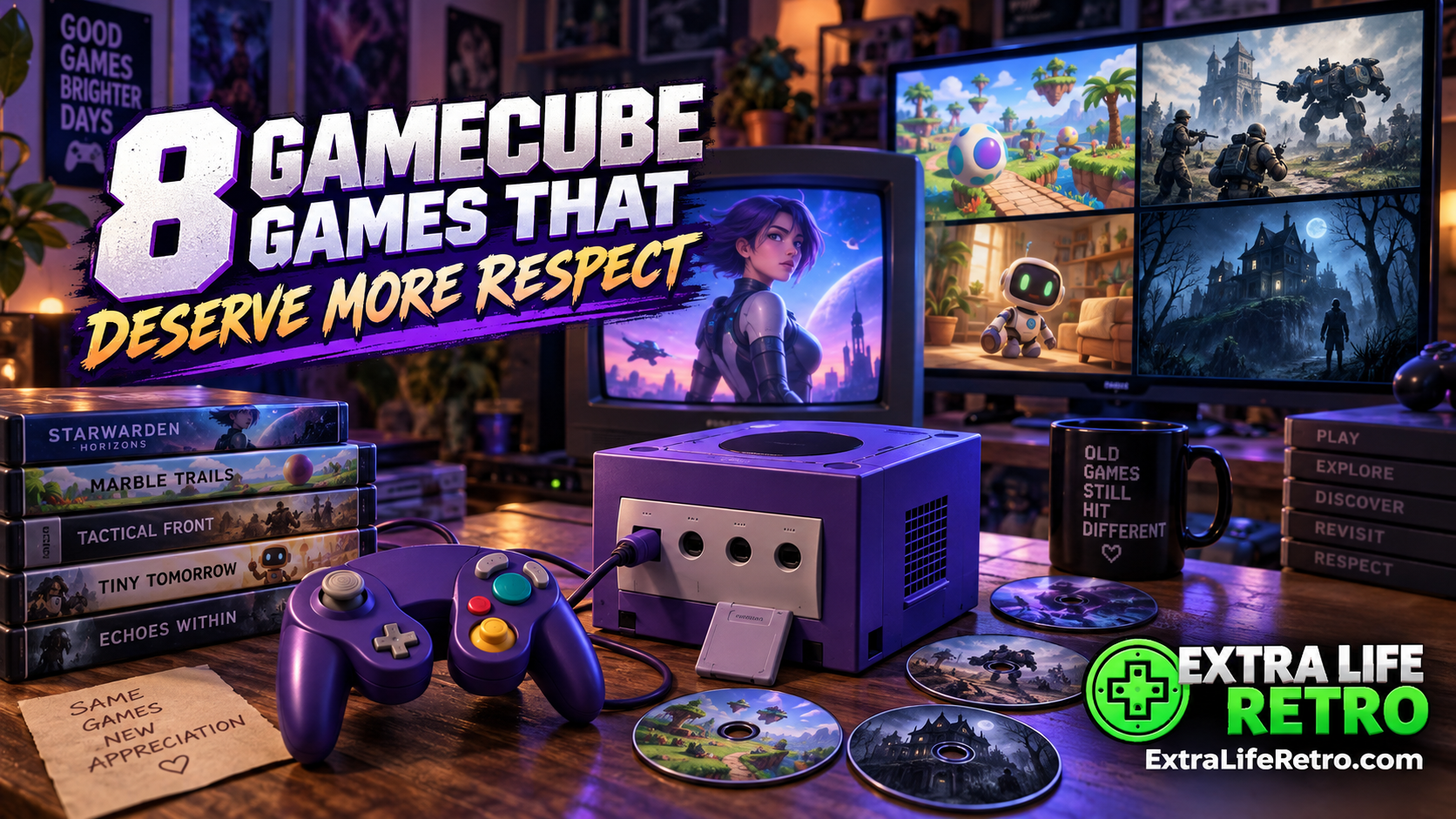
Posted on September 5, 2026
8 GameCube Games That Deserve More Respect
The GameCube had plenty of legends. These are the games that deserve a little more room beside them.
The Nintendo GameCube has one of those libraries where the biggest names can swallow the entire conversation.
Mention the little purple lunchbox and everybody immediately starts firing off Super Smash Bros. Melee, Metroid Prime, The Legend of Zelda: The Wind Waker, Resident Evil 4, Mario Kart: Double Dash!!, and Super Mario Sunshine.
Fair enough. Those games earned their reputations.
But some of the most interesting underrated GameCube games lived farther down the rental-store shelf. They were the games you discovered because your first choice was already checked out, because the box art looked strange enough to gamble a weekend on, or because somebody at school insisted, “No, seriously, you have to try this.”
Read More
Posted on September 2, 2026
Strider NES: The Weird, Ambitious Capcom Adventure That Refused to Play It Safe
Strider on NES wasn’t the arcade game squeezed onto a cartridge. It was stranger than that—and in some ways, far more interesting.
Before Strider Hiryu became the impossibly cool, blade-swinging acrobat many players remember from arcades and the Sega Genesis, there was another Strider waiting on the NES.
And this one was weird.
You still had Hiryu. You still had the futuristic ninja gear, the razor-fast Cypher blade, secret organizations, exotic locations, and enough late-’80s sci-fi intrigue to make the cartridge feel dangerous before you even pressed Start. But instead of simply running from left to right and carving through everything in sight, Strider NES asked you to investigate. Explore. Find disks. Return to your orbital headquarters. Unlock destinations. Gain abilities. Backtrack. Figure out where the heck you were supposed to go next.
Read More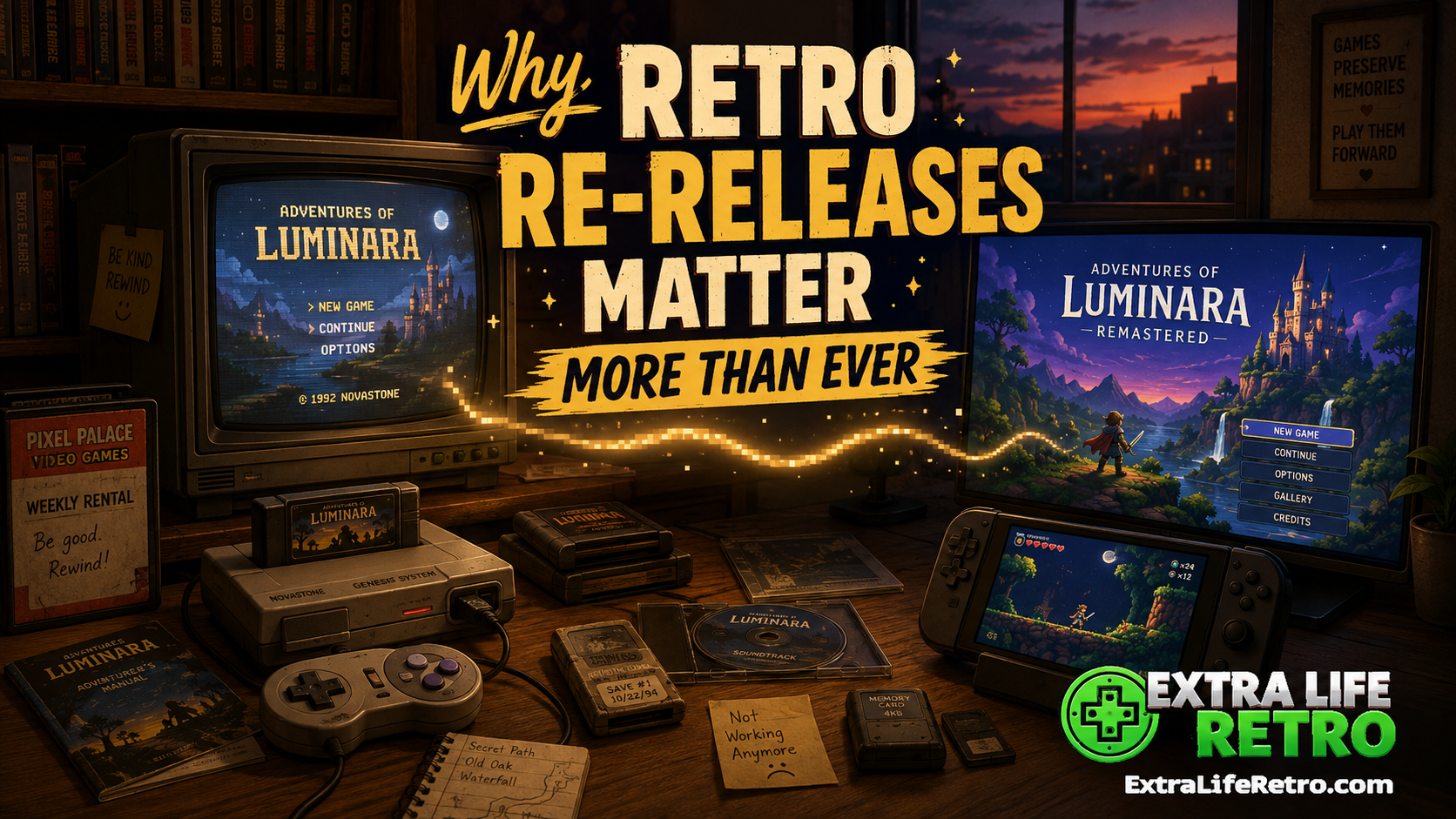
Posted on September 1, 2026
Why Retro Game Re-Releases Matter More Than Ever
The games we grew up with shouldn’t become museum pieces we can remember, collect, and watch—but no longer easily play.
There was a time when rediscovering an old game could happen almost by accident.
Maybe you spotted a familiar PlayStation jewel case buried in the used section of a game store. Maybe a friend showed up with a cartridge you hadn’t seen since elementary school. Maybe you found an old memory card in a drawer, plugged it in, and suddenly there were save files carrying dates from another chapter of your life.
Those little rediscoveries felt almost magical.
Today, they’re getting harder.
Original consoles are aging. Optical drives fail. Batteries inside cartridges eventually die. Discs get scratched or develop problems. Once-common games become expensive collectibles. Digital storefronts disappear. Licensing agreements expire. Entire libraries remain trapped on hardware that hasn’t been manufactured in decades.
That’s why retro game re-releases matter more now than they ever have.
Read More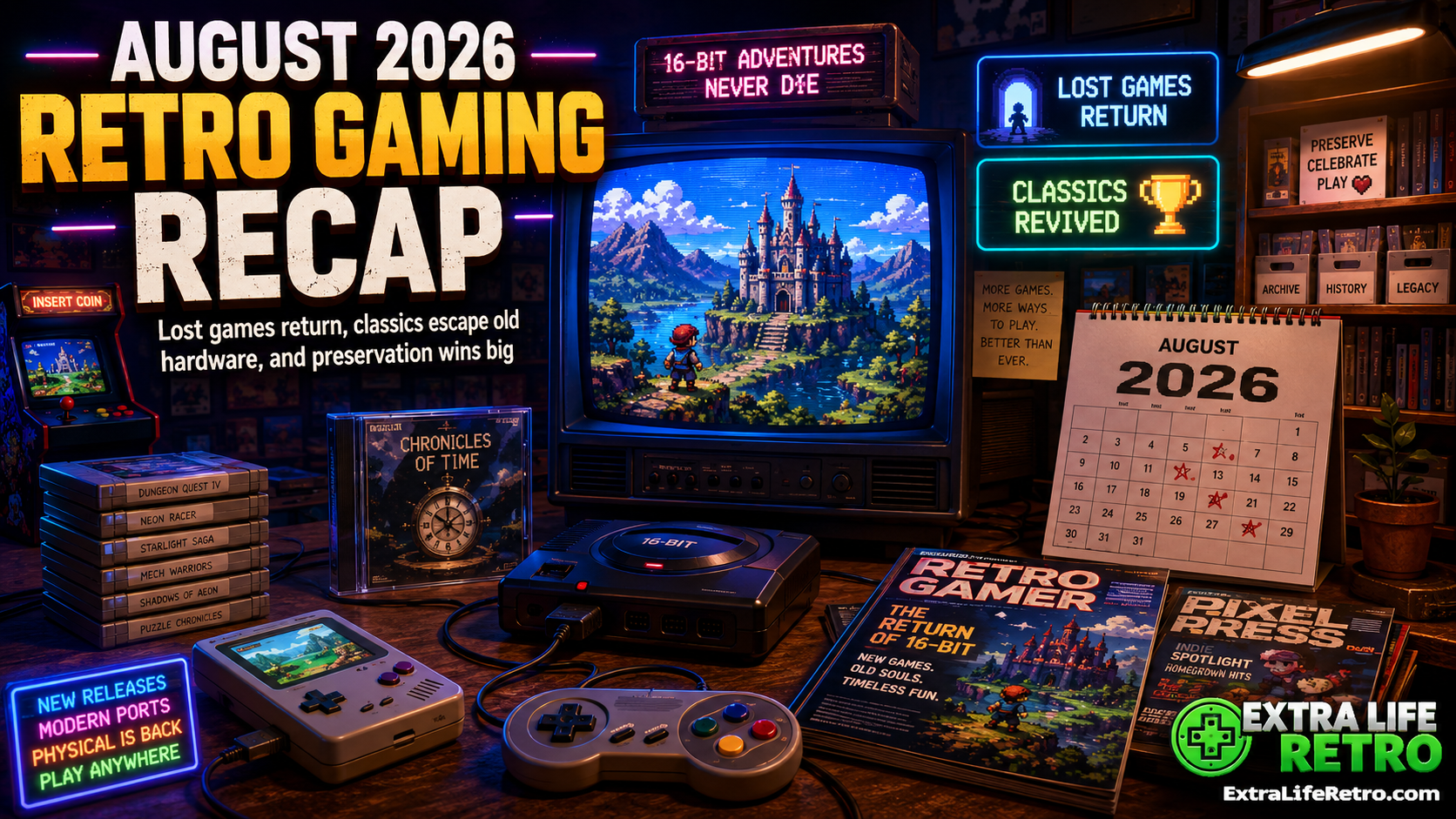
Posted on August 31, 2026
August 2026 Retro Gaming Recap: Lost Games Return, Classics Escape Old Hardware, and Preservation Wins Big
From unreleased Virtual Boy games finally seeing daylight to Terranigma reaching North America and Metal Gear Solid 4 escaping the PS3, August was a remarkable month for making gaming history playable again.
August 2026 was a very good month to be a retro gaming fan — especially if you care about actually playing old games instead of simply admiring them from behind glass.
Read More
Posted on August 29, 2026
CRT TVs Are Still Retro Gaming Royalty — But Are They Still Practical in 2026?
Old tube televisions still offer something modern displays struggle to duplicate. The question is whether that authentic experience is worth the space, weight, aging hardware, and growing hassle.
There is something almost magical about plugging an original Super Nintendo, Sega Genesis, PlayStation, or Nintendo 64 into a CRT TV for retro gaming and seeing everything suddenly look… right.
The pixels soften into one another. Sprites gain texture. Composite video stops looking like a technical deficiency and starts looking like part of the artwork. Movement feels immediate. Even the slight glow of the screen can transport you back to bedrooms, rental-store weekends, and late-night gaming sessions when nobody knew the television itself would someday become collectible hardware.
Retro gamers haven’t forgotten that experience.
But in 2026, there’s a harder question worth asking: Is owning a CRT still practical?
Read More
Posted on August 28, 2026
10 Nintendo 64 Multiplayer Games That Are Sleepover Classics
Four controller ports. One glowing CRT. A floor covered in snack wrappers. These are the best N64 multiplayer games for recreating the glorious chaos of a late-’90s sleepover.
Some of the best N64 multiplayer games weren’t memorable because they had enormous campaigns or revolutionary graphics. They were memorable because four controllers, one television, and a room full of friends could somehow consume an entire Friday night.
The Nintendo 64 was practically engineered for this.
No multitap was required. No online account. No matchmaking lobby. You plugged controllers directly into those four ports on the front of the console, slid a cartridge into the system, and suddenly the living room became an arcade.
Read More


Leave a Comment
Posted on September 8, 2026
Why 16-Bit Pixel Art Still Looks Timeless
by Big Willie Retro
There is something about the glow of a 16-bit game on a dark screen that still feels like an invitation.
Maybe it’s the deep blue night surrounding Dracula’s castle in Super Castlevania IV. Maybe it’s Sonic tearing through the checkerboard hills and waterfalls of Emerald Hill Zone. Maybe it’s Samus standing alone beneath the rain on Zebes, or the tiny windows glowing against the nighttime skyline of Final Fantasy VI.
None of these images are remotely photorealistic.
They aren’t supposed to be.
And somehow, more than three decades after the Super Nintendo and Sega Genesis defined an era, the best 16-bit pixel art hasn’t simply survived. It still looks beautiful.
Read More