Posted on June 10, 2026
F-Zero Review: The Blistering Racer That Can’t Slow Down
Disclosure: Some of the links in this post are affiliate links. This means if you click on the link and purchase an item, we will receive an affiliate commission at no extra cost to you. All opinions remain my own. I only recommend products or services I believe will add value to my readers.
Before Captain Falcon became a meme machine, F-Zero made him the face of futuristic speed.
There are some Super Nintendo games that politely introduce you to 16-bit gaming.
F-Zero does not politely introduce anything.
It grabs you by the collar, drops you into Mute City, throws a futuristic hover machine under your thumbs, and says, “Try not to explode.”
For a game released at the very beginning of the Super Nintendo era, F-Zero still has that “new hardware smell.” It feels like Nintendo showing off, but in the best possible way. Not with a tech demo that only impresses programmers, but with a real game that made kids lean closer to the TV and say, “Wait… how is the track moving like that?”
F-Zero was developed and published by Nintendo for the Super Nintendo, with its Japanese release arriving alongside the Super Famicom in 1990. It later reached North America in 1991 and Europe in 1992. Nintendo’s own SNES Classic developer interview describes it as a futuristic racing game where players speed through courses at more than 400 kilometers per hour, and that is still exactly the right energy.
This was not just another racing game. This was Nintendo taking the new console’s Mode 7 scaling effects and turning them into a whole attitude.
At a Glance
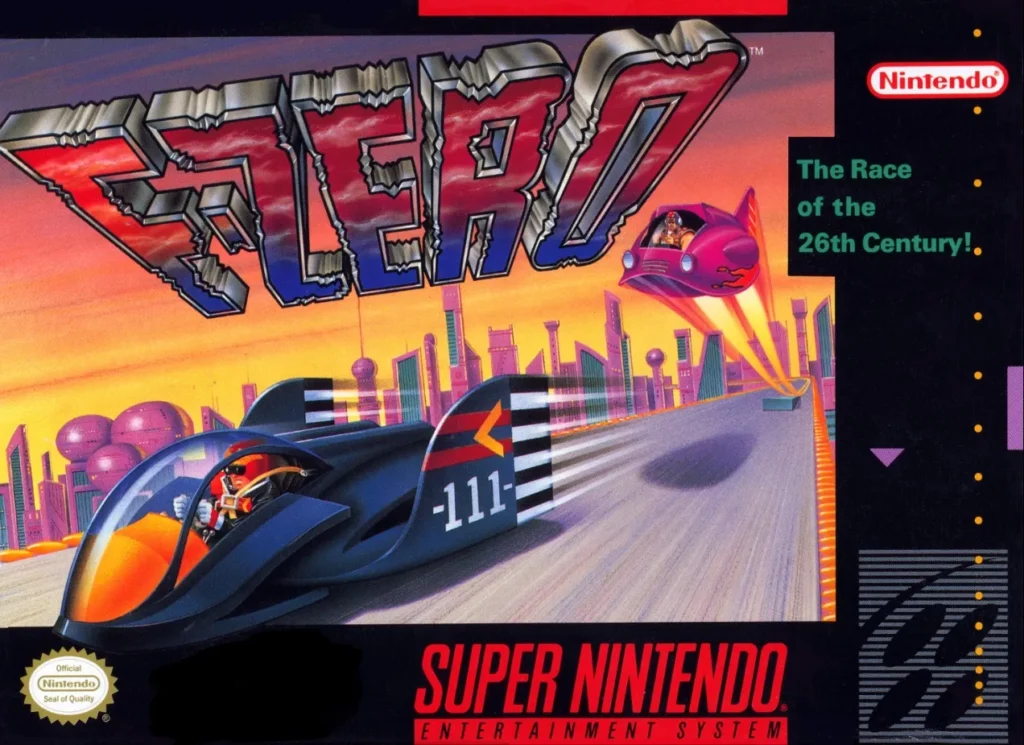
Platform: Super Nintendo Entertainment System
Released: 1990 in Japan, 1991 in North America, 1992 in Europe
Developer: Nintendo EAD
Publisher: Nintendo
Genre: Futuristic racing
Vibe: Neon hovercraft, dangerous curves, screaming synth-rock energy, and that early Super Nintendo magic where the whole screen felt like it was flying.
You’ll Love It If: You enjoy arcade-style racing, clean mechanics, track memorization, and 16-bit games that still have a strong sense of identity.
Maybe Skip If: You need multiplayer racing or modern assists to enjoy old-school speed.
Best Way to Play: Nintendo Switch Online is currently the easiest official modern option, with F-Zero included in the Super Nintendo Nintendo Classics library.
Collector Note: The original SNES cartridge is usually not one of the most punishing retro purchases, but prices move around. Recent PriceCharting data places loose SNES copies around the lower collector range, while boxed/complete copies cost more.
The Original Era: When the Super Nintendo Felt Like the Future
To understand why F-Zero mattered, you have to remember where racing games were when it landed.
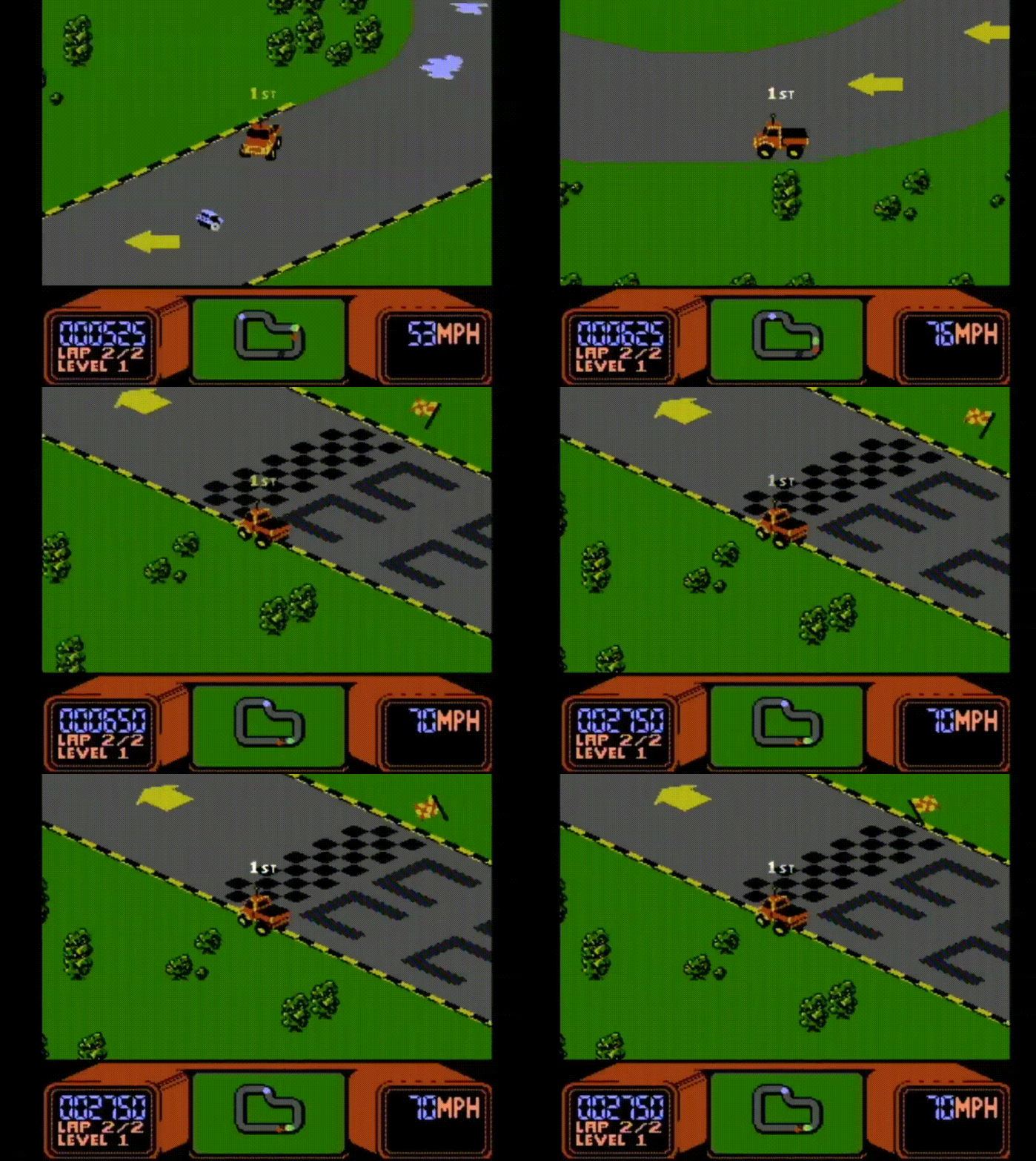
The NES had fun racers, sure. Excitebike, R.C. Pro-Am, Rad Racer and similar games like them had their place. But F-Zero felt like a different machine entirely. The track did not just scroll. It warped, rotated, twisted, and stretched beneath you like the TV had learned a new trick overnight.
That mattered in 1990 and 1991.
This was the era when screenshots in magazines still sold imagination. A single page of F-Zero could make the Super Nintendo feel like a giant leap forward. You could look at Mute City, Big Blue, and Port Town and instantly understand that Nintendo was not merely updating the NES. It was opening a new door.
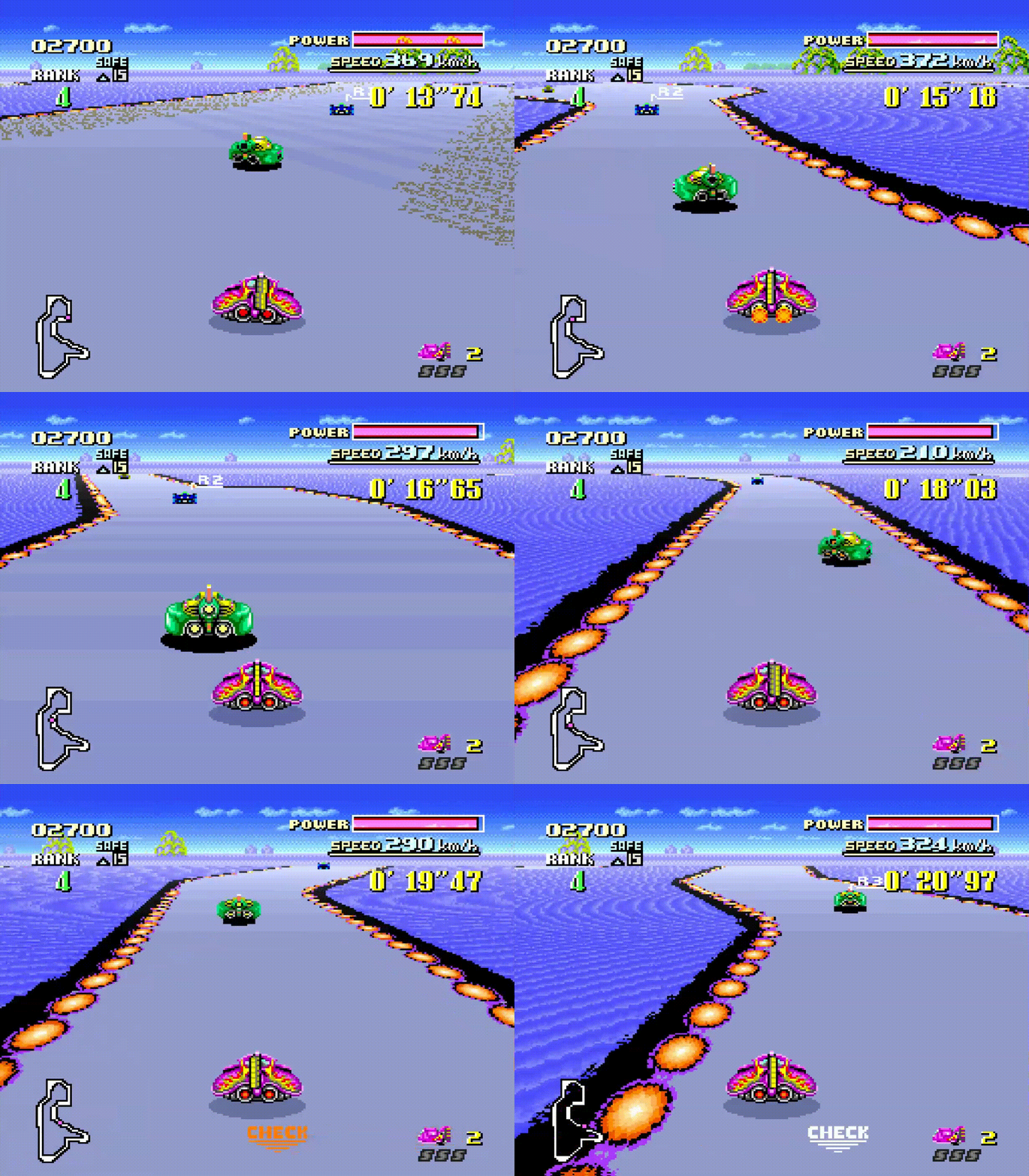
And F-Zero had style. Not cute mascot racing. Not realistic racing. Not arcade cabinet imitation. This was comic-book sci-fi racing with hovercars, dangerous pilots, electric barriers, wild track hazards, and music that sounded like the future had a guitar solo.
Before most players knew anything meaningful about Captain Falcon, he already looked important. The manual art, the character portraits, the vehicle names — Blue Falcon, Golden Fox, Wild Goose, Fire Stingray — all of it gave the game a bigger world than the cartridge could fully show.
That was part of the magic. The game itself was lean, but the imagination around it felt huge.
Gameplay: The Part Your Hands Remember
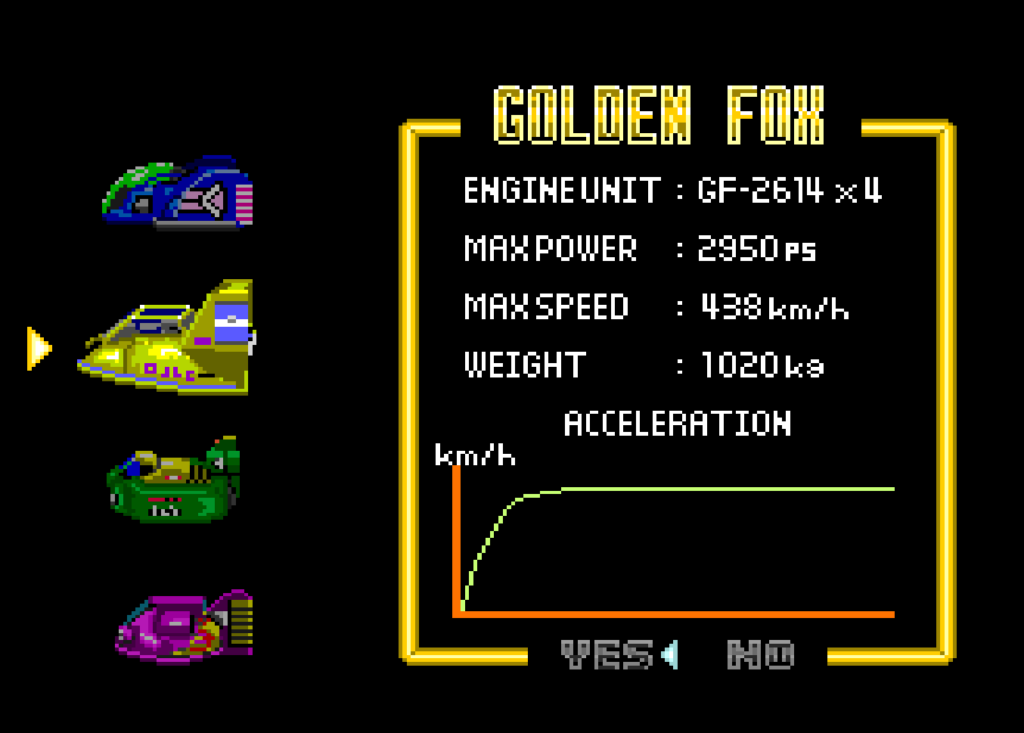
F-Zero is beautifully simple on the surface. Pick one of four machines, choose a league, survive the track, finish high enough to keep going.
That’s it.
But the magic is in the handling.
Each machine has its own personality. The Blue Falcon is the balanced all-rounder. The Golden Fox accelerates quickly but can feel fragile. The Wild Goose can take punishment but does not feel as nimble. The Fire Stingray is fast and heavy, the kind of machine that rewards players who already know the corners before they arrive.
The racing is not really about bumping rivals out of the way or collecting a pile of items. It is about rhythm, racing lines, boost timing, and staying calm when the screen looks like it is moving faster than your brain.
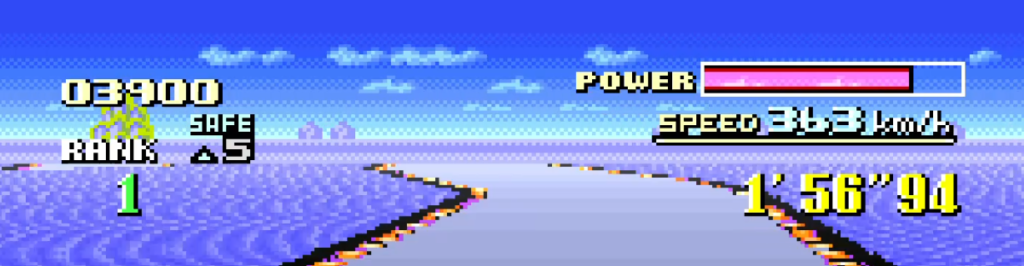
F-Zero uses an energy meter instead of a traditional health bar. Smack into barriers, mines, or rival vehicles too much and your machine detonates. That one idea gives the game a sharp edge. Every mistake matters. Every rough turn makes the next section more dangerous. You are not just trying to win. You are trying to survive with enough energy left to avoid becoming futuristic scrap metal.
The controls are still responsive, but they demand respect. You can nudge into turns, use the shoulder buttons to lean into corners, and gradually learn how to thread through narrow sections without scraping the guardrails. Once the game clicks, it has that classic Nintendo “one more run” feeling.
The learning curve is friendly at first, then quietly ruthless. Early races let you feel powerful. Later tracks remind you that confidence and carelessness are not the same thing.
Graphics: Mode 7 With Swagger
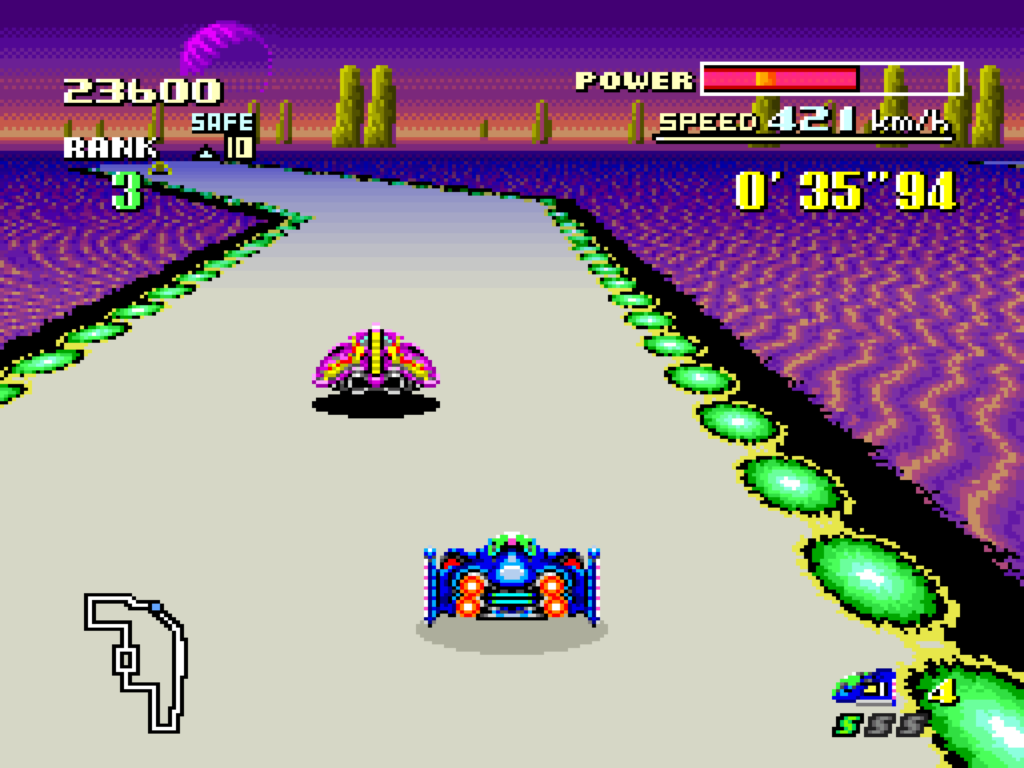
F-Zero’s visuals are impossible to separate from the Super Nintendo’s early identity.
The game’s track rotation and scaling were a showpiece for Mode 7, and even now, there is something charming about how boldly it presents itself. The courses are flat by modern standards, but they do not feel empty. They feel clean, readable, and fast.
Mute City has that perfect early-90s sci-fi glow. Big Blue feels wide open and breezy. Death Wind has the kind of nasty environmental gimmick that makes you immediately understand the track’s name. Fire Field feels like the game taking off the gloves.
The cars themselves are small, but memorable. The color coding, vehicle silhouettes, and cockpit-like HUD help each race feel readable, which matters when the game is moving at full speed.
No, it does not look like a modern racer. That is not the point. F-Zero still has visual identity. It looks like a 16-bit future drawn by people who understood speed, danger, and color.
Sound and Music: Mute City Still Hits
Let’s be honest: a huge part of F-Zero’s staying power lives in its music.
Mute City is one of those themes that feels permanently wired into Nintendo history. Big Blue is right there with it. These tracks do not merely sit in the background. They push the race forward. They make the game feel louder and faster than the SNES should reasonably allow.
The sound effects are simple but effective: engine hum, barrier hits, explosions, checkpoint sounds, and that rising tension when your energy gets low. It all works because the game knows exactly what it wants to be.
Fast. Dangerous. Cool.
The music gives F-Zero its swagger. Without it, the game would still be historically important. With it, the game becomes unforgettable.
Story: Thin Plot, Big Imagination
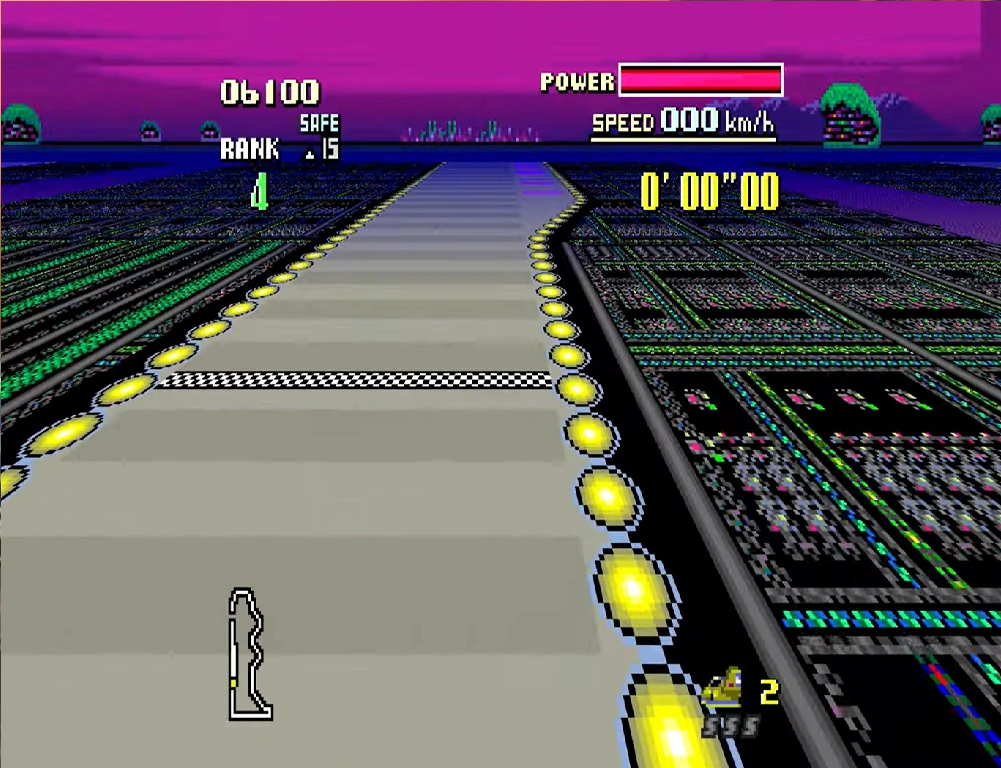
F-Zero does not tell a story in the modern sense. There are no cutscenes between races, no dramatic rival monologues, no career mode where Captain Falcon learns the value of friendship.
But that does not mean the game has no world.
The premise is simple: in the 26th century, the ultra-rich have created a new high-speed entertainment spectacle inspired by Formula One. The racers are larger-than-life characters, and the machines are absurdly dangerous.
That is enough.
F-Zero belongs to that wonderful retro category where the manual, box art, character portraits, and music do half the storytelling. The game gives you just enough to imagine the rest. Captain Falcon was not fully formed in the way later Smash Bros. fans would know him, but the ingredients were already there: bounty hunter energy, sci-fi racing fame, comic-book confidence, and a vehicle that looked like it belonged on a poster.
Sometimes old games did not need more story. They needed a strong hook and room for your imagination to run wild.
The Culture Around It: Rental Weekends, Magazine Screenshots, and SNES Bragging Rights
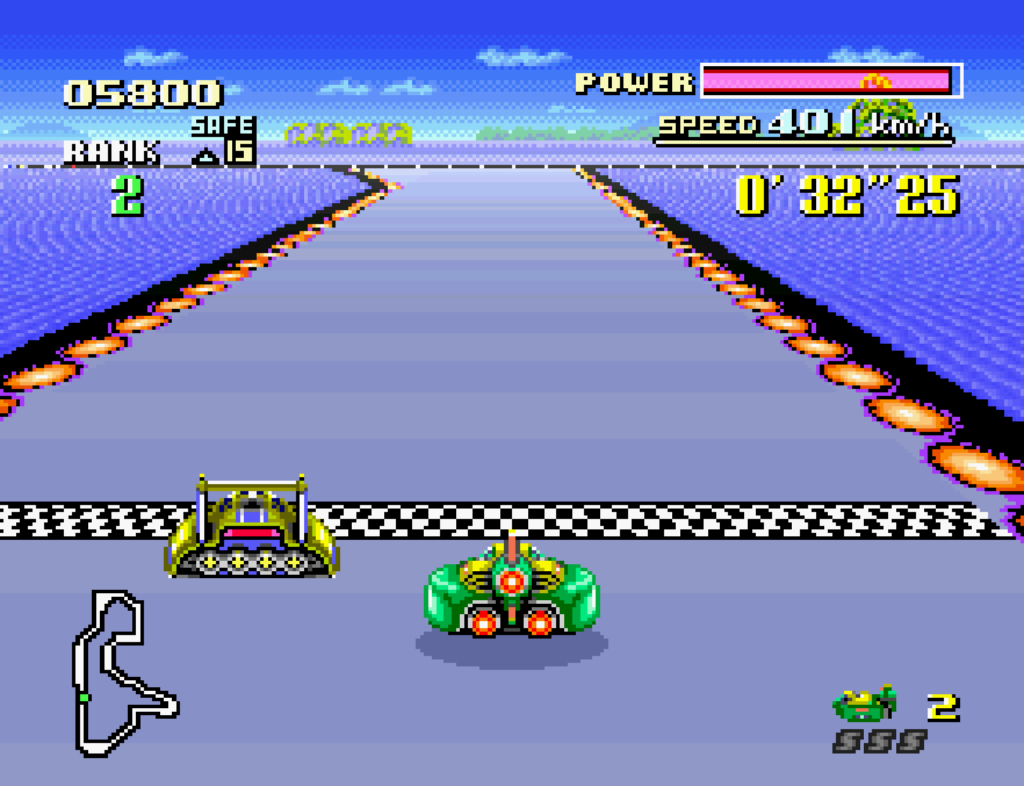
F-Zero was the kind of game that helped sell the Super Nintendo dream.
It looked great in magazines. It moved beautifully in store demos. It made the console feel powerful in a way that was easy to understand. You did not need a technical explanation of scaling and rotation. You just needed to see the track bend under the hovercar.
For players discovering it in the early 90s, F-Zero was also a perfect rental game. You could understand the basics quickly, race with friends taking turns, argue over which machine was best, and slowly realize the game had more bite than expected.
The lack of multiplayer is the one strange absence that modern players notice quickly, especially because Super Mario Kart would later make split-screen SNES racing feel essential. But F-Zero still had a social life. It was a score-chasing, turn-swapping, “let me try that track again” kind of game. The competition came from the couch, even if the cartridge itself only supported one player.
And among Nintendo fans, F-Zero became one of those early SNES identity games. It represented speed. Pilotwings represented the new 3D-like playground. Super Mario World represented polish and charm. F-Zero represented the future screaming past your face.
The Rough Edges: Fast, Fair… Until It Isn’t
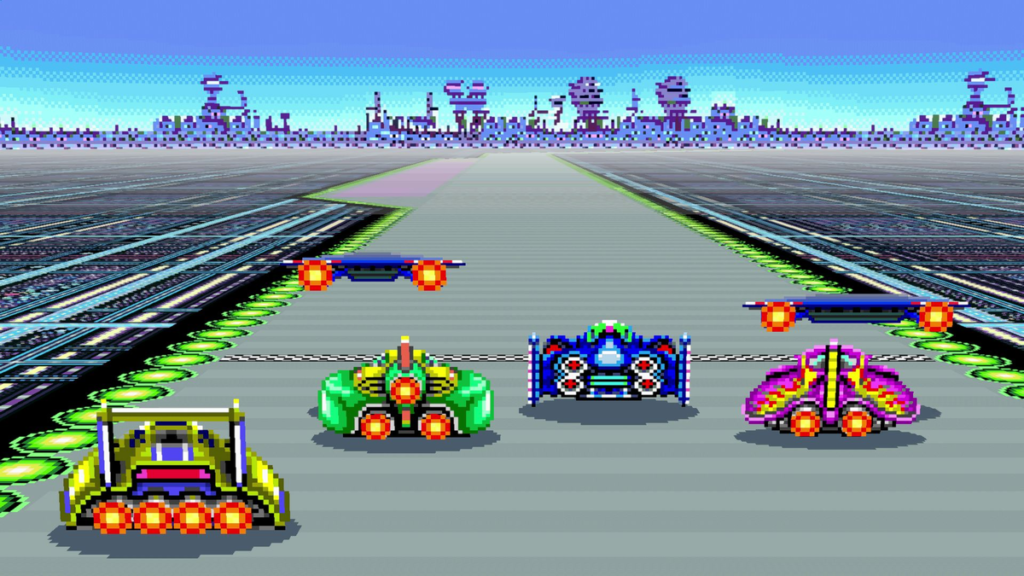
F-Zero is still a blast, but it is not perfect.
The biggest disappointment is obvious: no two-player mode. For a racing game, that hurts. The single-player design is strong enough to survive without it, but there is no getting around the fact that couch competition would have made this cartridge even more legendary.
The difficulty can also get mean. Rival vehicles sometimes feel less like racers and more like moving hazards programmed to ruin your day. Later courses require memorization, and some track hazards are brutal if you are not prepared. New players may bounce off once the game stops being a flashy speed showcase and starts demanding precision.
There is also not a huge amount of content by modern standards. You get leagues, tracks, vehicles, and difficulty levels, but not the mountain of modes that later racing games would normalize.
Still, these flaws do not sink the experience. They just define what kind of retro game this is. F-Zero is lean, focused, and a little unforgiving. It is not trying to be your forever racing platform. It is trying to give you a white-knuckle futuristic Grand Prix, and it does that extremely well.
Best Way to Play Today
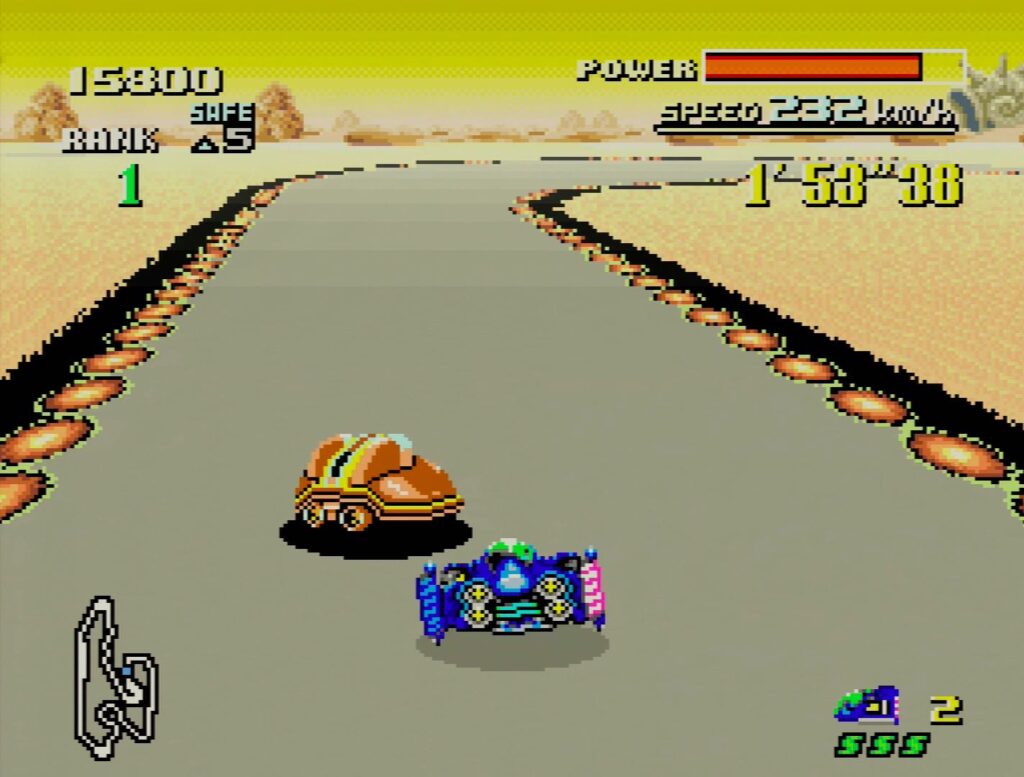
For most players, the easiest official way to revisit F-Zero today is through Nintendo Switch Online, where it is included in the Super Nintendo Nintendo Classics library. Nintendo’s current listing includes F-Zero among the available SNES titles, and the collection supports play on Switch and Switch 2 with a membership.
The Super NES Classic Edition is another nice official option if you already own one, since F-Zero was included there too.
For the full nostalgia hit, original SNES hardware with the original cartridge still feels wonderful, especially with a proper CRT or a good modern HDMI setup. But casual players do not need to chase hardware unless they specifically enjoy collecting. The cartridge is generally more approachable than many high-demand SNES games, but boxed and complete copies can climb quickly. PriceCharting recently showed loose SNES copies around the lower end of retro pricing, with boxed/complete copies higher, so check current sold listings before buying.
A good SNES-style controller also helps. Nintendo currently sells a wireless Super Nintendo Entertainment System controller for Nintendo Switch Online members, and Nintendo notes that it can be used for classic SNES games in the Nintendo Classics library, though it is optional.
Simple recommendation:
Play it on Nintendo Switch Online first. If the music, speed, and track design grab you, then consider an original cartridge for the shelf.
Modern Revisit: What New Players Should Expect
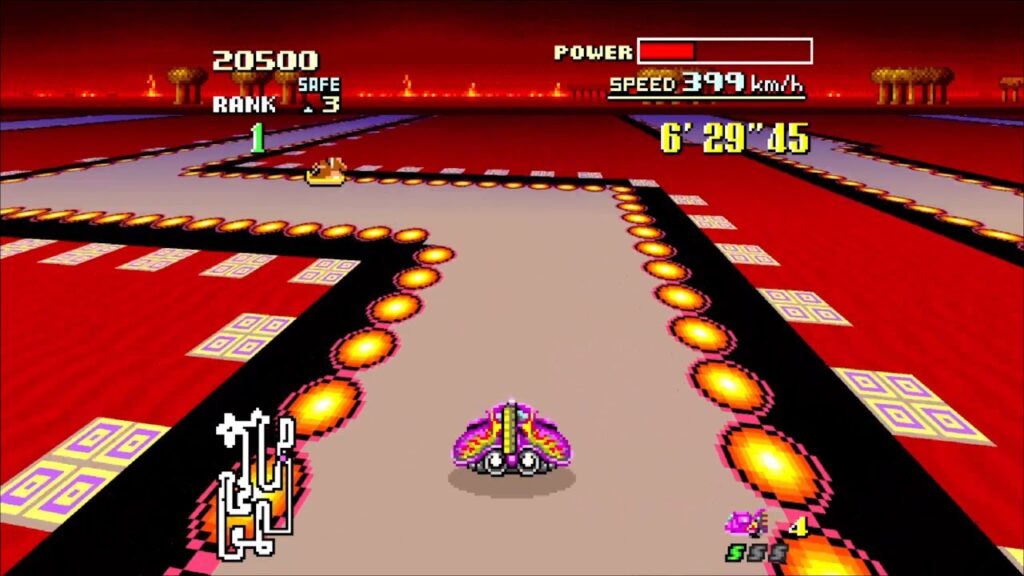
If you are coming to F-Zero fresh, expect speed and simplicity, not feature overload.
There is no career mode. No garage customization. No online leaderboard built into the original SNES experience. No modern cinematic presentation.
What you get instead is pure arcade racing discipline. Pick a machine. Learn the track. Survive the pack. Try again. Get better.
The game still feels great because the core loop is clean. The shoulder-button turning, energy management, boost timing, and course memorization all give your hands something to learn. The more you play, the more the tracks stop feeling chaotic and start feeling musical.
New players may need patience with the difficulty and the single-player-only structure. Nostalgia definitely adds warmth, but it is not required. F-Zero still communicates its appeal quickly: speed, danger, music, and the thrill of barely making it across the finish line with your machine sparking.
That feeling has not expired.
Why F-Zero Still Matters
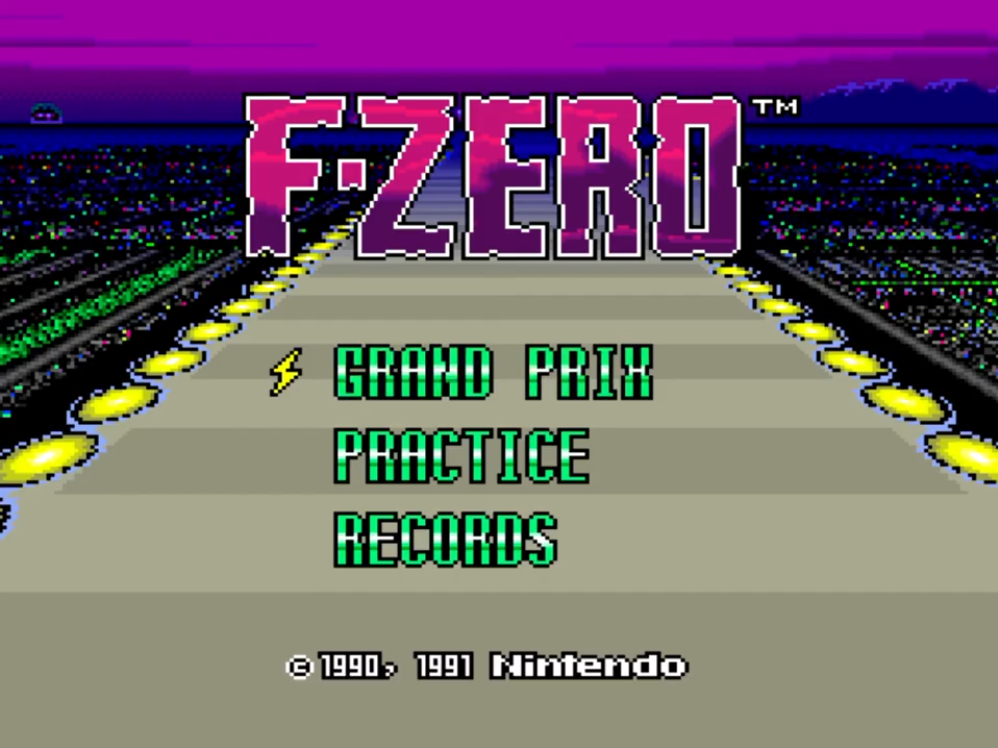
F-Zero matters because it captured a moment when Nintendo hardware felt like a doorway into tomorrow.
It helped define the Super Nintendo’s early personality. It showed off Mode 7 in a way that was not just impressive, but fun. It introduced a world that would later grow into one of Nintendo’s most beloved cult franchises. And it gave players music, tracks, and characters that still echo through Nintendo culture decades later.
It also reminds us that a game does not need endless systems to be memorable. Sometimes all it takes is a strong idea executed with confidence.
A hovercar.
A dangerous track.
A killer song.
One more race.
That is F-Zero.
Final Takeaway
F-Zero is still worth playing because it preserves a very specific kind of retro gaming memory: the moment when the Super Nintendo felt impossibly fast, impossibly bright, and just a little dangerous.
Collectors will appreciate it as an early SNES cornerstone. Nintendo fans should revisit it to understand where Captain Falcon and one of Nintendo’s coolest dormant franchises began. New players should try it for the speed, the music, and the clean arcade challenge.
It is not the biggest racing game. It is not the most feature-packed. It is not even the best multiplayer racing memory on the Super Nintendo, because it does not have multiplayer at all.
But F-Zero still has that spark.
It feels like Nintendo flooring the gas pedal at the start of the 16-bit era and daring everyone else to keep up.