Posted on September 25, 2026
7 Retro Games That Would Be Perfect for a Modern Indie Revival
Disclosure: Some of the links in this post are affiliate links. As an Amazon Associate we earn from qualifying purchases. This means if you click on the link and purchase an item, we will receive an affiliate commission at no extra cost to you. All opinions remain our own. We only recommend products or services we believe will add value to our readers.
Some forgotten classics do not need $100 million remakes. They just need the right developer, a sharp idea, and another life.
There is something wonderfully appropriate about the indie scene becoming a retirement home — or maybe a resurrection chamber — for old video game ideas.
Modern independent developers have already proved that you do not need photorealistic graphics, a 40-hour campaign, six skill trees and an open world full of map markers to make something memorable. Sometimes you need one great mechanic, a killer art style and enough confidence to build an entire game around them.
That is exactly why some retro games that deserve a comeback feel better suited to indie-scale revivals than enormous AAA reboots.
We are not simply picking seven famous games that have been gone for a while. These choices were ranked according to how distinctive their original gameplay remains, how naturally the concept could evolve using modern indie design, and how much room there is to expand the idea without sanding away what made it special.
The countdown starts with seven.
7. General Chaos
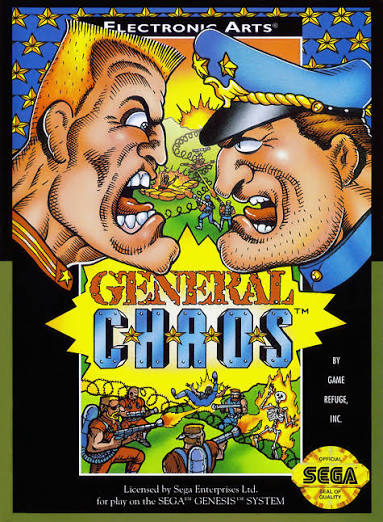
Platform: Sega Genesis
Released: 1994
Developer: Game Refuge
Publisher: Electronic Arts
There are strategy games, action games, party games and competitive multiplayer games.
General Chaos somehow managed to shove pieces of all four onto a Genesis cartridge.
The premise was appropriately ridiculous. General Chaos and General Havoc were fighting a cartoon war for control of a battlefield, with players directing small squads armed with machine guns, flamethrowers, grenades, bazookas and dynamite. Rather than feeling like a traditional strategy game, battles unfolded as frantic little skirmishes in which positioning mattered right up until everything descended into explosions and fistfights.
The original even supported up to four players, including cooperative and head-to-head play.

That mixture feels almost absurdly well suited to the modern indie scene.
Imagine the basic General Chaos formula with destructible battlefields, additional squad classes, environmental hazards, couch multiplayer, online co-op and matches designed to last ten or fifteen minutes. Keep the exaggerated military satire. Keep the little soldiers scrambling across the battlefield. Keep the sense that a carefully arranged tactical plan is always about five seconds away from becoming complete nonsense.
Most importantly, do not turn it into a sprawling real-time strategy game.
Its charm came from compressing strategy until it became immediate and slightly chaotic. A modern revival could sit somewhere between a tactics game and a couch-party brawler without needing to become either one completely.
Thirty-two years later, that is still a strangely uncommon combination.
Worth Revisiting If: You like multiplayer games where planning helps but improvisation usually wins.
6. Uniracers
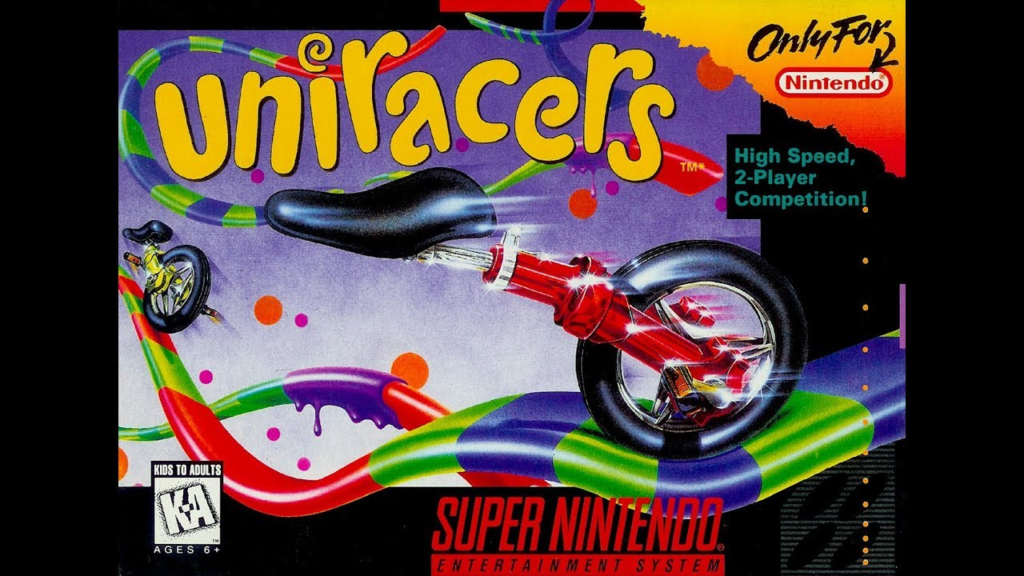
Platform: Super Nintendo
Released: 1994
Developer: DMA Design
Publisher: Nintendo
Try pitching this one today without sounding slightly unhinged:
You race riderless unicycles around enormous 2D tracks, perform flips and spins in midair, and use successful tricks to increase your speed.
That was Uniracers.
And somehow it worked.
The SNES game was extraordinarily fast, with tracks that twisted through loops, jumps, hills and half-pipes while players tried to maintain momentum by chaining stunts together. Races could be played against the clock or another player, while dedicated stunt events emphasized tricks rather than simply reaching the finish line first.
The result felt less like conventional racing and more like someone had transformed the rhythm of a skateboarding game into a side-scrolling sprint.

That is exactly where a modern indie interpretation becomes interesting.
Picture hand-drawn or sharply stylized 2.5D tracks where maintaining speed depends on mastering flips, rotations and landings. Add asynchronous ghost racing. Daily challenge tracks. Four-player races. Online leaderboards. Maybe even a track editor built around creating increasingly ridiculous stunt courses.
No cars required.
There is, however, an enormous historical asterisk. Uniracers became entangled in litigation involving Pixar’s Red’s Dream, after which additional production of the SNES cartridge was halted.
That makes an exact resurrection potentially complicated.
But the idea behind Uniracers — momentum-based racing where tricks literally make you faster — deserves another shot even if a spiritual successor has to change the wheels.
Sometimes the game worth reviving is really the design philosophy hiding underneath it.
5. Metal Warriors

Platform: Super Nintendo
Released: 1995
Developer: LucasArts
Publisher: Konami
A modern indie studio could build an entire game around one mechanic from Metal Warriors:
Getting out of your mech.
That sounds simple until you actually see what LucasArts was doing with it in 1995.
Players controlled several different combat machines with their own weapons and movement styles, but pilots were not permanently trapped inside them. You could eject from one machine, fly around as a vulnerable human-sized pilot, infiltrate parts of a stage and climb into another available mech. The original featured six different battledroids and a two-player versus mode alongside its campaign.
That changes the whole relationship between the player and the machine.
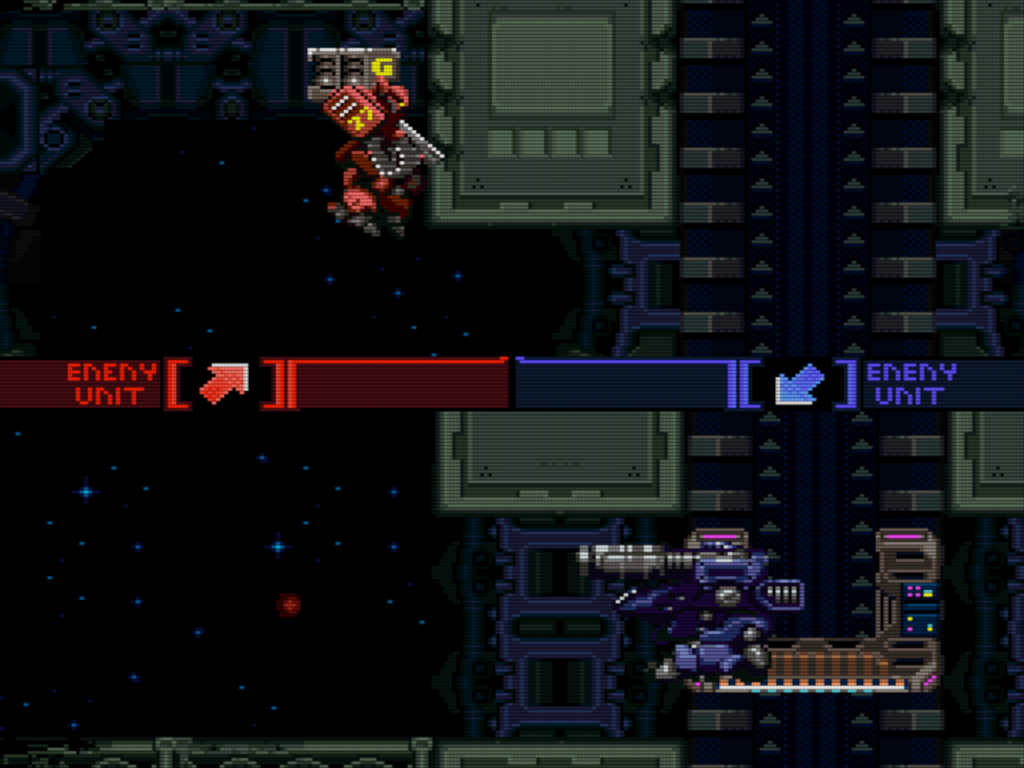
Your mech is powerful.
It is not necessarily you.
Suddenly losing one does not automatically mean losing the fight. An abandoned enemy machine can become an opportunity. Escaping a damaged mech at the last possible second becomes part of the action rather than merely an elaborate death animation.
That concept still has teeth.
A revival could build missions around swapping machines to solve traversal problems, stealing enemy equipment, salvaging damaged units or abandoning a burning mech halfway through a multiplayer fight and desperately trying to capture another one.
And visually? Pixel-art mechs are practically indie-game catnip.
You would not need to transform Metal Warriors into a giant cinematic robot epic. Quite the opposite. Give it gorgeous 2D animation, weighty movement, destructible environments and four-player competitive or cooperative modes.
Then let the machines do the talking.
This is one of those retro games where the most exciting modern feature is already sitting inside the original cartridge.
4. Mischief Makers
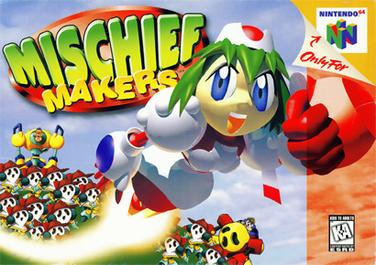
Platform: Nintendo 64
Released: 1997
Developer: Treasure
Publisher: Enix in Japan / Nintendo in Western markets
“Shake, shake!”
For players who know Mischief Makers, two words are enough.
Treasure arrived on the Nintendo 64 in 1997 with something wonderfully out of step with the industry around it. While seemingly everyone else was racing toward polygonal 3D worlds, Mischief Makers remained fundamentally a side-scrolling action-platformer built around grabbing things.
Marina Liteyears could grab enemies, projectiles and objects, shake them, throw them and use them to interact with the environment. Even movement incorporated grabbing, with special points allowing Marina to propel herself around stages.
That grab-shake-throw vocabulary gave the game its identity.
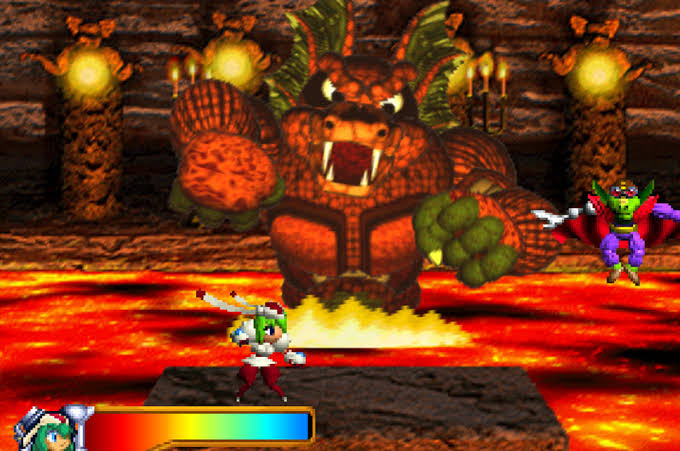
And identity is exactly what a good indie revival needs.
Rather than reinventing Mischief Makers as a 3D action adventure, a new game could lean harder into the original formula: lavish 2D animation, bizarre bosses, physics-driven grabbing puzzles, speed-running challenges and stages designed around discovering increasingly strange applications for Marina’s abilities.
There is also something refreshing about how easily its mechanics can be understood.
Grab something.
Shake it.
Throw it.
The complexity comes from what the designers ask you to do with those three actions.
That philosophy is all over modern indie design — establish a compact mechanical language and then spend the game finding clever new sentences to write with it.
Mischief Makers was already doing that in 1997.
It does not need reinvention nearly as much as it needs rediscovery.
3. Einhänder
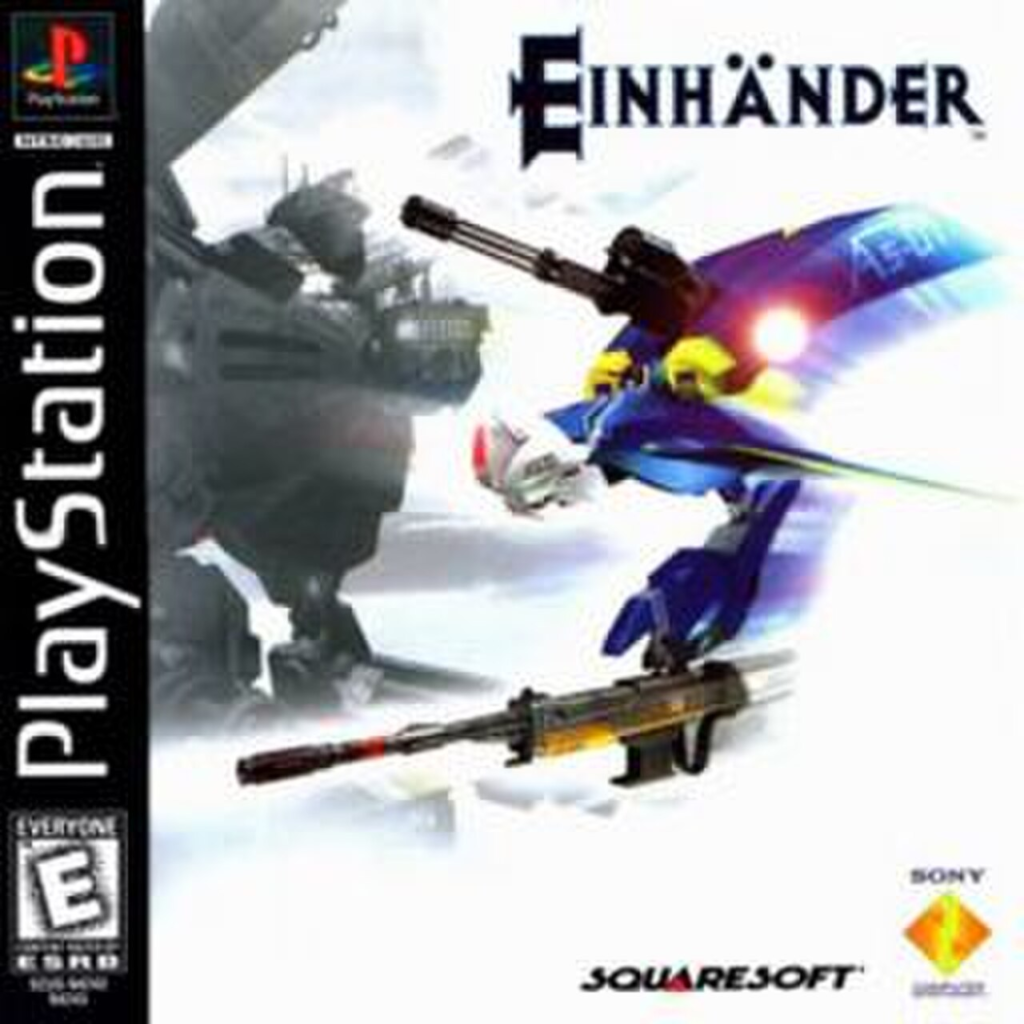
Platform: PlayStation
Released: 1997 in Japan / 1998 in North America
Developer: Square
Square making a futuristic side-scrolling shooter during the PlayStation era already sounds like something recovered from an alternate timeline.
Yet there it is.
Einhänder arrived in Japan in 1997 and North America in 1998, placing players inside experimental spacecraft fighting through a war between Earth and the Moon. Its title refers to a one-handed sword, reflected mechanically in the manipulator arm beneath the player’s craft.
The really memorable part was what that arm could do.
Destroy an enemy carrying useful weaponry and you could grab its gunpod, effectively stealing weapons in the middle of combat. Cannons, missiles, machine guns and other equipment became temporary tools rather than permanent loadout selections.
That creates an addictive combat rhythm:
Shoot.
Survive.
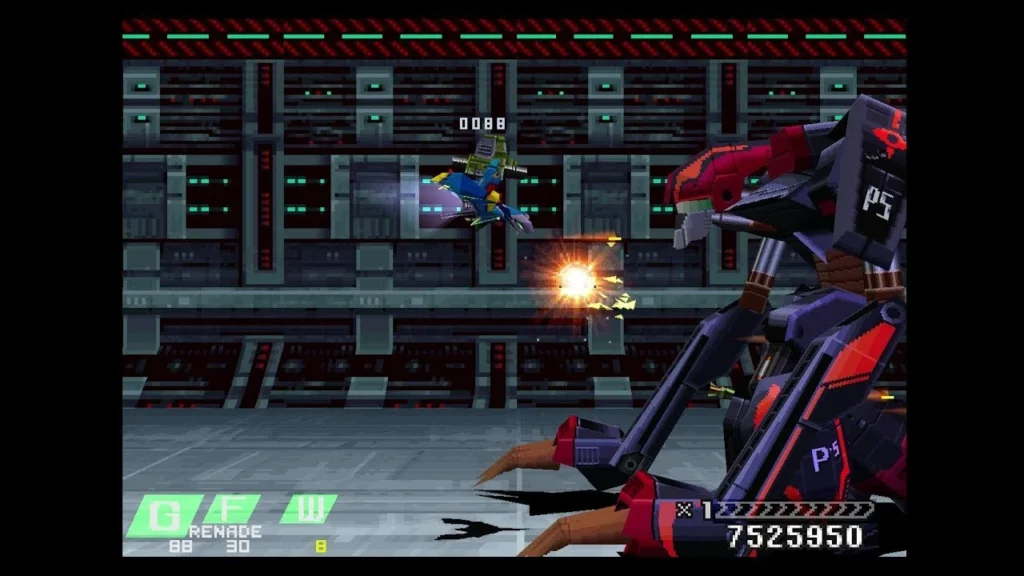
Spot a desirable weapon.
Take it.
Burn through its ammunition.
Find something else.
For a modern indie shooter, that system is practically waiting to be expanded.
Imagine enemy formations deliberately built around weapon acquisition. Branching stages where certain gunpods open alternate routes. Bosses that force you to decide whether to preserve precious ammunition or unload everything immediately. Score systems rewarding risky weapon combinations. Roguelite challenge modes could work too — although the campaign should remain a tightly designed shooter rather than becoming procedurally generated simply because modern games can.
Most importantly, the developers should keep the industrial science-fiction atmosphere.
The original’s mechanical cities, enormous machines and aggressive electronic soundtrack helped Einhänder feel unusually harsh and stylish compared with Square’s better-known RPG output of the era.
Retro shooters are flourishing again.
This one has been sitting on one of the genre’s coolest unused ideas for decades.
2. Blast Corps

Platform: Nintendo 64
Released: 1997
Developer: Rare
Publisher: Nintendo
Most games ask you to save buildings.
Blast Corps handed you heavy machinery and told you to flatten them.
There was a reason.
A vehicle carrying leaking nuclear missiles was moving uncontrollably toward a safe detonation site. Anything standing in its path needed to disappear, meaning the player’s job was essentially to perform emergency urban demolition before the carrier reached the obstruction.
The result was part action game, part puzzle game and part glorious excuse to knock things down.
Players switched between an assortment of vehicles and machines, each suited to different kinds of destruction. Bulldozers could simply smash through certain obstacles. Other situations demanded more creative solutions, turning demolition itself into a spatial puzzle.
Few games have ever captured quite the same feeling.
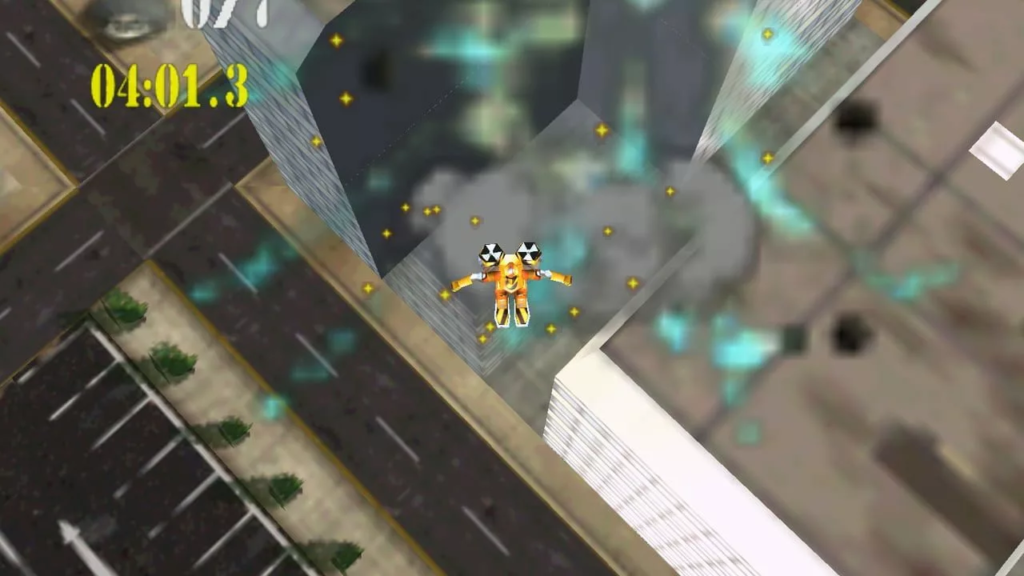
And modern technology could finally let the concept go completely wild.
Imagine compact, replayable levels built around sophisticated destruction physics. Buildings buckle differently depending on where they are struck. Fuel tankers create chain reactions. Bridges collapse. Construction equipment can be repurposed on the fly. Every level becomes a little mechanical puzzle where the solution just happens to involve catastrophic property damage.
Add score chasing and suddenly the same stage can support multiple goals: safest route, fastest route, maximum destruction, minimum equipment or some completely absurd developer challenge.
Better still, Blast Corps remains accessible rather than completely trapped in 1997. The original has appeared through Rare Replay on Xbox, and Nintendo also added it to the Nintendo 64 library available through Nintendo Switch Online in 2024.
So this is not really a preservation problem.
It is an opportunity problem.
Rare created a premise so unusual that nearly three decades of technological progress have somehow made it more interesting.
Give a talented smaller studio today’s physics tools and that original concept.
Then get out of the way.
1. Guardian Heroes

Platform: Sega Saturn
Released: 1996
Developer: Treasure
Publisher: Sega
If one game on this list feels like modern indie development eventually caught up with its ideas, it is Guardian Heroes.
On the surface, Treasure’s Saturn classic is a side-scrolling beat-’em-up.
Then you start playing.
Characters gain experience. Attributes can be developed. The story branches according to player decisions. Different routes produce different battles and endings. Combat shifts between foreground, middle and background planes. Magic and traditional fighting-game-style attacks sit alongside the usual brawler mechanics. The original also offered multiplayer battles featuring a huge selection of characters.
It feels less like a conventional arcade brawler than someone asking:
What if we just kept adding interesting things to a beat-’em-up until somebody stopped us?
Fortunately, nobody did.
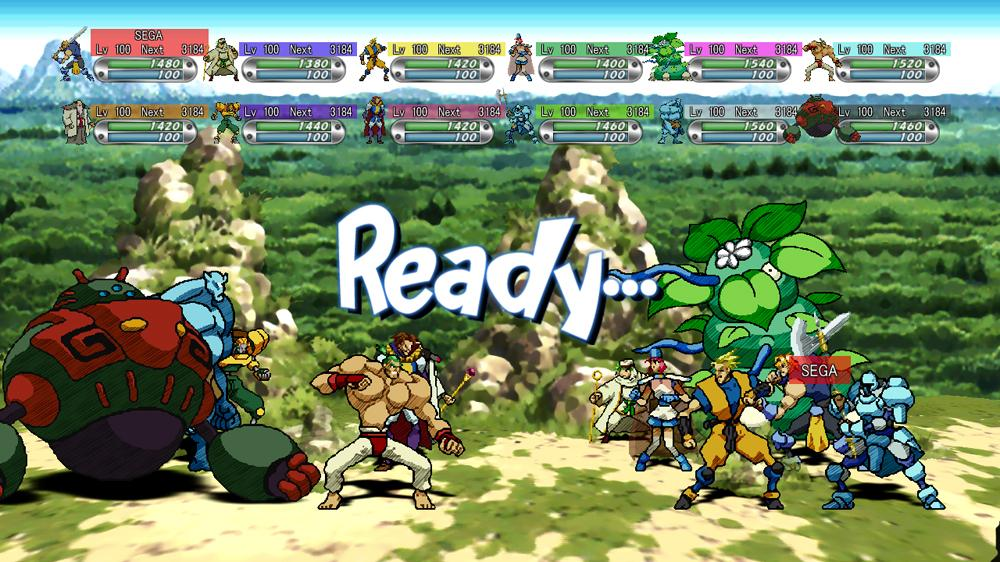
That makes Guardian Heroes extraordinarily compatible with what smaller studios are doing today.
A modern revival could retain handcrafted branching routes while adding deeper character builds, unlockable fighters, online cooperative play and a combat system expressive enough to support players who want to master it without alienating people who simply want to smash through fantasy armies with friends.
And unlike several games on this list, Guardian Heroes has not completely disappeared.
Treasure and Sega produced an enhanced Xbox 360 edition in 2011 with updated visuals and online multiplayer, and Microsoft currently lists that version as playable on Xbox One and Xbox Series X|S.
That is good news for preservation.
But we want something more.
Guardian Heroes deserves a genuine continuation of the idea — not necessarily a giant sequel, but a confident modern game willing to mix RPG progression, branching storytelling and chaotic cooperative brawling with the same disregard for neat genre boundaries.
We already know indie-scale brawlers can succeed.
We already know pixel art can sell fantasy worlds.
We already know players enjoy cooperative games built for repeated runs.
Treasure practically left the blueprint sitting on the Sega Saturn.
Someone just needs to pick it up.
Best Way to Revisit These Retro Games Today
The frustrating reality with a list like this is that accessibility varies enormously.
Blast Corps is one of the easier recommendations because it has received official modern distribution through both Rare Replay and Nintendo’s Switch Online Nintendo 64 library. Guardian Heroes is another pleasant exception: the enhanced Xbox version remains listed for Xbox One and Xbox Series consoles.
Others are considerably less convenient.

That is precisely why preservation and thoughtful re-releases matter. Nobody should have to become a vintage-hardware collector simply to discover an interesting game from the 1990s.
If you do collect original hardware, cartridges and discs can be part of the fun — especially when revisiting the games on the controllers and CRT displays they were originally designed around. Just do not confuse collecting with the only “authentic” way to appreciate retro games.
Sometimes convenience wins.
And sometimes the easiest modern release is exactly what keeps an old game alive long enough for another generation to care about it.
The Best Retro Revivals Would Keep the Weird Parts
There is a temptation whenever an old franchise returns to make it bigger.
More systems. Bigger worlds. Longer campaigns. Cinematic storytelling. Crafting. Progression trees. Live-service roadmaps.
But none of these seven games need that.
The reason they remain interesting is almost the opposite.
Mischief Makers is interesting because grabbing and shaking things became an entire mechanical language.
Blast Corps is interesting because demolition became a puzzle.
General Chaos blurred strategy and multiplayer slapstick.
Einhänder let you rip weapons from enemies.
Metal Warriors understood that abandoning your giant robot could be just as interesting as piloting it.
Uniracers made performing tricks part of racing faster.
And Guardian Heroes threw role-playing systems into a brawler long before genre mashups became an indie-development playground.
Those are not ideas that need $100 million budgets.
They need developers who understand why they were fun in the first place.
The best modern indie revival would not make these games respectable.
It would make them weird again.
And that might be the most retro thing possible.