Posted on June 3, 2026
Final Fight on SNES: The Classic Metro City Brawler
It was not the perfect arcade port but that didn’t matter. For a lot of SNES kids, Final Fight was still the night Metro City moved into the living room.
There are some games you remember because they weren’t just technically perfect. They felt like gaming was making a seismic shift. You feel the spirit of the game, and that spirit is what possesses your memory banks. And when it comes to brawlers, Final Fight on SNES is owns a significant portion of real estate on memory lane.
Final Fight because it had presence.
You remember that huge Capcom look. Haggar was a no-nonsense unit, walking around like a tank with a mustache. Cody throwing hands in jeans and a white T-shirt like every late-80s action hero rolled into one. The Mad Gear Gang pouring onto the screen with knives, pipes, mohawks, leather jackets, and names that sounded like they were yelled across a smoky arcade. You remember punching open oil drums and finding food inside like that was just how cities worked back then.
And for those of us who played it for the first time back then, that feeling still lingers — like we had stumbled onto something special, the kind of game that already felt like it was meant to last.
The arcade original hit in 1989, while the SNES version arrived later: Japan in December 1990, North America in 1991, and Europe in 1992. That matters because Final Fight was born in the arcade first, then squeezed into a home console world that was still trying to convince us it could bring the arcade experience into the living room.
That was the magic and the heartbreak of the era. You would see something massive in the arcade, spend quarters trying to survive it, then wait and hope the home version could capture even half of that feeling.
Final Fight on SNES did not bring everything home. But it brought enough.
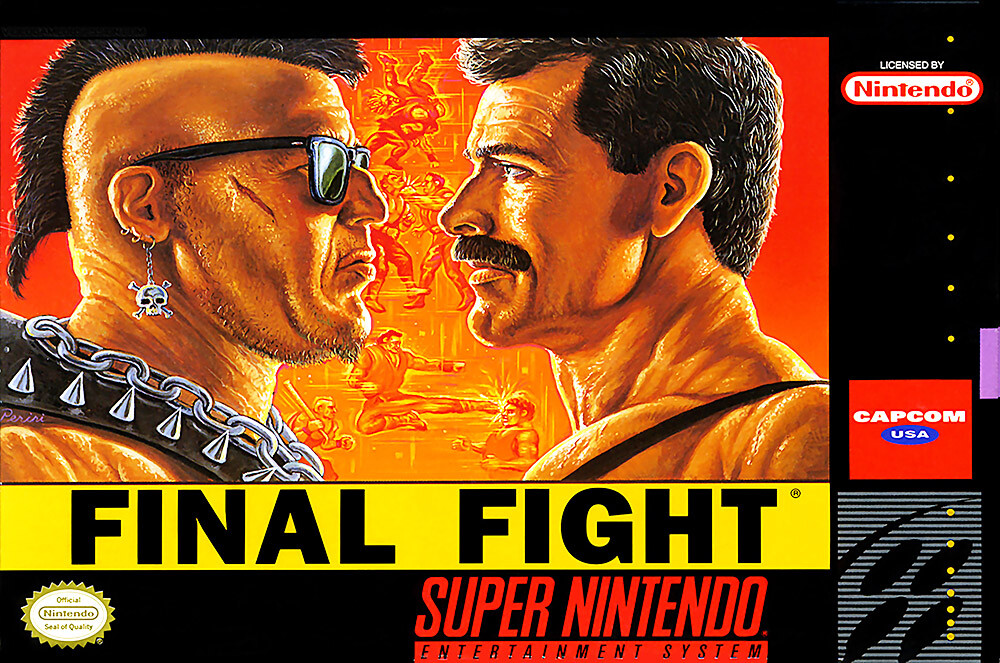
At a Glance
Platform: SNES
Released: Arcade in 1989; SNES in Japan in 1990, North America in 1991, and Europe in 1992
Genre: Side-scrolling beat ’em up
Vibe: Gritty arcade street justice, big Capcom sprites, steel pipes, alleyway chaos, and that early-SNES feeling that the arcade had somehow followed you home
You’ll Love It If: You enjoy classic brawlers, Capcom arcade energy, Metro City atmosphere, and old-school games that feel like they were built for late-night rentals
Maybe Skip If: You need two-player co-op, the full arcade roster, or a completely arcade-accurate home version
Best Way to Play: The Capcom Beat ’Em Up Bundle is the easiest modern route, but the original SNES cartridge still has that full nostalgia hit if you want the box, cart, controller, and couch-memory experience
Before “Open World,” We Had One Dirty Street at a Time
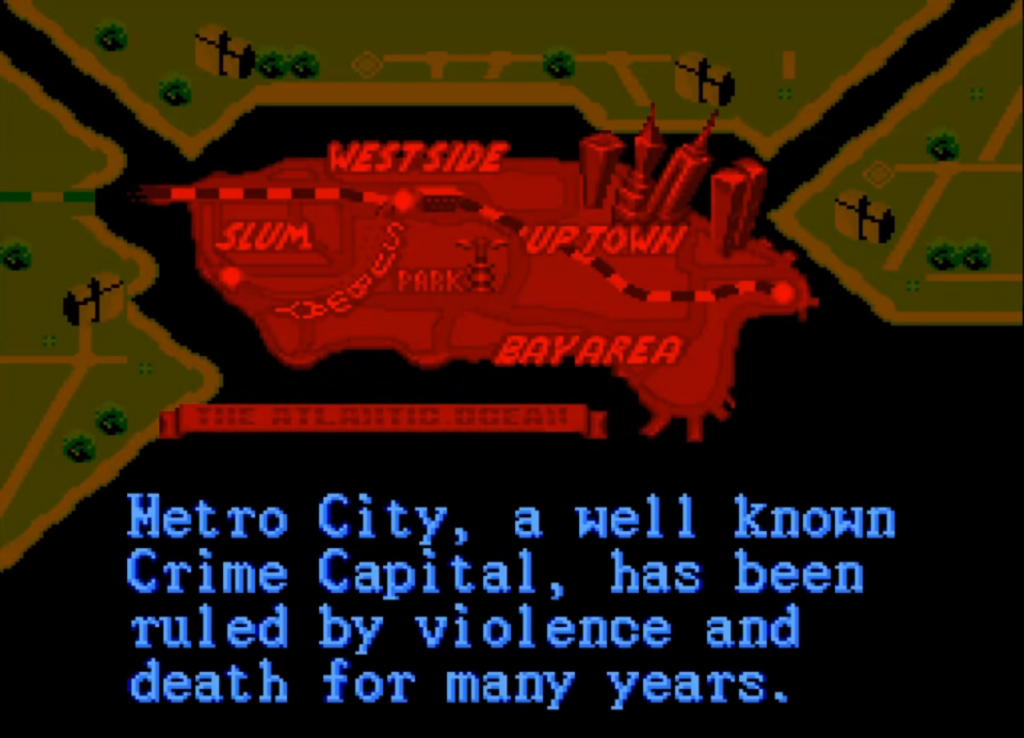
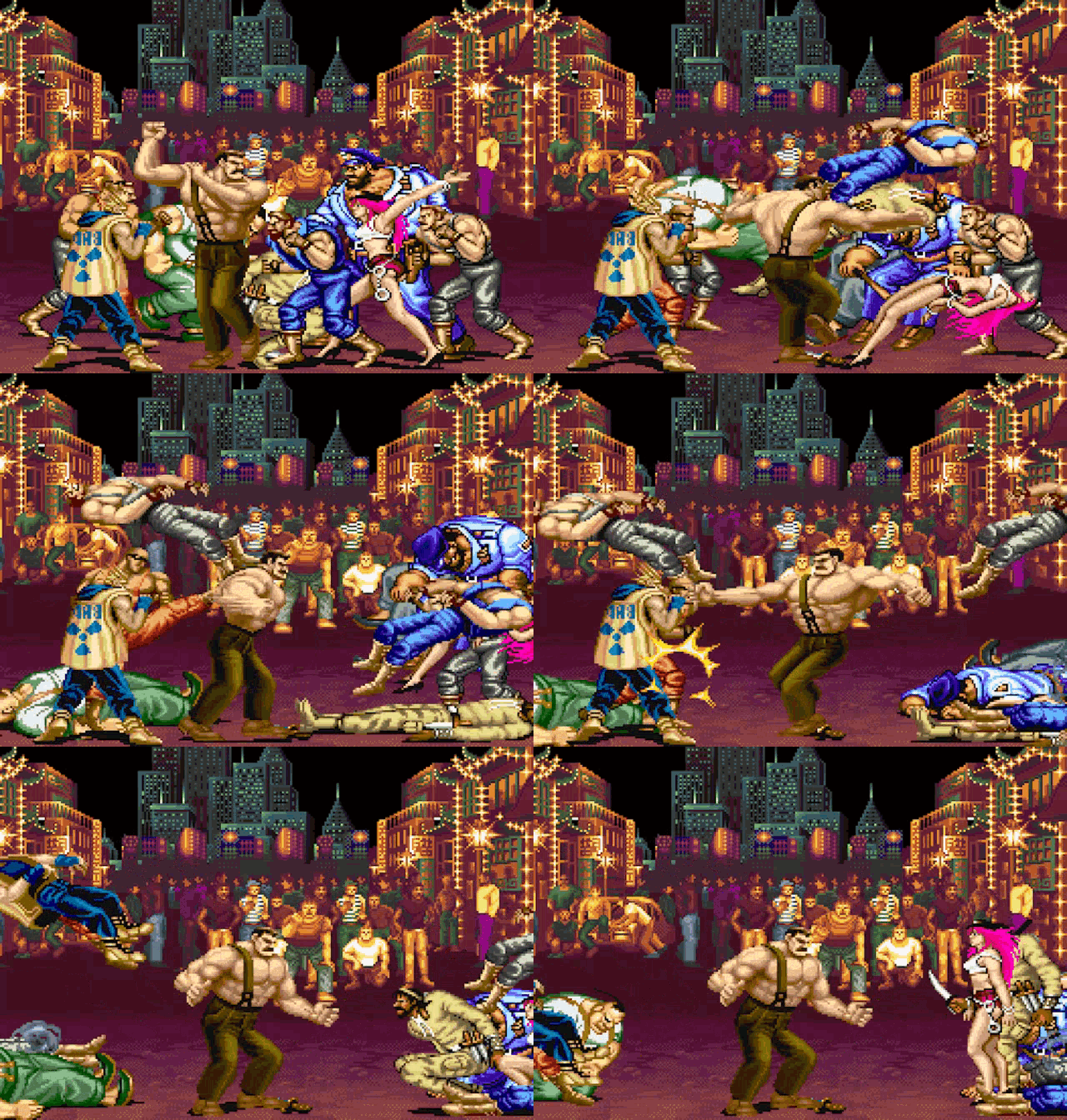
Final Fight is about as pure as a beat ’em up setup gets. Metro City is in trouble. The Mad Gear Gang kidnaps Jessica. Mike Haggar, the mayor and former pro wrestler, decides the correct political response is to take off his shirt, put on green pants, and personally clean up the streets with piledrivers.
This is why it is still one of the greatest video game premises ever. The quintessential 80s action hero promise is all over this game.
The arcade version let players choose between Haggar, Cody, and Guy as they fought through Metro City to rescue Jessica. The SNES version, famously, cut Guy from the original release and removed two-player co-op. It also dropped the Industrial Area stage and the Rolento fight.
Those cuts matter. We should not pretend they do not.
But here is the thing: if you were a kid staring at Final Fight on a SNES in 1991, you were not always making a spreadsheet of missing arcade features. You were looking at those sprites. You were listening to that music. You were realizing that the same Capcom energy you saw glowing from an arcade cabinet could now live on your TV.
That was a big deal.
This was the period when the SNES was still proving itself. Mode 7 was blowing minds. Capcom was becoming one of those names that made you stop and pay attention. If a game had that logo on the box, it felt like quality before you even pressed Start.
Final Fight fit right into that moment. It looked tough. It sounded tough. It felt like a Saturday night action movie you could play with a controller.
Gameplay: Punches, Piledrivers, and Pressure
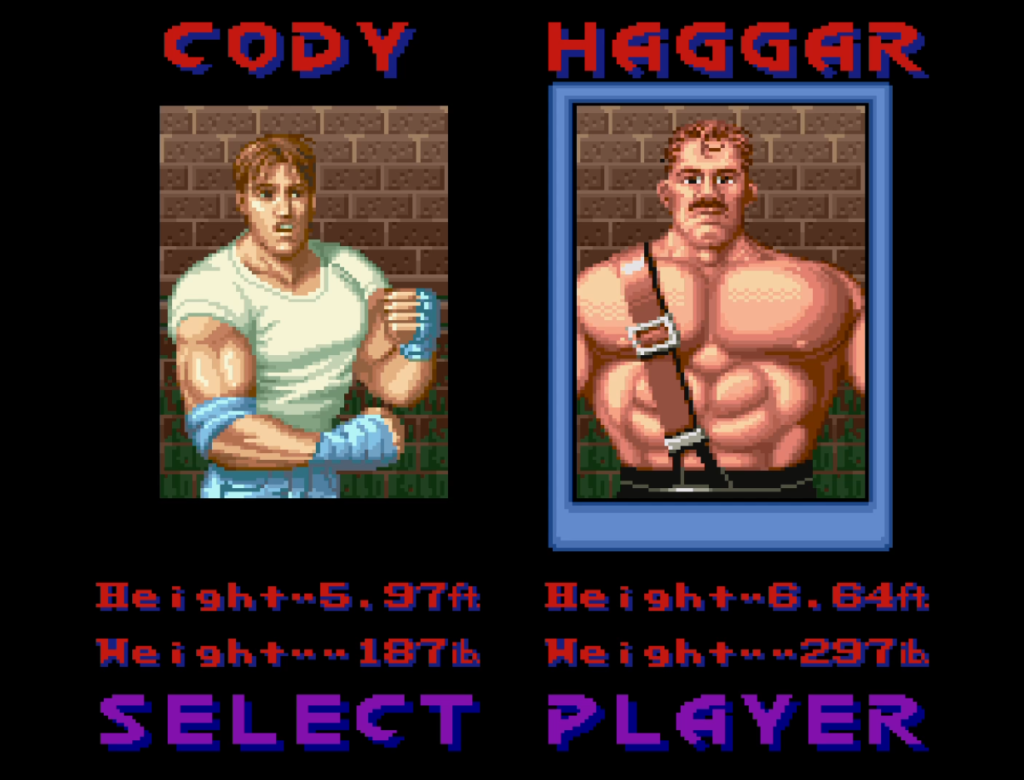
The core rhythm is simple but satisfying: move into a crowd, land a few punches, grab an enemy, throw them into someone else, and try not to get surrounded. Cody feels quicker and more natural for players who want that classic street-fighter flow. Haggar feels heavier, slower, and more powerful, but that is part of his charm. When he grabs someone and drops them with a piledriver, it still feels like the whole screen briefly stops to respect the impact.
That is what made Final Fight so easy to understand back then. Even if you were renting it for the first time, you knew what to do within seconds. The challenge came from surviving long enough to do it well. Enemies crowd you, bosses punish careless movement, and health can disappear fast if you let yourself get trapped between two sides of the screen. It has that arcade-style pressure where every mistake feels expensive, but every clean stretch makes you feel like you are finally learning the city.
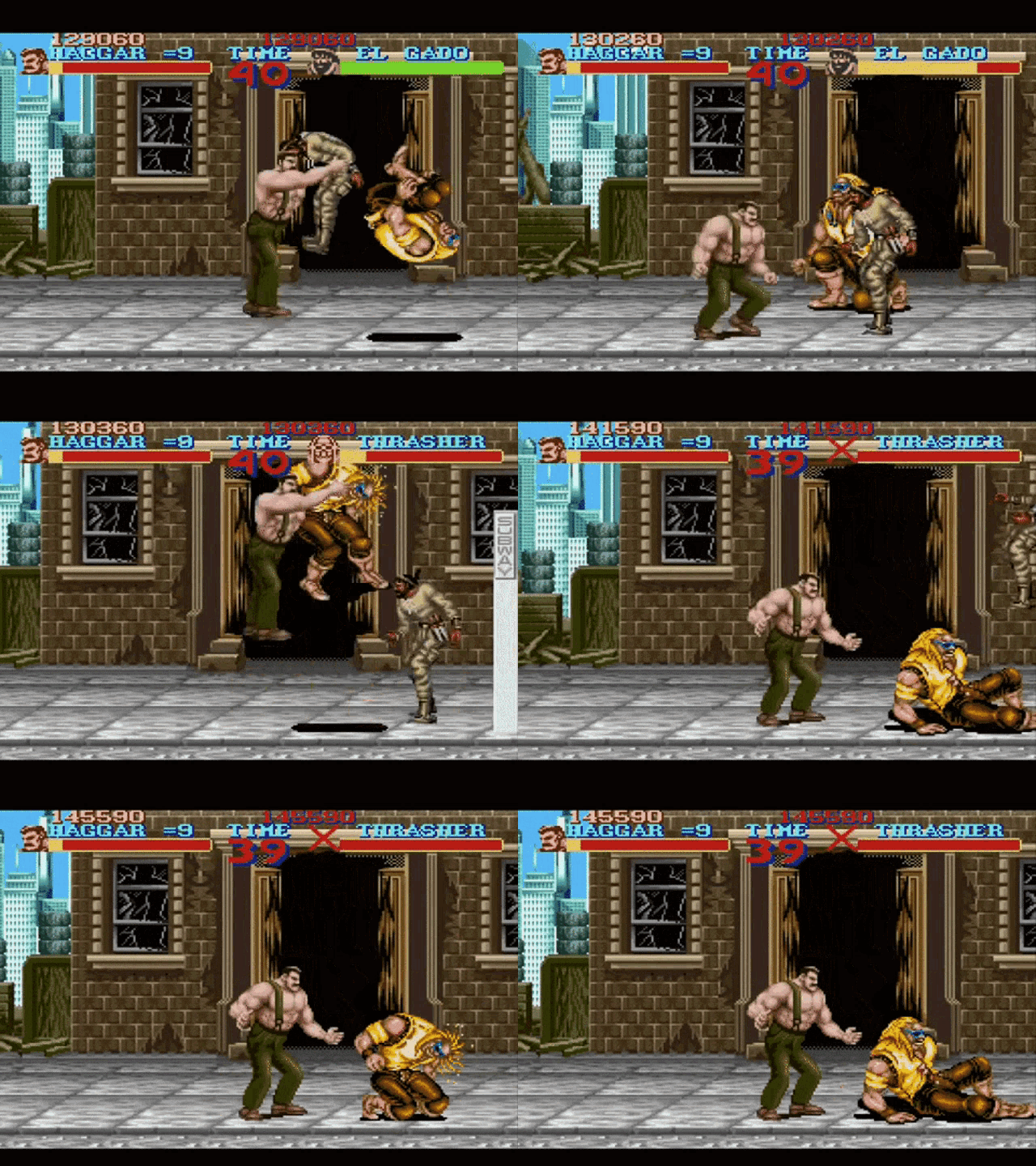
The SNES version is approachable, but it is not gentle. There are no modern checkpoints smoothing things out, and continues only go so far. You had to learn enemy patterns, figure out when to use your special attack, and resist the urge to waste food pickups too early. A lot of players probably remember getting stuck on a boss, handing the controller to a friend or sibling, and then insisting they almost had it when things went sideways.
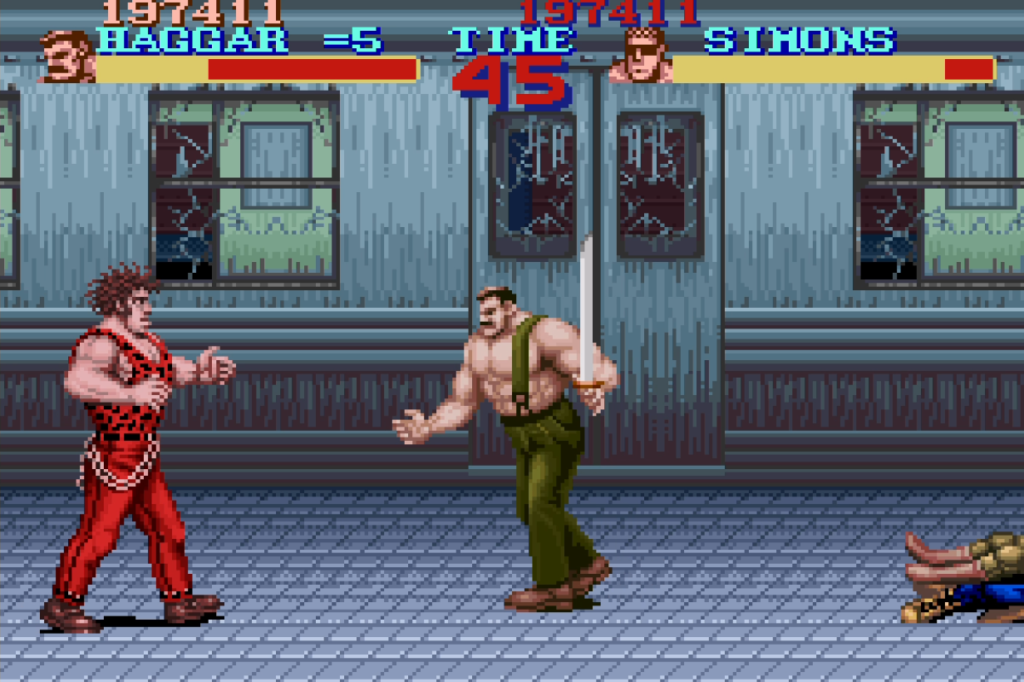
Visually, Final Fight still has that chunky Capcom personality. The character sprites are big, expressive, and full of attitude. Metro City feels rough and dangerous without needing paragraphs of story to explain itself. The alleys, subway areas, wrestling-ring chaos, and boss encounters all give the game a strong identity. Even when you notice the limits of the SNES version today, the art direction still carries weight because the characters look like they belong in a comic book action movie from the late 80s.
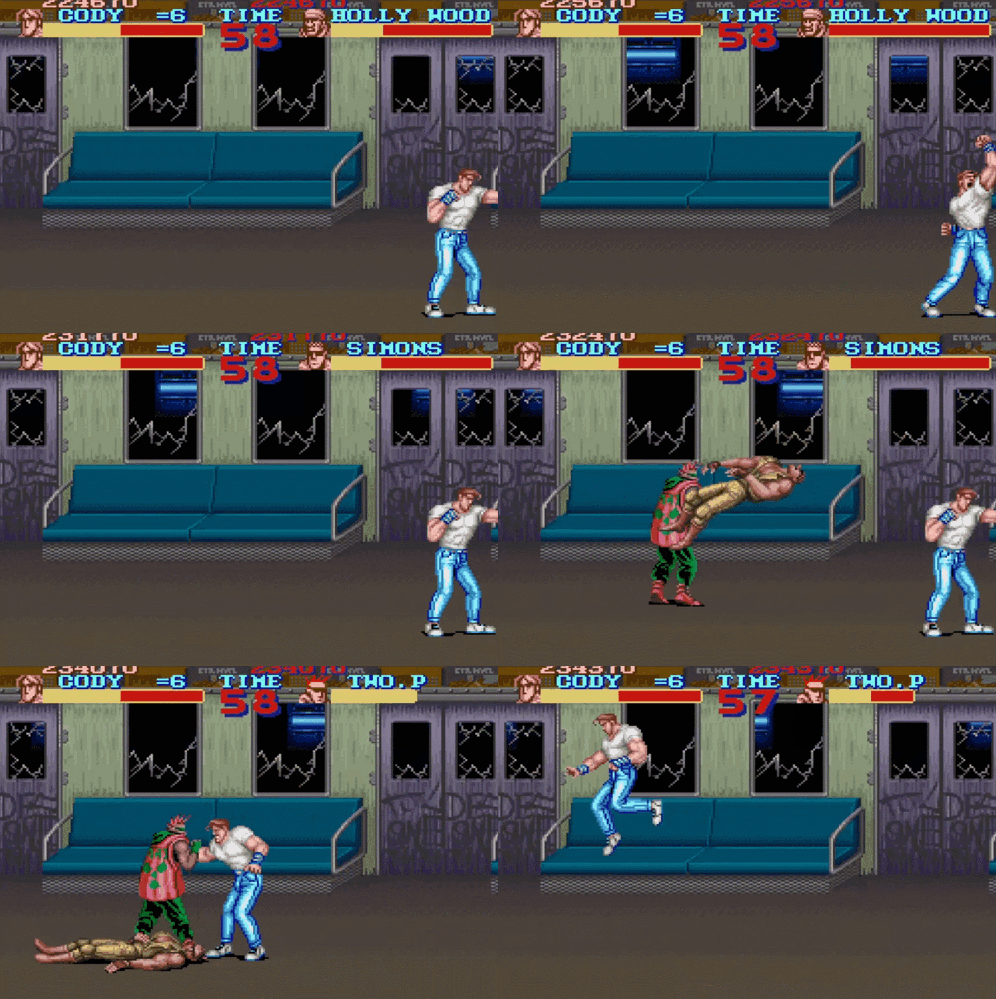
The story is not complicated, but it does not need to be. Jessica is kidnapped, Haggar and Cody go after the Mad Gear Gang, and Metro City becomes the battleground. The emotional pull comes less from cutscenes and more from momentum. You feel the stakes through the music, the escalating enemies, the boss fights, and the sense that you are punching your way deeper into a city that has completely lost control.
That is why the gameplay sticks. Final Fight was not just about pressing attack until the credits rolled. It was about learning how to survive the crowd, remembering which bosses gave you trouble, fighting over who got the health pickup, and feeling that little rush when a steel pipe dropped at exactly the right time. It was simple, direct, sometimes rough, and absolutely memorable — the kind of game your hands remember even before your brain catches up.
The Rental Era Made Games Feel Bigger
Final Fight also belongs to a very specific gaming ritual: the rental weekend.
This was the kind of game that made perfect sense on a Friday night. You spotted the box at the rental store, saw Haggar and Cody surrounded by street punks, and immediately knew what kind of weekend it was going to be. This was not a slow-burn RPG. This was not a puzzle game you had to explain to your cousin. This was “pick a guy and start punching.”
That simplicity was part of the magic.
You could bring it home, blow into the cartridge even though everyone now says we should not have done that, slide it into the SNES, and be fighting in Metro City within minutes. No tutorials. No unlock trees. No live service menus. Just you, a health bar, a timer, and a crowd of enemies who all seemed deeply committed to making bad life choices.
And because rentals were temporary, games like Final Fight had a strange intensity. You had two nights, maybe three. You were not casually “working through your backlog.” You were trying to see how far you could get before Sunday evening came around and the case had to go back.
Haggar Was the Whole Selling Point
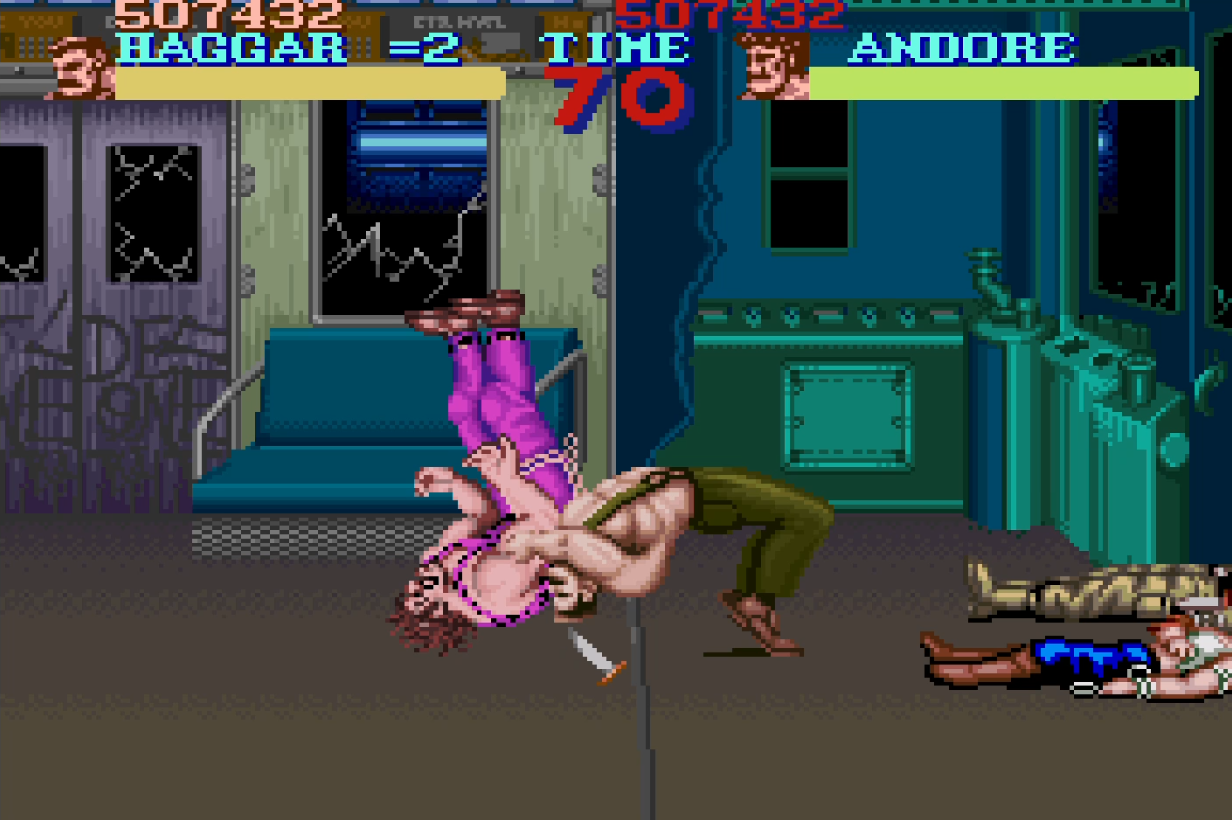
Cody was cool. No question. He had that street-brawler hero vibe that made him easy to pick first. But Haggar was the legend.
There was just something unforgettable about playing as a mayor who fought crime by grabbing people off the street and slamming them into pavement. His piledriver was not just a move. It was a statement. Haggar turned every fight into a wrestling match nobody else agreed to join.
He was slower, heavier, and less smooth than Cody, but that was the appeal. When you picked Haggar, you were not dancing around enemies. You were grabbing them by the collar and rearranging the city one spine at a time.
This kind of character design sticks the landing. Decades later, people still talk about Haggar because he represents everything Final Fight does well: oversized personality, instant readability, and that glorious Capcom ability to make a character feel iconic after five seconds of animation.
And honestly, Haggar being the mayor still makes the whole game funnier and cooler. Metro City did not need a task force. It needed one extremely angry public servant.
The Missing Guy Problem
Now we have to talk about Guy.
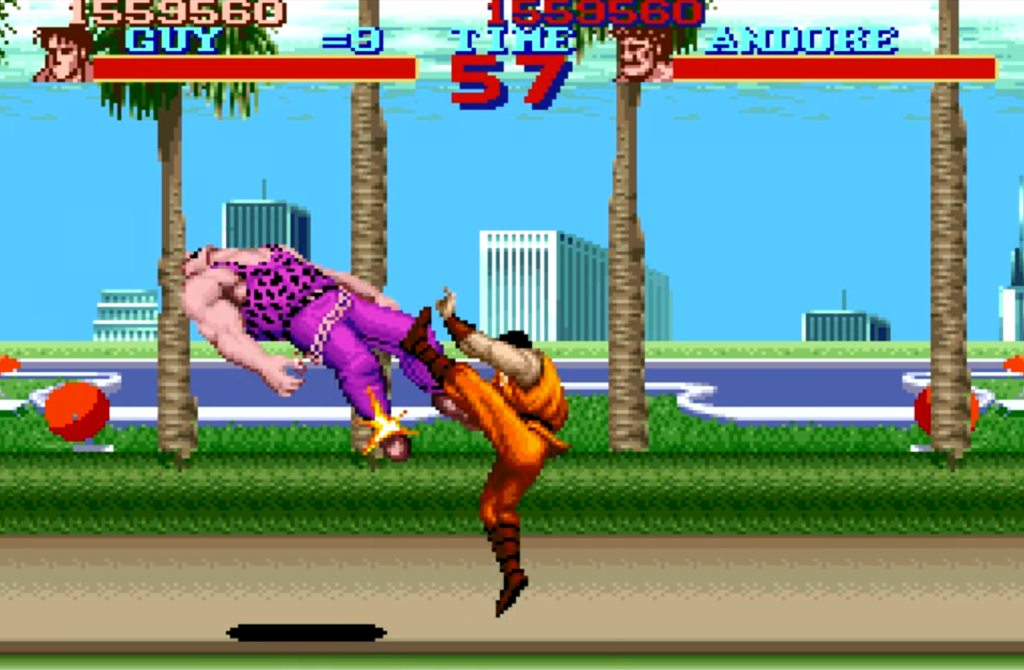
For players who knew the arcade version, his absence on SNES hurt. Guy was fast, stylish, and different from Cody and Haggar. He gave the original lineup that classic trio balance: the all-around fighter, the powerhouse, and the quick ninja-type.
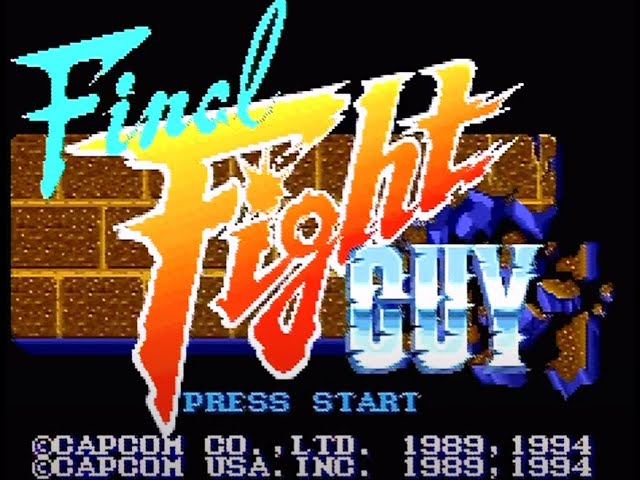
The original SNES Final Fight only gave players Cody and Haggar. Later, Final Fight Guy replaced Cody with Guy, but even that version still did not restore everything missing from the SNES port.
What is interesting is how fans remember this divide. Some players look back and say the SNES port was compromised, especially because losing two-player co-op changed the entire social feel of an arcade brawler. Others defend it with real affection, arguing that even with the cuts, it still felt huge and exciting at the time. One Reddit discussion captures that split nicely, with one fan pushing back against the idea that the port was universally hated and remembering it as something that still felt massive before later brawlers raised the bar.
That feels right.
Final Fight on SNES is one of those games where both things can be true. It was compromised. It was also loved.
Retro gaming is full of games like that. The version you had was not always the definitive version. It was the version on your shelf. The version your friend owned. The version you rented three times. The version you played before you knew what “arcade accurate” even meant.
That matters.
The City Had a Mood
Metro City is not deep worldbuilding in the modern sense, but it has atmosphere for days.
The slums, the subway, the wrestling ring, the bay area, the uptown climb — it all feels like a playable collage of late-80s urban action fiction. It is part comic book, part martial arts movie, part crime thriller, part arcade fever dream. Final Fight takes the “dangerous city” imagery of its era and turns it into a side-scrolling gauntlet where every few steps bring another gang member, another weapon, another breakable object, another health-saving snack hidden in something that definitely should not contain food.
The music helps sell it. Capcom had a particular sound in this era: urgent, punchy, melodic, and just grimy enough to match the street setting. Even on SNES, where the soundtrack had a different texture from the arcade, the music still gave every stage that feeling of pushing deeper into hostile territory.
And then there were the weapons.
The pipe was the big one. Every beat ’em up fan knows the sacred joy of picking up a pipe and suddenly feeling like the whole screen belongs to you. The knife was quicker, nastier, and more desperate. The sword felt like you had stumbled into a different game for a few seconds. Final Fight understood that weapons in a brawler should feel temporary and exciting. You were not building a loadout. You were surviving with whatever the street gave you.
That is a very specific kind of fun.
Every boss fight feels personal.
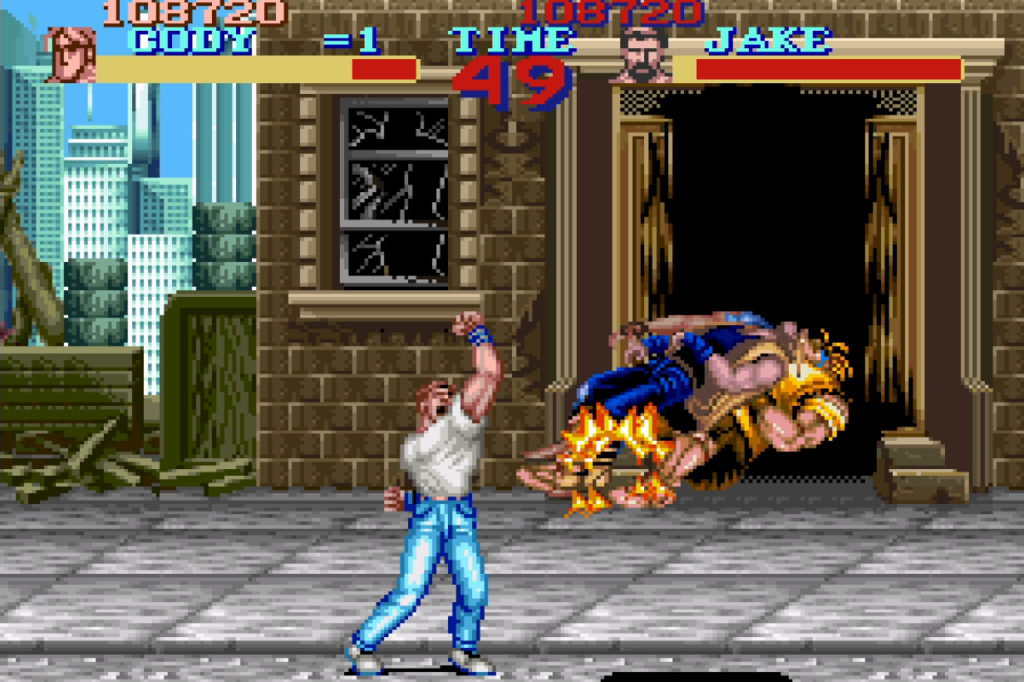
Damnd was not just the first boss. He was the wall between you and feeling like you knew what you were doing. Sodom felt like an arcade memory that had wandered into your house. Abigail looked like somebody inflated a punk-rock bodybuilder. Belger, waiting at the top of the tower, felt like the final bad guy from a VHS movie your parents maybe should not have let you watch yet.
Final Fight did not need a complicated story because the whole game was built on forward motion. Walk right. Hit everyone. Pick up the pipe. Eat the meat. Keep going.
Final Fight is one of those games where the controls make sense almost immediately. You walk right, clear the screen, grab whatever weapon the city gives you, and keep pushing forward. There is no complicated setup, no long explanation, no menu full of systems to study. You pick Cody or Haggar, hit the streets, and the game teaches you through bruises.
The One-Player Problem
The biggest flaw is obvious: no two-player co-op.
For a beat ’em up, that is not a small thing. These games were built for shoulder-to-shoulder chaos. The arcade version supported two players, and that social energy was part of the appeal. Losing that on SNES changed the way Final Fight felt at home.
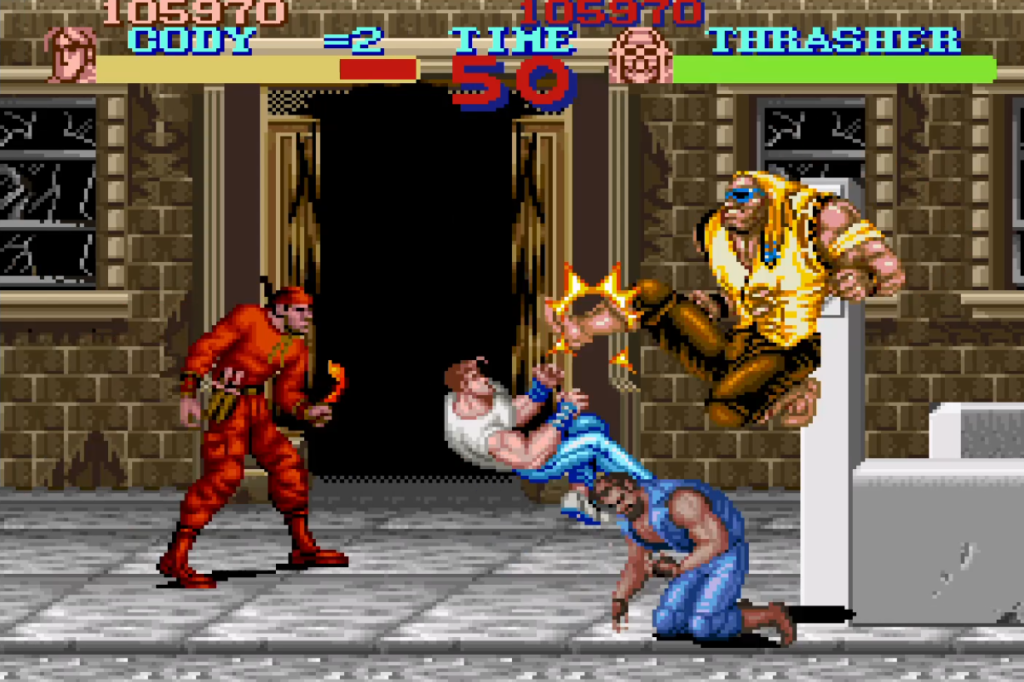
Instead of you and a friend fighting through Metro City together, it became a solo mission. That made the game feel lonelier and, in some ways, harsher. You could still pass the controller back and forth, and plenty of us did exactly that, but it was not the same as two players accidentally punching in the same direction, stealing each other’s food pickups, and yelling when someone wasted a special attack.
That absence also explains why games like Streets of Rage 2 became such a big deal later. When Sega delivered that smooth, stylish, two-player console brawler experience, the comparison became impossible to avoid. Even fans defending SNES Final Fight often acknowledge that later competition changed how people judged it.
Still, Final Fight deserves to be remembered in its own moment. In the early SNES window, it was not just “the port missing things.” It was one of the first big signs that the 16-bit console generation was going to chase the arcade dream hard.
Best Way to Play Today
If you want the easiest way to play Final Fight today, the Capcom Beat ’Em Up Bundle is the practical choice. It includes Final Fight alongside other Capcom arcade brawlers like Captain Commando, The King of Dragons, Knights of the Round, Warriors of Fate, Armored Warriors, and Battle Circuit.
That collection is probably the best route for most players because it gives you the arcade version without needing original hardware, an arcade PCB, or a cabinet-sized hole in your living room. It is cleaner, easier, and cheaper than chasing every old format.
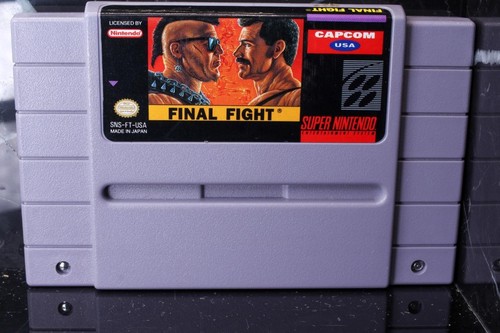
But if you specifically want the SNES nostalgia hit, the original cartridge still has its charm. Just be smart. You do not need to overpay for a loose cart unless you really want it for the shelf. Complete-in-box copies are a collector lane, not a requirement. If you are playing on original hardware, a good controller matters more than fancy extras. A reliable SNES controller, decent video output, and a comfortable couch will do more for the experience than any overpriced display piece.
Why Final Fight Stayed With Us
Final Fight stayed with players because it understood impact.
Every character was readable. Every punch had weight. Every stage pushed you forward. Every boss looked like they came from a sketchbook full of action-movie villains. It did not ask you to learn a hundred systems. It asked you to survive the next screen.
And that is why people still talk about it.
Not because the SNES version was flawless. It was not. Not because it was the best possible way to experience Final Fight. It probably is not. But because it gave a generation of home players a piece of that arcade electricity.
For some people, Final Fight was the game they first saw in an arcade and then begged to rent. For others, it was the SNES cartridge they played before they ever knew what was missing. For collectors, it is a snapshot of Capcom’s early 16-bit presence. For beat ’em up fans, it is part of the genre’s foundation.
And for anyone who grew up in that era, it has that unmistakable feeling: the TV glow, the controller cord stretched across the carpet, the sound of enemies grunting, and the pure satisfaction of Haggar cleaning up Metro City one piledriver at a time.
Final Fight on SNES may not be the full arcade beast. But it is still Final Fight.
And sometimes, that was more than enough.