Posted on July 22, 2026
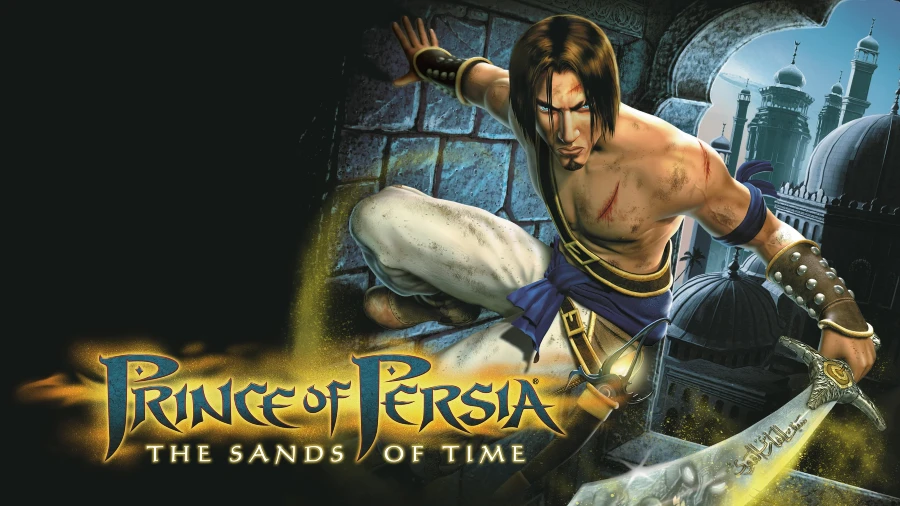
Prince of Persia: The Sands of Time Still Feels Magical
Disclosure: Some of the links in this post are affiliate links. This means if you click on the link and purchase an item, we will receive an affiliate commission at no extra cost to you. All opinions remain my own. I only recommend products or services I believe will add value to my readers.
Ubisoft’s 2003 classic turned every missed jump into another chance and made a crumbling palace feel like the beginning of a legend.
There was something almost magical about the first time Prince of Persia: The Sands of Time sent the Prince running straight across a wall, leaping over a bottomless gap, and landing safely on the other side. In 2003, that kind of movement did not feel routine. It felt like discovering a new language for action games—one built around momentum, timing, and the belief that even a fatal mistake might still be undone.
Prince of Persia: The Sands of Time arrived during one of the most exciting periods of the PlayStation 2, Xbox, and GameCube era, when 3D adventures were becoming more cinematic without yet losing their sense of experimentation. It had sword fights, traps, puzzles, and towering palace ruins, but its real personality came from how gracefully it let players move through them. Every wall run, narrow beam, collapsing platform, and last-second rewind made the journey feel intimate and theatrical at the same time.
That is why this game is still worth revisiting. It was not simply a successful revival of an older franchise. It captured a rare balance of elegance, danger, romance, and forgiveness—then wrapped it all inside a storybook adventure that still feels distinct from the games it later influenced.
At a Glance

Platform: PlayStation 2, Xbox, Nintendo GameCube, Windows PC; separate Game Boy Advance version
Released: 2003
Developer: Ubisoft Montreal
Publisher: Ubisoft
Genre: Action-adventure, puzzle-platformer
Vibe: A sunlit storybook adventure filled with impossible acrobatics, ancient traps, quiet palace ruins, and the comforting promise that one bad jump does not have to be the end.
You’ll Love It If: You enjoy environmental puzzles, fluid platforming, cinematic adventures, and games that give movement as much importance as combat.
Maybe Skip If: Long combat encounters frustrate you or you need a completely modern camera and control system.
Best Way to Play: The backward-compatible Xbox release is the easiest console option, while the GOG version offers an inexpensive PC alternative.
Collector Note: Original PS2, Xbox, and GameCube copies remain relatively common and generally affordable, although condition and completeness can affect the price.
Before Every Hero Could Run Along a Wall
There was a moment in the early 2000s when 3D action games seemed determined to make every room bigger, every hero tougher, and every battle louder.
Then Prince of Persia: The Sands of Time arrived and asked a more interesting question:
What if simply moving through the world could feel heroic?
The Prince did not just climb a ladder or jump across a gap. He sprinted along walls, swung from poles, balanced above dizzying drops, vaulted over enemies, and descended through ruined chambers as though the entire palace had been designed for one long, dangerous dance.
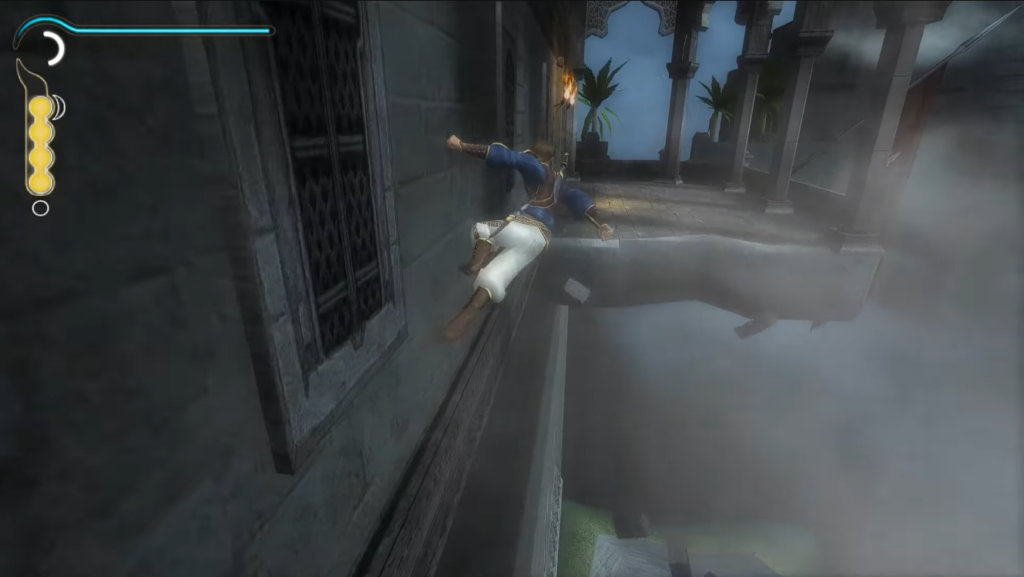
And when that dance went wrong—as it frequently did—you could rewind time and try again.
That single mechanic changed the emotional rhythm of the adventure. Missing a ledge no longer meant staring at a game-over screen and replaying several minutes of progress. Instead, the Prince could pull the moment backward, returning to the instant before the mistake.
The fall reversed. Broken stones returned to their places. The Prince flew upward into safety.
Then you tried the jump again.
Released in 2003 for PlayStation 2, Xbox, GameCube, and Windows PC, The Sands of Time was developed by Ubisoft Montreal and published by Ubisoft. Series creator Jordan Mechner contributed as writer, game designer, and creative consultant, helping the project reconnect with the spirit of the original Prince of Persia while translating it into a fully 3D action adventure.
More than two decades later, its greatest strength is not that every element feels untouched by time. It is that the game still understands something many larger adventures forget:
Movement can tell a story.
A Familiar Name Reborn for a New Generation
For players who knew the original Prince of Persia, the 2003 game felt like a forgotten legend returning with new life.
For everyone else, this was often their introduction.
The gaming landscape was crowded that year. The PlayStation 2 was deep into its dominant run, Xbox was building its identity, GameCube owners were enjoying some of Nintendo’s most distinctive releases, and ambitious games such as Star Wars: Knights of the Old Republic, Beyond Good & Evil, Viewtiful Joe, and The Legend of Zelda: The Wind Waker were expanding what console adventures could look and feel like.
In that company, The Sands of Time stood apart through elegance.
It was cinematic without constantly taking control away from the player. It was approachable without feeling empty. Its palace was large enough to inspire awe but structured enough to maintain a clear sense of momentum.

The game became one of the critical standouts of 2003, earning widespread praise and a Metacritic score of 92. Contemporary year-end coverage frequently placed it alongside Knights of the Old Republic among the year’s leading games, even though its initial commercial performance was more restrained than its glowing reviews might suggest.
That contrast became part of the game’s identity. It was acclaimed, admired, recommended between friends—and gradually transformed from a successful release into one of those defining games people insisted you had to experience.
Entering the Palace
The story begins with youthful arrogance.
During an attack on the Maharajah’s palace, the unnamed Prince discovers the Dagger of Time. Manipulated by the treacherous Vizier, he uses the dagger to open an enormous hourglass, releasing the Sands of Time across the kingdom.
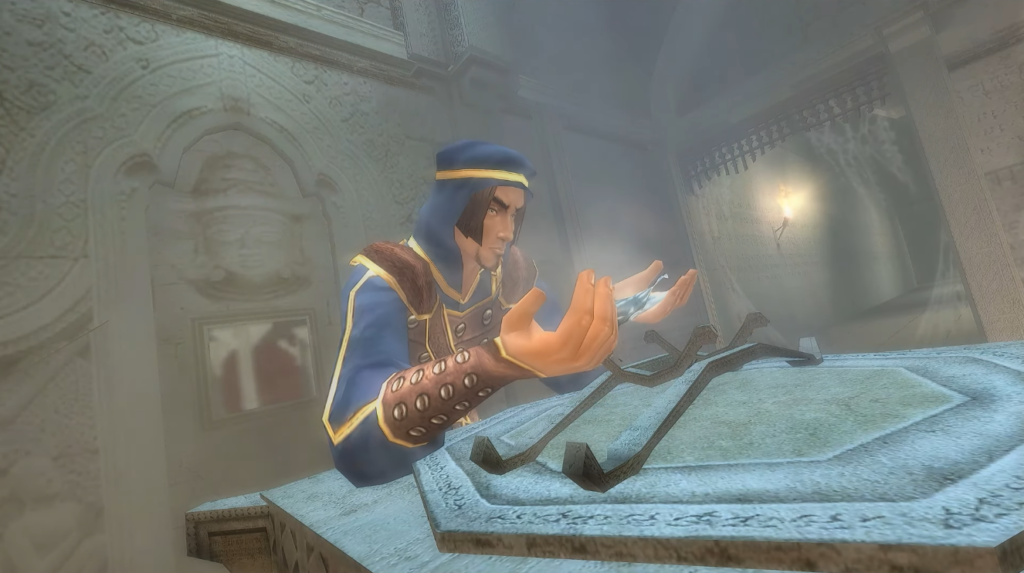
The result is catastrophe.
Most of the palace’s inhabitants become monstrous sand creatures. The Prince survives because he possesses the dagger, while Princess Farah is protected by a magical medallion. The two are forced into an uneasy partnership as they search for a way to contain the sands and reverse the destruction.
It is a straightforward adventure story, but the framing gives it unusual warmth.
The Prince narrates the journey as though he is telling someone the story after the fact. When the player dies, he occasionally interrupts with variations on the idea that events did not really happen that way.
It is a clever touch. Failure becomes part of the storytelling rather than something entirely outside it.
The relationship between the Prince and Farah also gives the journey its emotional center. They bicker, distrust one another, trade observations, and slowly develop genuine affection. Their conversations frequently happen while you are still moving through the environment, allowing the relationship to grow without reducing every emotional beat to a cutscene.

The Prince begins as impulsive, vain, and eager to prove himself. Farah repeatedly challenges that self-image. By the end, the adventure has become as much about humility and responsibility as magical sand.
Gameplay: The Part Your Hands Remember
The defining pleasure of The Sands of Time is learning to read a room.
You enter a vast hall and initially see only broken architecture: cracked columns, hanging banners, narrow beams, rotating blades, distant ledges, and walls that appear too far apart to cross.

Then the route begins to reveal itself.
That wall can be run across. That pole can be reached from the ledge. That banner can slow your descent. That pressure plate opens a door, but only briefly. That column can be climbed if you approach it from the proper angle.
The game transforms architecture into a language.
Movement and Platforming
The Prince’s acrobatic abilities were extraordinary in 2003.
He can wall-run horizontally to cross wide gaps, run vertically to reach higher ledges, leap between parallel surfaces, swing around poles, climb columns, balance across beams, hang from narrow edges, and rebound from walls.

These actions are generally easy to perform. The challenge comes from recognizing the correct sequence and maintaining your rhythm.
The best platforming rooms feel almost musical. Run, jump, catch, swing, release, land. Once the route clicks, the Prince flows through the environment with an effortless confidence that makes the player feel far more graceful than they probably were during the first few attempts.
This is where rewinding time becomes essential.
The Dagger of Time allows the player to reverse roughly ten seconds of action, provided enough sand remains available. Later abilities can slow or freeze enemies, but rewind is the power that defines the experience.
It removes much of the punishment from experimentation without removing the tension from the jump itself. You still do not want to fall. You simply know that one mistimed button press does not have to erase your progress.
In an era when many games still treated failure with lengthy reloads or repeated sections, this felt remarkably generous.
Combat
Combat is the part of The Sands of Time that has attracted the most consistent criticism.
The Prince attacks with his sword, blocks incoming blows, jumps over enemies, rebounds from walls, and performs acrobatic strikes. However, ordinary attacks are not enough to finish sand creatures permanently. Once an enemy has been weakened, the Prince must stab it with the Dagger of Time to absorb its sand.
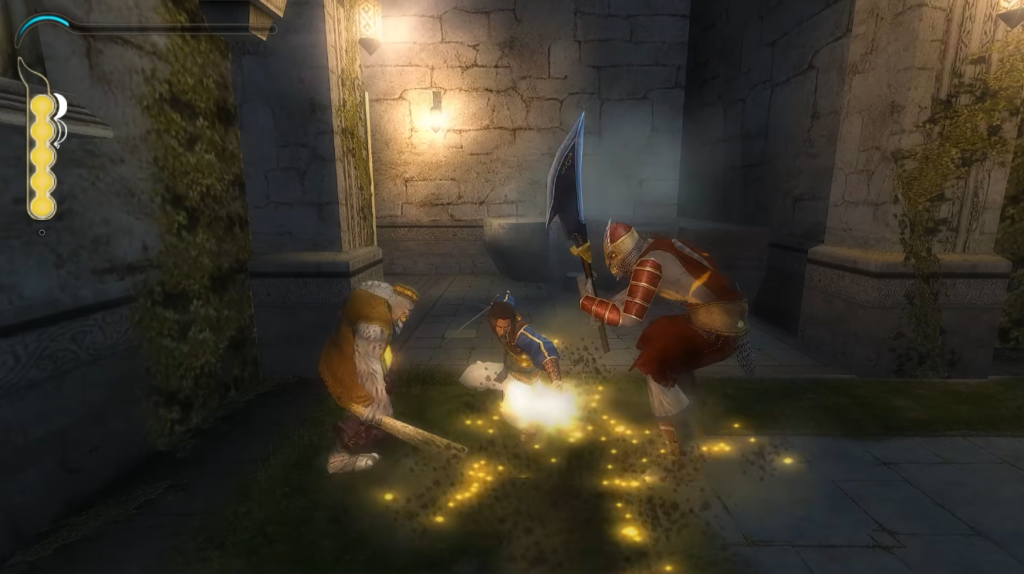
Early encounters can be exciting. Vaulting over a guard and striking from behind fits perfectly with the game’s acrobatic identity.
The problem is repetition.
Some battles throw several waves of similar enemies into enclosed areas, and the routine of weakening, knocking down, and absorbing each creature can last longer than the encounter remains interesting. Even later coverage of the series openly recognized that The Sands of Time had comparatively limited and repetitive combat, an issue Ubisoft attempted to address in Warrior Within.
Farah can assist with her bow, but protecting her occasionally creates extra frustration, particularly when enemies surround both characters.
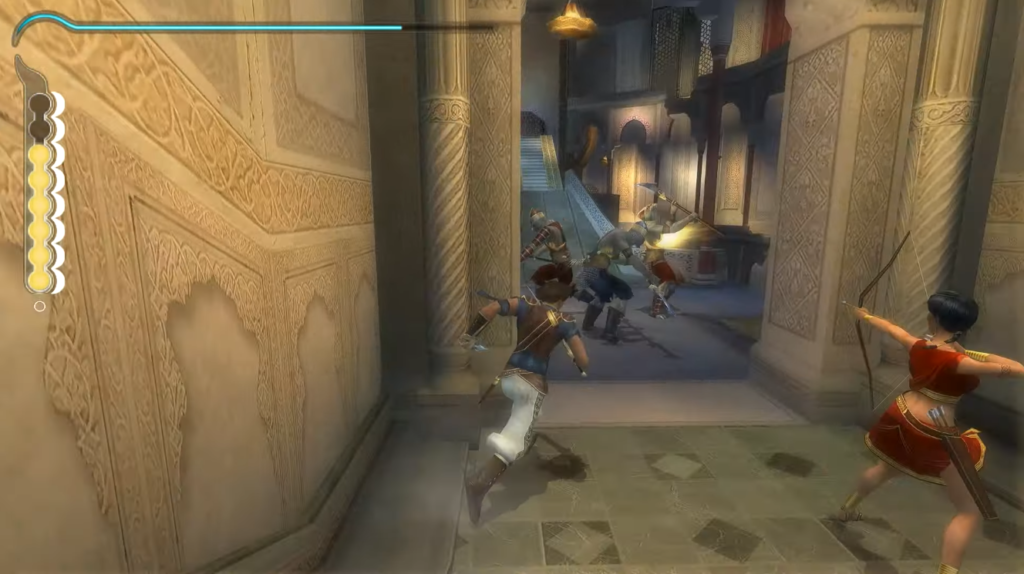
Combat is not disastrous. It is functional, often stylish, and sometimes satisfying. It simply lacks the elegance of the platforming.
When people remember The Sands of Time, they usually remember the wall runs before the sword fights.
Ease of Use and Checkpoints
The game explains its abilities gradually and usually communicates its routes well.
A distant camera angle may briefly sweep across a room, highlighting the destination or suggesting a path. The Prince’s movement is forgiving enough to make ambitious sequences manageable, and water fountains restore health while creating natural pauses in the journey.
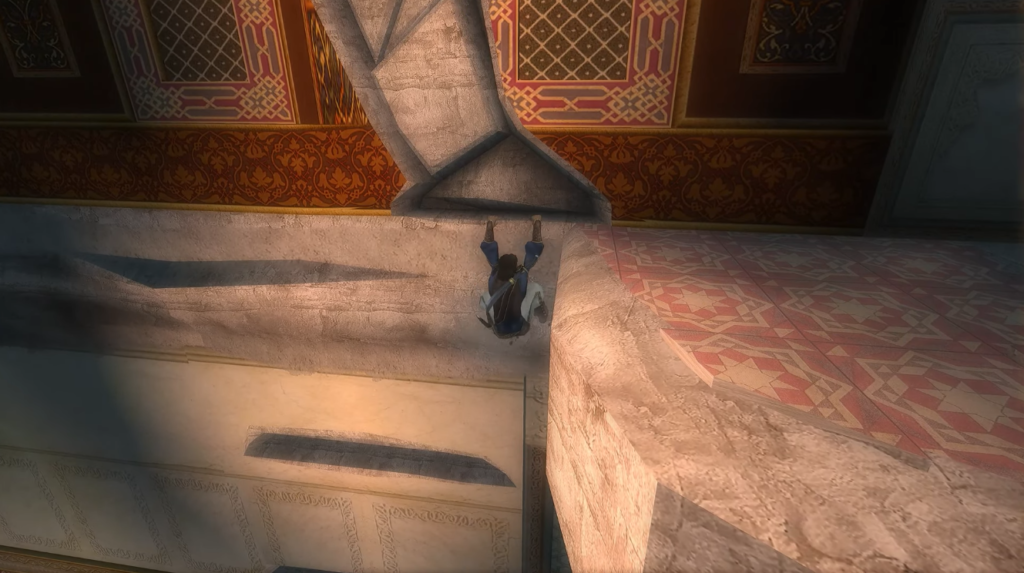
The camera can still become awkward in tighter spaces. Depth can occasionally be difficult to judge, especially when jumping between small ledges or changing direction near a wall.
There are also moments when the Prince performs a different action than the player intended. A wall run becomes a vertical climb. A careful adjustment becomes a leap. A landing angle sends him toward the wrong edge.
Fortunately, the rewind mechanic softens most of these frustrations.
The game does not eliminate trial and error. It makes trial and error feel like an intentional part of mastering the palace.
Graphics and Art Direction
The Sands of Time remains visually memorable because it is more interested in atmosphere than realism.
The palace glows with burnt oranges, warm golds, pale stone, deep shadows, blue water, and drifting particles of sand. Sunlight pours through broken walls. Curtains move in the breeze. Ruined gardens hide pools and fountains behind crumbling architecture.
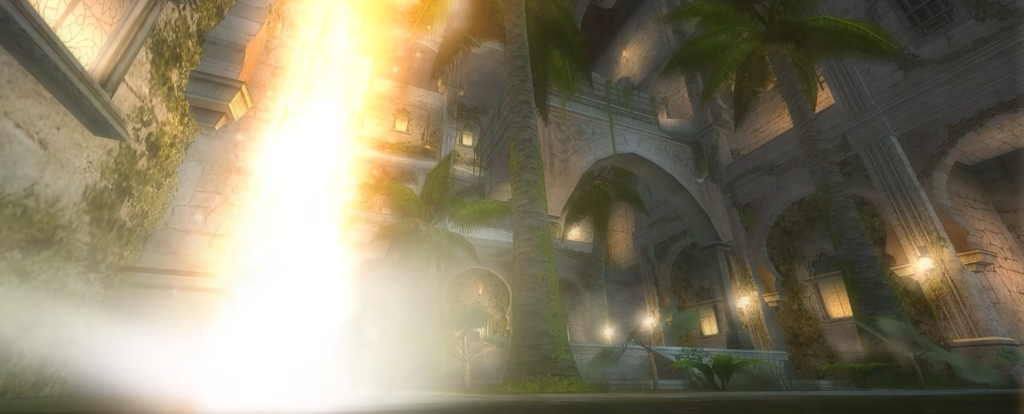
The environments frequently feel abandoned but not dead.
There is always the suggestion that the palace was magnificent only moments before the disaster. That contrast gives the adventure a melancholy quality. You are not exploring an ancient ruin that has been empty for centuries. You are moving through a living place suddenly frozen by catastrophe.
Character models and facial animation naturally reflect their era, but the broader visual direction still carries personality. The Prince’s exaggerated movements, Farah’s distinctive silhouette, and the palace’s dreamlike lighting give the game a clear identity that resolution alone cannot replace.
Sound and Music
Stuart Chatwood’s music mixes Middle Eastern-inspired instrumentation, atmospheric percussion, ambient passages, and occasional modern rock textures.
The soundtrack rarely overwhelms the environment. It supports the sensation of moving through a forgotten story.
The sound effects are equally important: the metallic scrape of the dagger, the rush of reversing time, the impact of a successful landing, the distant movement of machinery, the splash of water from a fountain.
And then there is the Prince’s narration.
Yuri Lowenthal gives him confidence, humor, impatience, and vulnerability. Joanna Wasick’s Farah offers a grounded counterbalance, giving their conversations the natural push and pull that makes the relationship believable.
Hearing those voices while navigating an empty palace creates a companionship that keeps the quieter stretches from feeling lonely.
The Moments That Stayed With Us
Certain memories from The Sands of Time tend to return immediately.
The first successful wall run.
The enormous hourglass opening and swallowing the kingdom in sand.
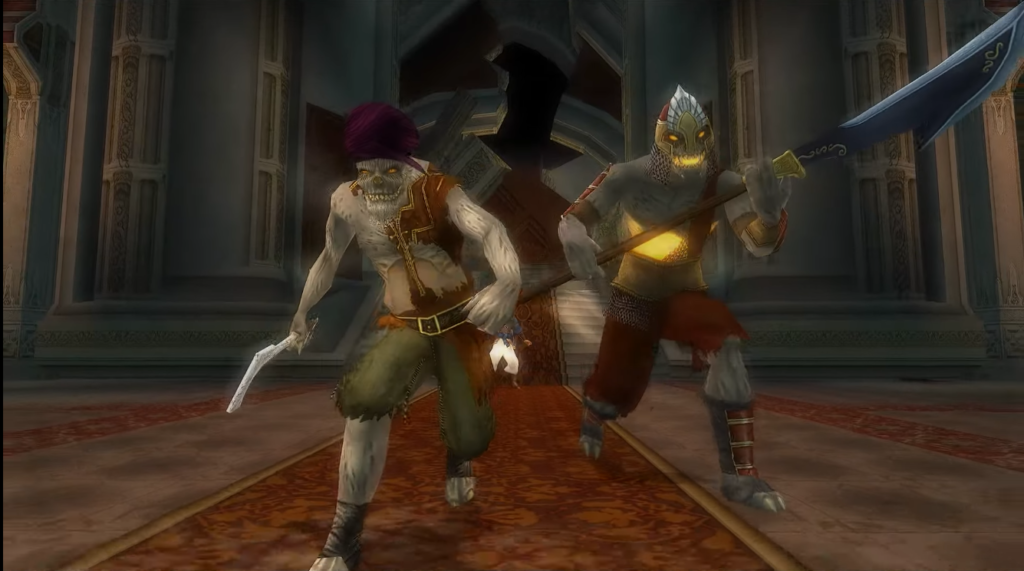
Descending through rooms that seem impossibly tall.
Navigating the palace’s mechanical defenses.
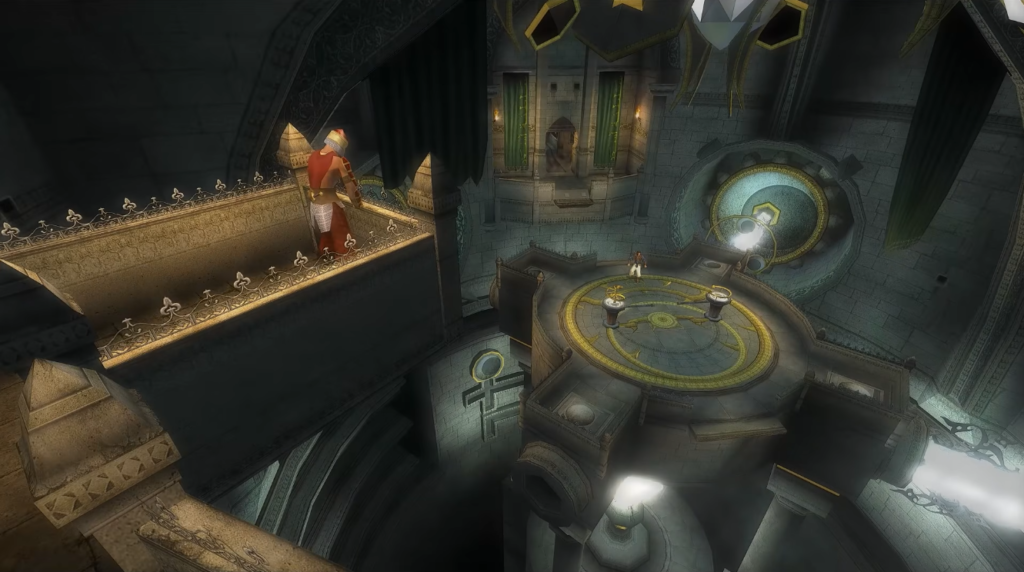
Drinking from a mysterious fountain and discovering that the Prince’s health has increased.
Trying to keep Farah safe while sand creatures attack from every direction.

Realizing that the route across a chamber is hidden in plain sight.
And, of course, rewinding a fatal fall just before impact.
The rewind is not merely a useful mechanic. It creates tiny stories.

You remember the time you jumped too early, reversed the mistake, waited half a second longer, and landed perfectly.
You remember being surrounded during a battle, pulling time backward, changing your target, and escaping an attack that had already killed you.
You remember the first time the game gave you enough confidence to move through an entire sequence without stopping.
That is why the mechanic made such a lasting impression. It did not just save progress. It let players correct their own memories.
When the Palace Starts Repeating Itself
Affection should not become blindness, and The Sands of Time has rough edges.
The combat encounters are its clearest weakness. Enemy waves can feel padded, and the requirement to absorb every defeated creature with the dagger slows the pace.

Farah’s pathfinding and survival instincts are not always reliable. The camera occasionally fights the player. Some puzzle solutions require more waiting and lever-pulling than genuine deduction.
The final stretch also loses some of the mechanical freedom that makes the middle of the adventure so satisfying.
Then there is the game’s structure. Although the palace feels enormous, progression is largely linear. Players expecting a broad modern exploration game may be surprised by how directly the adventure guides them from one set piece to the next.

But that linearity is also part of its strength.
The experience has a crafted rhythm. Every chamber, trap, conversation, and vista is placed along a deliberate journey. The game is not asking you to clear icons from a map. It is telling a story through forward motion.
Why The Sands of Time Still Matters
It would be easy to reduce the game’s importance to wall running and rewinding, but its influence goes deeper.
The Sands of Time demonstrated that cinematic presentation did not require sacrificing responsiveness. It showed that failure could be folded into a game’s fiction. It proved that traversal could carry the same emotional weight as combat.
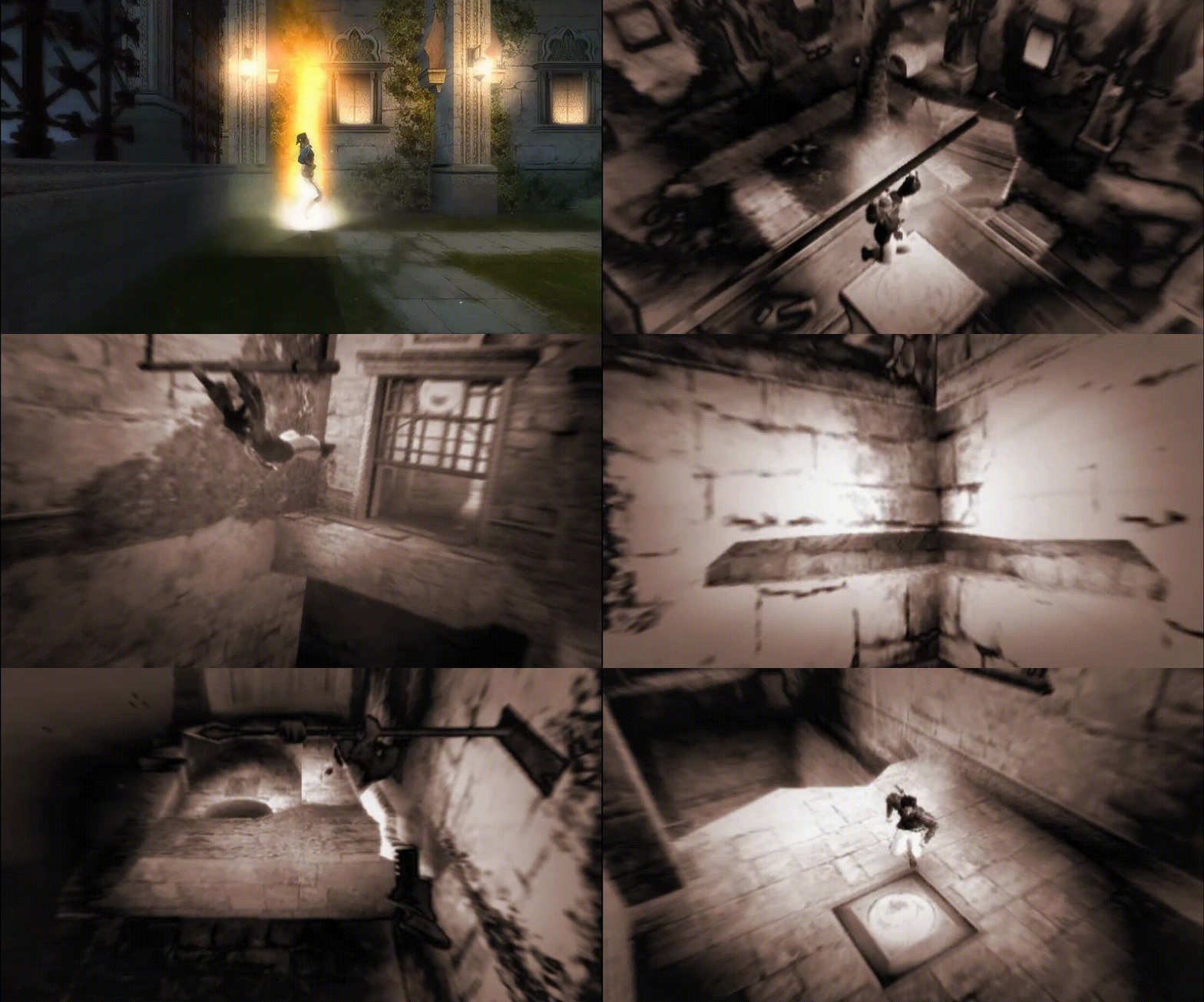
Its mixture of climbing, environmental navigation, dramatic camera work, and fluid animation can be felt in many later action-adventure games. Ubisoft Montreal itself would continue exploring acrobatic movement, historical architecture, and accessible traversal in projects that followed.
Yet the original remains distinctive because of its restraint.
The palace is grand, but the adventure is intimate. The stakes are enormous, but the story revolves around two people learning to trust one another. The Prince possesses power over time, but his real challenge is accepting responsibility for what he has done.
That human scale is what separates it from games that borrowed only the surface mechanics.
How It Feels to Revisit Today
The platforming remains the heart of the experience.

The Prince’s movements still feel expressive, the palace remains beautiful, and rewinding a mistake is still satisfying. The structure is also refreshingly focused. A typical playthrough can be completed without the enormous time commitment expected by many current action games.
New players should be prepared for a few early-2000s habits.
The camera may need active management. Combat can overstay its welcome. Character animation is sometimes stiff outside the Prince’s acrobatics. PC players may need minor troubleshooting or community fixes depending on their hardware and chosen release; GOG itself maintains support information for visual artifacts and compatibility issues.

Nostalgia certainly adds something, especially for players who remember seeing wall running for the first time.
But nostalgia is not required.
The game’s central ideas are still easy to appreciate because they are communicated through play. Give a new player the dagger, place them above a fatal drop, and let them discover what happens when time moves backward.
The magic explains itself.
Best Way to Play Today
For console players, the original Xbox version running through backward compatibility is the most convenient option. Microsoft currently lists the game as playable on Xbox One and Xbox Series X|S, and the title received Xbox One X enhancements. Availability and regional pricing can change, so check the store listing before purchasing.
Players who already own an original Xbox disc may also be able to use it on a backward-compatible Xbox console with a disc drive. The Xbox Series S cannot accept physical discs.
On PC, both GOG and Steam offer digital versions. GOG is particularly attractive for players who prefer a straightforward standalone purchase, although modern systems may still require adjustments for widescreen support, controller setup, or visual issues.
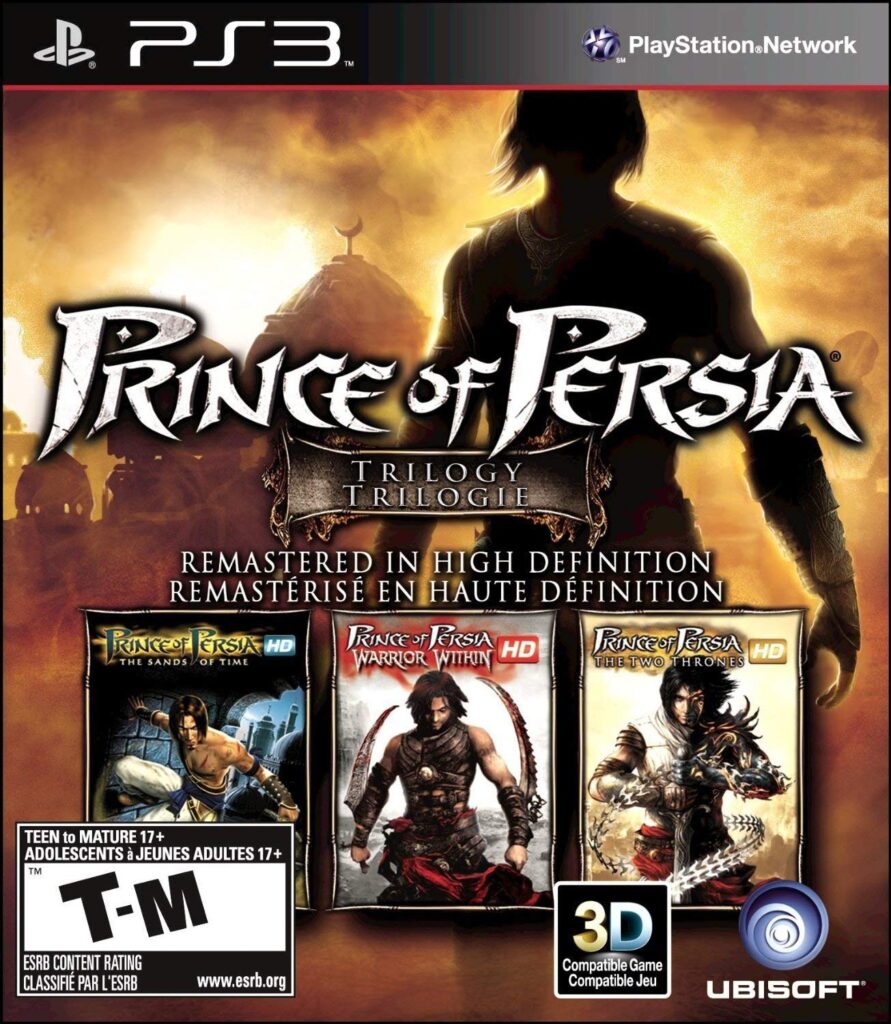
The Prince of Persia Trilogy HD on PlayStation 3 packages The Sands of Time, Warrior Within, and The Two Thrones. It is convenient for players who already own a PS3, though presentation and audio differences mean some purists still prefer the original releases.
For the full nostalgia experience, an original PS2, Xbox, or GameCube disc remains inexpensive compared with many collectible games from the same generation. Recent marketplace examples tracked by PriceCharting commonly place complete copies in the roughly $10–$20 range, depending on platform, condition, seller, and region. These figures fluctuate, so treat them as a general snapshot rather than a fixed value.
A physical copy is worth considering when:
- You still use original hardware.
- You want the manual and case on your shelf.
- You prefer a period-accurate controller.
- You find a clean copy at a sensible price.
A digital release is better when:
- You simply want to play the game.
- You do not own older hardware.
- You want improved output on a modern display.
- You would rather avoid aging discs, memory cards, and video adapters.
One important update for returning fans: Ubisoft officially stopped development of the long-delayed Sands of Time remake in January 2026. There is currently no forthcoming remake to wait for, making the original releases the practical way to experience this story.
Final Verdict: A Story Worth Telling Again
Prince of Persia: The Sands of Time is remembered because it made failure feel temporary and movement feel magical.
Its combat can become repetitive. Its camera sometimes needs patience. A few rooms reveal the limits of early-2000s 3D design.
But none of that erases the feeling of standing on one side of a ruined chamber, tracing a route across walls, poles, columns, and crumbling ledges, then setting the Prince in motion.
For returning players, it preserves a specific kind of sixth-generation memory: discovering that an action game could be graceful, romantic, funny, and forgiving without losing its danger.
For newcomers, it offers a focused adventure built around one of gaming’s most elegant ideas.
And for collectors, it remains that increasingly rare thing—a historically significant retro game that can still be purchased without treating the hobby like an investment portfolio.
Play it for the palace. Play it for Farah. Play it for the wall running.
Just keep a little sand in the dagger.
You may need another try.