Posted on July 24, 2026
Max Payne 25th Anniversary: Why Bullet Time Still Feels Brilliant
Twenty-five years after Remedy sent players diving through gunfire in slow motion, Max Payne remains one of PC gaming’s most stylish and influential action thrillers.
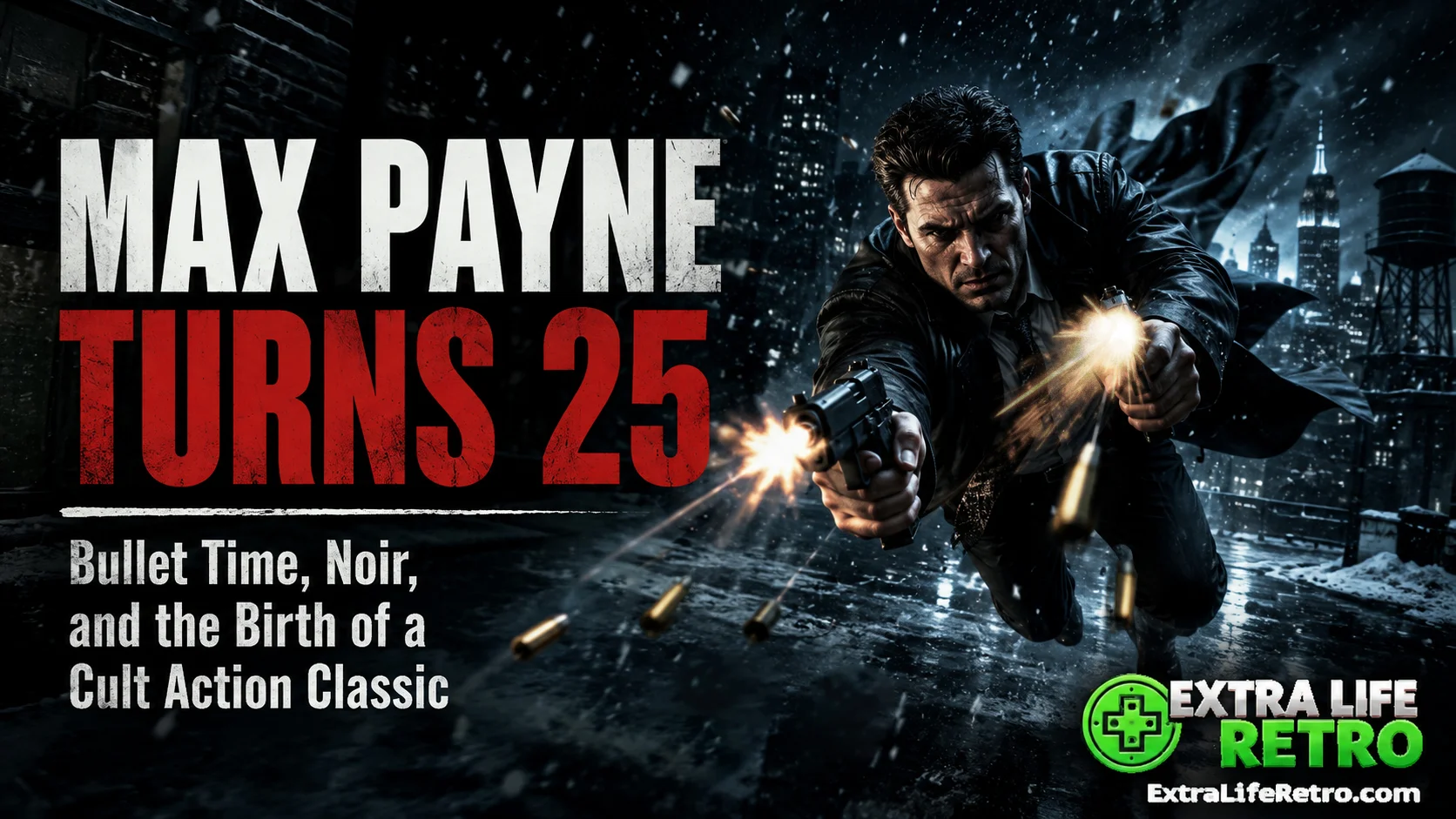
Twenty-five years ago, Max Payne stepped into a frozen New York night with two Berettas, a leather jacket, and absolutely nothing left to lose. The Max Payne 25th anniversary is not merely a chance to remember a famous gimmick. Bullet Time may have been the hook, but the game endured because Remedy surrounded it with atmosphere, personality, sharp action design, and the kind of gloriously excessive noir storytelling that most studios would have been afraid to attempt.
A quarter-century later, Max is still falling through doorways in slow motion. Somehow, it still looks cool.
Originally released for Windows on July 25, 2001, Remedy Entertainment’s hard-boiled third-person shooter arrived at exactly the right cultural moment. Action fans were still fascinated by the slow-motion gunfights popularized in late-1990s cinema, PC games were becoming increasingly cinematic, and players were ready for something darker than another anonymous military corridor or colorful sci-fi arena. Rockstar’s official game page lists July 25, 2001, as the release date, while later versions brought the game to PlayStation 2, Xbox, mobile devices, Game Boy Advance, and newer PlayStation hardware.

Max Payne Release History at a Glance
- Original release: July 25, 2001
- Original platform: Windows PC
- Developer: Remedy Entertainment
- Original publisher: Gathering of Developers
- Genre: Third-person action shooter
- Later platforms: PlayStation 2, Xbox, Game Boy Advance, iOS, Android, Kindle and newer PlayStation systems
- Franchise position: First game in the Max Payne series
The original PC release was followed by PlayStation 2 and Xbox versions later in 2001. The game eventually received additional adaptations and digital releases, although the experience can differ considerably between platforms. Rockstar currently lists versions across PC, Xbox, PlayStation and mobile hardware.
Remedy and Rockstar are also developing Max Payne 1 & 2 Remake as a single title for PC, PlayStation 5 and Xbox Series X|S. Remedy’s official project page does not currently provide a release year, so players should be cautious about treating rumored dates as confirmed.
What Made Max Payne Special?
The easiest answer is Bullet Time.
Press a button, slow the world around Max, leap sideways and unload both pistols while bullets crawl visibly through the air. It transformed encounters that might have felt like ordinary third-person shooting galleries into miniature action sequences directed by the player.

Bullet Time was not simply a visual flourish. It gave players additional time to aim, identify threats and make tactical decisions during chaotic firefights. The slow-motion meter also prevented it from becoming a permanent advantage, encouraging players to use it aggressively and replenish it through successful combat.
Then there was the shoot-dodge.
Max could throw himself sideways, forward or backward while continuing to fire. Sometimes the smartest move was to enter a room cautiously. More often, the most satisfying move was to dive through the doorway like a man who had already decided that survival was somebody else’s problem.
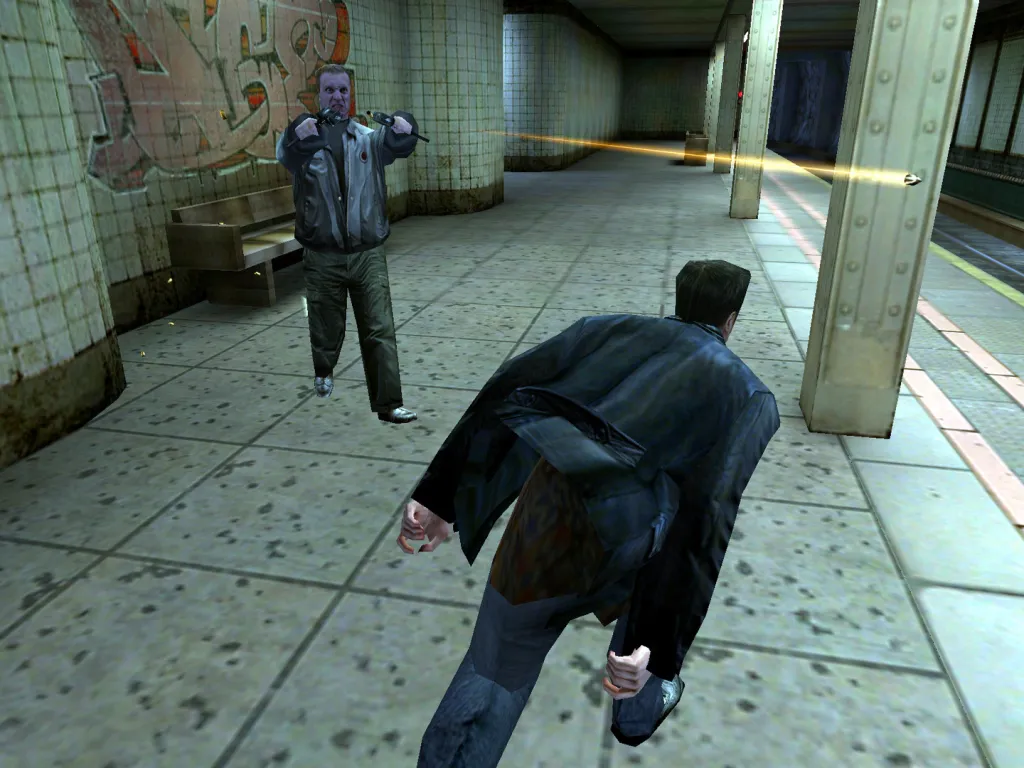
The result was a combat rhythm unlike almost anything else available in 2001. Every room became a violent little performance: identify the enemies, choose a weapon, trigger Bullet Time, launch Max through the air and hope the landing did not leave him exposed beside three armed mobsters.
Remedy’s interest in stylized slow-motion action predated the game’s release. Developers have discussed Hong Kong action cinema—and particularly the influence of John Woo—as an important part of the concept’s development. Producer Scott Miller later recalled encouraging Remedy to turn its slow-motion effects into an active gameplay mechanic rather than limiting them to cinematic enemy deaths.
The mechanic was spectacular, but it also worked. That distinction is why it mattered.
A Noir Thriller Told Like a Graphic Novel
Max Payne could have survived as a stylish shooter alone. What made it unforgettable was the voice surrounding the gunfire.
The story follows Max, an undercover officer framed for murder while investigating the Valkyr drug conspiracy connected to the killing of his wife and infant daughter. It is a revenge story filled with corrupt officials, mobsters, secret projects, unreliable reality and a city seemingly trapped in permanent darkness.

That grim revenge-driven atmosphere also connects Max Payne to other antihero games, including The Punisher, another violent action title built around loss, vengeance, and a protagonist operating far outside the usual heroic mold.
Instead of relying primarily on expensive full-motion cinematics, Remedy presented much of the narrative through photographed graphic-novel panels accompanied by dialogue, sound effects and Max’s internal narration. The technique was partly practical, but it became one of the game’s defining artistic choices.
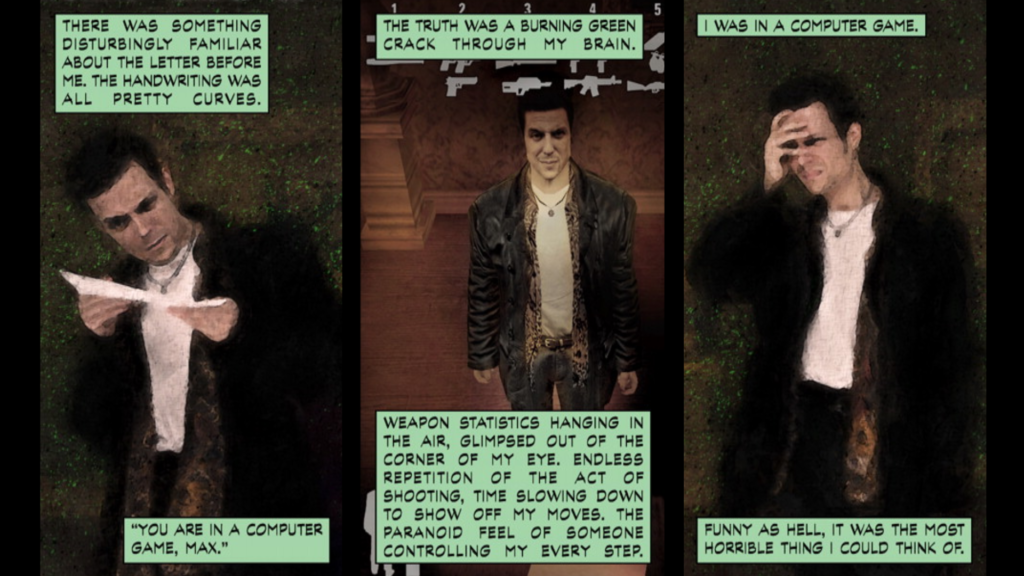
Remedy had limited production resources, so members of the development team, friends and relatives appeared as characters in the photographed panels. Writer Sam Lake famously provided Max’s face, while James McCaffrey supplied the weary, gravel-edged voice that gave the character his emotional identity.
The writing was not subtle. Max described buildings, blizzards and personal misery through metaphors stacked high enough to violate several municipal safety codes. Yet the excess worked because the game understood its own tone. It was a sincere tragedy delivered with pulp-comic intensity and flashes of self-awareness.
Max Payne was gloomy, but it was never dull.
A Perfect Product of the 2001 PC Gaming Era
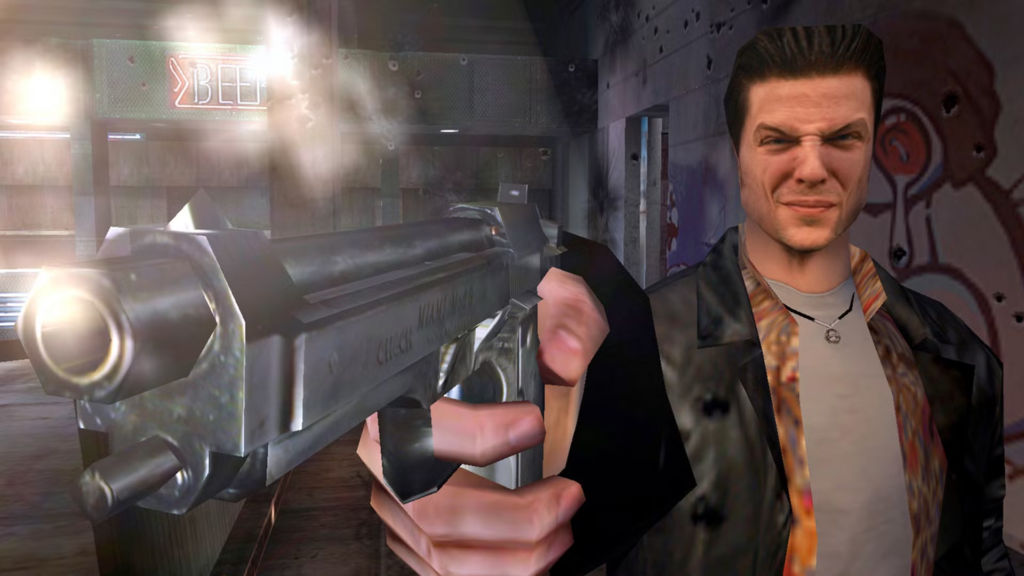
The game arrived during a fascinating transition for PC gaming.
First-person shooters still dominated much of the action landscape, but developers were experimenting with more cinematic structures, sophisticated 3D environments and stronger narrative presentation. At the same time, the PlayStation 2 had launched, Microsoft was preparing the original Xbox, and the boundary between traditionally PC-focused games and console action titles was beginning to weaken.
Max Payne sat comfortably between those worlds.
Its mouse-and-keyboard aiming, quick saves and demanding firefights felt unmistakably rooted in PC gaming. Its third-person camera, cinematic presentation and eventual console ports pointed toward the multiplatform action games that would become increasingly common throughout the decade.

For players who first encountered it on a beige family computer, the game felt almost impossibly stylish. This was the sort of title you saw in screenshots, magazine previews or a friend’s PC demonstration and immediately wanted to experience for yourself. Watching Max dive through a room while shell casings and bullets drifted around him was a persuasive argument for upgrading whatever aging graphics card happened to be inside the household computer.
It also arrived while The Matrix was still shaping popular expectations for digital action. Max Payne naturally benefited from that cultural moment, although Remedy’s developers have explained that their slow-motion combat ideas were also deeply connected to Hong Kong action cinema.
More Than a One-Mechanic Shooter
Bullet Time received the headlines, but the surrounding game was carefully constructed.
Max moved through subway stations, cheap hotels, warehouses, nightclubs, industrial facilities and corporate spaces, all buried beneath an almost supernatural New York blizzard. The environments were often linear, but they created the convincing impression of descending deeper into a city that had gone completely rotten.
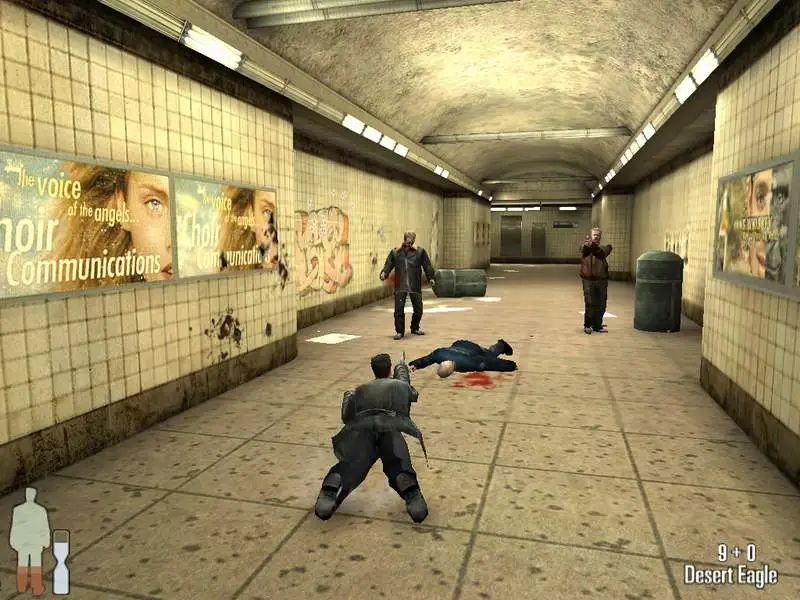
Weapon progression was straightforward and satisfying. Pistols gave way to shotguns, submachine guns, rifles, grenades and heavier options as the conspiracy escalated. Ammunition management rarely became complicated, yet each weapon encouraged a slightly different approach to positioning and Bullet Time.
The game also made unusually effective use of televisions, radio broadcasts, environmental details and fictional programs to expand its world. These elements foreshadowed Remedy’s later fascination with stories nested inside other stories—a style that would become central to games such as Alan Wake and Control.

Even the nightmare sequences, divisive as they remain, showed Remedy’s willingness to disrupt the action with surreal imagery and psychological horror. Following a thin trail of blood through darkness while the sound of a crying child loops in the background is not exactly the part most players rush to revisit. It is, however, difficult to forget.
Why Max Payne Still Matters
Max Payne helped demonstrate that a third-person shooter could be mechanically exciting, narratively ambitious and stylistically distinctive at the same time.
It was not the first game to use slow motion, cinematic influences or noir storytelling. Its achievement was bringing those elements together in a package that felt cohesive and immediately understandable. Players did not need a lengthy explanation of Bullet Time. They pressed the button, watched the world slow down and knew exactly why it was fun.

The game also established many of the qualities that would later define Remedy Entertainment: troubled protagonists, layered realities, metafiction, television programs within the game world, strong authorial personality and action mechanics tied directly to the story’s atmosphere.
Remedy and Rockstar themselves describe the original games as notable for their neo-noir atmosphere, storytelling and Bullet Time gunplay. The fact that the companies are now collaborating on remaking the first two titles shows that Max’s original journey remains commercially and creatively relevant decades later.
Its most important legacy may be simpler, though. Max Payne made players feel as though they were directing an action movie one room at a time.
Games have produced larger battles, smoother animations and more advanced destruction since then. Few have made a basic sideways dive feel quite as satisfying.
How Does Max Payne Hold Up Today?
The original remains entertaining, but twenty-five years have left marks.
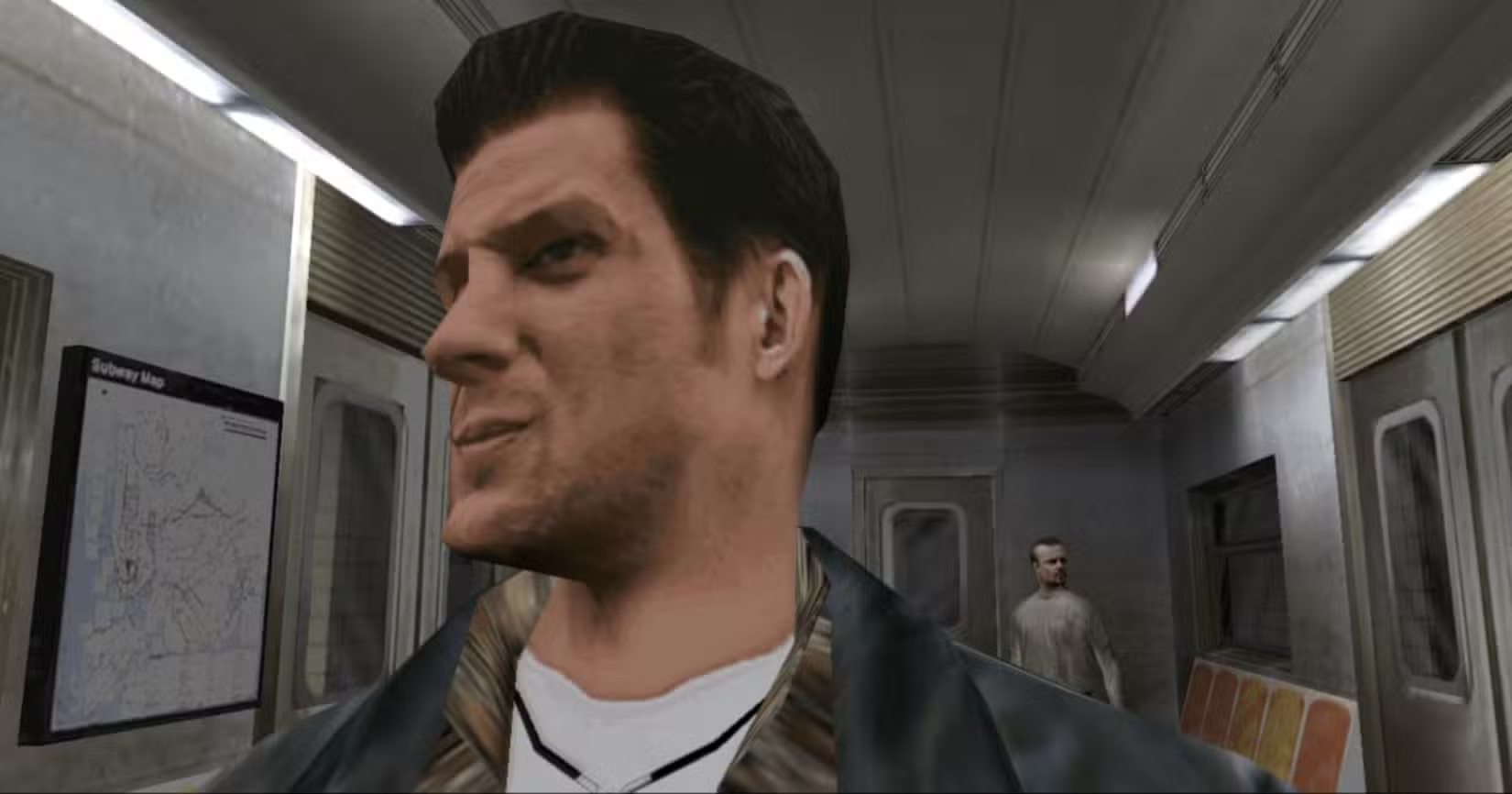
The shooting is still fast, readable and satisfying, particularly with mouse and keyboard. Bullet Time remains useful rather than merely decorative, and the game’s compact encounters prevent it from becoming a repetitive cover shooter. Max is designed to keep moving, take risks and attack aggressively.
The atmosphere may have aged even better than the technology. Low-resolution textures and angular character models now contribute to the game’s early-2000s identity. The graphic-novel presentation, winter setting, music and narration give it a personality that higher polygon counts could not automatically improve.
Some elements are less graceful.
Enemy accuracy can feel punishing, and entering a room without knowing what waits behind the door can lead to sudden deaths. Frequent saving is highly recommended. Platforming sequences are stiff, several environmental puzzles interrupt the pace, and the nightmare sections remain more effective as narrative ideas than enjoyable pieces of movement-based gameplay.
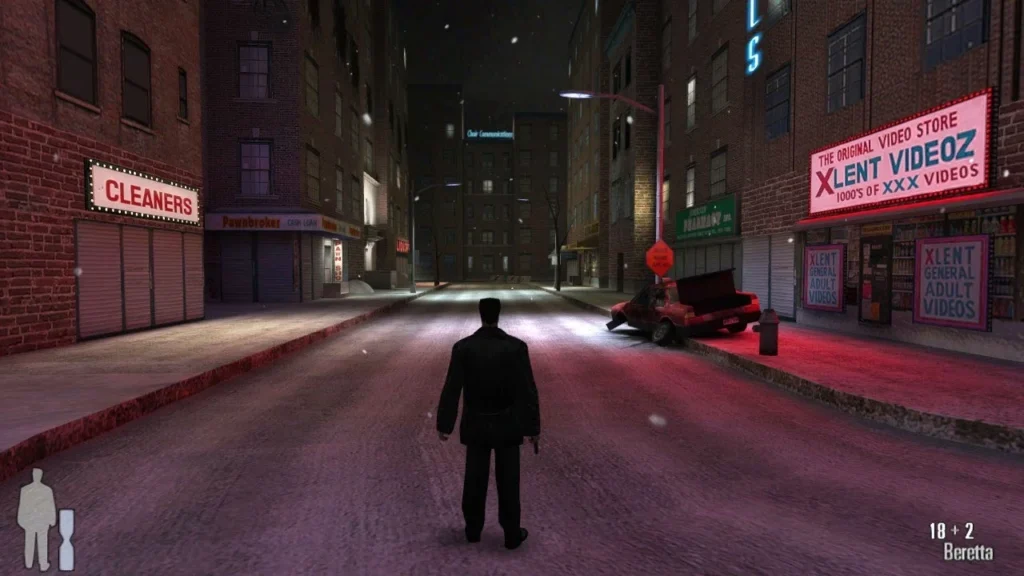
The console versions also make compromises compared with the original PC game. Players who have a suitable computer will generally find that the PC version offers the most natural controls, although older Windows games can occasionally require troubleshooting on modern hardware.
New players should not expect a contemporary cover-based shooter. Max Payne comes from an era when action games were comfortable killing the player quickly and letting a quick-save key handle the consequences.
Approached on those terms, it remains an excellent weekend of noir gunplay.
Best Way to Play Max Payne Today
At the time of writing, the original game is sold digitally through Steam, while console versions are listed through the Xbox Store and PlayStation Store. Store availability, compatibility and regional listings can change, so check the relevant platform before purchasing.
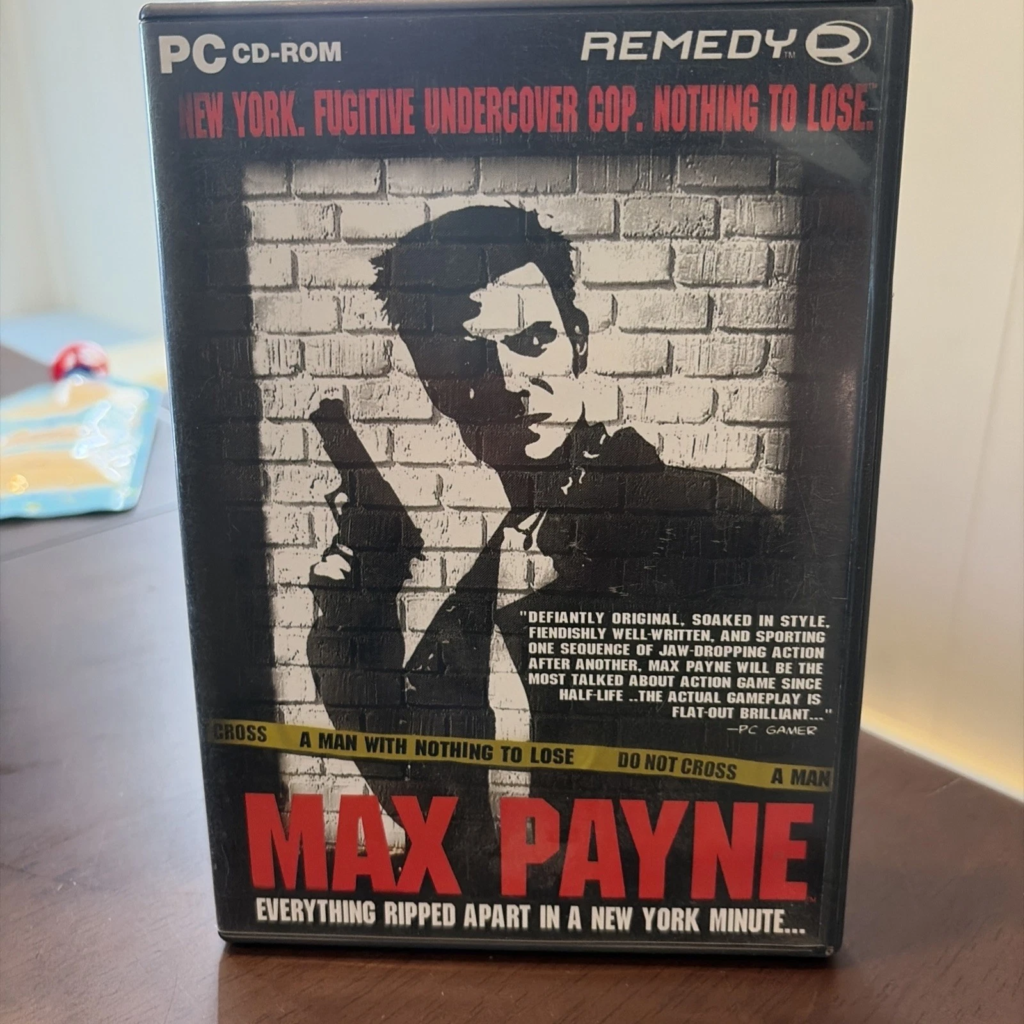
For most players, the PC version remains the most appropriate starting point because the game was originally designed around mouse-and-keyboard aiming. It is also frequently discounted. However, prospective buyers should check recent compatibility reports, since running a 2001 PC title on current versions of Windows may require community-documented fixes or adjustments.
The PlayStation Store version is based on the PlayStation 2 release and adds features such as higher-resolution rendering and Trophy support on compatible hardware. That makes it convenient for PlayStation players, but it should not be mistaken for a full remaster.
Xbox players can also purchase the original game digitally, providing a convenient alternative to tracking down an aging disc and compatible original hardware.
Those interested in the upcoming remake may prefer to wait, but there is value in experiencing the original first. Its photographed characters, chunky environments, graphic-novel transitions and famous Sam Lake expression are not defects to be erased. They are part of the reason the game became a cult classic.
What the Anniversary Means for Collectors
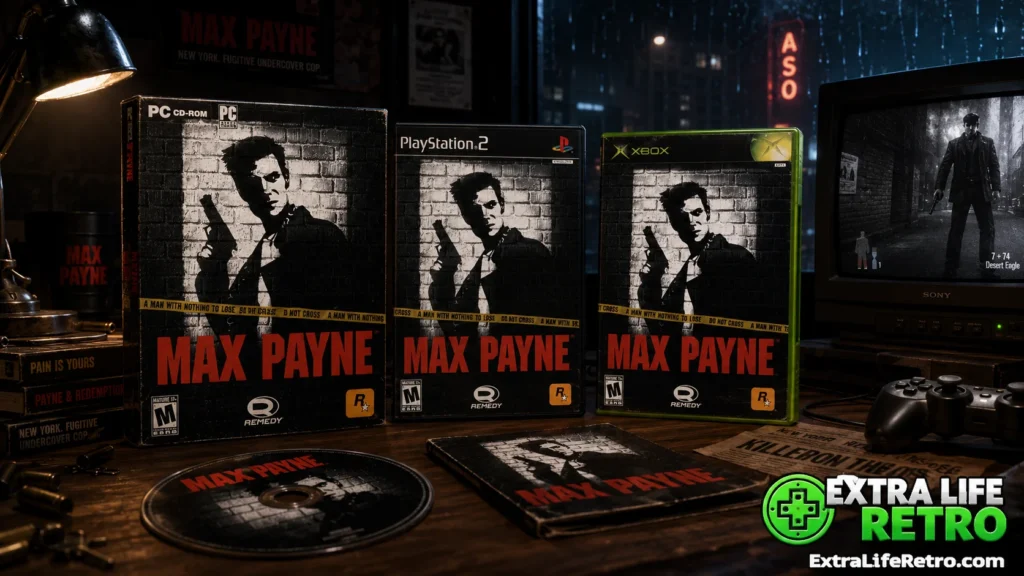
Physical PC, PlayStation 2 and Xbox copies remain attractive pieces of early-2000s gaming history. Complete editions with intact boxes, manuals and inserts will naturally be more appealing to collectors than loose discs, but prices can vary significantly by platform, region and condition.
Collectors should compare current sold listings rather than relying on an isolated asking price. Max Payne is historically important, but that does not mean every physical copy is exceptionally rare or worth paying a premium for.
The original large-box PC edition offers the strongest nostalgia hit for players who remember when PC games arrived with substantial packaging. Console collectors may prefer the PS2 or Xbox release that matches the system on which they first played it.
For everyone else, a digital version is cheaper, easier to access and more practical. Owning the original box is satisfying. It is not required to appreciate the game.
Twenty-Five Years of Painkillers and Slow-Motion Gunfire
Max Payne arrived in 2001 wearing its influences openly: noir detectives, Hong Kong action movies, crime comics, psychological thrillers and cinematic slow motion. What could have felt derivative instead became unmistakably Remedy.
Its textures are old. Its platforming is awkward. Its metaphors occasionally sound like they were written during a contest to see who could make rain seem the most emotionally devastated.
None of that has broken the game’s appeal.
Twenty-five years later, Max Payne remains a powerful example of what happens when a developer takes one excellent mechanic, surrounds it with a strong identity and commits fully to the mood. It is bleak, theatrical, violent, strange and far more memorable than a conventional shooter needed to be.
The night was cold. The city was broken. Max was outnumbered.
Then the clock slowed down.