Posted on July 8, 2026
Streets of Rage 2: The Genesis Brawler That Still Owns the Night
Disclosure: Some of the links in this post are affiliate links. This means if you click on the link and purchase an item, we will receive an affiliate commission at no extra cost to you. All opinions remain my own. We only recommend products or services we believe will add value to my readers.
A warm, neon-soaked revisit to one of the SEGA Genesis’ defining beat ’em ups
The City Calls Again
Some retro games feel like memories. Streets of Rage 2 feels like a memory with a bassline.
You do not just remember the punches. You remember the mood. The blue-black city. The glowing signs. The sidewalk fights. The sudden elevator brawl. The way enemies stroll onto the screen like they own the pavement. The way the music does not politely sit in the background, but grabs the whole game by the collar and says, “We are going out tonight.”
Released on the SEGA Genesis in 1992, Streets of Rage 2 arrived during one of the console’s strongest stretches. Sonic had given SEGA speed and swagger. Sports games gave the Genesis a living room identity. Arcade ports and arcade-style games made the system feel louder, sharper, and a little more rebellious than its competition. Streets of Rage 2 fit that mood perfectly.
This was not a complicated game. Four fighters walk from left to right and clean up the city one gang member at a time. But the magic is in how confidently it does that. Streets of Rage 2 is not trying to be everything. It knows exactly what it is: a two-player street brawler with big sprites, tight hits, memorable enemies, and one of the most iconic soundtracks on the Genesis.
And when a game knows itself that well, it tends to stick around.
At a Glance
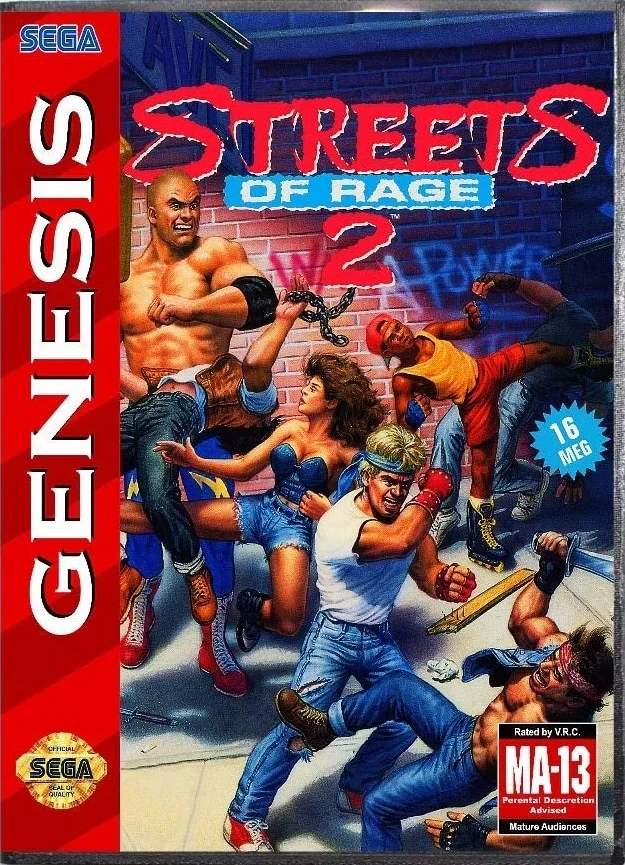
Platform: SEGA Genesis
Released: 1992 on Genesis/Mega Drive, with later releases and ports across other platforms
Developer: Ancient, Shout! Designworks, M.N.M Software, and H.I.C.
Publisher: SEGA
Genre: Side-scrolling beat ’em up / brawler
Vibe: Neon streets, thumping club music, flying fists, busted phone booths, and that perfect late-night Genesis attitude.
You’ll Love It If: You enjoy arcade-style action, couch co-op, chunky 16-bit sprites, and games that get straight to the point.
Maybe Skip If: You need deep progression systems, frequent checkpoints, or modern quality-of-life features in every retro game.
Best Way to Play: Original Genesis hardware is still the pure nostalgia hit, but Nintendo Switch Online + Expansion Pack currently offers a convenient modern option with save states, rewind, and online play features.
Collector Note: Original cartridges are very collectible, but prices vary widely by condition and completeness. Casual players may be better served by a modern release or subscription option.
What Streets of Rage 2 Was in Its Era
To understand why Streets of Rage 2 landed so hard, you have to picture the early ’90s home console battlefield. Beat ’em ups were arcade royalty. Final Fight, Double Dragon, Teenage Mutant Ninja Turtles, The Simpsons Arcade Game, Captain Commando — these were the games that could eat quarters all afternoon.
At home, though, things were trickier. Console ports often had compromises. Missing characters. Missing co-op. Smaller sprites. Slower action. The dream was always simple: bring the arcade feeling home without making it feel like a watered-down apology.
Streets of Rage 2 did not feel like an apology.
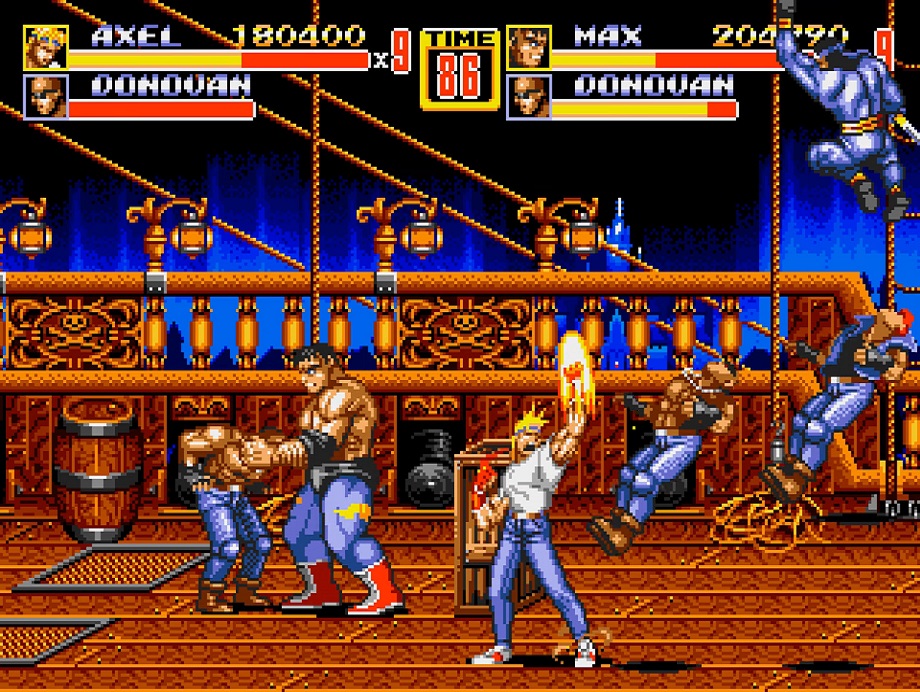
It felt like SEGA looked at the arcade brawler formula and said, “Fine, we will build our own.” Bigger characters. Better animation. More moves. More personality. Two-player co-op. A soundtrack that sounded like it escaped from a nightclub and landed inside a cartridge.
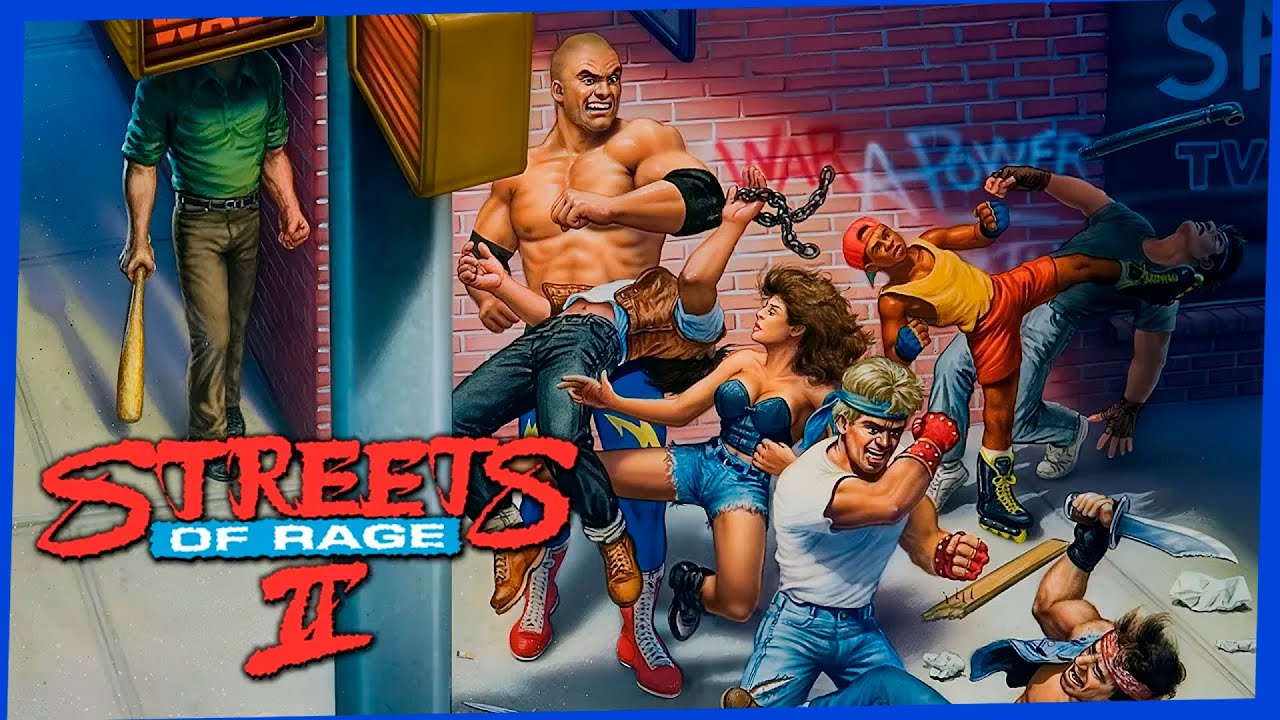
The setup is classic arcade storytelling. After the first game, Mr. X returns, Adam is kidnapped, and Axel, Blaze, Skate, and Max head into the city to set things right. MobyGames’ description notes the sequel’s larger, more animated characters, enemy names and life bars, new moves, and new playable fighters. That is really the whole pitch: Streets of Rage, but bolder, heavier, cleaner, and more confident.
For Genesis owners, this was the kind of game that made the system feel powerful.
The Cultural Impact: SEGA’s Street-Level Statement
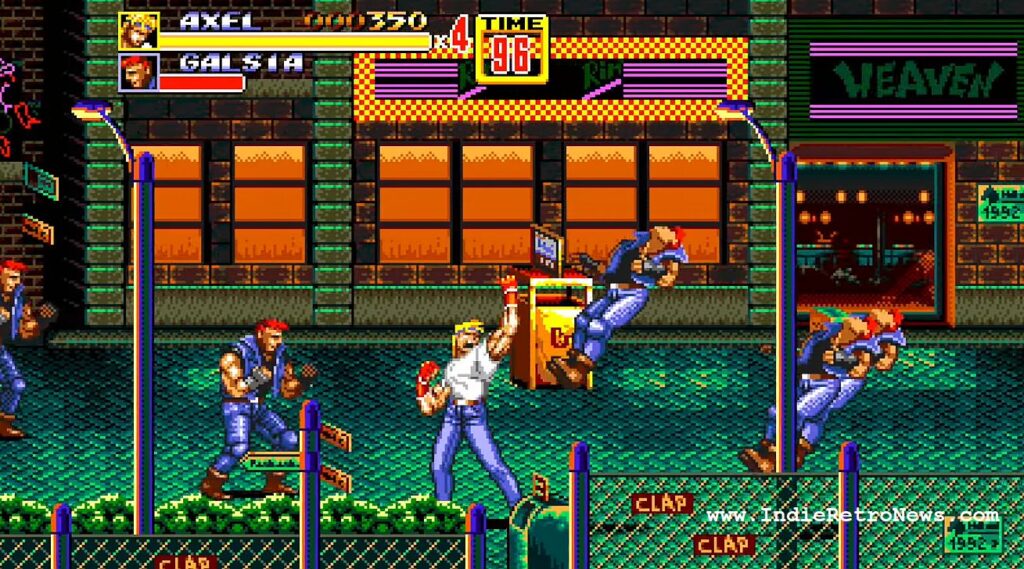
Streets of Rage 2 did more than give Genesis owners a great beat ’em up. It helped define what SEGA cool felt like in the early ’90s. This was the Genesis attitude in cartridge form: urban, loud, stylish, immediate, and just a little dangerous. While Nintendo often owned the bright mascot fantasy side of the console wars, SEGA had a different kind of energy, and Streets of Rage 2 became one of the clearest examples of it.
The game also proved that a console brawler did not have to feel like a compromised arcade port. It could be its own event. For a lot of players, Streets of Rage 2 became the home-console beat ’em up, the one you pulled out when a friend came over and you wanted instant action without explaining much. That matters because couch co-op was not just a feature then; it was a social ritual. This was the kind of game that turned a living room into a two-player arcade.
Its soundtrack had a cultural life of its own, too. Yuzo Koshiro’s club-influenced score gave the game an identity that reached beyond the usual “video game music” expectations of the era. Even now, the music is a huge part of why the game is remembered with such intensity. Streets of Rage 2 did not just look like the night. It sounded like it.
That influence is still visible whenever modern indie brawlers chase neon streets, heavy beats, chunky sprites, and co-op chaos. Streets of Rage 2 helped set that template. It preserved the arcade spirit, but gave it a distinctly Genesis heartbeat.
The Gameplay Experience: The Part Your Hands Remember
Streets of Rage 2 is easy to understand in about ten seconds. You move in eight directions, punch, jump, grab, throw, use weapons, and unleash special attacks when the screen starts getting too rude. It is simple enough for someone to pick up during a sleepover, but deep enough that experienced players start developing little habits: lining enemies up, baiting attacks, saving health items, learning boss patterns, and deciding when a special move is worth the health cost.
Each character changes the feel of the game in a real way. Axel is the all-around bruiser, steady and dependable, with that unforgettable “Grand Upper” energy. Blaze is quick, stylish, and probably the smoothest character for many players. Skate brings speed and a younger, scrappier rhythm. Max is slower, but when he grabs somebody, it feels like the pavement should file a complaint.
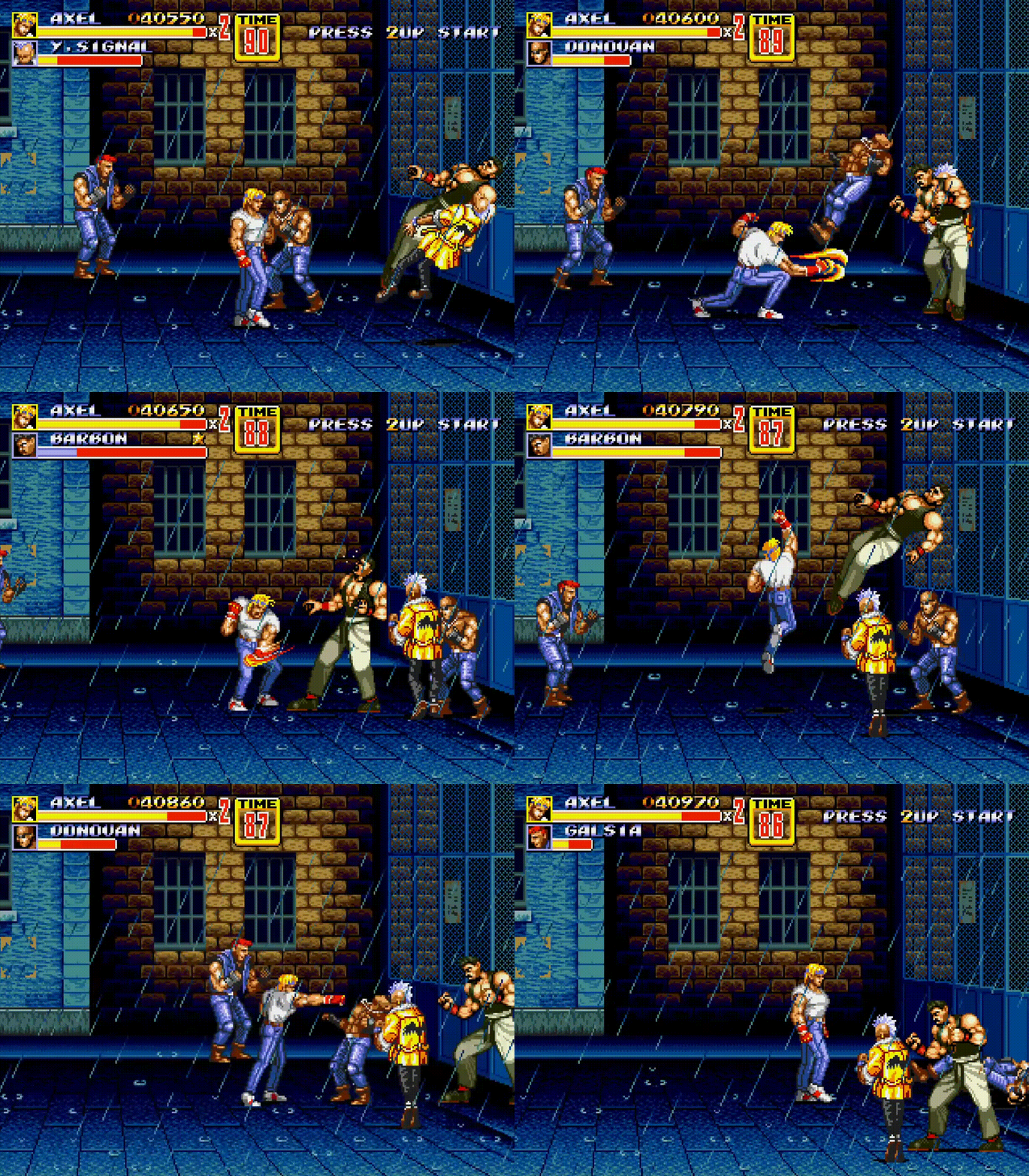
That variety matters because the game is built around repeated play. You are not leveling up. You are not unlocking a skill tree. You are learning the streets. You start to know where enemies appear, which weapons are worth grabbing, when a boss is about to turn cheap, and when your co-op partner is about to accidentally pick up the health item you desperately needed.
That is part of the charm, too. Streets of Rage 2 is one of those games where couch co-op is both teamwork and mild betrayal. You are fighting the same gang, but you are also racing for apples, arguing over roast chickens, and trying not to punch each other by mistake. Two-player mode is where the game feels most alive.
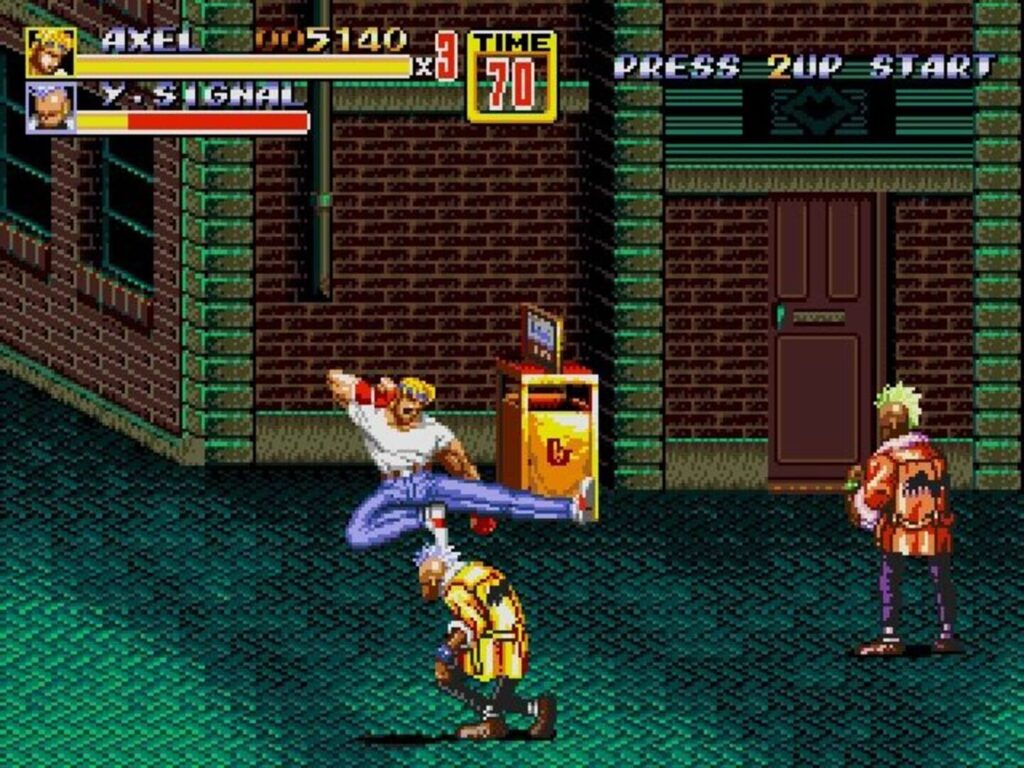
The controls still feel good because they are direct. There is a little commitment to movement and attack spacing, as there should be in a beat ’em up, but it rarely feels sloppy. When a hit connects, it has weight. When an enemy goes flying, it feels earned. When you grab a pipe or knife, the whole screen suddenly feels a little more dangerous.
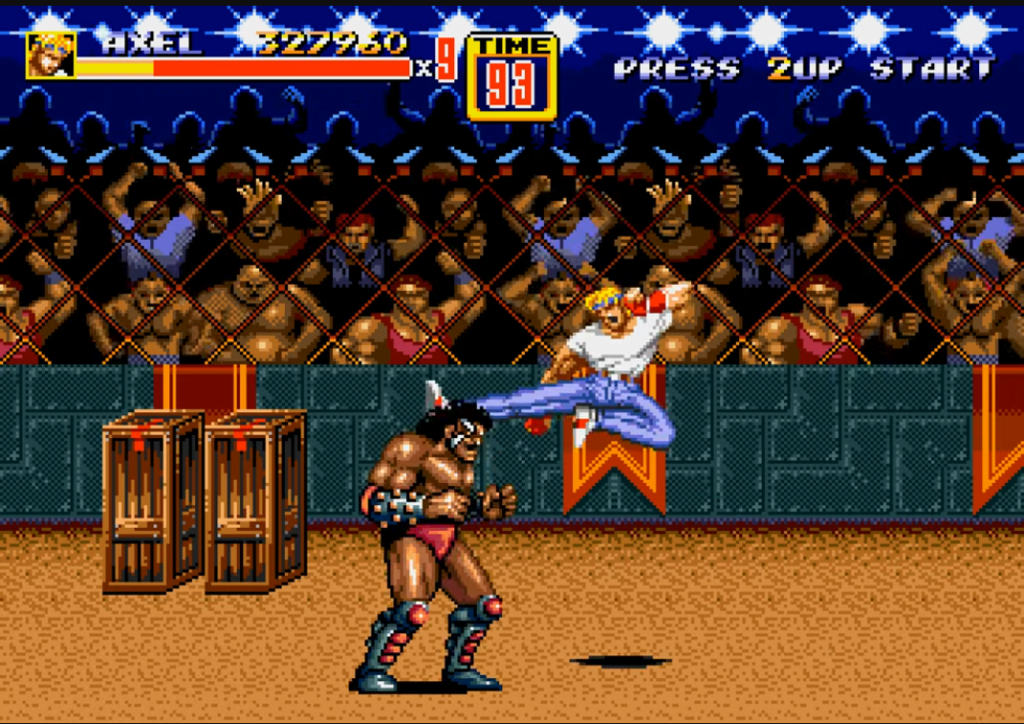
The visuals are pure 16-bit street drama. Big sprites, colorful backgrounds, sharp silhouettes, and stages that move from urban sidewalks to bars, bridges, amusement areas, elevators, factories, and that final climb toward Mr. X. The game does not need long cutscenes because the environments do a lot of the storytelling. You know what kind of city this is because every screen feels like a place where trouble is waiting just outside the music.
And that music — come on. Yuzo Koshiro’s soundtrack is a huge part of why Streets of Rage 2 is still talked about with such affection. It gives the game its pulse. The tracks bring house, techno, breakbeat, and club-inspired energy into a Genesis cartridge in a way that still feels wildly stylish. Even if someone has not played the game in years, one song can pull them right back to a CRT glow and a six-button controller.
The story is thin, but that is not really a flaw here. The story is an excuse to walk into danger with a friend and clean up the screen. The emotional stakes are created through action, music, and momentum. You are not reading about the city falling apart. You are walking through it, one broken bottle and spinning kick at a time.
The Moments That Stick
Every great beat ’em up needs moments that players can instantly remember, and Streets of Rage 2 has plenty.
The opening stage is one of the best introductions on the Genesis. It gives you the street, the music, the enemies, the rhythm, and the promise of everything ahead. It is not overly complicated. It just feels right.
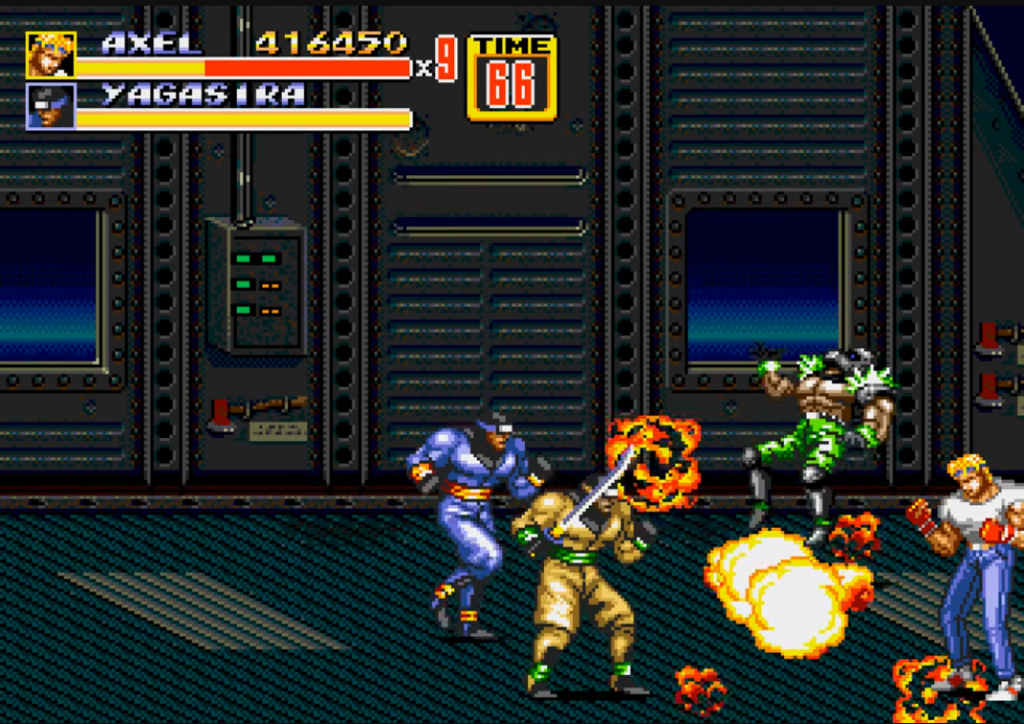
The bar fight has that classic “things are getting worse” energy. The elevator sequence is one of those old-school tests where positioning becomes everything. Boss fights like Barbon, Abadede, and Shiva have a way of humbling players who were feeling a little too confident. And Mr. X, sitting there with that weapon like a final exam in arcade villainy, gives the whole thing the proper late-night finale.
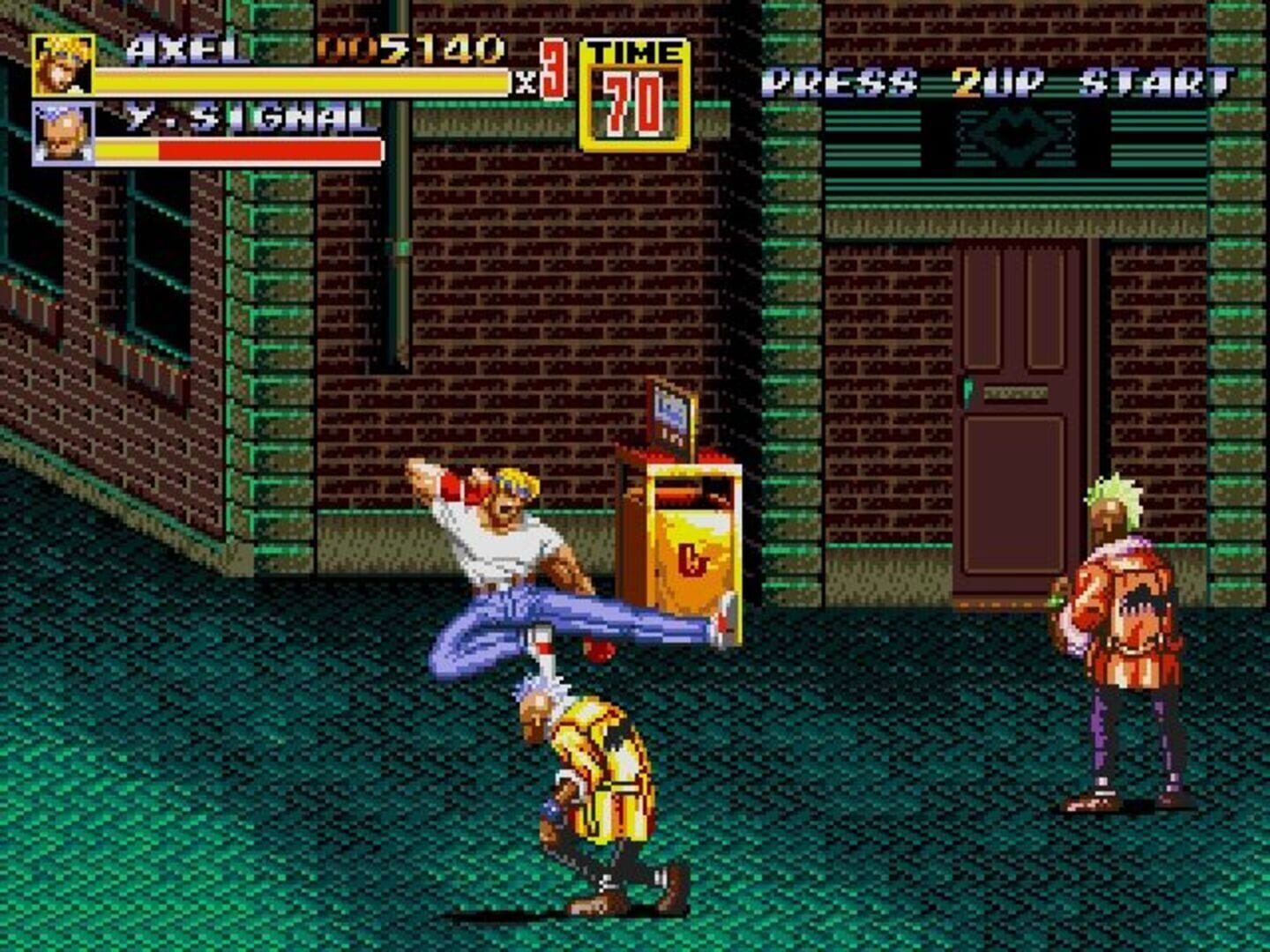
This is also one of those games where enemy names become part of the memory. Signal. Galsia. Donovan. Electra. The details are small, but they matter. They give the game texture. You are not just clearing anonymous sprites. You start recognizing trouble before it even reaches you.
The Culture Around the Cartridge
Streets of Rage 2 belongs to the rental-store era. It is easy to imagine the clamshell case sitting on a shelf with bold Genesis branding, promising instant action for the weekend. This was the kind of game that made sense as a rental, but also the kind you wanted to own once you realized how replayable it was.
It also fit perfectly into the schoolyard and couch-co-op culture of the time. Which character was best? Was Max too slow or secretly unstoppable? Was Blaze the smoothest pick? Could you make it to the end on limited continues? Did your friend know some trick you did not? Those conversations mattered because games traveled through people back then. Magazines helped, sure, but a lot of gaming knowledge moved from friend to friend, living room to living room.
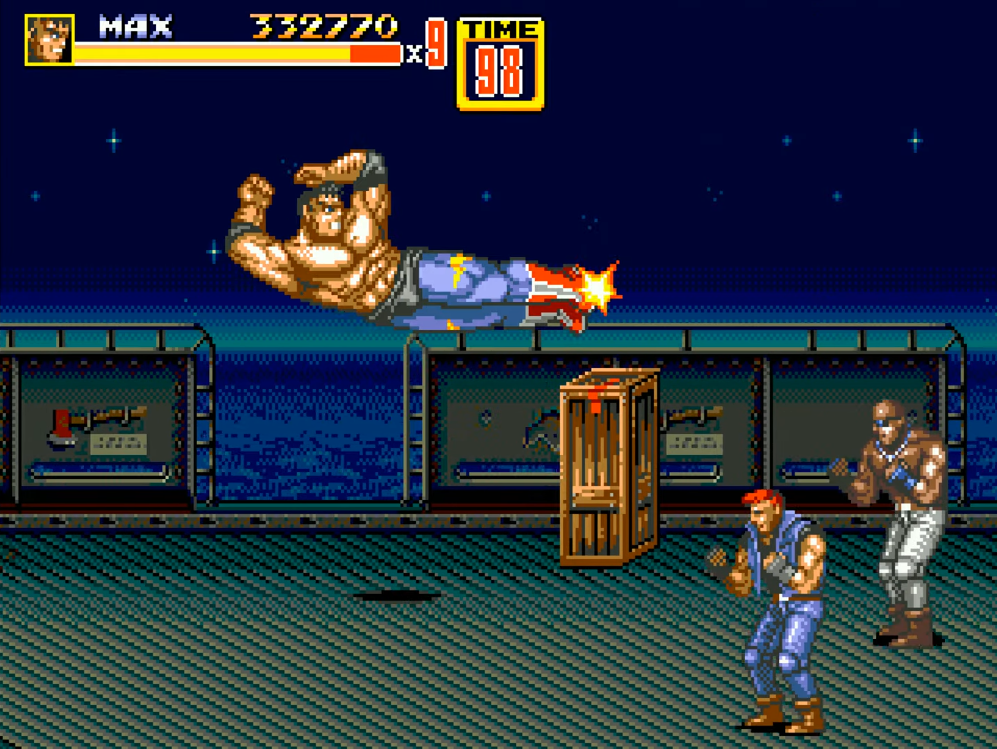
Streets of Rage 2 also gave Genesis fans a real answer to the arcade brawler obsession. It did not need to be Final Fight. It had its own identity. It was street-level, music-driven, stylish, and unmistakably SEGA.
What Is Rough Today?
As affectionate as this retro game review is, Streets of Rage 2 is not flawless.
The game can be repetitive if you are not in the mood for old-school brawling. You are mostly walking, fighting, clearing the screen, and moving on. That loop is the point, but modern players used to upgrades, unlocks, branching paths, and generous checkpoints may need to meet the game on its own terms.
Some enemies can feel cheap, especially when they crowd you, interrupt your rhythm, or punish you for standing in the wrong place. Bosses can be rough until you learn their patterns. The limited-continue structure also gives the game an arcade edge that may frustrate players who just want to casually cruise through the whole thing in one sitting.
The story is also barely there. If you need heavy narrative payoff, this is not that kind of ride.
But none of these issues sink the game. They are mostly part of the genre’s DNA. Streets of Rage 2 is not asking for a 60-hour commitment. It is asking for focus, rhythm, and maybe a friend on the second controller.
How It Plays Today
The best thing about revisiting Streets of Rage 2 now is how quickly it gets moving. No login screen. No patch notes. No battle pass. No map full of icons. Just a title screen, character select, and the streets.
That simplicity feels refreshing.
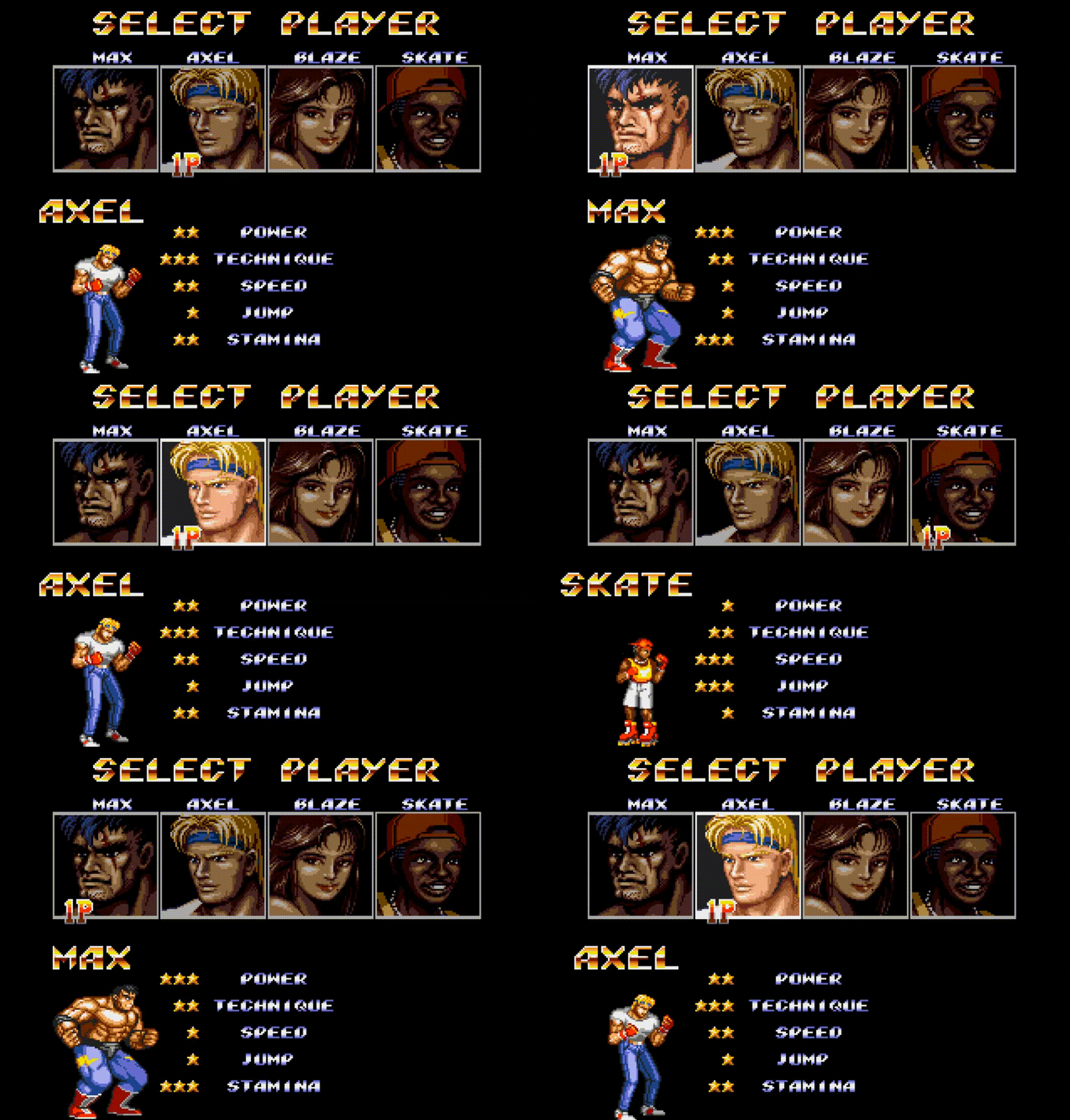
New players should expect an arcade-style challenge, not a modern beat ’em up with constant safety nets. The game is fair most of the time, but it expects you to learn. Do not mash forever and hope for mercy. Use spacing. Grab carefully. Watch enemy movement. Save health pickups until you need them. Try different characters until one clicks.
Nostalgia definitely helps, but it is not required. Streets of Rage 2 still works because the fundamentals are strong: readable action, memorable music, satisfying hits, and a pace that rarely drags. It is especially good with another player. Solo play is still worthwhile, but co-op is where the game’s old living-room magic comes back strongest.
Best Way to Play Today
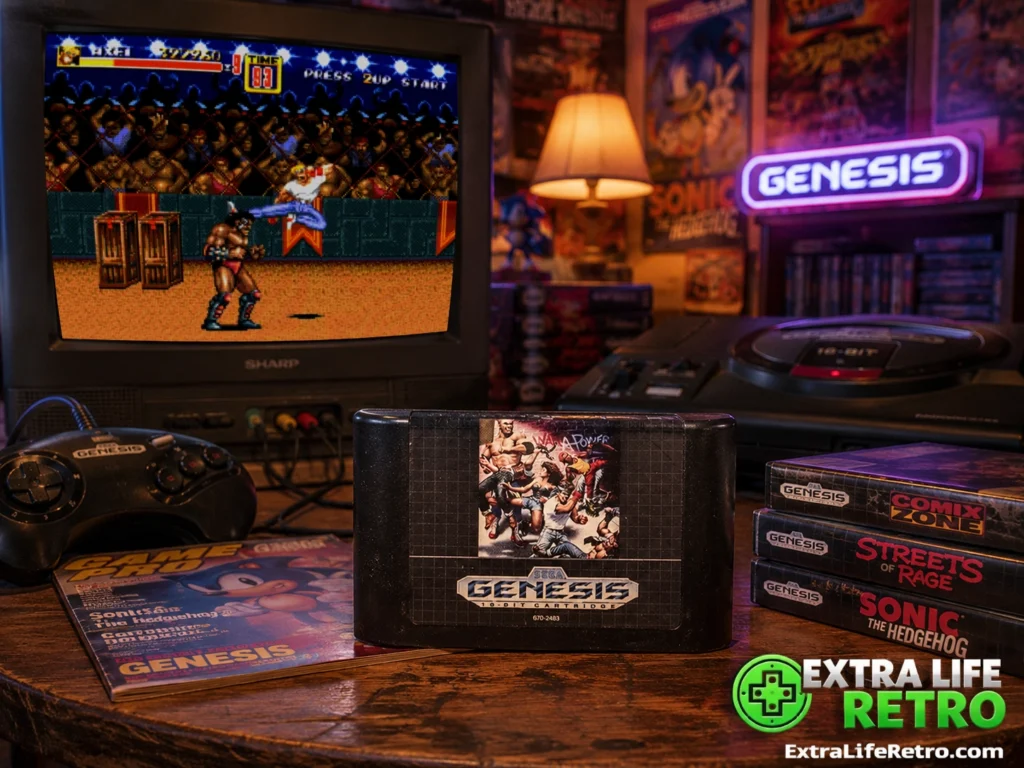
If you want the full nostalgia hit, original Genesis hardware with a real cartridge and a good controller is still hard to beat. Add a CRT or a quality scaler setup, and you are basically lighting the old arcade candle.
That said, original hardware is not necessary for everyone. The SEGA Genesis Mini included Streets of Rage 2, and the game has appeared in several collections over the years, including SEGA Genesis / Mega Drive Classics and Sega Vintage Collection: Streets of Rage. However, SEGA announced that select classic games and bundles would be delisted from digital stores beginning December 6 at 11:59 p.m. PST, while already-owned games remain playable in user libraries. Streets of Rage 2 is listed among the Steam delistings, and SEGA Genesis Classics is listed for delisting on Switch and PlayStation storefronts.
As of this writing, Nintendo’s SEGA Genesis – Nintendo Switch Online app lists Streets of Rage 2 as part of its included game library, with features like save states, rewind, and online play for supported titles. That makes it one of the easiest legal ways for many players to revisit the game today, assuming they already use or want the Expansion Pack membership.
Collectors should be careful and patient. Loose cartridges are easier to find than complete boxed copies, but prices can swing based on label condition, box/manual completeness, region, and seller timing. PriceCharting currently shows prices for loose cartridges hovering just under $30, but marketplace prices change constantly and should always be checked before buying. If you just want to play, do not overpay for nostalgia unless owning the original cartridge is part of the joy for you.
Why Streets of Rage 2 Still Matters
Streets of Rage 2 matters because it captures a version of gaming that was immediate, stylish, social, and physical. It was not built around endless content. It was built around one powerful loop executed with confidence.
It also represents the Genesis at its best. Not just technically, but emotionally. The console had attitude, and Streets of Rage 2 sounds like that attitude. It looks like that attitude. It plays like that attitude. Big sprites, hard hits, neon nights, and music that still feels cooler than it has any right to feel.
This is the kind of game that reminds you why old beat ’em ups worked. They were simple, yes, but they were not empty. They turned repetition into ritual. Pick a character. Hit the streets. Learn the patterns. Laugh when things go wrong. Try again.
That legacy also makes Streets of Rage 2 a natural fit for our coverage of dream retro game adaptations. We have featured it before as the kind of 1990s brawler that could explode on screen, and Lionsgate’s live-action Streets of Rage movie is now moving forward with director Jeymes Samuel and Sonic writers Pat Casey and Josh Miller attached. For Extra Life Retro, this one is personal. Streets of Rage 2 defines so much of our 1990s childhood memory: couch co-op, neon streets, thumping music, and that unmistakable Genesis attitude.
Final Takeaway
Streets of Rage 2 is still worth revisiting because it preserves one of the purest joys of the 16-bit era: sitting beside someone, grabbing a controller, and fighting your way through a dangerous city that somehow feels like home.
It is not a museum piece. It is not only “important” because people say it is important. It still has energy in its hands. The punches land. The music moves. The city glows. The co-op chaos still works.
Play it if you love arcade brawlers, Genesis history, couch co-op, or retro games that waste no time. Collect it if the cartridge means something to you. Try a modern release if you just want the cleanest path back to the streets.
Some games survive because they are famous. Streets of Rage 2 survives because the moment you hear that music and throw the first punch, you remember exactly why people never really left.