
Posted on September 2, 2026
Strider NES: The Weird, Ambitious Capcom Adventure That Refused to Play It Safe
Disclosure: Some of the links in this post are affiliate links. As an Amazon Associate we earn from qualifying purchases. This means if you click on the link and purchase an item, we will receive an affiliate commission at no extra cost to you. All opinions remain our own. We only recommend products or services we believe will add value to our readers.
Strider on NES wasn’t the arcade game squeezed onto a cartridge. It was stranger than that—and in some ways, far more interesting.
Before Strider Hiryu became the impossibly cool, blade-swinging acrobat many players remember from arcades and the Sega Genesis, there was another Strider waiting on the NES.
And this one was weird.
You still had Hiryu. You still had the futuristic ninja gear, the razor-fast Cypher blade, secret organizations, exotic locations, and enough late-’80s sci-fi intrigue to make the cartridge feel dangerous before you even pressed Start. But instead of simply running from left to right and carving through everything in sight, Strider NES asked you to investigate. Explore. Find disks. Return to your orbital headquarters. Unlock destinations. Gain abilities. Backtrack. Figure out where the heck you were supposed to go next.
For a kid pulling this thing off a rental-store shelf in 1989 or 1990, that could be fascinating—and occasionally maddening.
Strider feels like Capcom throwing action, espionage, anime, platforming, and early adventure-game ideas into one cartridge before anybody had agreed on exactly what this kind of game was supposed to be. The result can be clumsy. Sometimes spectacularly clumsy.
But boring?
Never.
At a Glance
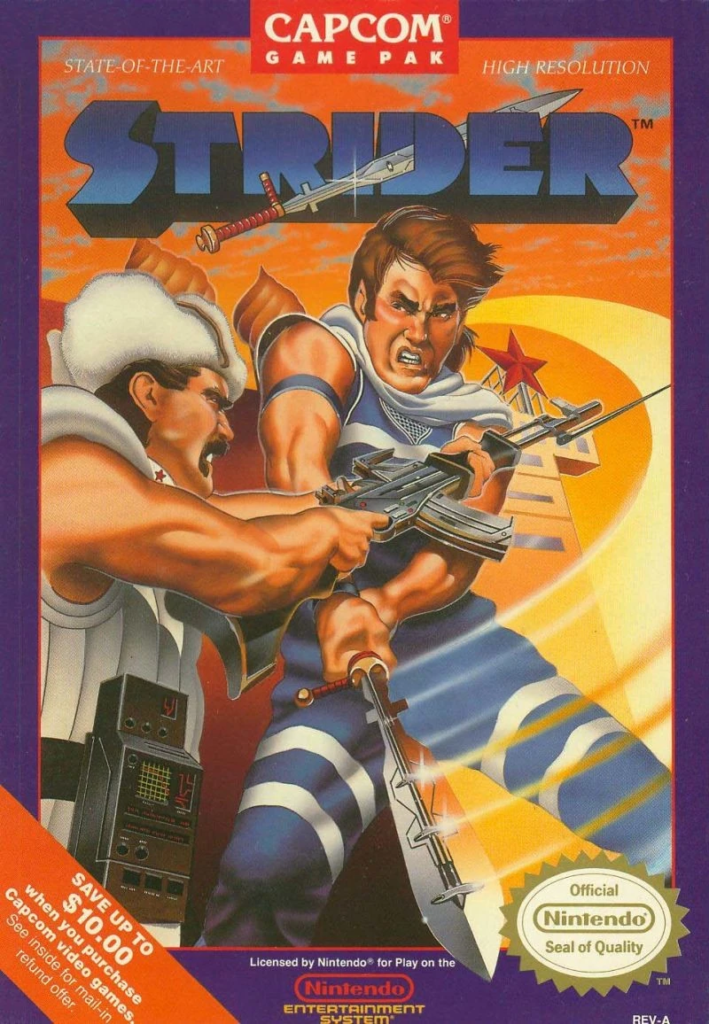
Platform: Nintendo Entertainment System
Released: July 1989 in North America; planned Japanese Famicom version canceled
Developer: Capcom
Publisher: Capcom
Genre: Action-adventure / exploration platformer
Vibe: Cyber-ninja espionage wrapped in chunky NES sci-fi, globe-trotting intrigue, strange machinery, and pure late-’80s Capcom imagination.
You’ll Love It If: You enjoy exploratory NES adventures like Blaster Master, Bionic Commando, and other games that expect you to poke around and figure things out.
Maybe Skip If: Awkward jumping physics, backtracking, and occasionally cryptic progression are immediate deal-breakers.
Best Way to Play: An original NES cartridge remains the most straightforward authentic option; the NES version also appeared in 2006’s Capcom Classics Mini-Mix for Game Boy Advance.
Collector Note: Thankfully, this is not one of those NES games requiring a collector’s ransom. Loose copies remain relatively affordable compared with many sought-after cartridges.
This Wasn’t the Strider You Saw in the Arcade
This is probably the most important thing to understand about Strider NES.
It isn’t really an arcade conversion.
Capcom developed the NES game alongside the famous 1989 arcade Strider as part of a larger collaboration with manga group Moto Kikaku. The project included a Strider Hiryu manga, the arcade game, and this home-console interpretation. The NES version followed the manga storyline much more closely and became its own action-adventure rather than attempting to duplicate the arcade game’s relentless pace.
That distinction matters because anyone expecting the Genesis-style Strider experience can spend the first several minutes wondering what happened.

Instead of an immediate sprint through futuristic Kazakhstan, you begin aboard the Blue Dragon, the Striders’ orbital headquarters. Hiryu receives orders involving fellow Strider Kain, but what initially sounds like a straightforward mission begins unraveling into something much larger.
Before long, you’re uncovering the mysterious Zain Project, moving between locations around the world, collecting information, destroying massive machines, and discovering that the people giving Hiryu orders may not deserve his trust.
For a late-’80s NES action game, it is surprisingly interested in having an actual plot.
The English translation certainly has its rough spots, but that almost adds to its period charm. This was the age when game stories often existed somewhere between the cartridge, instruction manual, box art, Nintendo Power screenshots, and whatever interpretation an eight-year-old player constructed from all of it.
Strider gave your imagination plenty to work with.
When NES Games Started Feeling Bigger Than Their Cartridges
Think about where the NES was in 1989.
Players already understood platformers. Super Mario Bros. had established the language. Mega Man 2 was showing just how polished action games could become. Zelda II, Metroid, Bionic Commando, and Blaster Master had already demonstrated that an action game could ask you to do something beyond simply reaching the right side of the screen.
Strider belonged to that adventurous branch of the NES family tree.
There was a feeling during this period that certain cartridges contained entire worlds you somehow hadn’t completely discovered yet.
That feeling matters.
Without the internet sitting beside you, getting stuck actually meant something. Maybe the solution appeared in Nintendo Power. Maybe a friend knew where to go. Maybe somebody’s older brother had already beaten the game. Maybe you rented the same cartridge again the following weekend because you were convinced you had finally figured out what that stupid disk was for.

Nintendo Power covered Strider in its July/August 1989 issue, exactly the kind of exposure that could make screenshots of its futuristic bases, international destinations, and enormous machinery look irresistible to an NES kid studying every page. Community recollections decades later still mention rentals, magazine coverage, the game’s ambitious world-travel structure—and, inevitably, that infamous Triangle Jump.
And that’s Strider in miniature.
Big ideas.
Cool atmosphere.
One maddening wall jump.
Gameplay: The Part Your Hands Remember
The basic action is immediately understandable.
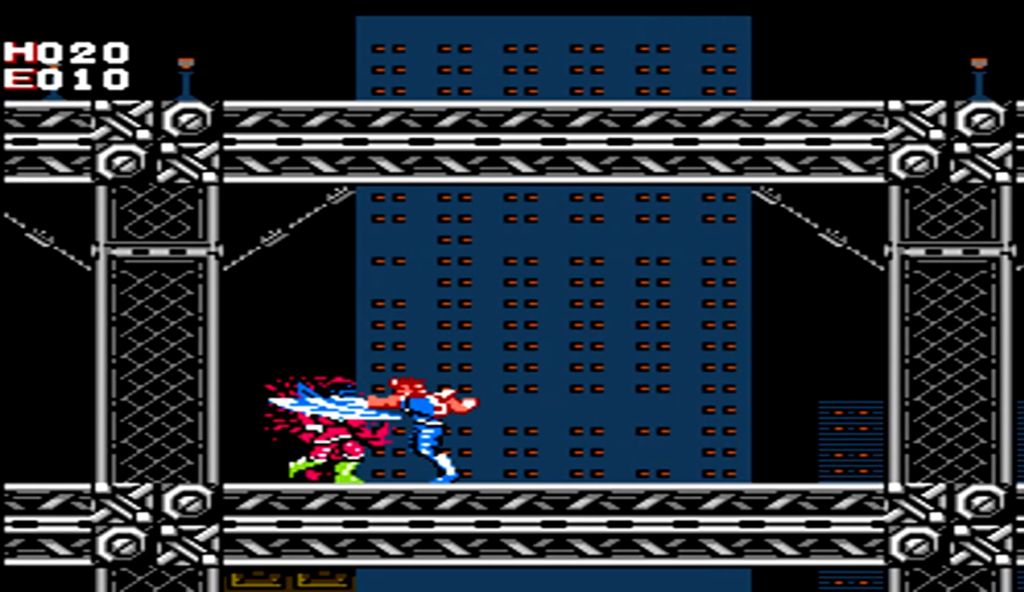
Hiryu runs, jumps, and attacks with his Cypher, carving through soldiers and other enemies at close range. But Strider NES quickly reveals that defeating enemies is only part of the job.
You’re gathering keys and data disks, unlocking new destinations, investigating stages, returning to previously visited areas, and periodically heading back to the Blue Dragon to analyze information.
As the adventure expands, destinations include areas such as Egypt, China, Africa, Australia, and Los Angeles. Some locations need to be revisited after you’ve obtained the necessary information or abilities.

That structure gives Strider a sense of scale that its individual screens cannot always provide.
You’re not clearing Stage 1 and moving permanently to Stage 2.
You’re working a mission.
Growing Into the Mission
Hiryu also gains levels through accomplishments such as defeating important enemies and destroying Zain machinery.
Those levels increase his capabilities and unlock special Tricks. His expanding toolkit includes abilities related to healing, jumping, attacks, and eventually moving out of areas. The game even tracks meaningful progression through its password system rather than reducing everything to a simple stage number.

That was exciting stuff on the NES.
There is a primitive action-RPG flavor underneath Strider, although calling it an RPG would oversell the idea. What matters is the feeling that Hiryu becomes better equipped as the conspiracy expands.
Your adventure is developing rather than simply advancing.
And Then You Try to Jump
We have to talk about it.
The jumping can be rough.
Strider’s physics have a peculiar stiffness to them, especially when you need to perform the game’s Triangle Jump—essentially bouncing between vertical surfaces to climb upward.
When it works, you feel like a cyber-ninja.

When it doesn’t, you feel like your controller has personally betrayed you.
This isn’t merely modern players struggling with an old game. Frustration with the Triangle Jump has remained one of the most consistent complaints surrounding the NES version. Players still joke about fighting the wall-jump mechanics decades later, alongside complaints about inconsistent momentum, abrupt enemy appearances, collision quirks, and general technical roughness.
There are moments where Strider genuinely feels unfinished.
Enemies can appear awkwardly. Hit detection isn’t always your friend. Hiryu lacks the buttery movement you’d expect if you’re coming from the arcade version—or even from Capcom’s more polished NES releases.
And yet the funny thing is how often players describing those problems immediately follow them with some version of:
“I still love this game.”
That makes perfect sense.
Because Strider has personality to spare.
Graphics, Music, and That Wonderful Cyber-Ninja Mood

Visually, Strider NES isn’t one of the system’s great technical showcases.
What it does have is identity.
Hiryu’s animation may be simple, but the game surrounds him with military installations, strange technology, computer terminals, huge Zain machines, international environments, and those memorable portrait screens aboard the Blue Dragon.
Those communication scenes do a tremendous amount of atmospheric work.
For a kid accustomed to games where the king tells you the princess has been kidnapped and immediately sends you outside, seeing giant faces appear on futuristic computer displays helped sell the idea that Hiryu belonged to an enormous clandestine organization operating around the globe.
The soundtrack does even more.
Composer Harumi Fujita’s music gives areas their own personality while reinforcing the game’s strange espionage atmosphere. The Blue Dragon theme in particular feels like something important is happening behind the screen—a briefing, a conspiracy, another piece of information you weren’t supposed to discover.
The Cypher’s repeated attack sound is much less graceful. You’ll hear it constantly, and “constantly” is probably several hundred slashes too many.
But when Strider’s music, environments, and story presentation line up, the game creates a mood few NES releases quite duplicate.
It’s part ninja movie.
Part Cold War thriller.
Part anime.
Part science fiction fever dream.
Exactly the kind of combination 1989 could somehow deliver without anyone asking whether these things belonged together.
A Story That Actually Wants You Paying Attention

The NES storyline also gives Hiryu more to do than simply topple an evil ruler.
Set in 2048, the story revolves around the Striders—a technologically advanced organization of covert operatives.
Hiryu is ordered by Vice Director Matic to locate fellow Strider Kain and kill him after Kain has been captured.
Hiryu doesn’t follow through.
Instead, information recovered from Kain points toward Zain, a sinister mind-control project. As Hiryu investigates, the conspiracy grows until he discovers corruption reaching directly into the Strider organization itself.
Again, we’re talking about an NES action game from 1989.
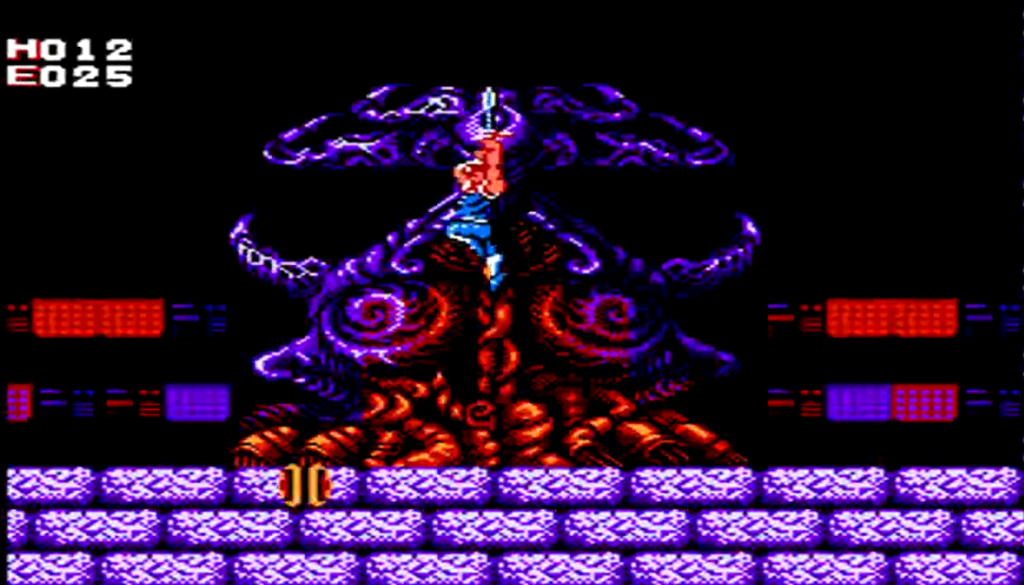
The storytelling isn’t sophisticated by modern standards. The localization can be downright peculiar. But the game understands something important: mystery creates momentum.
Why were you ordered to kill Kain?
What’s Zain?
Who can Hiryu trust?
What’s waiting at the next location?
Those questions give all that disk collecting and backtracking a purpose.
You’re not just hunting keys.
You’re uncovering something.
The Rough Edges Are Part of the Conversation

There is no point pretending Strider NES is secretly flawless.
It isn’t.
The Triangle Jump is genuinely the most aggravating aspect of the game. There are some helpful tutorial videos that may help but don’t get your hopes up.
The jumping physics occasionally feel as though Hiryu and gravity are negotiating separate contracts.
Certain objectives are cryptic enough that consulting a guide today is completely reasonable.
Backtracking can slow the pace, especially when you’re revisiting an area because you finally acquired the information necessary to progress.
And the game lacks the polish Capcom would demonstrate elsewhere on the NES.
Those shortcomings explain why Strider can produce such wildly different reactions.
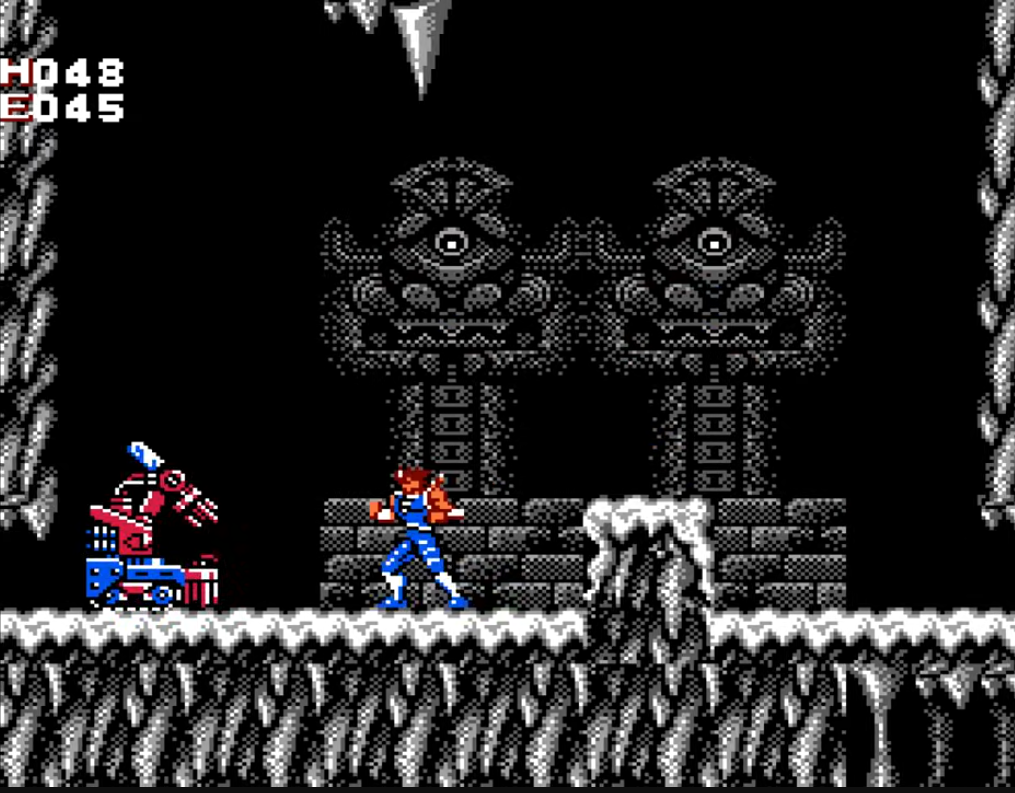
Someone discovering it after playing the arcade version may wonder why Hiryu isn’t flying around the screen in an acrobatic blur.
Someone discovering it after Mega Man 2 may wonder why Capcom’s controls suddenly feel so unruly.
But players who meet Strider on its own terms often find something more interesting underneath.
A slightly broken game with enormous ambition.
That’s a very specific kind of retro charm.
Why Strider NES Still Matters
The fascinating thing about Strider isn’t that it perfected a formula.
It didn’t.
It’s that the formula barely existed.
This was an NES action game trying to combine platform combat with persistent character growth, selectable abilities, information gathering, world travel, passwords, backtracking, story scenes, and semi-open progression.

Its companion arcade game took the character in the opposite direction: speed, spectacle, athleticism, and relentless forward momentum.
Both games came out of the same larger Strider project.
And somehow both interpretations make sense.
The arcade version captures what Hiryu looks like in motion.
The NES version explores what it might feel like to actually be a Strider—receiving missions, traveling between locations, gathering intelligence, uncovering conspiracies, and slowly realizing that your own organization has secrets.
That’s why this version deserves to be remembered as more than “the weird Strider.”
It tried something.
How Strider NES Feels Today
Modern players should bring two things.
Curiosity and patience.
The combat itself isn’t particularly difficult to understand. The larger adjustment comes from learning how the game communicates progression.

Strider doesn’t constantly tell you where to go next. It expects you to remember information, experiment, revisit locations, and occasionally tolerate something that seems more mysterious than it probably needed to be.
And yes, save states would make some of its rougher moments considerably less irritating—but there currently isn’t an obvious contemporary console release of this specific NES version offering that convenience.
That’s an important distinction.
The original arcade Strider has been rereleased in numerous modern products and collections. Those versions should not be confused with this NES adventure.
For someone coming in fresh, a guide isn’t cheating the experience. If you’ve spent enough time wandering around wondering whether you’ve missed a disk or destination trigger, look it up.
We already paid our dues reading Nintendo Power by flashlight.
Best Way to Play Strider Today
Here’s the pleasant surprise: you don’t need collector money to play Strider on original hardware.
As of August 2026, PriceCharting places a loose NES cartridge at roughly $12, with recent completed sales commonly falling around the $8–$15 range. Complete copies command considerably more, with the current guide value above $60, so collectors wanting the box and manual will pay the nostalgia premium. Prices move, of course, so check current sold listings before buying.

For most players, the original cartridge is therefore a perfectly reasonable purchase if you already own an NES or compatible cartridge-playing system.
There’s also Capcom Classics Mini-Mix for Game Boy Advance, released in 2006 with the NES versions of Strider, Bionic Commando, and Mighty Final Fight. It remains one of the few official rereleases specifically containing the NES Strider rather than the arcade game.
Just understand what you’re buying when browsing newer collections.
Seeing Strider listed on a Capcom compilation, mini console, or retro device often means the 1989 arcade game, not this NES adventure. For example, modern releases such as Capcom Arcade Stadium and the Genesis Mini preserve versions associated with the arcade lineage rather than this particular NES title.
If you’re chasing this exact childhood memory, check the version before hitting Buy.
Final Takeaway: A Beautifully Messy Kind of NES Game
There are retro games we remember because they were nearly perfect.
Strider isn’t one of them.
We remember Strider because it was trying to fit something enormous inside an NES cartridge.
A secret organization orbiting Earth.
A cyber-ninja named Hiryu.
A friend you’re ordered to assassinate.
A globe-spanning conspiracy.
Mind-control machines.
Data disks.
Hidden information.
Strange computer portraits.
Passwords scribbled onto paper.
That unmistakable music.
And somewhere in the middle of all that futuristic intrigue, a wall you desperately cannot jump up.
That’s Strider NES.
It can frustrate you. It can confuse you. It occasionally feels like another development pass might have transformed it into one of Capcom’s unquestioned NES classics.
But perfection isn’t why I’d point someone toward this one.
Play it because it captures an era when developers were still discovering just how much adventure could be packed into eight bits. Play it if you love ambitious NES games that make their worlds feel larger than their screens. Play it if the strange corners of Capcom history interest you more than another trip through the obvious blockbusters.
And if you played it as a kid, fire it up simply to hear that Blue Dragon music again.
You’ll probably remember more than you expect.
Just brace yourself for the Triangle Jump.