Posted on September 5, 2026
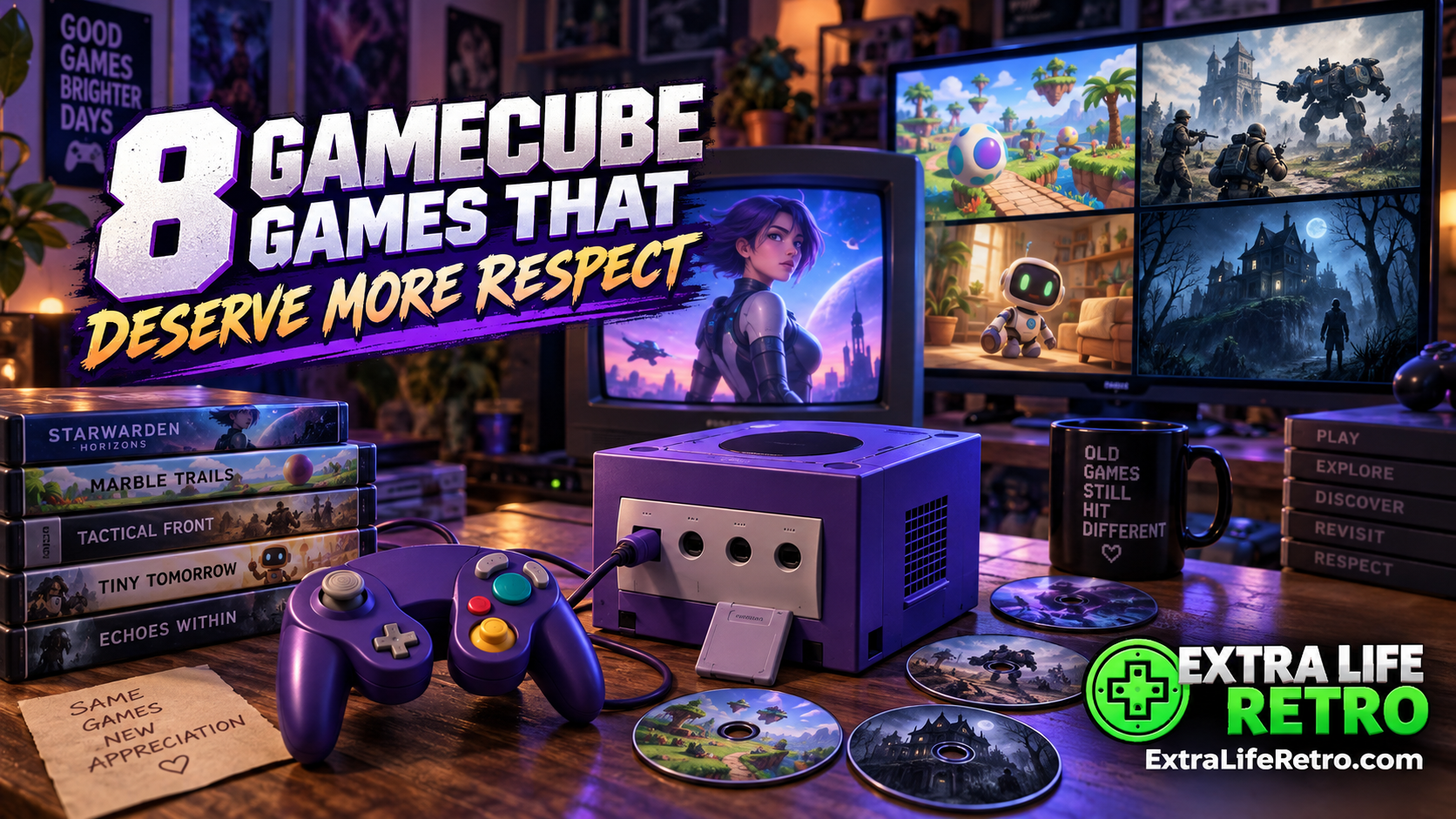
8 GameCube Games That Deserve More Respect
Disclosure: Some of the links in this post are affiliate links. As an Amazon Associate we earn from qualifying purchases. This means if you click on the link and purchase an item, we will receive an affiliate commission at no extra cost to you. All opinions remain our own. We only recommend products or services we believe will add value to our readers.
The GameCube had plenty of legends. These are the games that deserve a little more room beside them.
The Nintendo GameCube has one of those libraries where the biggest names can swallow the entire conversation.
Mention the little purple lunchbox and everybody immediately starts firing off Super Smash Bros. Melee, Metroid Prime, The Legend of Zelda: The Wind Waker, Resident Evil 4, Mario Kart: Double Dash!!, and Super Mario Sunshine.
Fair enough. Those games earned their reputations.
But some of the most interesting underrated GameCube games lived farther down the rental-store shelf. They were the games you discovered because your first choice was already checked out, because the box art looked strange enough to gamble a weekend on, or because somebody at school insisted, “No, seriously, you have to try this.”
That is the angle here.
These aren’t necessarily the eight rarest GameCube games or the eight most obscure. They’re games that were overshadowed, misunderstood, commercially unlucky, or simply never became as central to the GameCube conversation as their ideas deserved.
We’re counting down from No. 8 to No. 1 based on a mix of originality, lasting play value, distinctiveness within the GameCube library, cultural memory, and just how badly each game deserves another look today.
Let’s dig into the discs that deserve more respect.
8. P.N.03

Platform: Nintendo GameCube
Released: 2003
Few GameCube games scream “early-2000s Capcom experiment” quite like P.N.03.
Vanessa Z. Schneider doesn’t simply run into a room and start firing. She dances through combat.
The game’s sterile science-fiction corridors, monochrome environments, electronic soundtrack, robotic enemies, and Vanessa’s rhythmic dodges give it an identity that remains immediately recognizable. Her attacks are fired from the palms of her Aegis Suit, while evasive movement turns encounters into something closer to choreography than conventional third-person shooting.
Capcom released P.N.03 in North America in September 2003, with 11 environments built around Vanessa’s battle against machines controlled by the Computer Arms Management System.

It wasn’t universally loved, and that’s understandable. The environments can become repetitive, the controls demand adjustment, and anyone expecting something resembling Resident Evil with lasers was probably headed for disappointment.
But viewed as an arcade-style score attack game rather than a cinematic action adventure, P.N.03 becomes much easier to appreciate.
There’s something wonderfully GameCube-era about a major publisher releasing a strange, stylish action game built around a woman essentially gunfighting through interpretive dance.
Worth Revisiting If: You like mechanically focused action games and oddball Capcom experiments that feel unlike anything being made now.
7. Gladius

Platform: Nintendo GameCube
Released: 2003
Imagine wandering into a game store in 2003, seeing Gladius sitting between louder action releases, and somehow realizing that the gladiator RPG inside deserved 40 or 50 hours of your life.
That’s part of its charm.
Developed by LucasArts, Gladius is a tactical role-playing game built around assembling and training a school of gladiators. You travel between regions, recruit fighters, manage different classes, and send your squad into turn-based arena battles.
The GameCube version arrived in North America on October 28, 2003.
What makes Gladius memorable isn’t simply the strategy. Attacks incorporate timing-based mechanics, giving individual actions a little more physical involvement than selecting commands and watching animations unfold.

Then there’s the team-building.
Different gladiators fill different battlefield roles, which means recruiting your squad becomes part RPG optimization and part “these are my people now” attachment. Anyone who has ever become irrationally protective of a randomly recruited strategy-game unit knows exactly how powerful that can become.
Gladius never had the brand power of Final Fantasy Tactics or Fire Emblem, but that’s precisely why discovering it felt special.
It was the kind of game you could mention to another GameCube owner and immediately learn whether the two of you had wandered into the same obscure corner of the console’s library.
6. Billy Hatcher and the Giant Egg

Platform: Nintendo GameCube
Released: 2003
There was a period when Sega seemed willing to throw almost any colorful idea at a console and see what happened.
Thankfully, somebody approved the kid in a chicken suit pushing giant eggs.
Created by Sonic Team, Billy Hatcher and the Giant Egg arrived in North America on September 23, 2003 as a GameCube-exclusive platformer. Its central idea was wonderfully bizarre: roll enormous magical eggs through colorful environments, using them to defeat enemies, solve environmental puzzles, and eventually hatch useful creatures.
And yes, Billy actually shouts a rooster call.
You will remember it.

The egg mechanic gives the game a physical quality that distinguishes it from the mountain of 3D platformers produced during that era. Instead of simply jumping from ledge to ledge collecting objects, you’re constantly thinking about momentum, positioning, and what might come out of the next egg.
It could be awkward. The camera wasn’t always your friend, and rolling a giant sphere around narrow environments occasionally produced exactly the chaos you’d expect.
But Billy Hatcher also feels like the product of an industry still comfortable spending real money on a completely ridiculous new mascot.
That’s increasingly charming with distance.
For younger retro fans exploring GameCube hidden gems, this is also a terrific example of how experimental Sega could still be after leaving the console hardware business.
5. Battalion Wars
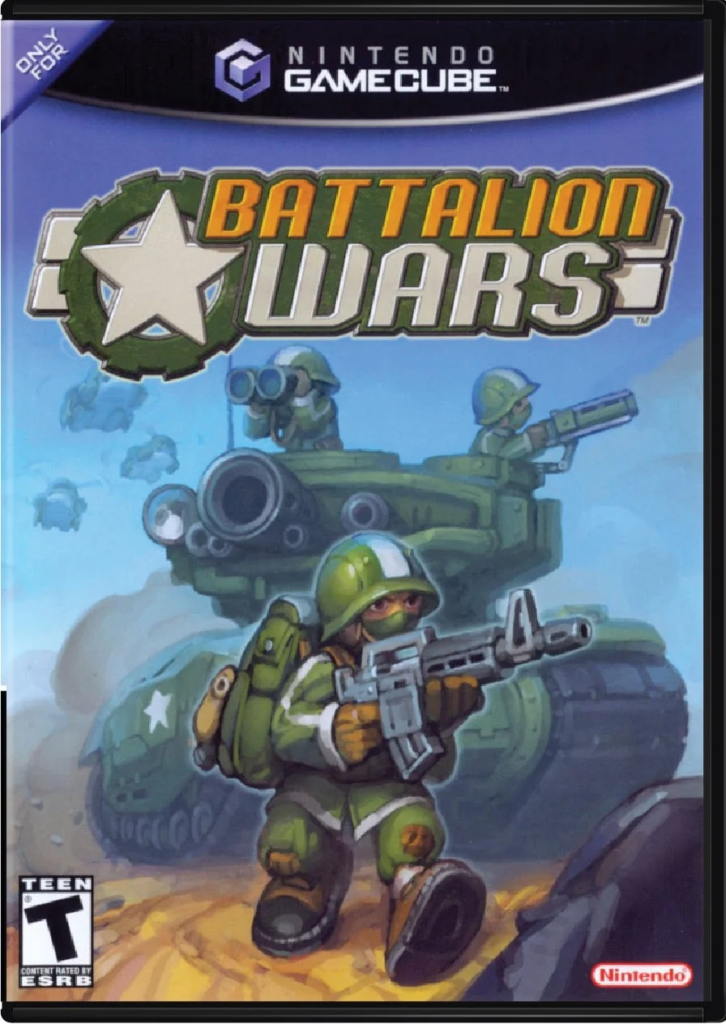
Platform: Nintendo GameCube
Released: 2005
Battalion Wars looked like Advance Wars had suddenly leapt out of the Game Boy Advance, grabbed a bazooka, and decided to personally join the fight.
That isn’t exactly what happened, but it gets close to the feeling.
Developed by Kuju and published by Nintendo, Battalion Wars arrived in North America on September 19, 2005. It combined action and real-time tactical command across more than 20 missions, allowing players to directly control infantry, tanks, aircraft, and other battlefield units while simultaneously issuing orders to the rest of their force.
That hybrid design is what made it memorable.
One moment you’re surveying the battlefield and thinking like a commander. The next you’re personally driving the tank.
Switching between units creates a constant sense that you’re inside the strategy rather than hovering safely above it.

The downside is that managing troops during frantic combat can become messy, especially when the situation starts deteriorating and half your carefully arranged battle plan is suddenly exploding.
But that chaos is also part of Battalion Wars’ personality.
The GameCube had plenty of platformers, racers, adventures, and party games. It had far fewer experiences that felt anything like this.
Even better, it eventually received a Wii sequel — proof that Nintendo saw something worth continuing.
It deserves to be remembered as more than that weird action-game cousin of Advance Wars.
4. Metal Arms: Glitch in the System

Platform: Nintendo GameCube
Released: 2003
If you rented Metal Arms: Glitch in the System because the robot on the box looked cool, you may have accidentally stumbled into one of the GameCube era’s best underdog shooters.
Glitch is a small robot dropped into a surprisingly substantial third-person campaign against General Corrosive and his Mil-bot army.
The setup sounds like cartoon sci-fi fluff.
Then the weapons start coming out.
Metal Arms includes 17 weapons, more than 40 missions, puzzles, vehicles, and one particularly memorable mechanic that allows Glitch to take control of enemy machines and turn their own abilities against them.
That possession mechanic alone gives firefights an extra layer of mischief.

Instead of merely destroying an intimidating enemy robot, sometimes the better answer is hijacking the thing and using it to wreck everybody else.
The game also offered four-player local multiplayer, giving it exactly the kind of feature that could turn a random rental into an unexpectedly long night around the GameCube.
Metal Arms wasn’t exclusive to Nintendo’s console, but it belongs in this conversation because it represents a category of sixth-generation games that is easy to forget: ambitious mid-tier releases that didn’t arrive carrying a gigantic franchise name.
Those games were risky.
They were occasionally rough.
And sometimes they were fantastic.
Metal Arms deserved a much longer life than it got.
3. Gotcha Force

Platform: Nintendo GameCube
Released: 2003
Gotcha Force feels like somebody dumped a box full of action figures onto the floor and then gave every single one of them weapons.
Capcom’s strange arena combat game was released in North America in December 2003. Its hook was assembling a fighting force from more than 100 collectible Borg characters and then throwing them into frantic 3D battles. It also supported local four-player play and two-on-two combat.
That collectible structure changes everything.
You’re not simply picking a fighter.
You’re building a toybox army.
Different Borgs vary wildly in size, movement, attacks, and role, which turns unlocking another character into exactly the kind of playground compulsion that can consume a kid’s weekend.

“Just one more.”
Then another.
Then you need to see what that weird robot does.
Visually, Gotcha Force isn’t the GameCube’s greatest showcase, and the camera can become particularly unruly once several combatants start blasting around the arena.
But the sheer enthusiasm of the design overwhelms many of its rough edges.
This is one of those games that perfectly captures why exploring old libraries can be more fun than simply replaying the acknowledged masterpieces.
Sometimes you find something nobody talks about enough and wonder where it has been your entire life.
2. Chibi-Robo!

Platform: Nintendo GameCube
Released: 2006 in North America
The premise sounds almost absurdly small.
You’re a tiny household robot.
You clean things.
You plug yourself into electrical outlets when your battery runs low.
And somehow Chibi-Robo! turns that into one of the GameCube’s most charming adventures.
Standing only a few inches tall transforms an ordinary suburban home into an enormous explorable world. Tables become landscapes. Staircases become expeditions. Everyday objects become tools.
Nintendo’s own description highlights wonderfully mundane activities such as cleaning, cooking, digging with a spoon, and hiding underneath a mug — alongside considerably less mundane problems involving aliens and robotic spiders.

But what makes Chibi-Robo! special isn’t really cleaning.
It’s the Sanderson family.
The little robot gradually becomes an observer and helper inside a household filled with personalities and problems much larger than he is. The domestic setting gives the game an intimacy almost nothing else in Nintendo’s GameCube catalog resembles.
There are mechanical quirks. Constantly watching your battery and locating outlets won’t appeal to everyone.
Yet the very things that make Chibi-Robo! strange are the reasons people still talk about it.
At a time when so many games were escalating toward bigger weapons, bigger worlds, and bigger cinematic spectacle, Chibi-Robo! made an adventure out of helping around the house.
That’s not merely unusual.
It’s kind of wonderful.
1. Eternal Darkness: Sanity’s Requiem

Platform: Nintendo GameCube
Released: 2002
Yes, Eternal Darkness receives more praise today than most games on this list.
It still doesn’t receive enough.
Nintendo’s purple console wasn’t exactly the machine people associated with psychological horror, which made Eternal Darkness: Sanity’s Requiem feel even stranger sitting beside Mario, Pikachu, and Super Smash Bros.
Its greatest trick was convincing players that the game itself might be turning against them.
The famous sanity effects could distort rooms, create apparent technical problems, manipulate the screen, or otherwise undermine your confidence in what was actually happening. Some of those tricks are less convincing once you know they’re coming, but imagine experiencing them before YouTube compilations spoiled every surprise.
That’s the important part.
A horror game wasn’t merely frightening your character.
It was messing with you.

The game also jumped across different characters and historical periods while building a larger occult story around the Tome of Eternal Darkness. That structure gave it a scope far beyond a straightforward haunted-house adventure.
And because it existed during the era of CRT televisions, physical memory cards, wired controllers, and no second screen automatically sitting beside you with every secret explained, its tricks had an especially convincing environment in which to work.
That’s why it takes No. 1.
Eternal Darkness wasn’t perfect. Combat could be stiff, and certain ideas have aged better than others.
But it represented something particularly valuable about the GameCube era: Nintendo was willing to publish a strange, mature, experimental horror game that didn’t resemble the company’s obvious franchises.
More than two decades later, we’re still asking for another one.
That says plenty.
Best Way to Revisit These GameCube Games Today

For several games on this list, revisiting them isn’t as simple as opening a current digital storefront and pressing Download.
That makes original GameCube hardware — or a backwards-compatible Wii — especially attractive for collectors who already own the discs. A good controller, reliable memory card, and sensible modern-TV video solution can also make original-hardware GameCube gaming considerably more convenient.
But don’t confuse wanting to play a game with needing to own an increasingly expensive collectible copy.
Some GameCube discs have become costly on the secondary market, and prices can change quickly. Check current sold listings before buying, compare complete copies with disc-only options, and decide whether collecting the physical artifact is actually part of the experience you want.
If it isn’t, don’t let collector pricing convince you that enjoying old games requires proving anything with your wallet.
The GameCube Was Bigger Than Its Greatest Hits
Great retro libraries aren’t interesting only because of their masterpieces.
They’re interesting because of the shelves between the masterpieces.
That’s where you find the experiment that didn’t quite work but tried something fascinating. The rental you grabbed because everything else was gone. The weird Sega platformer with the chicken suit. The robot shooter somebody still insists deserved a sequel. The tactical RPG nobody else in your friend group seemed to know existed.
Those discoveries are part of what makes retro gaming fun.
The GameCube gave us some of Nintendo’s most celebrated games.
But it also gave us P.N.03, Gladius, Billy Hatcher, Battalion Wars, Metal Arms, Gotcha Force, Chibi-Robo!, and Eternal Darkness.
And every once in a while, it’s worth moving past the usual greatest-hits shelf and remembering just how wonderfully strange that little cube could be.