Posted on July 13, 2026
Persona 3 at 20: The PS2 RPG That Made Every Day Matter
Disclosure: Some of the links in this post are affiliate links. This means if you click on the link and purchase an item, we will receive an affiliate commission at no extra cost to you. All opinions remain my own. I only recommend products or services I believe will add value to my readers.
Twenty years after its Japanese debut, Persona 3 remains a haunting, stylish, and deeply human RPG—and the game that established the modern identity of the Persona series.
There is something almost too appropriate about celebrating the Persona 3 20th anniversary. This is a game obsessed with time: how we spend it, whom we share it with, what we leave unfinished, and how quickly an ordinary day can become a memory.
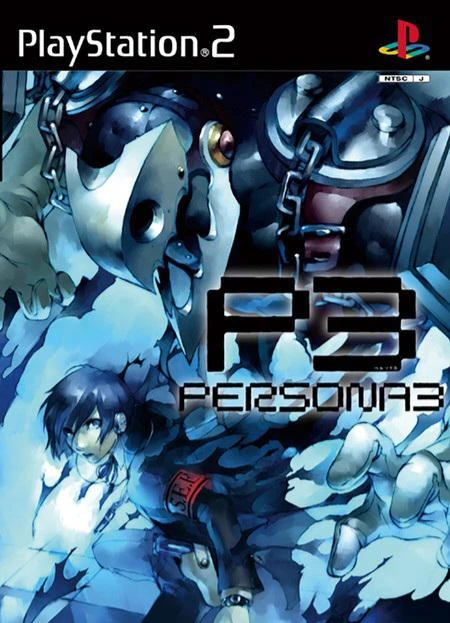
Atlus originally released Persona 3 for the PlayStation 2 in Japan on July 13, 2006. North American players received it on August 14, 2007, with the European release following in early 2008. Depending on where you lived, then, your personal twentieth-anniversary memories may arrive a little later. Historically, however, 2026 marks two decades since the game first introduced players to Gekkoukan High School, Tartarus, the Dark Hour, and one of the most unforgettable casts of the PS2 era.
Persona 3 did not merely add another chapter to an existing RPG franchise. It rebuilt Persona around a new rhythm of daily school life, relationships, dungeon exploration, turn-based combat, and calendar management. The structure it established became the foundation for Persona 4 and Persona 5, helping transform what had been a comparatively niche series into one of the most recognizable names in Japanese role-playing games.
Yet its importance is not purely mechanical. Persona 3 still matters because of how successfully it connects its systems to its themes. Every school day ends. Every opportunity requires time. Every friendship competes for a place on the calendar. Even when you know something important is approaching, you cannot stop the dates from moving forward.
Twenty years later, the Dark Hour still feels unsettling—and the ticking clock feels more meaningful than ever.
Persona 3 Release History at a Glance
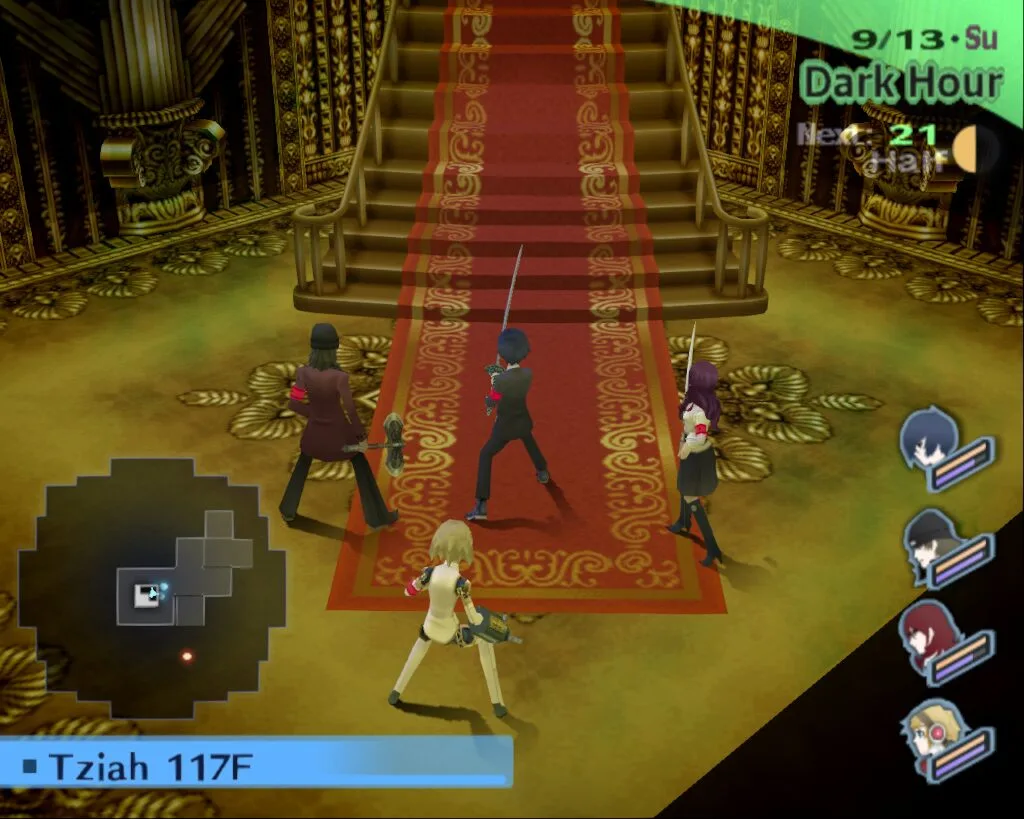
Persona 3 was developed and published by Atlus for the PlayStation 2. It was directed and produced by Katsura Hashino, with character designs led by Shigenori Soejima and music composed by Shoji Meguro.
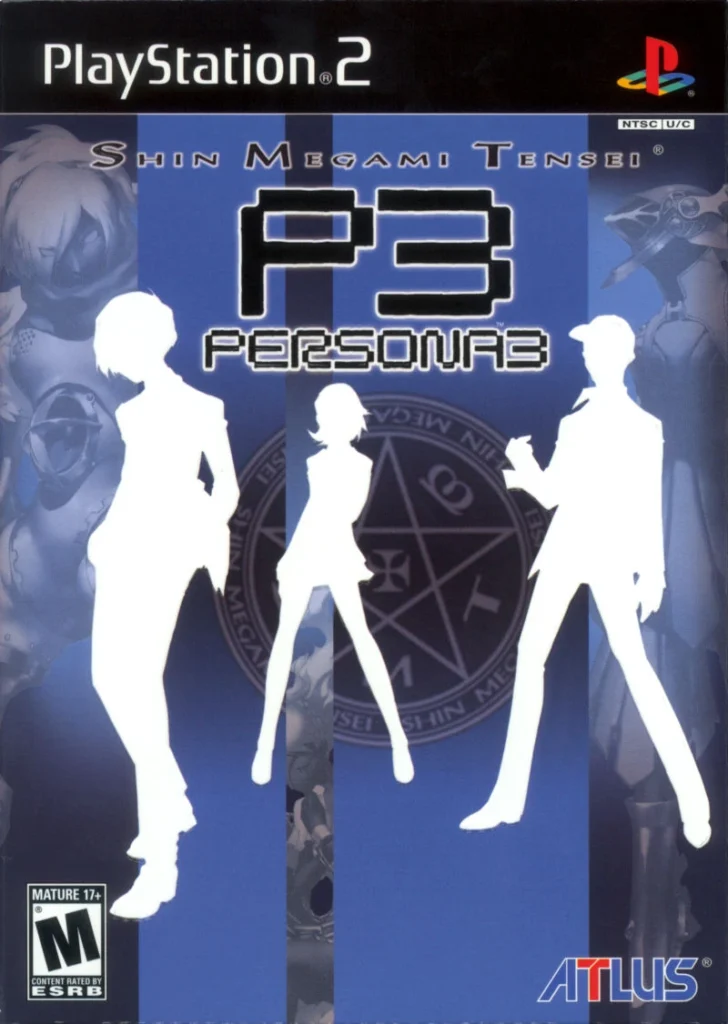
The original game arrived in Japan on July 13, 2006. Its North American release followed on August 14, 2007 under the title Shin Megami Tensei: Persona 3. The North American package included a soundtrack CD and an art book, making it especially memorable for players who encountered it as a complete boxed release rather than an ordinary PS2 game.
Atlus expanded the game with Persona 3 FES, which added adjustments to the main campaign and a substantial epilogue known as “The Answer.” FES was released for PlayStation 2 in North America on April 22, 2008.
Persona 3 Portable later adapted the experience for Sony’s PSP. It introduced direct party control, a female-protagonist route with altered Social Links and events, and a presentation redesigned around the handheld hardware. A remastered version of Portable reached modern consoles and PC in January 2023. Atlus lists it for Nintendo Switch, PlayStation 4, Xbox One, Xbox Series systems, Windows, and Steam.
Finally, Persona 3 Reload rebuilt the original campaign with modern graphics, revised combat, expanded character material, new voice work, and numerous quality-of-life improvements. It launched on February 1, 2024 for PlayStation 4, PlayStation 5, Xbox One, Xbox Series X|S, and PC. Its version of the FES epilogue was subsequently released as Episode Aigis –The Answer– through the Reload Expansion Pass.
That history leaves Persona 3 in an unusual position. There is no single version that contains every feature associated with the game. The original, FES, Portable, and Reload each preserve a different part of its identity.
What Made Persona 3 Special
At first glance, Persona 3 appears to be built from two separate games.
During the day, you attend school, answer classroom questions, join clubs, study, work part-time, visit shops, and spend time with other characters. At night, you can enter Tartarus, an enormous tower filled with Shadows, treasure, hazards, and procedurally arranged floors.
The breakthrough was not simply placing school life beside dungeon crawling. It was making the two halves depend upon each other.
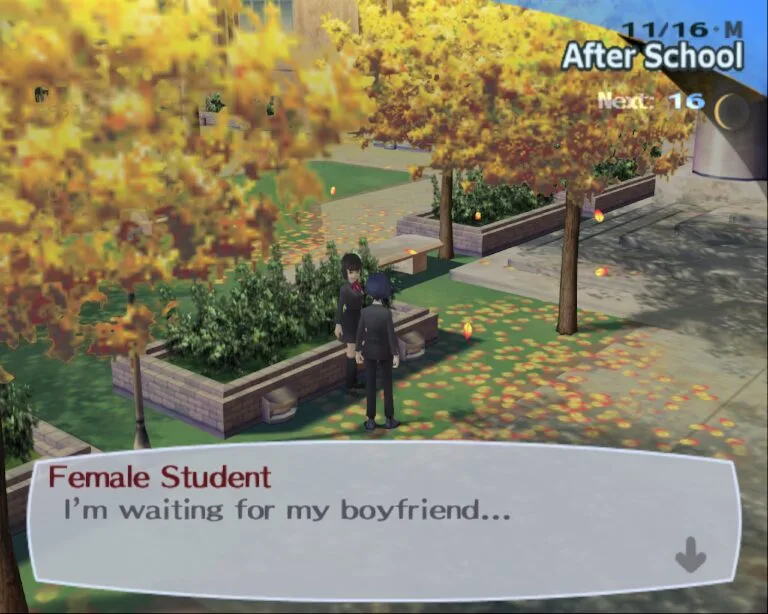
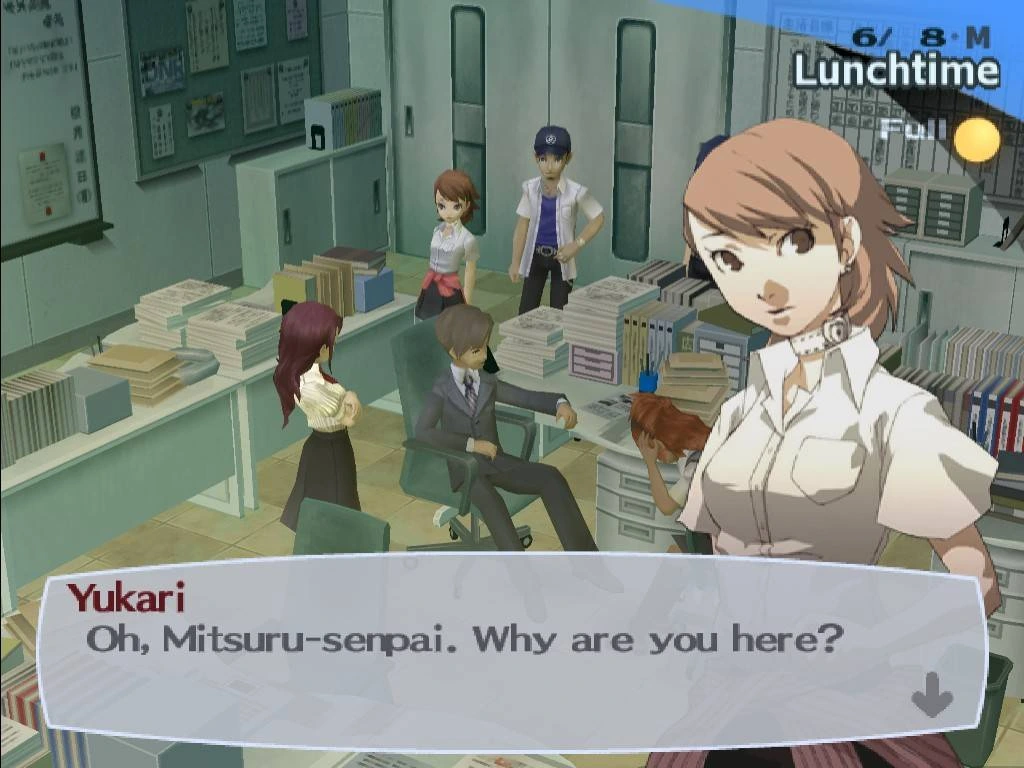
Relationships are represented through Social Links associated with the Tarot’s Major Arcana. Spending time with classmates, teammates, neighbors, and strangers advances those connections. Stronger Social Links grant bonuses when creating Personas of the corresponding Arcana, turning friendship and personal growth into meaningful parts of character progression.
Today, that structure feels inseparable from Persona. In 2006, however, it represented a dramatic change of direction. Persona 3 placed far greater emphasis on the Social Link system, reworked combat and Persona fusion, and established the school-calendar format that its sequels would continue refining.
The calendar is what gives the entire experience its pulse. You cannot see everybody, accomplish everything, and explore indefinitely in a single afternoon. Choosing to study may mean postponing a friendship. Entering Tartarus may consume an evening that could have been spent improving a personal statistic. Waiting too long to prepare for the next full moon can leave your party underpowered.
Those decisions are rarely dramatic on their own. Their accumulation is what matters.
Persona 3 understands that a life is largely composed of ordinary choices. Sit with someone after school. Visit an elderly couple. Practice with a club. Study before bed. Walk a dog. Call a friend. None of these moments looks as important as defeating a towering Shadow, but the game gradually teaches you that they may matter even more.
A Different Kind of PlayStation 2 RPG
Persona 3 arrived late in the PlayStation 2’s life. By 2006, players had already seen many of the console’s defining RPGs, including sprawling fantasy adventures, tactical epics, action-RPG experiments, and cinematic blockbusters.
It would have been easy for a new PS2 RPG to feel like it had arrived after the main event. Persona 3 instead used the maturity of the hardware to create something confidently strange.
Its menus were drenched in cool blue. Its character portraits and user interface looked sharp, youthful, and contemporary. Its urban Japanese setting felt far removed from the castles, airships, ancient prophecies, and medieval kingdoms commonly associated with console RPGs.
Then there was the music.
Shoji Meguro’s soundtrack blended hip-hop, pop, rock, electronic textures, and melancholy instrumentals in a way that immediately distinguished the game from its peers. “Mass Destruction” made ordinary battles sound like urgent late-night confrontations. “When the Moon’s Reaching Out Stars” gave everyday city exploration an easygoing personality. “Burn My Dread” announced that this was not going to sound like a conventional fantasy quest.
The result was unmistakably a product of the mid-2000s, but not in a way that makes it disposable. The music, fashion, flip phones, dormitory televisions, and PS2-era visual presentation now give Persona 3 an additional layer of nostalgia. It captures a moment when online connectivity had not yet reorganized every part of daily life and when a dense Japanese RPG could become a treasured discovery through magazine coverage, message boards, import discussion, or a striking box on a game-store shelf.
For many Western players, it was also the kind of release that felt slightly secret. Persona had not yet become a brand guaranteed to dominate online discussion. Finding Persona 3 could feel like being invited into a smaller circle of players who had discovered something unusual.
The Dark Hour Gave Persona 3 Its Identity
Every night at midnight, the world enters the Dark Hour.
Most people are sealed inside coffin-like forms, unaware that this hidden period exists. Gekkoukan High School transforms into Tartarus, an immense and unnatural tower. Shadows roam freely, and the members of the Specialized Extracurricular Execution Squad—SEES—investigate the phenomenon using manifestations of the psyche known as Personas.
That premise gave Persona 3 a memorable horror-adjacent atmosphere without turning it into a conventional survival-horror game. Familiar streets become empty. Colors turn sickly. The moon dominates the sky. The same school that represents routine and youthful possibility during the day becomes a hostile labyrinth at night.
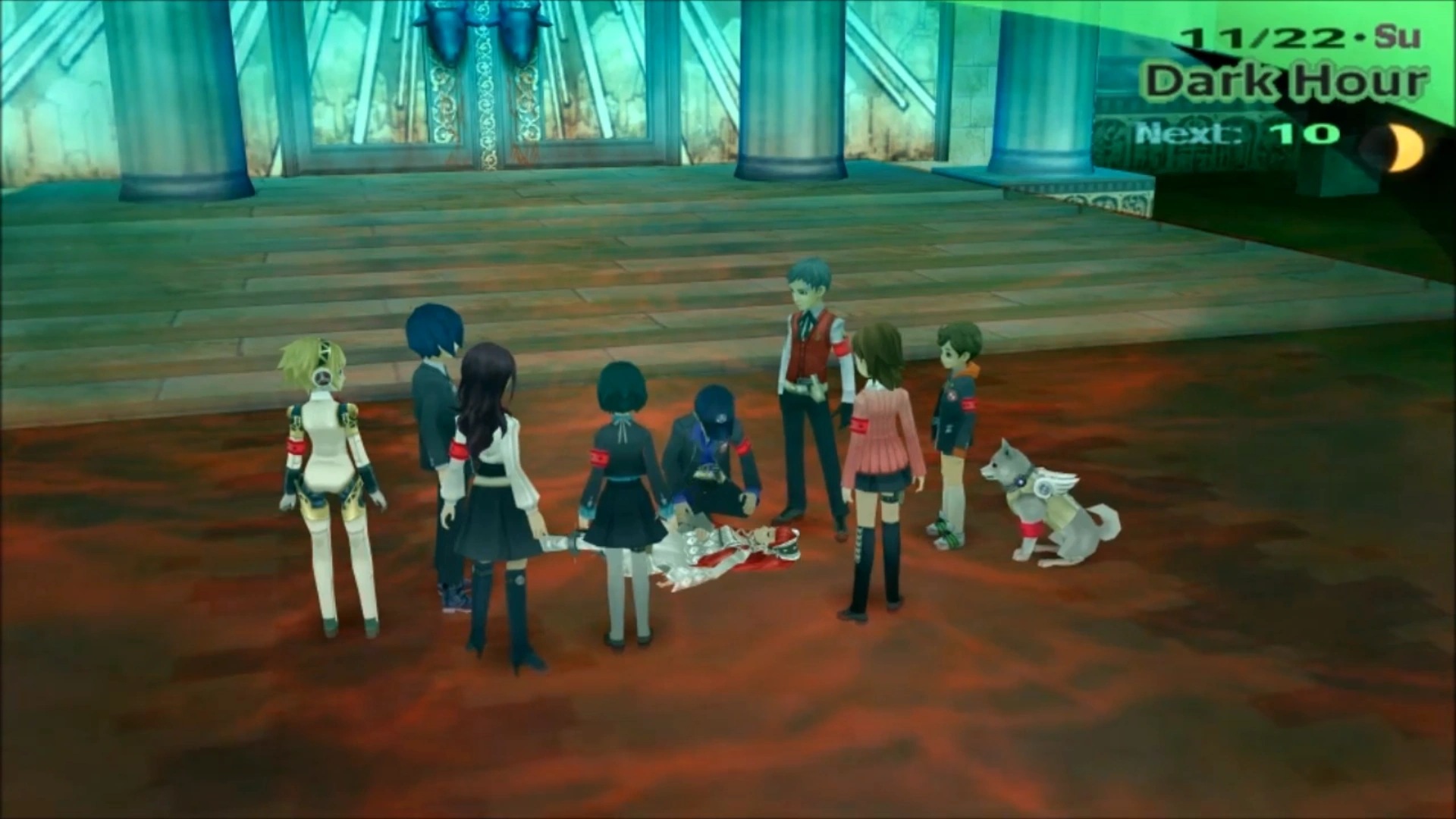
The game’s Evokers became its most controversial and instantly recognizable image. Characters summon their Personas using gun-shaped devices held to their heads, a visual designed to communicate the willingness to confront death and fear. The imagery is deliberately disturbing, and it remains important to understand Persona 3’s mature content before recommending it to younger players.
Beneath that shocking surface is a story less interested in celebrating darkness than in asking how people continue living when loss cannot be undone.
Nearly every major character carries some form of grief, guilt, isolation, or fear. They do not become a team simply because the plot assigns them matching uniforms. Their relationships can be awkward, fractured, competitive, and painfully human. Persona 3 allows tension to linger, which gives later moments of understanding greater weight.
This is one reason the story remains powerful even after its technology and dungeon design have aged. Its central ideas are not dependent on graphical spectacle. Mortality, friendship, regret, responsibility, and the search for meaning do not go out of date.
Combat, Tartarus, and the Cost of Repetition
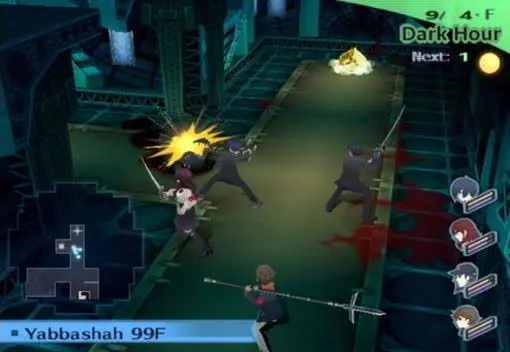
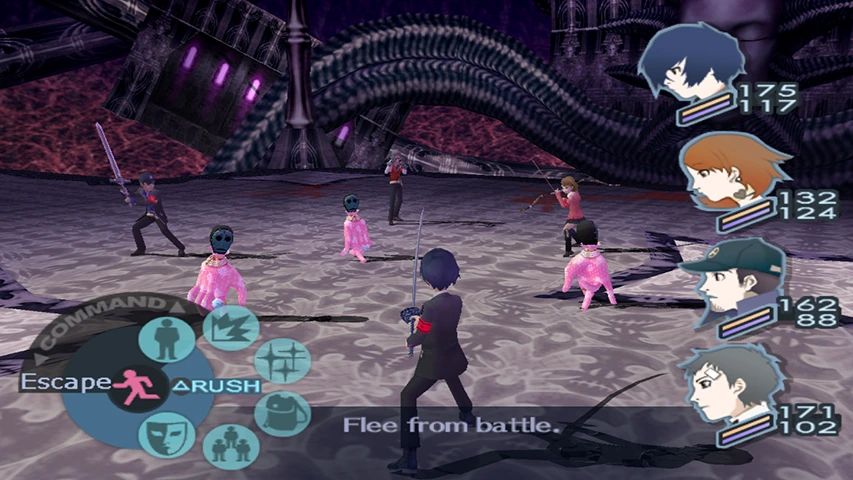
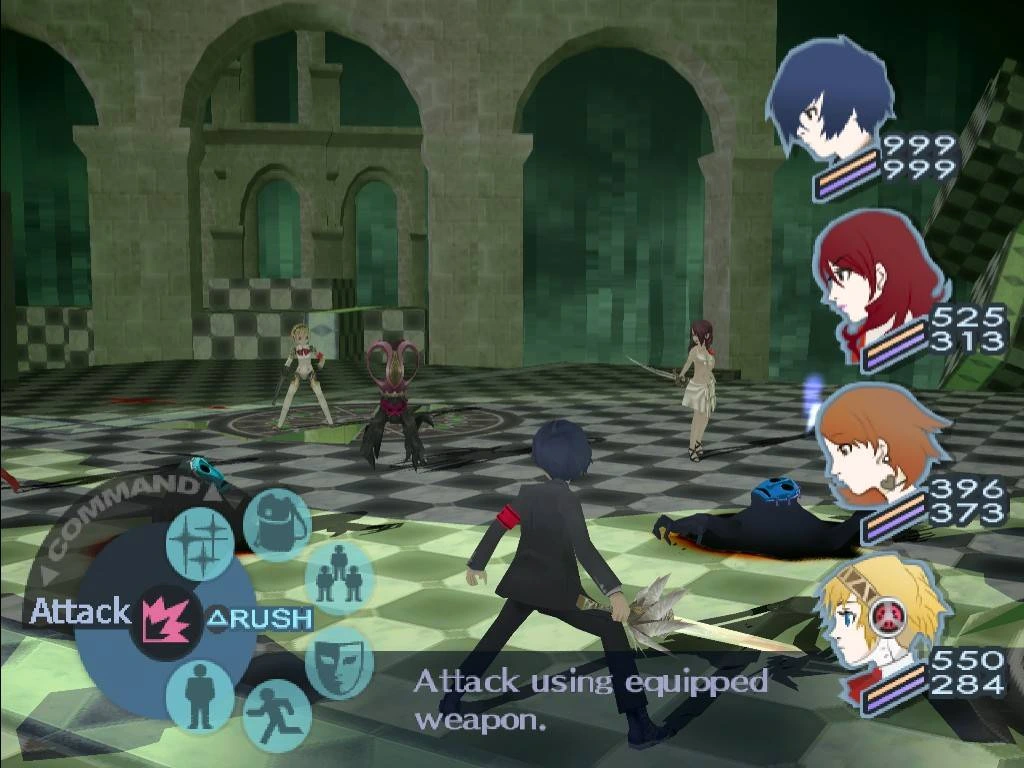
Persona 3’s combat uses a turn-based system built around elemental strengths, weaknesses, buffs, status effects, and Persona selection. Striking an enemy’s weakness can knock it down and grant an additional action. Downing every enemy opens the door to an All-Out Attack, allowing the party to overwhelm the opposition together.
It is a fast, satisfying foundation that rewards knowledge more than brute force. Learning an enemy’s affinities, preparing a flexible collection of Personas, and building a balanced team are essential parts of the experience.
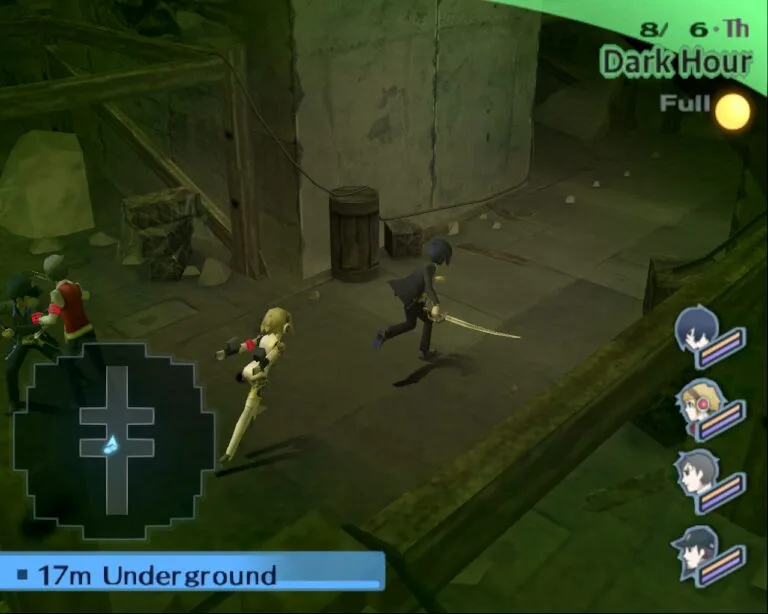
The original PS2 release does have one divisive restriction: the player directly commands only the protagonist. Teammates operate according to broad tactical instructions controlled by artificial intelligence. Hashino explained that this was intended to make party members feel like independent individuals rather than extensions of the protagonist, though he also acknowledged that the approach was not well received by every player.
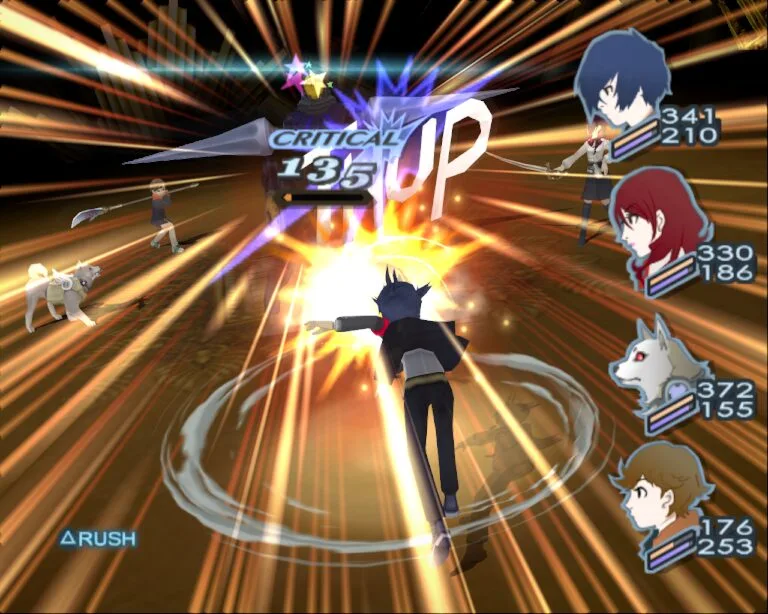
The idea is thematically defensible. In practice, it can be frustrating when an ally chooses an action that does not match the player’s plan. Persona 3 FES retains this system, while Portable and Reload allow direct control over the full party.
Tartarus is the more obvious sign of the game’s age. Its shifting floors, repeated visual patterns, and long stretches of combat can become monotonous, especially when compared with the more individually designed dungeons of Persona 5.
That repetition is not enough to ruin the experience. Tartarus creates an effective sense of scale and gradually becomes an imposing constant hanging over the school year. Still, anyone returning to the PS2 original should expect extended periods of grinding and environments that do not change as dramatically as a modern player might hope.
Persona 3 deserves celebration, but it does not require pretending every floor of Tartarus is thrilling.
Why Persona 3 Still Matters
Persona 3 matters because it created the basic language of modern Persona.
The school year, Social Links, limited daily activities, social statistics, dungeon excursions, Persona fusion, relationship-driven progression, and carefully curated soundtrack all became defining features of the series. Persona 4 made the friendships warmer and the central mystery more immediately communal. Persona 5 pushed presentation, dungeon design, and mainstream visibility much further. Persona 3 established the architecture underneath them.
Its influence is also visible in the creative lineage that followed. PlayStation’s official material for Metaphor: ReFantazio, for example, identifies that game as coming from creative talent behind Persona 3, Persona 4, and Persona 5.
More importantly, Persona 3 demonstrated that RPG progression could be tied to emotional and social investment without reducing relationships to decorative side content. The people you meet are not merely quest markers. Spending time with them changes your ability to create stronger Personas, but their stories also transform the emotional meaning of the passing year.
The game’s central theme of accepting mortality is strengthened by the calendar because the player experiences time as something finite. A conventional RPG may let you postpone the final battle forever while completing side quests. Persona 3 constantly advances. Missed days remain missed. Decisions become part of the shape of your playthrough.
That is where its mechanics and story meet.
How Persona 3 Holds Up Today
Persona 3’s strongest elements remain remarkably effective.
Its cast develops gradually rather than revealing every insecurity immediately. Its soundtrack still sounds distinct. Its combat continues to reward planning. Its blue-toned visual identity remains striking. Most importantly, its final stretch carries an emotional weight that few RPGs achieve.
The original PS2 presentation also has a mood that later versions cannot reproduce perfectly. Its character models, lighting, interface, animated scenes, and slightly distant pacing create a colder atmosphere. Players who experienced it on a CRT with a memory card in the console may find that atmosphere inseparable from Persona 3 itself.
Some elements have aged less gracefully.
The opening hours are slow. Tartarus can feel repetitive. The original AI-controlled party system may frustrate players accustomed to exact control. Several Social Links reflect writing conventions and relationship mechanics from an earlier period of the series. The game also expects a substantial time commitment and does not always explain how severely inefficient calendar choices can limit a first playthrough.
Nostalgia certainly helps smooth some of those edges, but nostalgia is not doing all the work. Beneath the inconvenience is an RPG with a disciplined thematic structure, memorable characters, strong battle mechanics, and an atmosphere that remains difficult to imitate.
Newcomers should approach it patiently. Persona 3 is not a game that reveals its full emotional power in the first few hours. It builds through repetition, routine, seasonal change, and the gradual realization that the calendar is running out.
What the Anniversary Means for Players and Collectors
The Persona 3 20th anniversary is likely to renew interest in the original PlayStation 2 releases, particularly complete copies containing their manuals, soundtrack discs, art books, or original packaging.
Collectors should avoid assuming that every copy is exceptionally rare or that anniversary attention guarantees rising values. Condition, completeness, region, edition, and seller expectations can produce significant pricing differences. Check recently completed sales and reputable game retailers rather than relying solely on ambitious asking prices.
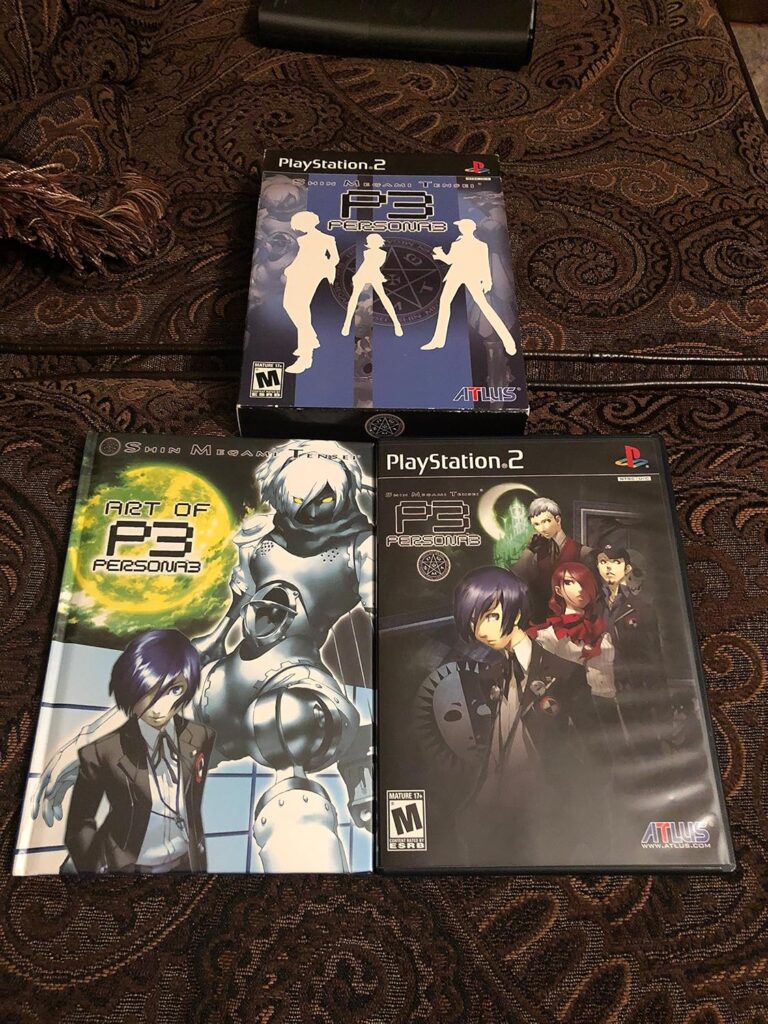
The original North American Persona 3 package is particularly appealing as a display piece because of its soundtrack and art-book presentation. Persona 3 FES is also important because it offers the expanded PS2 campaign and the original version of “The Answer.” Neither, however, is necessary for someone who simply wants to experience the story conveniently.
A physical PSP copy of Persona 3 Portable has its own appeal, especially for players who associate the game with handheld play or want the female-protagonist route in its original portable form. Again, prices vary, and the modern digital release offers a far easier entry point.
Preservation-minded fans face a larger issue: no current version perfectly replaces every previous one.
Reload modernizes the original campaign but does not include Portable’s female-protagonist route. Portable preserves that route but replaces much of the explorable 3D presentation outside Tartarus with a menu-driven, visual-novel-style format. FES retains the PS2 atmosphere and original epilogue, but its party control and pacing can feel dated.
That fragmentation is frustrating, but it also explains why each edition remains historically valuable.
Best Way to Play Persona 3 Today
For most first-time players, Persona 3 Reload is the best starting point.
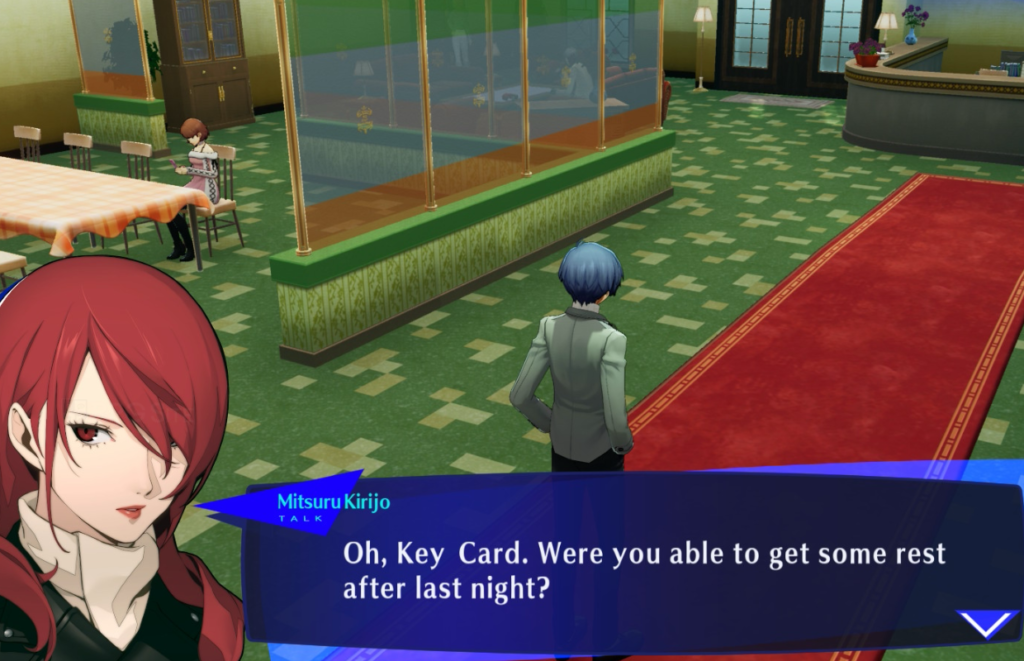
It preserves the main story while adding modern visuals, direct party control, improved combat flow, expanded character interactions, and a much more approachable presentation. It is officially available on PlayStation, Xbox, and PC platforms. Players who want the epilogue should confirm whether their chosen edition includes the Expansion Pass or whether Episode Aigis –The Answer– must be purchased separately.
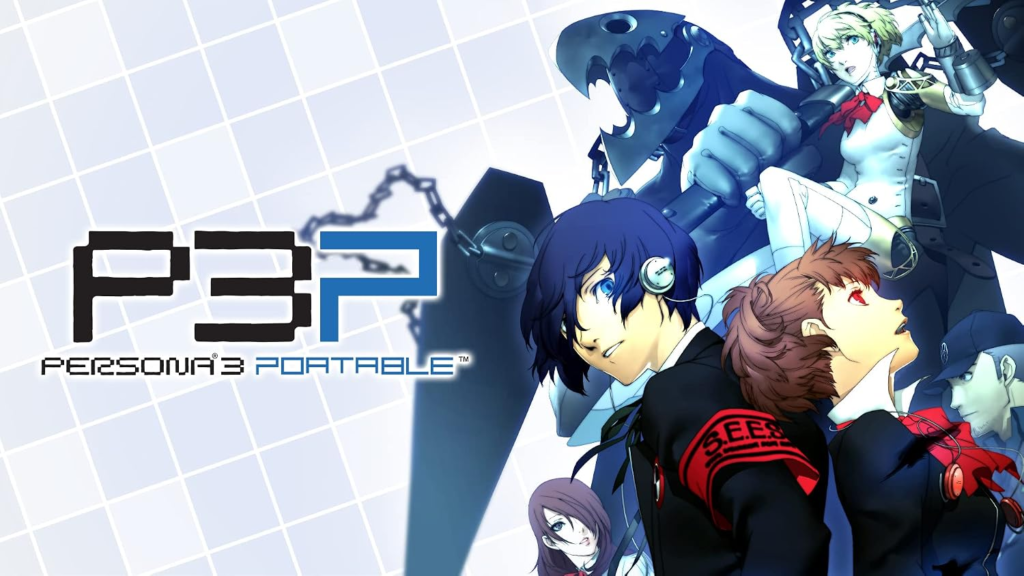
Persona 3 Portable is the better supplemental choice for players specifically interested in the female protagonist, her alternate Social Links, or a more streamlined version suitable for shorter sessions. The modern remaster also includes features such as difficulty selection and quick saving.
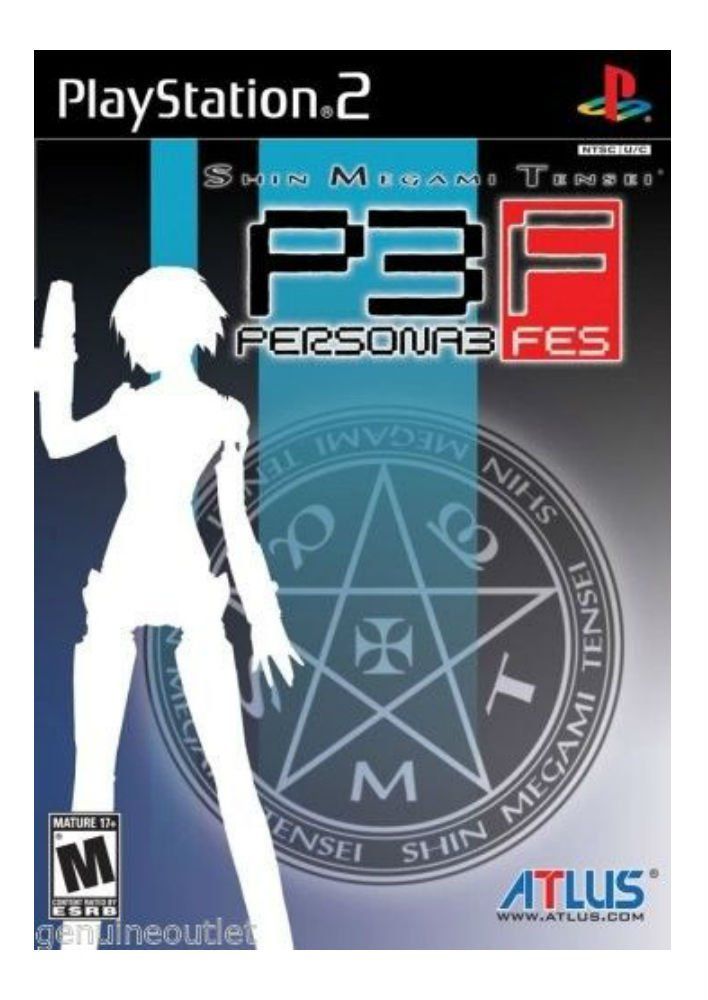
Persona 3 FES remains worth exploring for enthusiasts who want the original PS2 atmosphere, the period-specific presentation, and the historical version of the expanded story. That recommendation comes with a warning: playing comfortably on original hardware may require a working PS2, a compatible display solution, a memory card, and patience with AI-controlled teammates.
Casual players do not need to chase an expensive original disc. Collectors and preservation fans may value the PS2 editions as artifacts, but Reload provides the most accessible complete introduction to why Persona 3 became so important.
Twenty Years Beneath the Dark Hour
Persona 3 arrived on PlayStation 2 with a structure that sounded almost incompatible: part school-life simulation, part dungeon-crawling RPG, part supernatural mystery, and part meditation on death.
Somehow, it worked.
Its greatest accomplishment was not simply creating Social Links, Tartarus, or the calendar system. It was bringing those pieces together to make time feel valuable. Persona 3 asks players to save the world, but it never forgets that a world is made meaningful by ordinary people, ordinary routines, and ordinary days that will not come again.
Twenty years later, its rough edges are easier to see. So is its courage.
Persona 3 changed its series by refusing to follow a familiar path. It embraced unsettling imagery, contemporary music, imperfect relationships, limited time, and a story willing to sit with grief rather than hurry past it. Persona 4 and Persona 5 may have expanded the audience, but Persona 3 built the door through which that audience entered.
The Dark Hour was hidden between one day and the next.
Its legacy is visible everywhere.