Posted on July 10, 2026
20 Retro Beat ’Em Ups That Still Make You Want to Grab Player Two
Disclosure: Some of the links in this post are affiliate links. As an Amazon Associate we earn from qualifying purchases. This means if you click on the link and purchase an item, we will receive an affiliate commission at no extra cost to you. All opinions remain our own. We only recommend products or services we believe will add value to our readers.
These are the retro beat ’em ups that turned couch co-op, arcade cabinets, rental weekends, and pizza-fueled button mashing into lifelong retro gaming memories.
There is something wonderfully honest about a great beat ’em up. No long tutorial. No complicated build tree. No online lobby full of strangers yelling into a headset. Just you, Player Two, a crowded street, a health bar that is never quite long enough, and a screen full of goons who clearly made poor life choices.
Retro Beat ’Em Ups were built for shared chaos. They belonged in arcades, on rental shelves, under CRT glow, and in living rooms where controller cords stretched across the carpet like tripwires. The best ones gave us instant action, memorable characters, ridiculous bosses, and that beautiful co-op panic when someone accidentally grabbed the roast chicken you desperately needed.
This list is ranked, but not just by technical quality. The countdown considers nostalgic impact, couch co-op energy, arcade presence, replay value, memorable details, cultural importance, and how strongly each game still makes you want to call over a friend and say, “One more credit?”
These 20 Beat ’Em Ups earned their spots because they still carry a distinct memory. Some are genre landmarks. Some were cartridge-era sleepover staples. Some were arcade legends that ate quarters with a smile. A few have flaws, but each one captures a different piece of why old-school brawlers still matter.
20. Mighty Final Fight
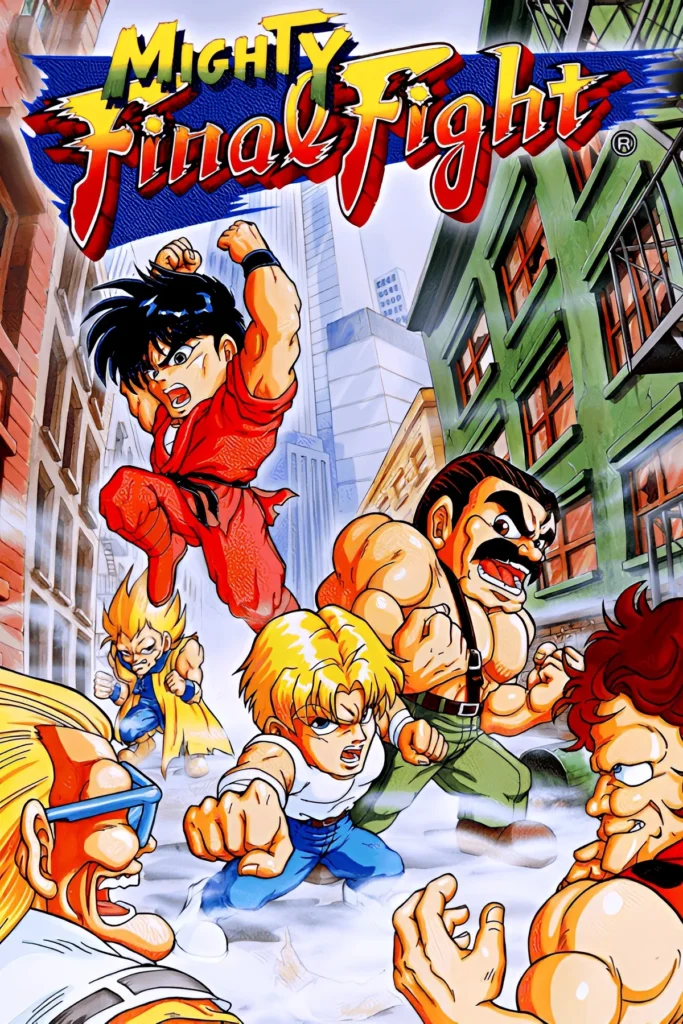
Platform: NES
Released: 1993
Mighty Final Fight is what happens when Capcom takes the gritty street-fighting attitude of Final Fight and squeezes it into an adorable, super-deformed NES package without losing the punch. Cody, Guy, and Haggar all return, but now they look like tiny action figures throwing hands in Metro City.
What makes it stick is how much personality it manages to preserve on aging 8-bit hardware. Haggar still feels like a walking wall of muscle. Guy still brings speed. Cody still has that balanced hero energy. The level-up system gives the game a little extra hook, making it feel more playful than a simple arcade downgrade.
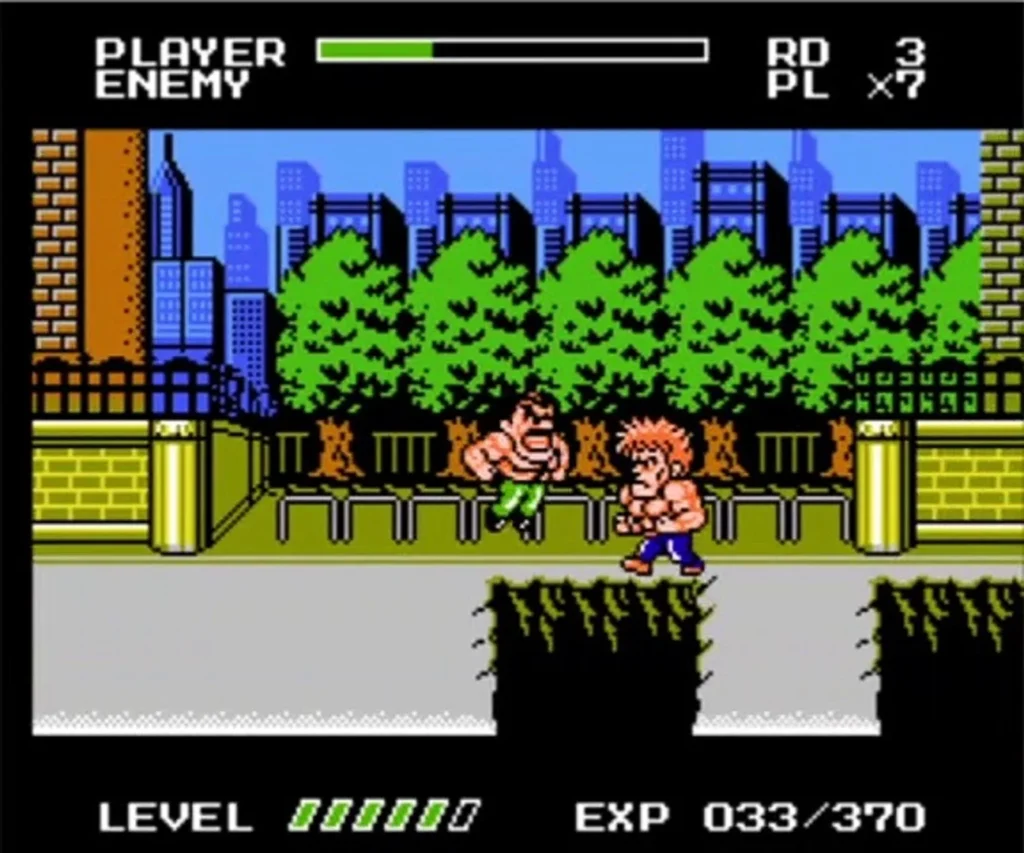
The bittersweet part is that it does not have two-player co-op, which hurts for a game inspired by one of the great buddy brawlers. Still, as an NES curiosity and a late-era cartridge with real Capcom polish, it belongs here.
Worth Revisiting If: You love the Final Fight universe and want a compact, charming NES spin on it.
19. Ninja Baseball Bat Man
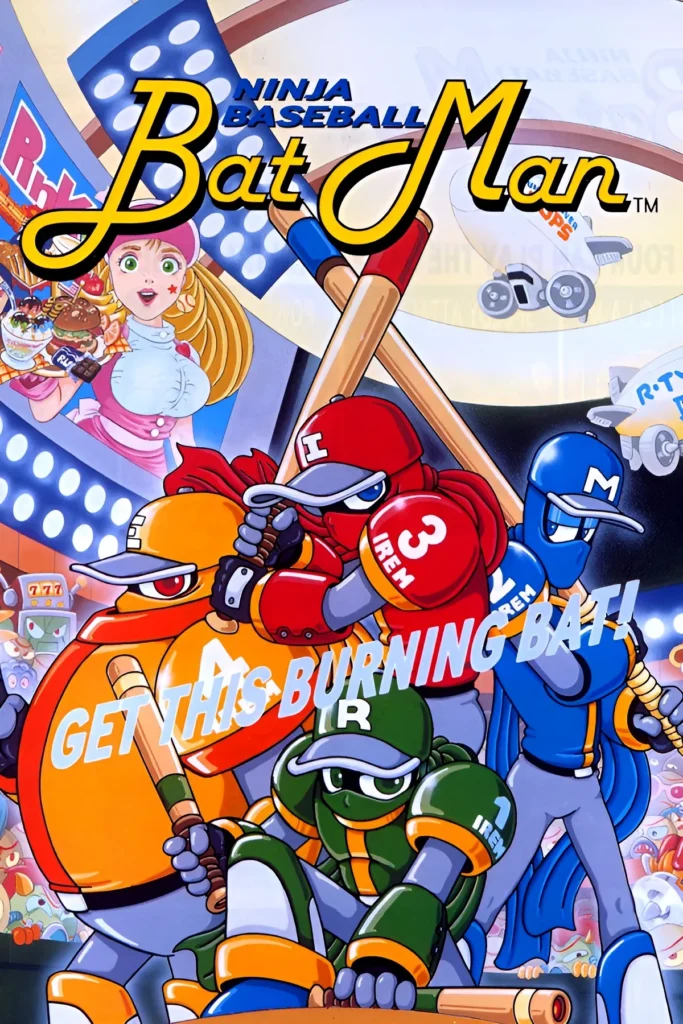
Platform: Arcade
Released: 1993
Ninja Baseball Bat Man sounds like something a kid invented while staring at an arcade flyer, and somehow that is part of its magic. It is a baseball-themed ninja beat ’em up with colorful characters, strange enemies, and a premise that refuses to apologize for itself.
The game’s visual identity is unforgettable. Enemies are baseballs, gloves, bats, and sports mascots twisted into cartoon chaos. The heroes swing bats like martial arts weapons, and the whole thing feels like a Saturday morning cartoon that found a stack of quarters and lost all restraint.
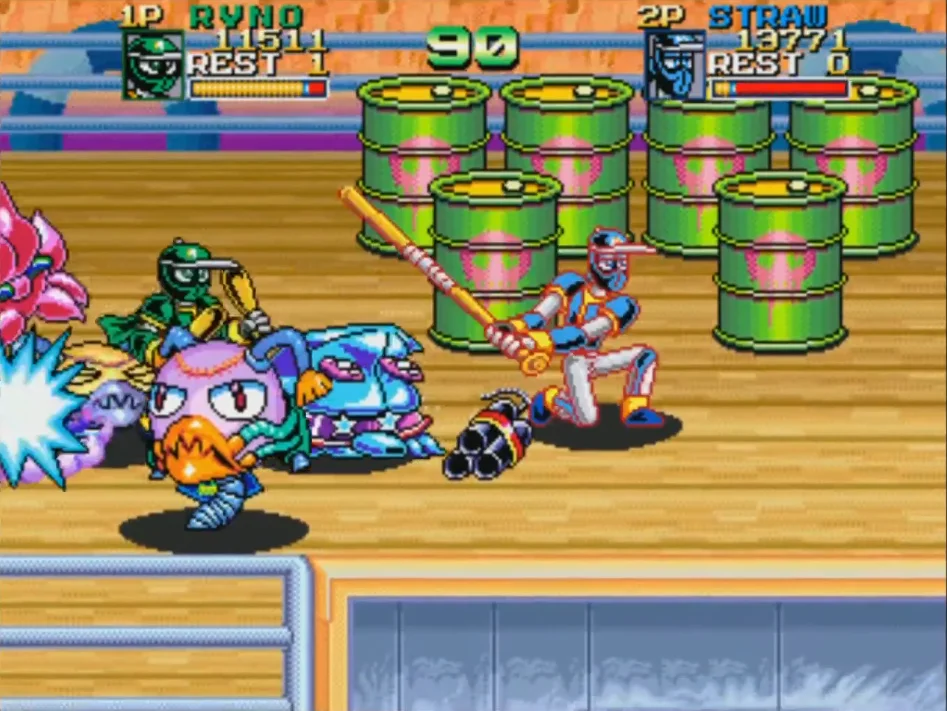
It never had the household-name recognition of TMNT or Final Fight, but that underdog status gives it collector-story energy. It is the kind of arcade game someone remembers seeing once, then spends years asking, “What was that baseball ninja game called?”
Worth Revisiting If: You want one of the strangest and most lovable arcade Beat ’Em Ups of the 1990s.
18. Batman Returns
Platform: Super Nintendo
Released: 1993
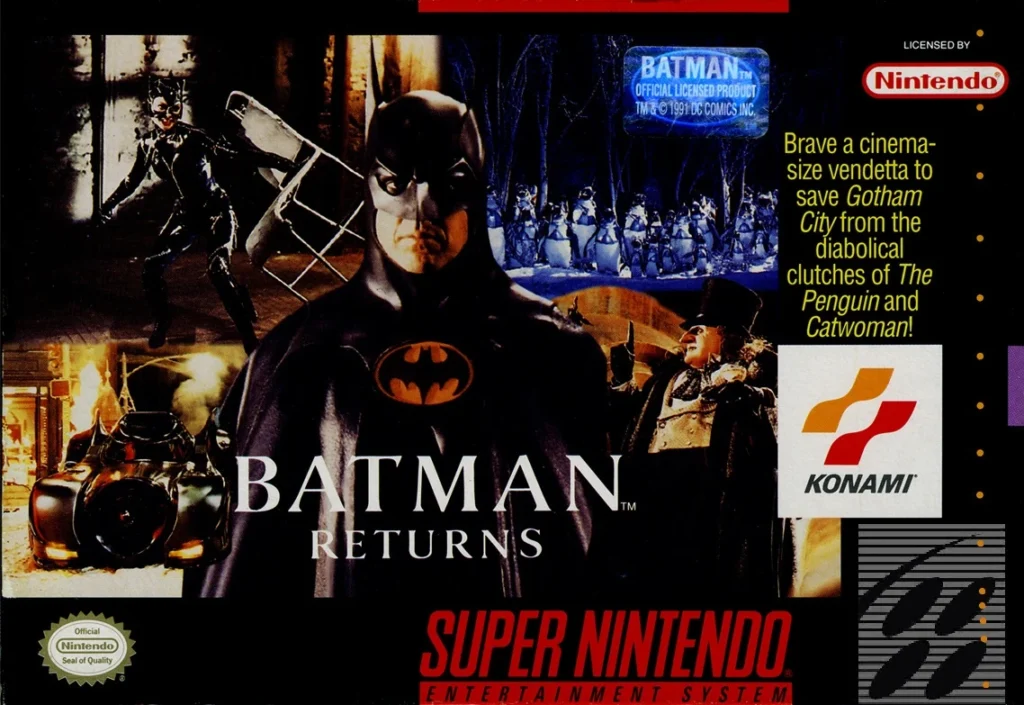
Batman Returns on SNES understood the assignment. It did not try to be everything. It focused on one thing: letting Batman stomp through Gotham’s frozen streets, slam thugs into the scenery, and look cool doing it.
Konami gave the game a heavy, cinematic feel. The snowy backdrops, circus gang enemies, and chunky character sprites capture the mood of the film surprisingly well. The best detail is the way Batman can grab enemies and smash them into opposite sides of the screen. It feels brutal in the most comic-book-safe way possible.
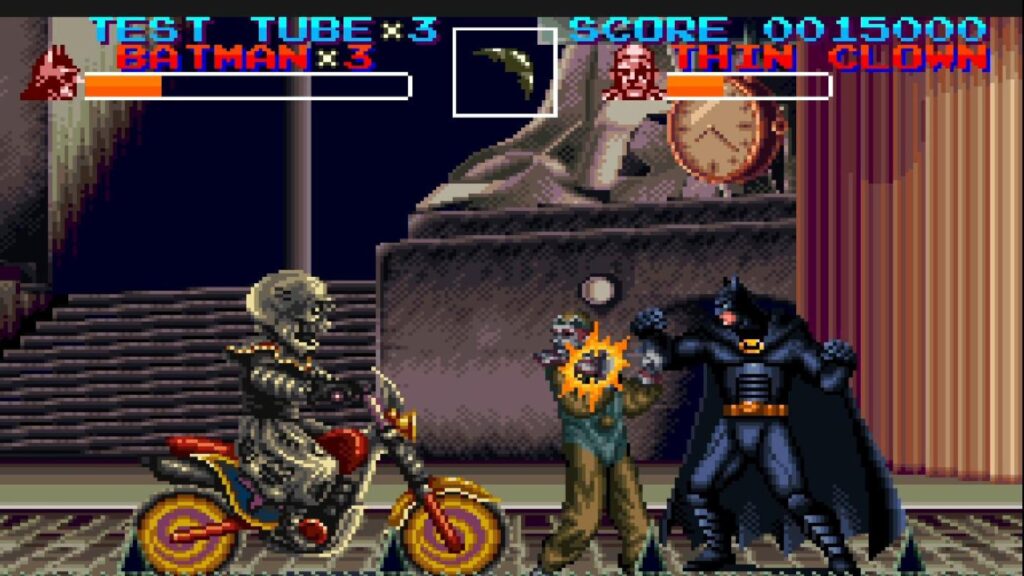
It is not a co-op game, which keeps it from climbing higher on a Player Two-focused list. But as a solo brawler, it is one of the strongest licensed Beat ’Em Ups on the SNES and a perfect example of how 16-bit games could translate movie atmosphere into arcade-style action.
Worth Revisiting If: You want a darker, more cinematic SNES brawler with serious Konami craftsmanship.
17. River City Ransom
Platform: NES
Released: 1990
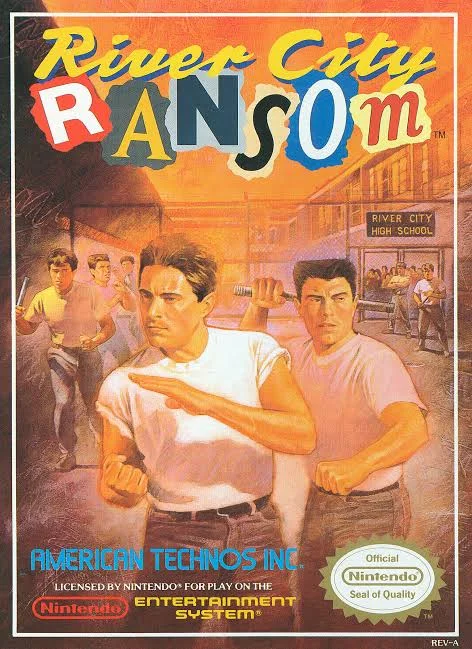
River City Ransom is the scrappy cousin at the beat ’em up family reunion. It has street fights, two-player action, and endless punching, but it also has shops, food, stat boosts, goofy dialogue, and a weird little open-world structure that made it feel ahead of its time.
Players remember the “BARF!” enemy reaction for a reason. It is silly, memorable, and completely unlike the more serious arcade brawlers of the era. Buying burgers, reading books to improve stats, and wandering around town gave the game a personality that felt closer to an RPG-brawler hybrid than a straight left-to-right slugfest.
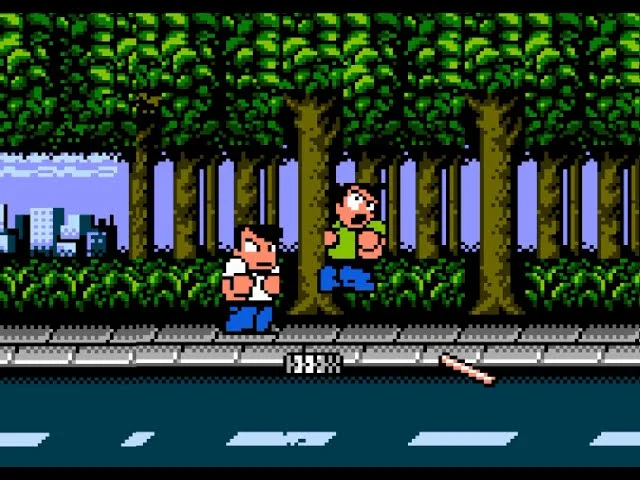
Its rough edges are part of the charm. The combat can feel loose, and figuring out where to go is not always elegant. But River City Ransom still matters because it showed that Beat ’Em Ups could be funny, flexible, and full of personality.
Best Way to Play Today: Modern re-releases and collections have made the River City/Kunio-kun series easier to explore than it used to be.
16. Guardian Heroes
Platform: Sega Saturn
Released: 1996
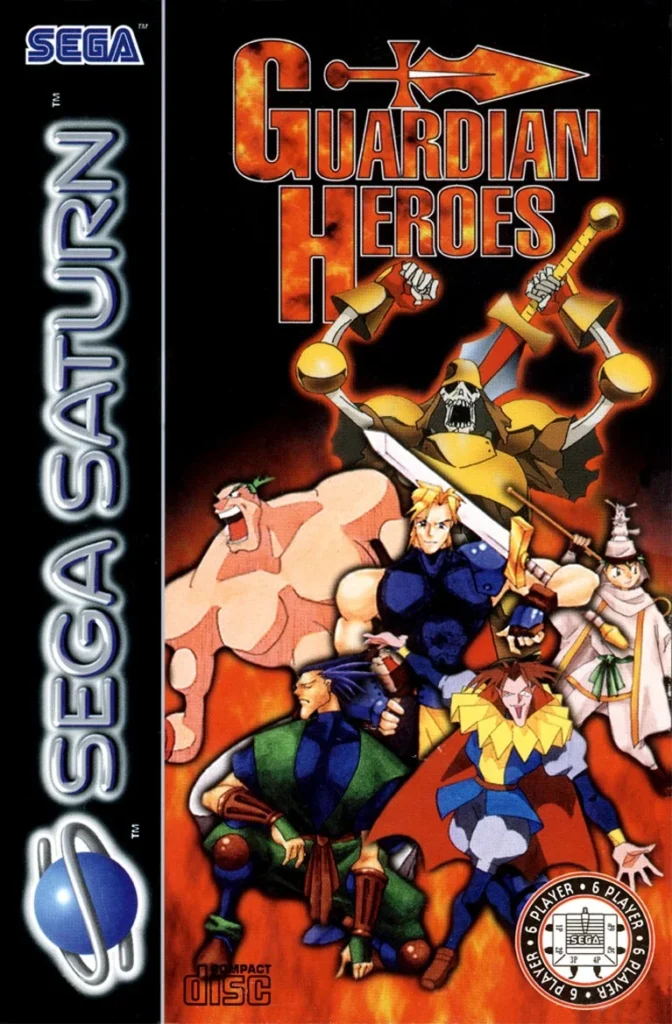
Guardian Heroes is the brawler for people who wanted their beat ’em up to feel like an anime fantasy epic that spilled into a fighting game. Treasure packed it with branching paths, magic attacks, multiple planes of movement, and a wild cast of characters.
What players remember most is the energy. The screen fills with spell effects, sword swings, skeleton soldiers, and chaos that feels almost too big for the Saturn to contain. The multiple routes gave it replay value at a time when many brawlers were still built around one straight march to the final boss.
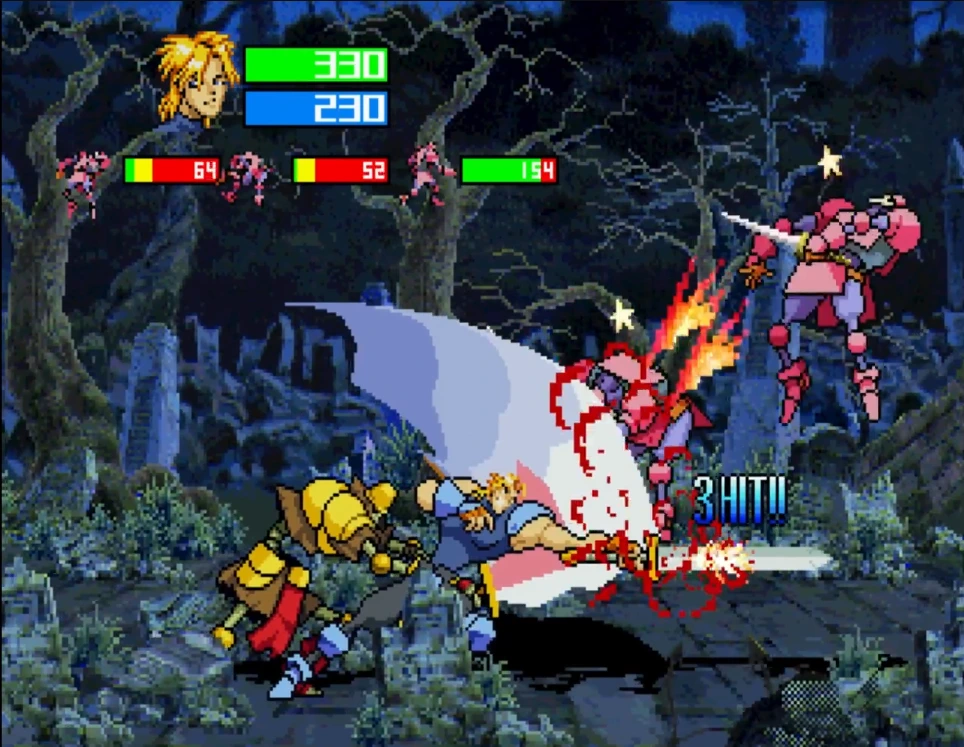
It is more complex than the average arcade bruiser, and that can make it slightly less pick-up-and-play for newcomers. But for Saturn fans, Guardian Heroes remains one of the system’s crown jewels and one of the most ambitious Beat ’Em Ups of the 32-bit era.
Collecting Note: Original Saturn copies can be pricey, so check current options carefully before chasing the disc.
15. The Punisher
Platform: Sega Genesis
Released: 1993
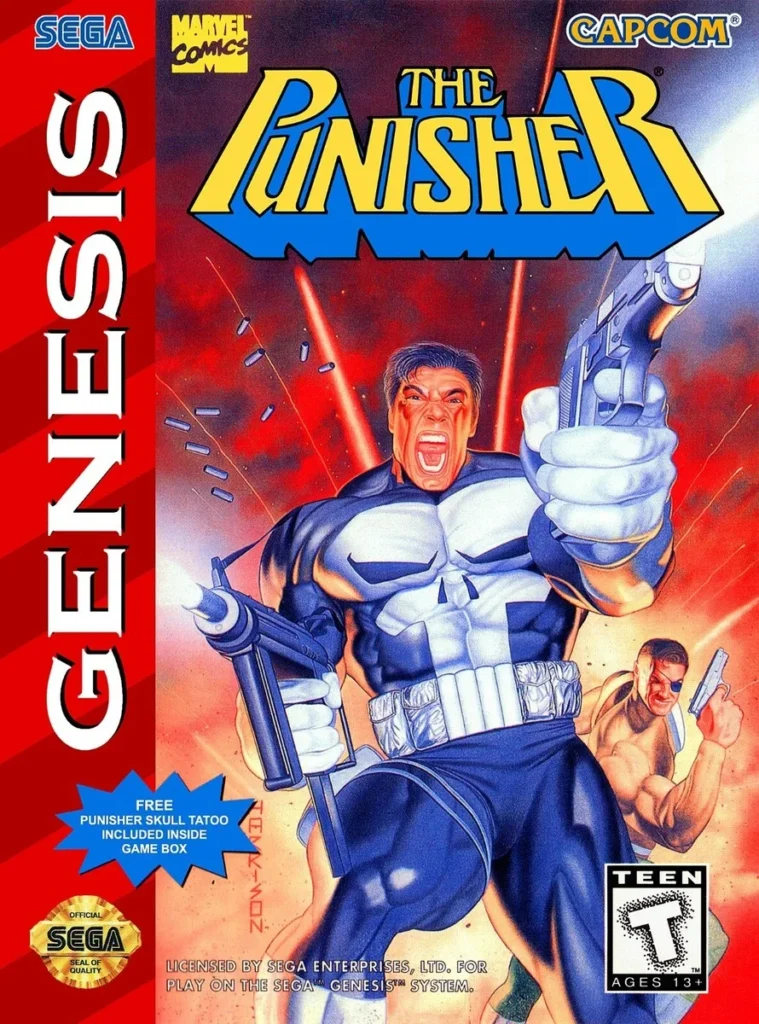
Capcom’s The Punisher is basically Final Fight wearing a trench coat and carrying heavier artillery. It has that unmistakable Capcom arcade feel: big sprites, responsive attacks, destructible objects, and enemies who arrive ready to be thrown into next week.
The game’s best co-op detail is the pairing of Punisher and Nick Fury. It gives the game a buddy-action flavor that feels ripped from early 90s comic racks and arcade rooms. Weapons add extra bite, especially when the screen erupts into gunfire, knives, and explosive chaos.
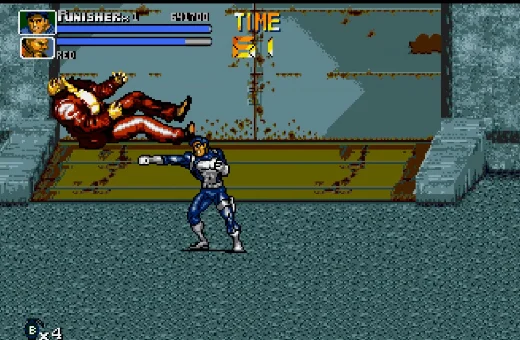
For years, The Punisher felt like one of those arcade classics trapped behind licensing complications. That has changed somewhat thanks to modern Capcom collections, but availability can still shift with licensing and storefront changes. Capcom lists The Punisher as part of Marvel vs. Capcom Fighting Collection: Arcade Classics, which gives modern players a cleaner way to revisit it.
Worth Revisiting If: You want a harder-edged Capcom brawler with comic book attitude.
14. Captain Commando
Platform: Sega Genesis
Released: 1991
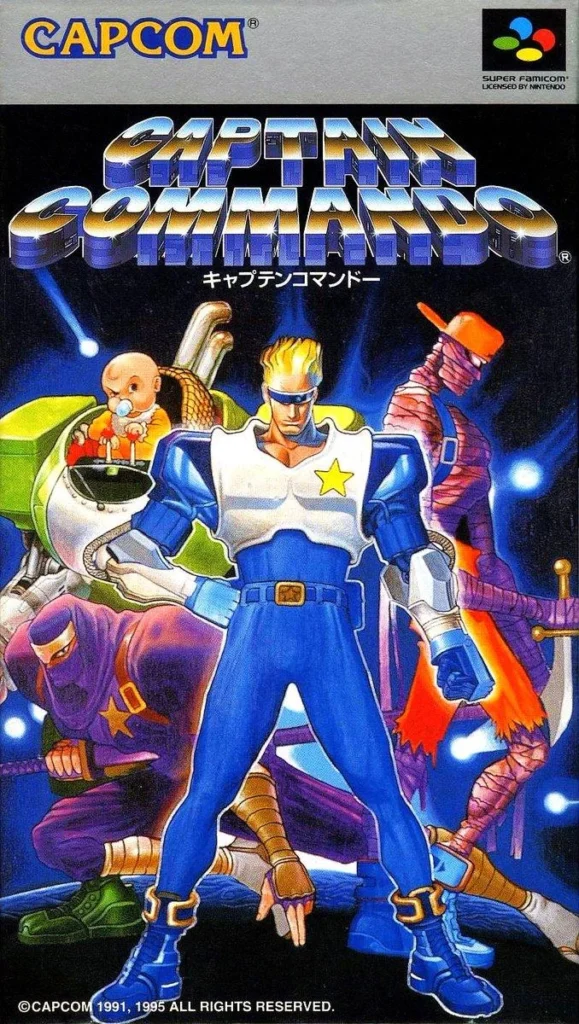
Captain Commando feels like Capcom decided the future needed ninjas, aliens, mechs, babies in robot suits, and absolutely no explanation longer than one attract screen. It is bright, loud, weird, and wonderfully arcade.
The character lineup is the hook. Captain Commando is the obvious leader, but Baby Head piloting a mech suit is the kind of character design that stays with you forever. Mack the Knife and Ginzu the Ninja round out a roster that feels made for a cabinet surrounded by curious kids.
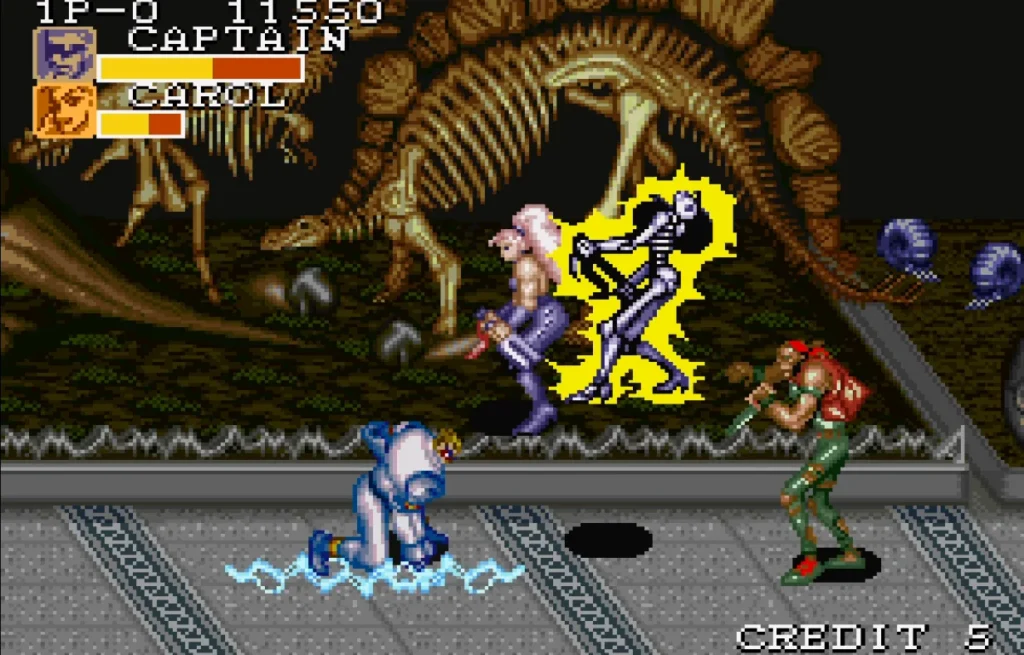
It is not as polished as Final Fight or Streets of Rage 2, but it has a wild energy those games do not. It represents the arcade era when character design alone could convince you to drop a quarter.
Best Way to Play Today: Capcom Beat ’Em Up Bundle includes Captain Commando alongside six other arcade brawlers. Capcom notes that the bundle includes seven arcade classics, including two titles that had not previously been available on home consoles.
13. Golden Axe
Platform: Arcade / Sega Genesis
Released: 1989
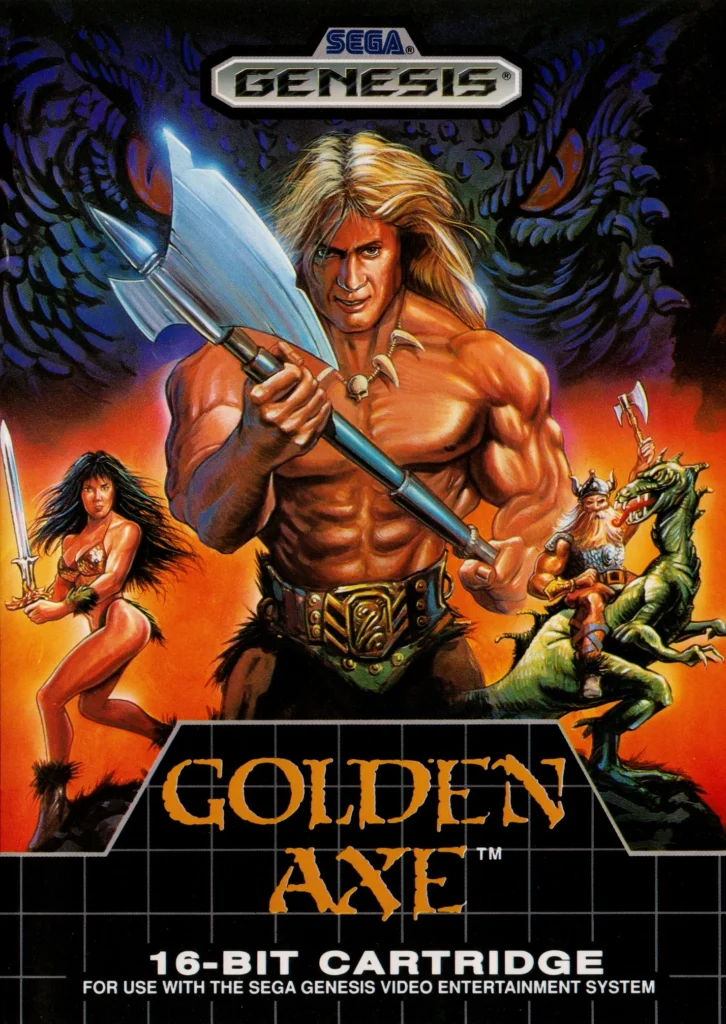
Golden Axe gave the beat ’em up genre a fantasy makeover. Instead of city streets and gang members, you got barbarians, skeletons, magic, dragons, and revenge against Death Adder. It felt like a sword-and-sorcery poster brought to life.
The mountable creatures are still the detail everyone remembers. Knocking an enemy off a little dragon and stealing it for yourself never gets old. The magic attacks also gave each character a theatrical moment, especially when the screen paused for a huge spell.
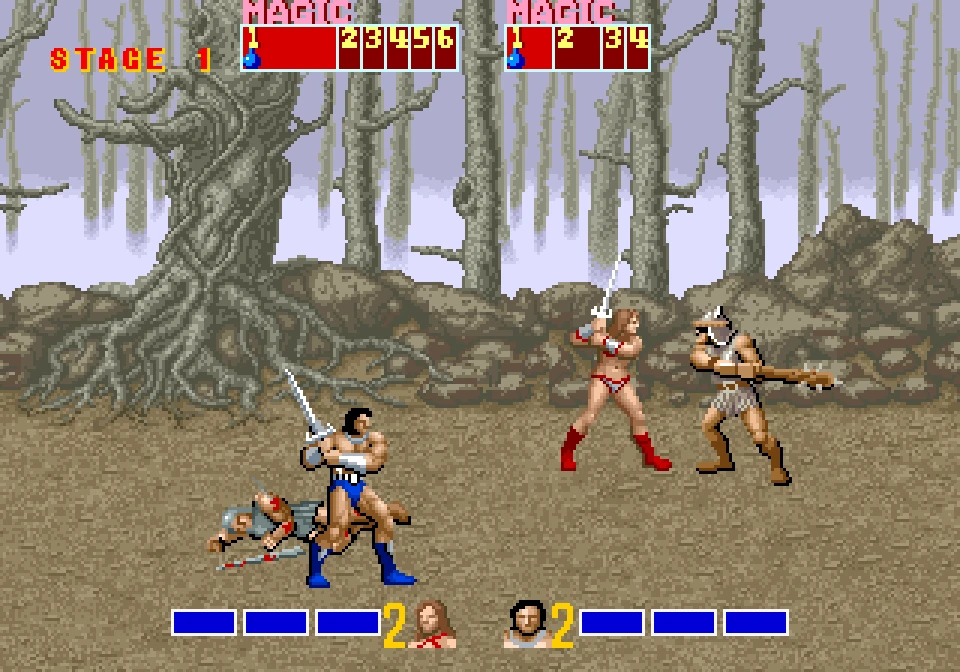
The Genesis version became a home-console staple, the kind of game that made Sega’s machine feel edgier than the competition. It is stiff compared to later brawlers, but that early Genesis grit is part of the appeal.
Worth Revisiting If: You want a fantasy brawler that helped define the Genesis attitude.
12. Alien vs. Predator
Platform: Arcade
Released: 1994
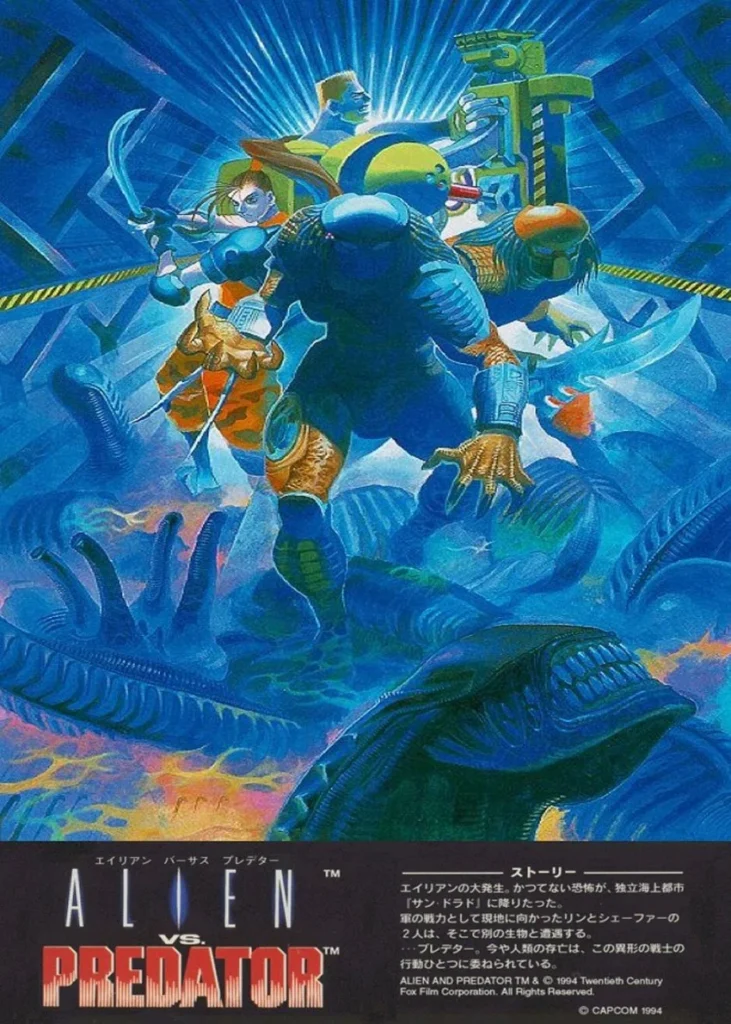
Capcom’s Alien vs. Predator is one of the great arcade “how did this even exist?” games. It throws Colonial Marines and Predators into a beautifully animated war against xenomorphs, and somehow the result plays as good as it sounds.
The speed is what separates it. This is not a slow, chunky brawler. Characters move fast, attacks feel sharp, and the Predators bring weapons that make the screen feel dangerous. Linn Kurosawa became a standout original character, slicing through aliens with the kind of confidence that made arcade players stop and watch.
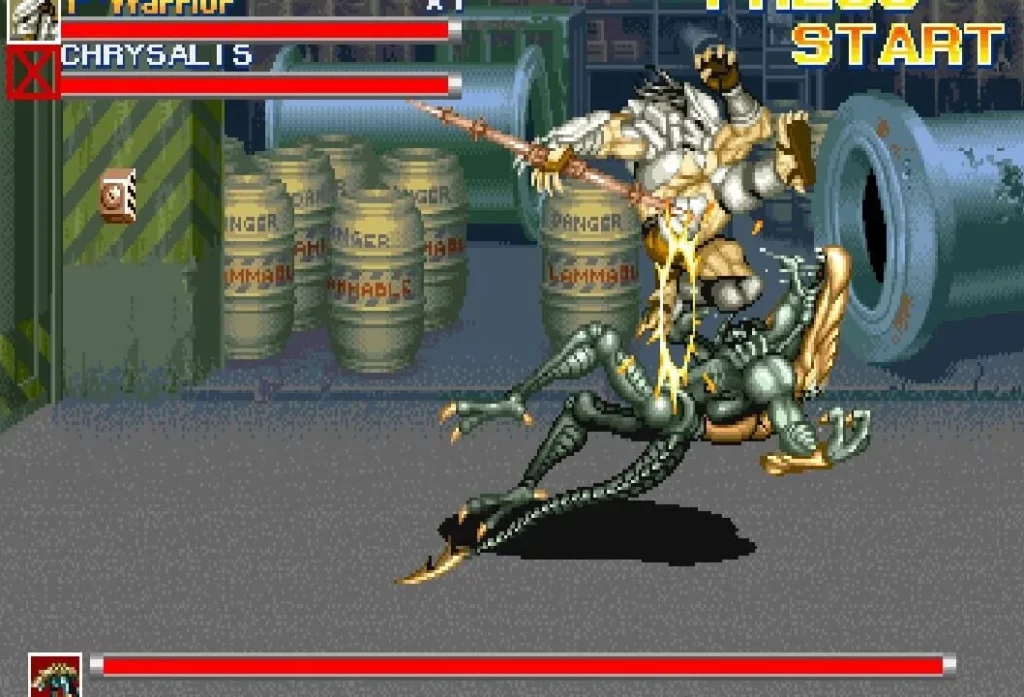
The downside is access. Unlike some Capcom brawlers, this one has not been widely reissued in a convenient modern collection, likely due to licensing complexity. That gives it almost mythical status among arcade fans.
Worth Revisiting If: You find a legitimate arcade setup or collection opportunity and want one of Capcom’s most spectacular licensed brawlers.
11. Double Dragon
Platform: Arcade
Released: 1987
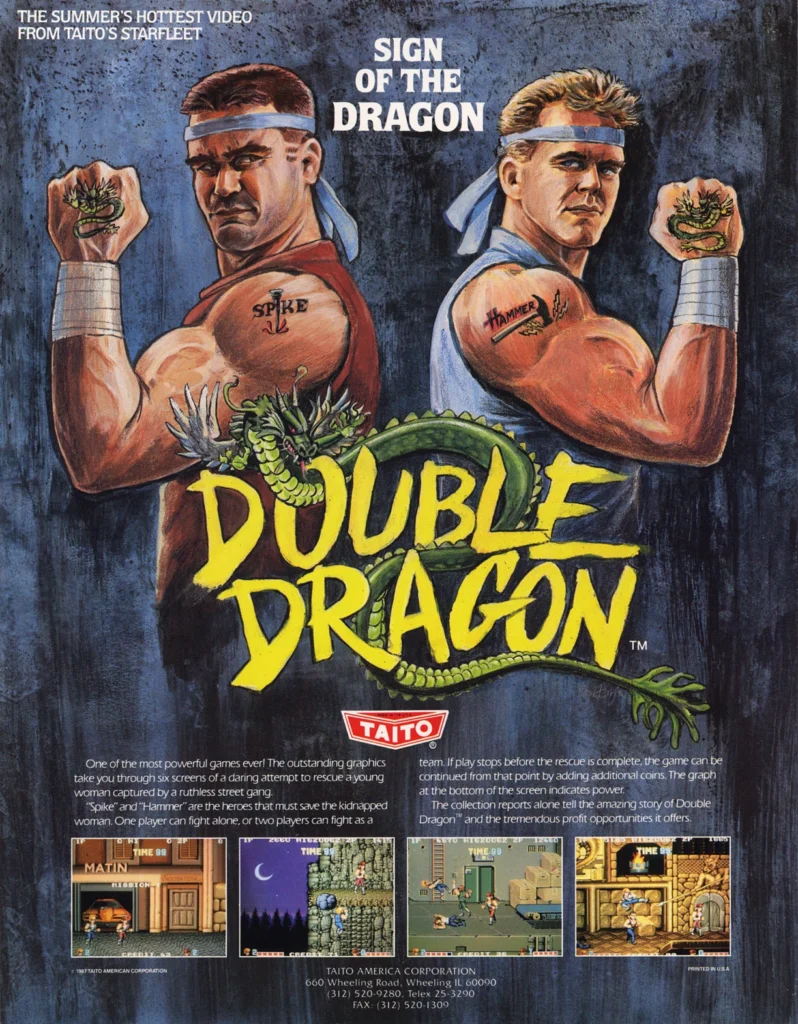
Double Dragon did not invent punching bad guys from left to right, but it helped turn the formula into a phenomenon. Billy and Jimmy Lee became icons of the arcade era, and the promise of two-player martial arts action was huge.
The elbow attack is one of those little details that became bigger than intended. Players figured out what worked, leaned into it, and made it part of the game’s identity. The opening scene, the street fights, the ladders, the whips, the final betrayal twist in two-player mode — Double Dragon had moments.
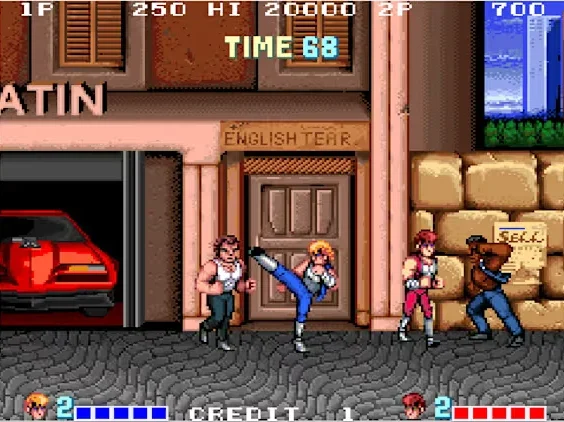
It feels rough now. The pacing is slower, the hit detection can be awkward, and later brawlers improved the formula dramatically. But historically, it is essential. Without Double Dragon, the genre’s late 80s and early 90s explosion looks very different.
Worth Revisiting If: You want to understand the roots of co-op street brawlers.
10. X-Men
Platform: Arcade
Released: 1992
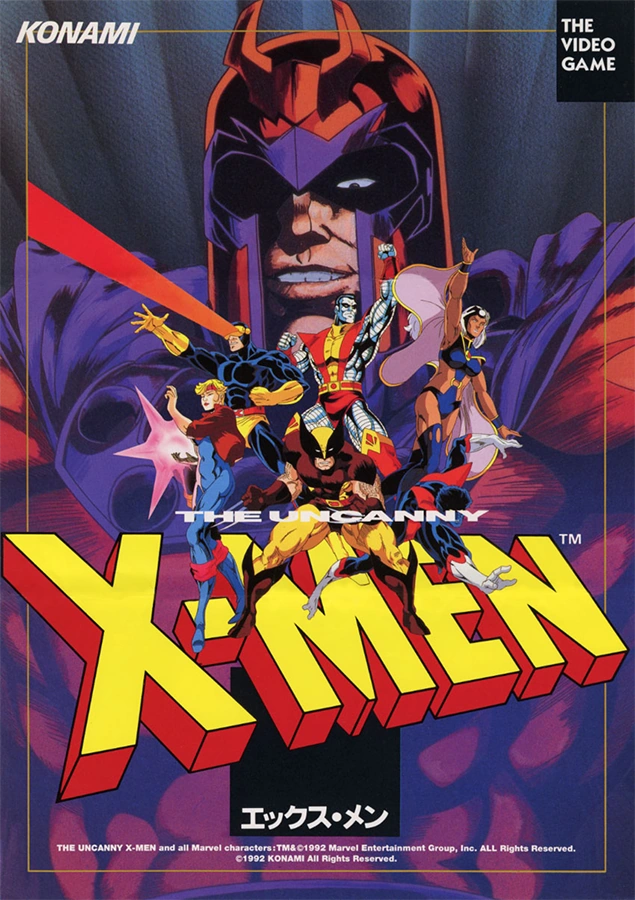
The X-Men arcade cabinet was not just a game. It was furniture. If you saw the massive six-player version in the wild, it felt like discovering the mothership. The cabinet itself was part of the event.
Cyclops, Wolverine, Storm, Colossus, Nightcrawler, and Dazzler each brought a recognizable silhouette and screen-clearing mutant power. Colossus yelling as he unleashed his special attack is burned into arcade memory. The voice clips, especially the wonderfully strange villain lines, gave the game a personality that fans still quote.
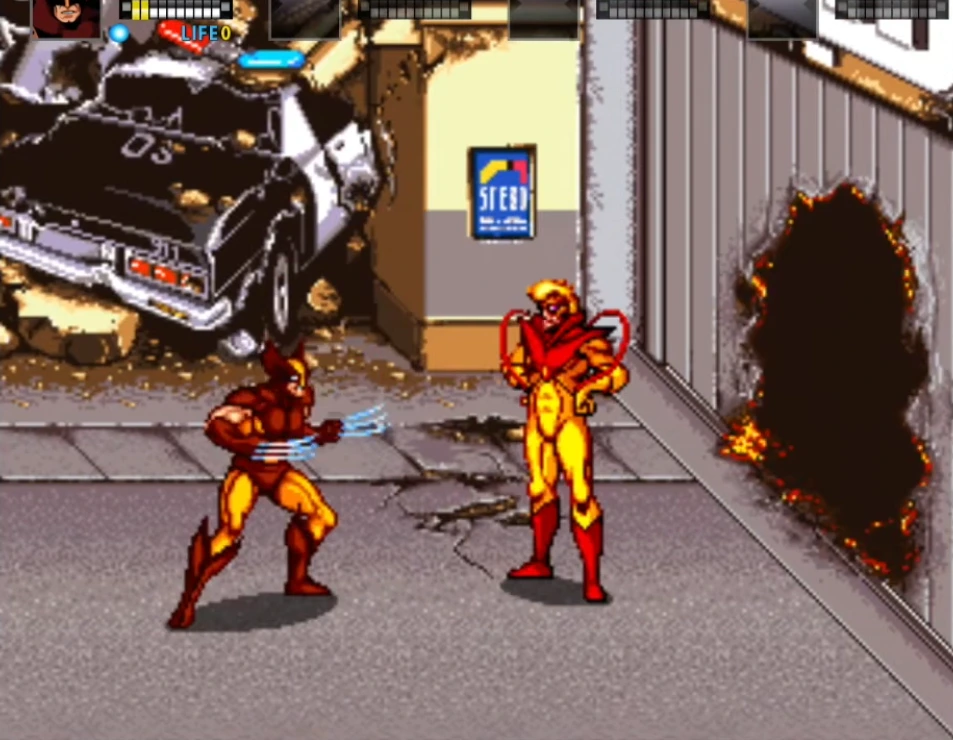
It is simple mechanically, but that was never the point. X-Men worked because it turned co-op into spectacle. Six players crowding around one cabinet was the kind of arcade moment modern online play still struggles to replicate emotionally.
Worth Revisiting If: You want a pure arcade party brawler with comic book electricity.
9. Cadillacs and Dinosaurs
Platform: Arcade
Released: 1993
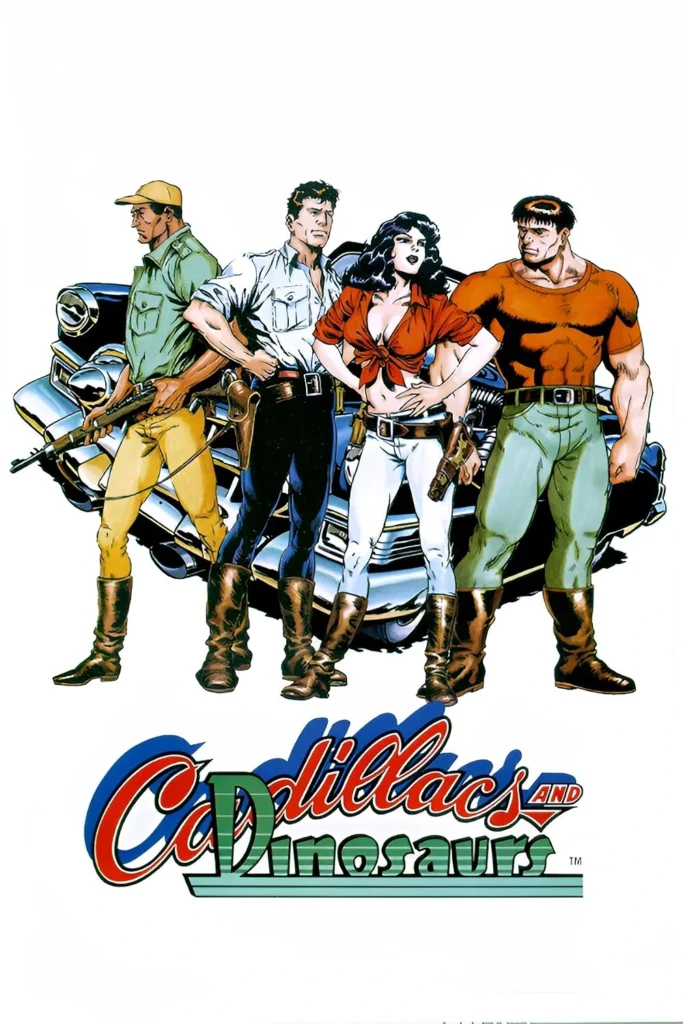
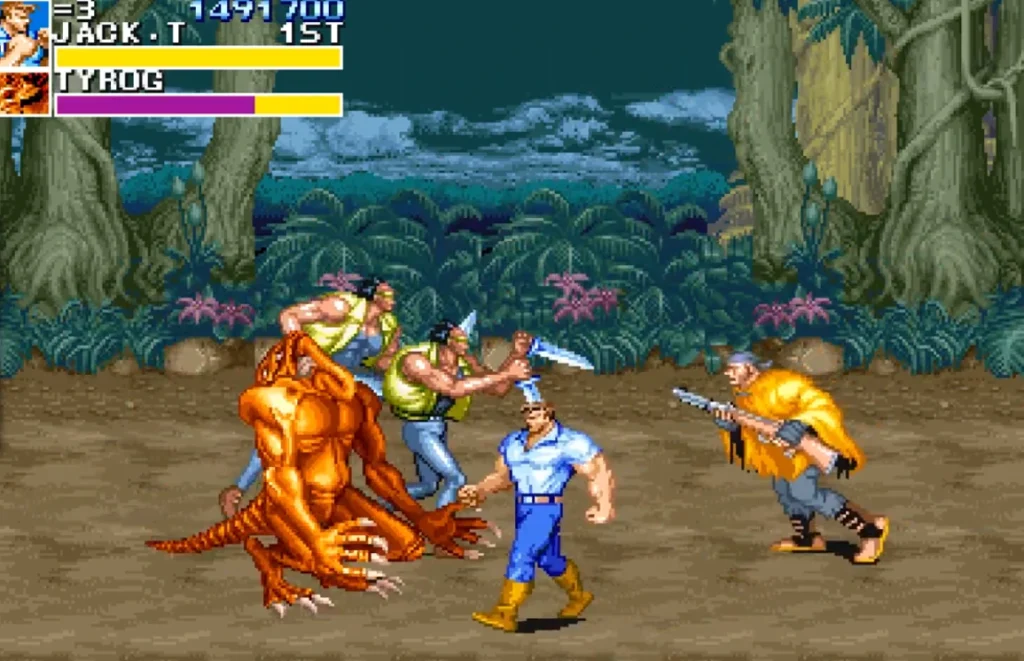
Cadillacs and Dinosaurs has one of the greatest titles in arcade history, and the game nearly lives up to it through attitude alone. Capcom combined post-apocalyptic action, stylish heroes, vehicles, guns, and dinosaurs into a brawler that feels like a lost comic-book blockbuster.
The screen presence is fantastic. Jack Tenrec and the crew fight through jungle ruins, city zones, and enemy mobs while dinosaurs stomp into the chaos. The car sequence adds a sense of motion that makes the game feel bigger than a standard corridor brawler.
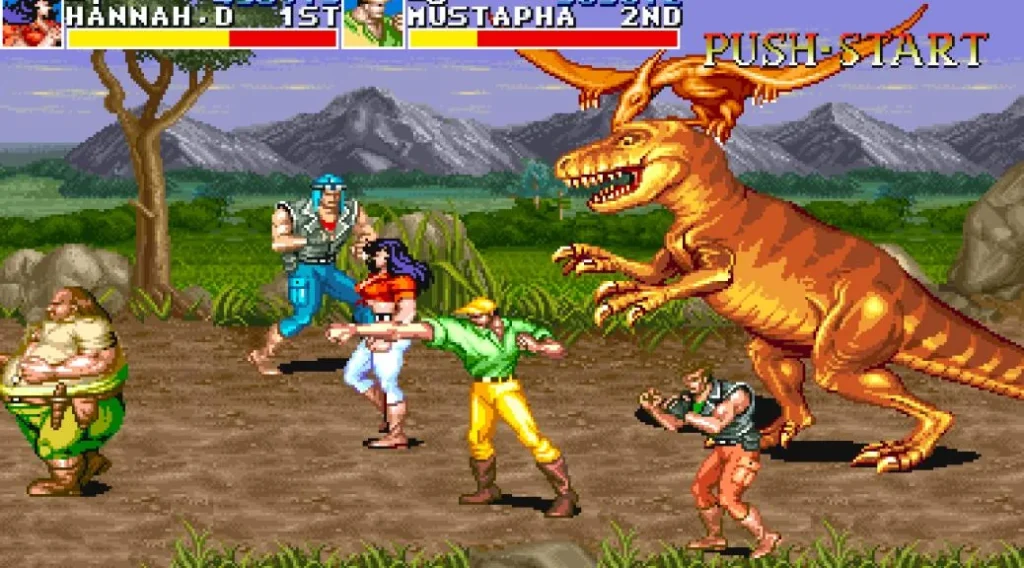
Like Alien vs. Predator, its biggest issue today is access. Licensing has kept it from enjoying the same modern visibility as Final Fight or Captain Commando. That scarcity of access has only made arcade fans talk about it more.
Worth Revisiting If: You love Capcom arcade design and want something with pulp adventure flavor.
8. The Simpsons
Platform: Arcade
Released: 1991
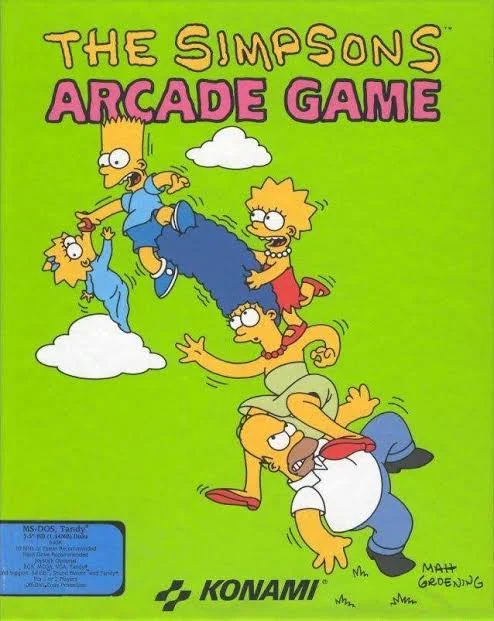
The Simpsons arcade game was a magnet. Even if you were not great at Beat ’Em Ups, the cabinet pulled you in because it looked like the show had somehow escaped the TV and landed beside the snack machines.
The character choices are still perfect. Homer punches and flails. Marge swings a vacuum cleaner. Bart attacks with a skateboard. Lisa uses a jump rope. The animations sell the joke, and the game captures that early Simpsons weirdness before the brand became overly polished.
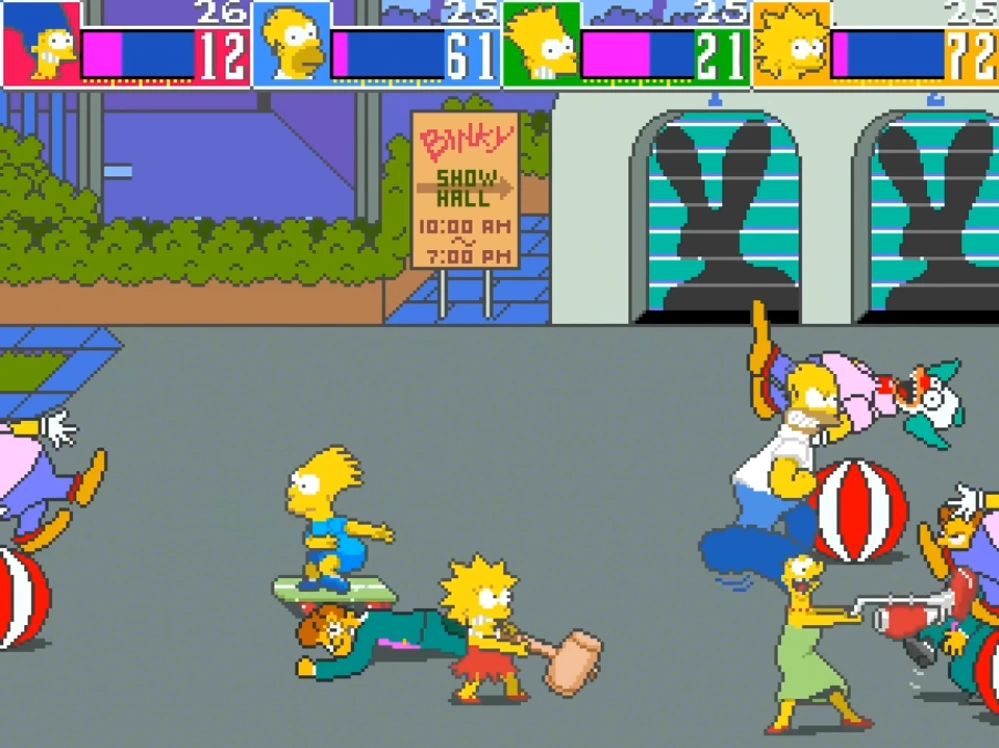
The game is not deep, but it is incredibly memorable. It represents the era when licensed arcade games could become communal events. You did not need to own it. You just needed to find it at a pizza shop, theater lobby, or arcade and convince someone to join in.
Worth Revisiting If: You want a colorful, approachable licensed brawler that still feels like a time capsule.
7. Final Fight
Platform: Arcade
Released: 1989
Final Fight is the blueprint with rolled-up sleeves. Metro City, Mad Gear, Cody, Guy, Haggar, barrels, knives, subway fights, and that glorious roast chicken hidden inside breakable objects — this is where the urban arcade brawler became larger than life.
Haggar is the soul of the game. A mayor who personally cleans up the streets by piledriving criminals is the kind of premise only arcade logic can deliver. The game’s huge sprites and heavy hits made it feel more physical than many earlier brawlers.
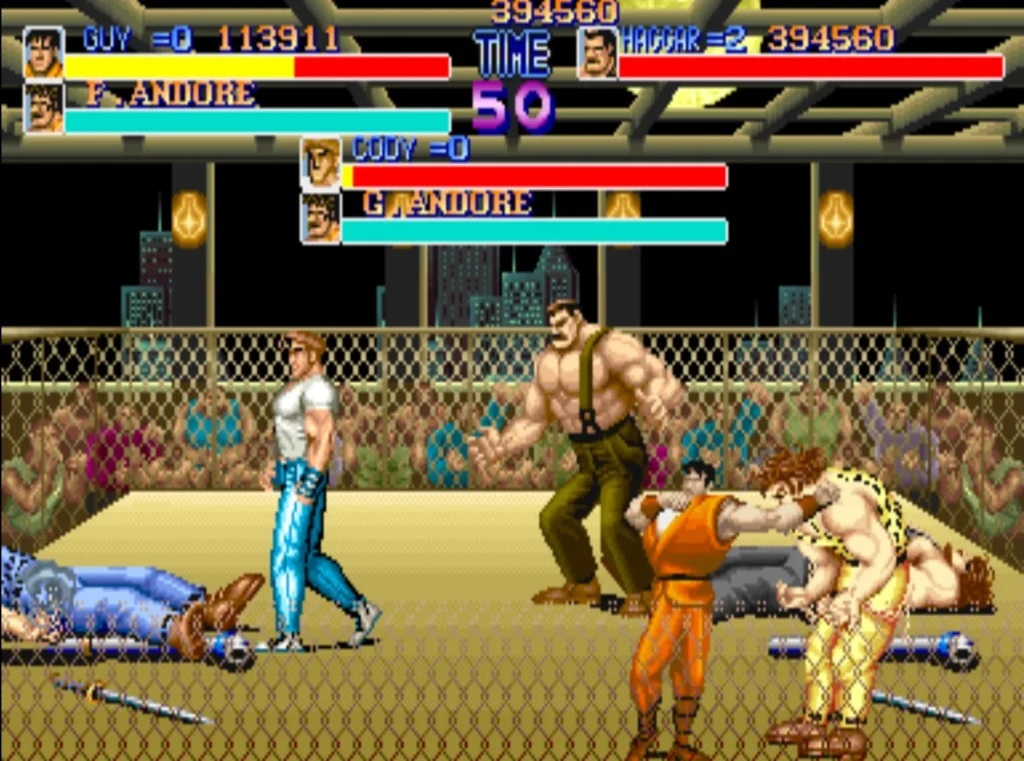
It can be brutally difficult, and some home versions made painful compromises. But the arcade original still has presence. Final Fight matters because so many later Beat ’Em Ups are either responding to it, borrowing from it, or trying to outdo it.
Best Way to Play Today: Final Fight appears in modern Capcom arcade releases, including Capcom Beat ’Em Up Bundle and Capcom Arcade Stadium-related offerings. Availability can vary by platform, so check current storefronts before planning a purchase.
6. Streets of Rage
Platform: Sega Genesis
Released: 1991
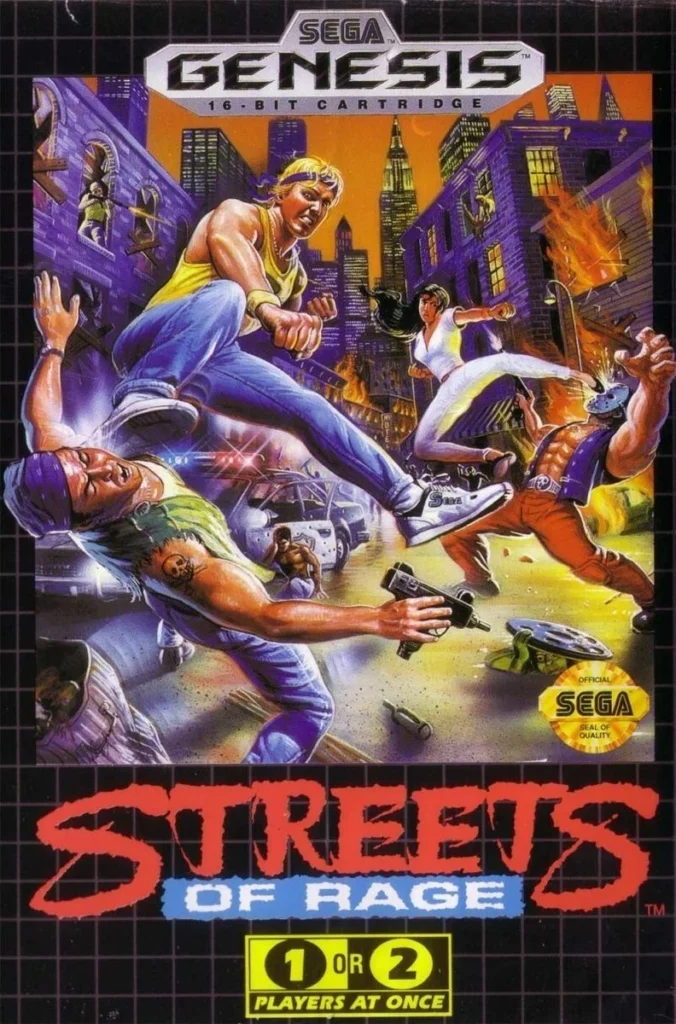
The first Streets of Rage brought the arcade brawler home with Sega attitude and one of the coolest soundtracks on the Genesis. It did not just want to imitate the arcade. It wanted your living room to feel like a neon-lit street war.
Adam, Axel, and Blaze gave players three distinct choices, and the police special attack remains one of the funniest and most satisfying panic buttons in the genre. Calling in a patrol car to launch a rocket into a crowd is absurd, but it felt incredible.
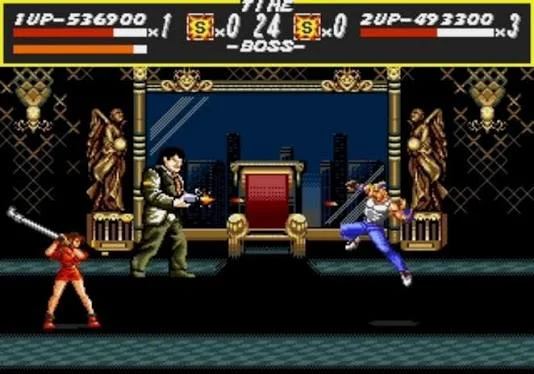
The sequel refined almost everything, but the original still matters because it established the mood. The music, the nighttime city, the sense of danger, and the two-player rhythm made it a Genesis classic.
Collecting Note: Sega has delisted some classic game bundles from modern storefronts, while noting that owners could keep downloading already purchased games. That makes it worth checking current availability before assuming a digital version is easy to buy.
5. Teenage Mutant Ninja Turtles
Platform: Arcade
Released: 1989
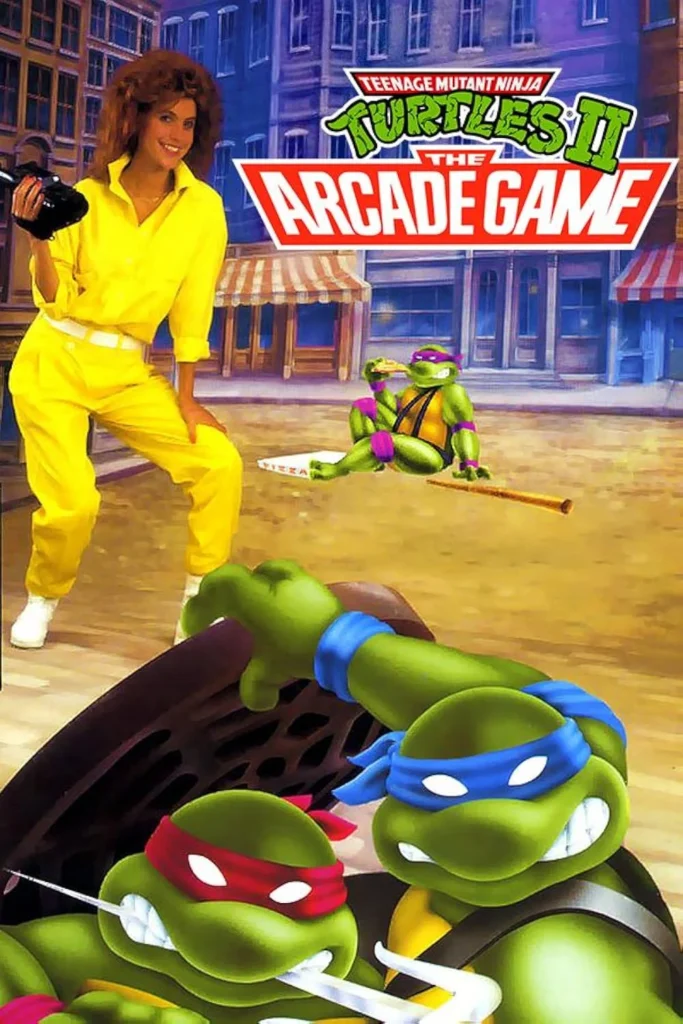
The TMNT arcade game was childhood wish fulfillment in cabinet form. Four turtles. Four players. Pizza. Foot Soldiers. Bebop. Rocksteady. Shredder. That theme of cartoon recognition plus instant co-op action was almost unfair.
The best part was how readable everything felt. Each turtle had a different weapon, the enemies were colorful, and the action moved fast without becoming confusing. Even younger players could understand the fantasy immediately: pick your turtle and start saving the city.
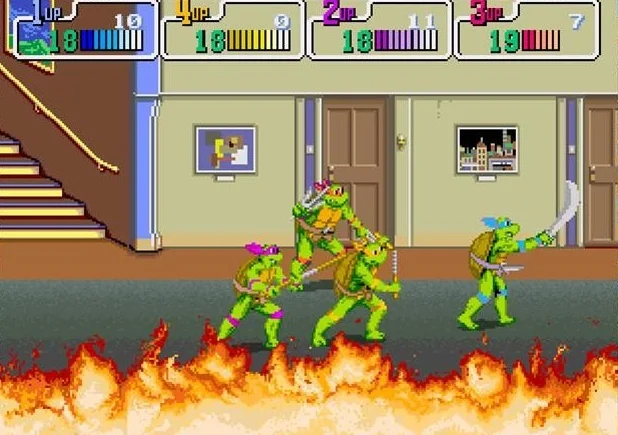
It also captured the social side of arcades beautifully. The four-player setup meant strangers could become temporary teammates. For a few levels, everyone had a role, even if nobody agreed on who stole the pizza.
Best Way to Play Today: Teenage Mutant Ninja Turtles: The Cowabunga Collection includes the arcade game along with 12 other classic TMNT titles across arcade, 8-bit, 16-bit, and handheld history.
4. Teenage Mutant Ninja Turtles IV: Turtles in Time
Platform: Super Nintendo
Released: 1992
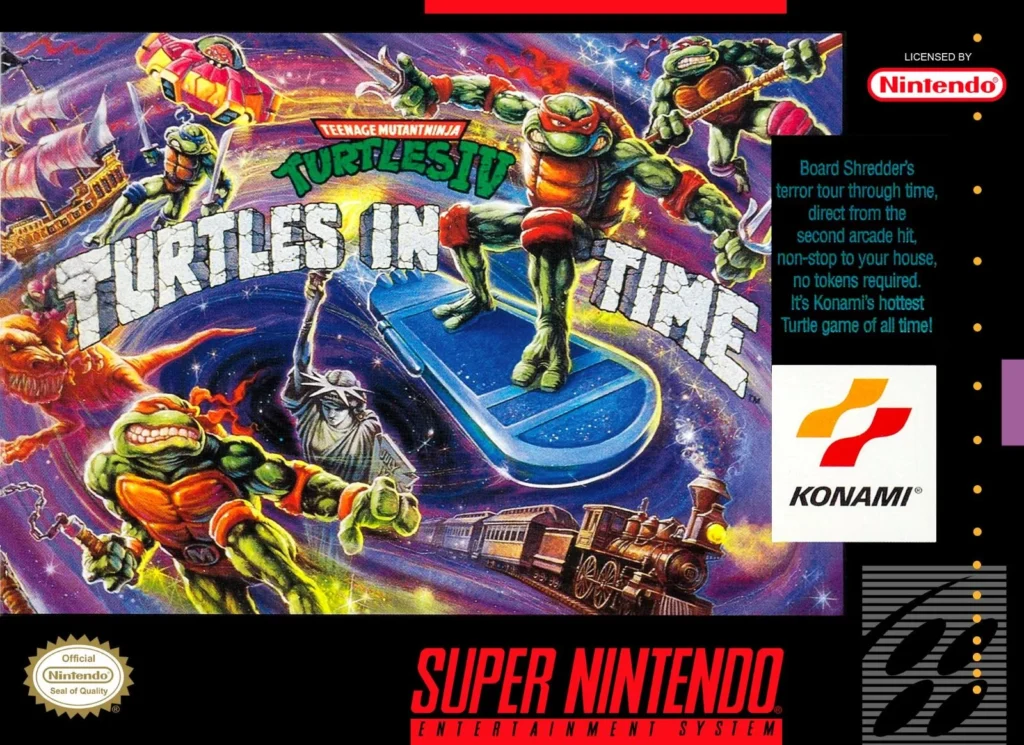
Turtles in Time on SNES is one of the great “bring the arcade home” memories, even with changes from the arcade version. It felt fast, colorful, funny, and endlessly replayable. For many 16-bit kids, this was the TMNT game.
Throwing Foot Soldiers toward the screen is the signature detail. It is a simple effect, but it still feels like pure 90s showmanship. Levels like “Prehistoric Turtlesaurus” and “Bury My Shell at Wounded Knee” gave the game a playful time-travel structure that made each stage feel distinct.
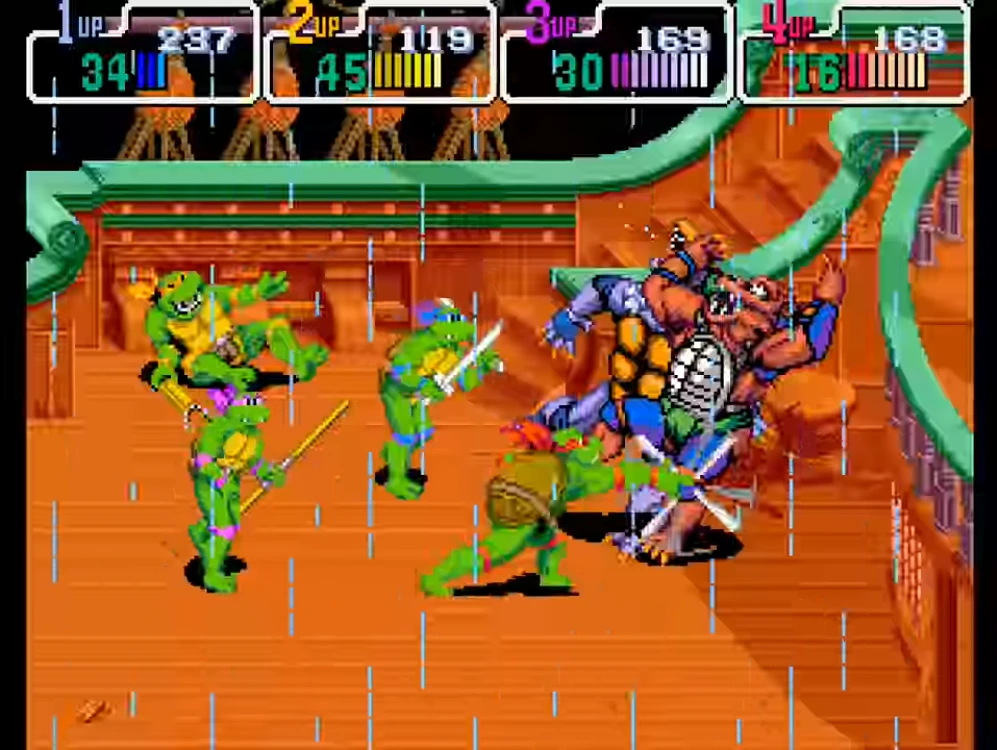
It is polished in a way that makes it easy to recommend to new retro fans. It does not require deep genre knowledge. It just asks you to pick a turtle, bring a friend, and enjoy the ride.
Best Way to Play Today: The Cowabunga Collection includes both arcade and SNES-era TMNT classics, with features such as save options, rewind, button mapping, and local couch play where originally supported.
3. Dungeons & Dragons: Shadow over Mystara
Platform: Arcade
Released: 1996
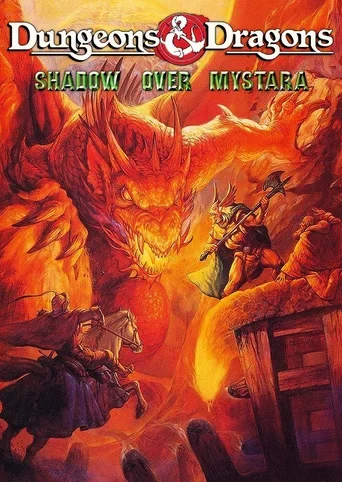
Shadow over Mystara is what happens when a beat ’em up eats a fantasy RPG and somehow digests it perfectly. Capcom built a brawler with character classes, branching paths, spells, items, shops, and enough depth to make repeated playthroughs feel meaningful.
The magic system is a huge part of the appeal. Playing as a spellcaster changes the rhythm dramatically, while fighters and thieves bring their own strengths. Boss encounters feel like events, especially when the screen fills with monsters, effects, and desperate co-op decision-making.
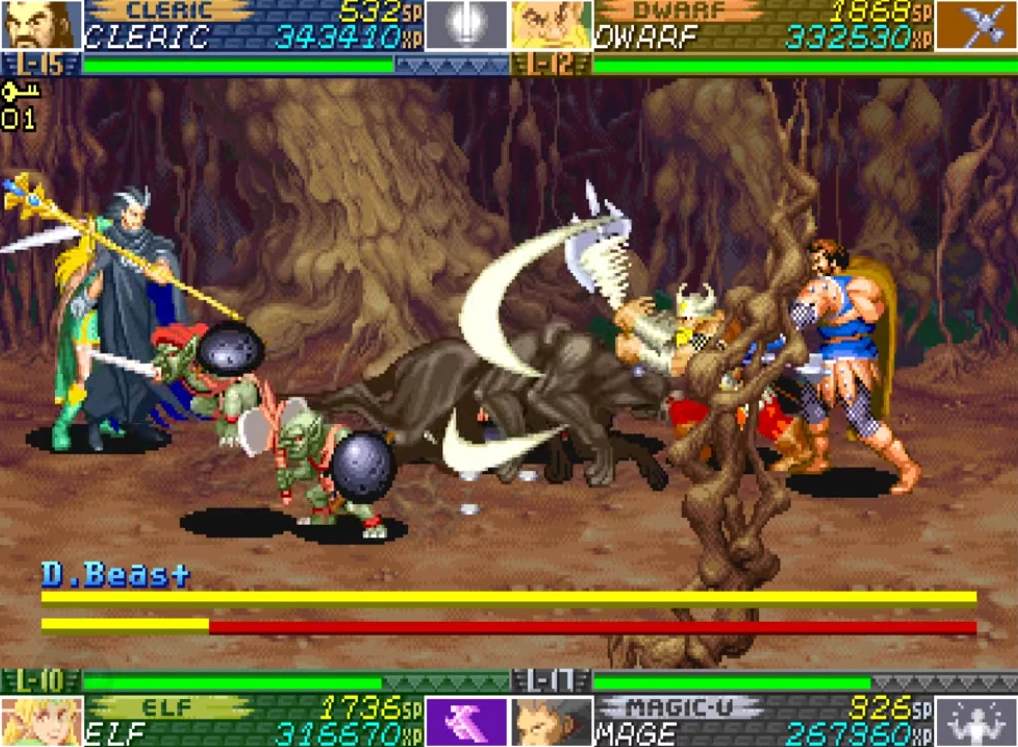
It can be intimidating for casual players because there is more going on than in a typical punch-and-kick brawler. But that depth is exactly why fans still revere it. Shadow over Mystara proved the genre could be more than a quarter-munching hallway.
Worth Revisiting If: You want a fantasy Beat ’Em Up with real replay depth and tabletop flavor.
2. Golden Axe II
Platform: Sega Genesis
Released: 1991
Actually, before crowning the winner, it is worth pausing on what the top spot represents. By the early 90s, Beat ’Em Ups had split into two powerful dreams: the arcade spectacle and the home-console sleepover classic. The arcade had bigger sprites, louder cabinets, and four-player chaos. The living room had repeat play, late-night mastery, and that feeling of owning the game instead of renting time with it.
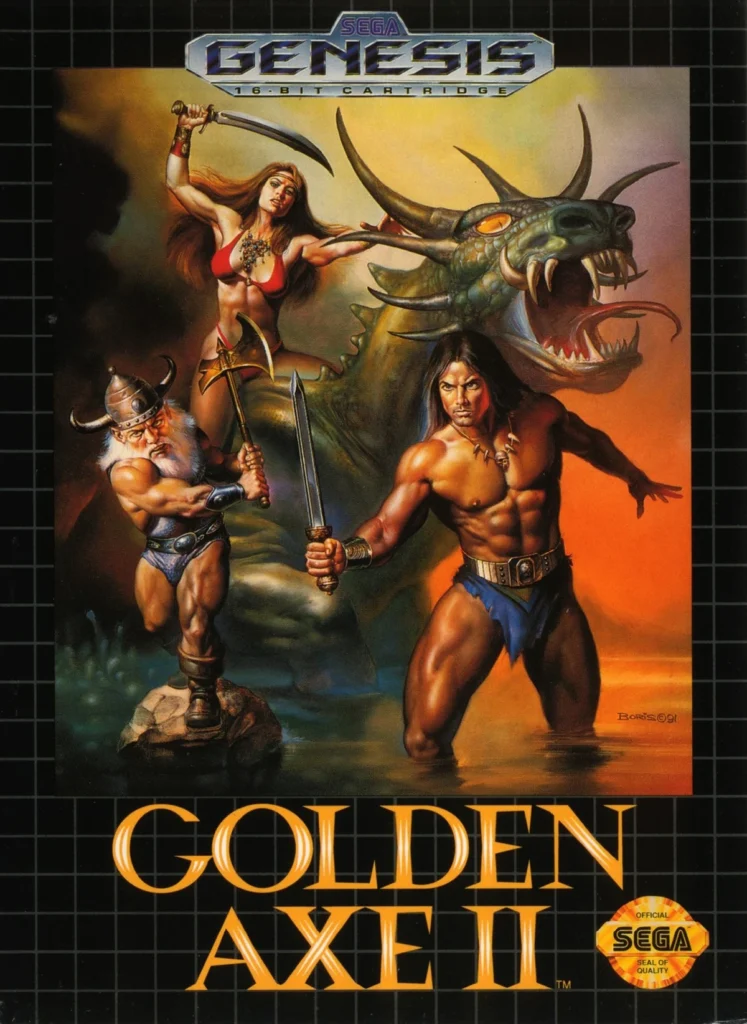
What makes Golden Axe II memorable is the way it preserves the “weekend rental” feeling of early Genesis co-op. This was the kind of game that looked instantly exciting on a box or game store shelf because it promised exactly what kids wanted: barbarians, monsters, skeletons, magic, and two-player action. Ax Battler, Tyris Flare, and Gilius Thunderhead all return, and while the game plays close to the original, the darker visual tone and new enemies give it enough of its own personality.
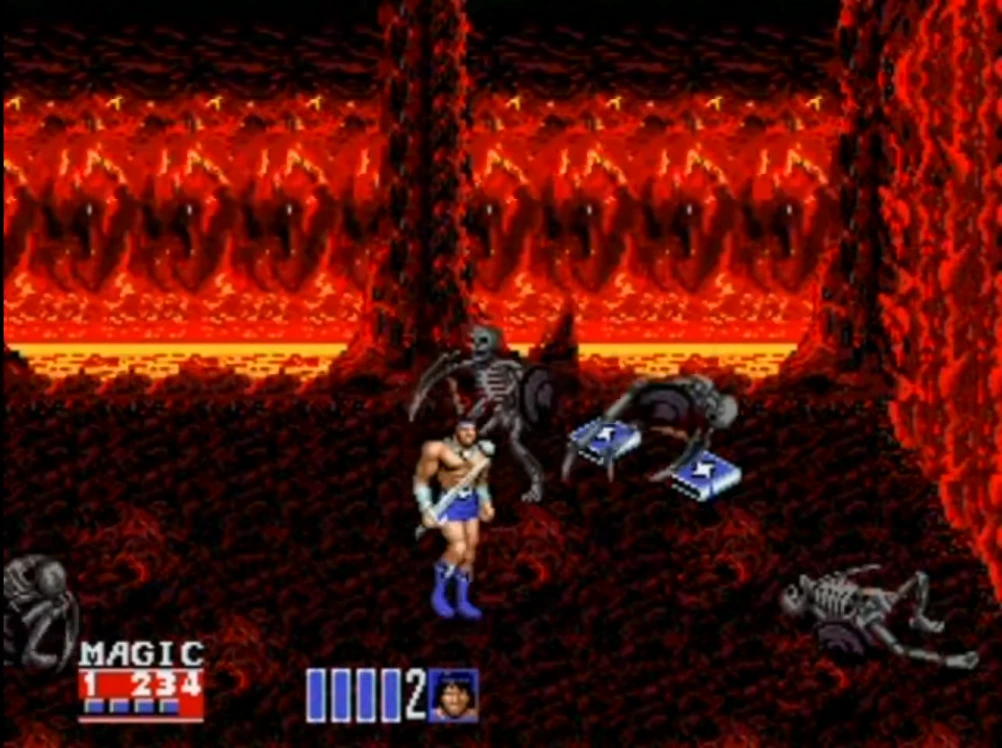
It’s is not the deepest Beat ’Em Up on this list, and some fans prefer the arcade bite of the original. But as a Genesis couch co-op staple, it still captures a very specific fantasy: two players shoulder to shoulder, clearing out strange creatures under a moody 16-bit sky, pretending the living room is a sword-and-sorcery battlefield.
Worth Revisiting If: You want a straightforward Genesis fantasy brawler that delivers old-school co-op comfort without asking for much setup.
1. Streets of Rage 2
Platform: Sega Genesis
Released: 1992
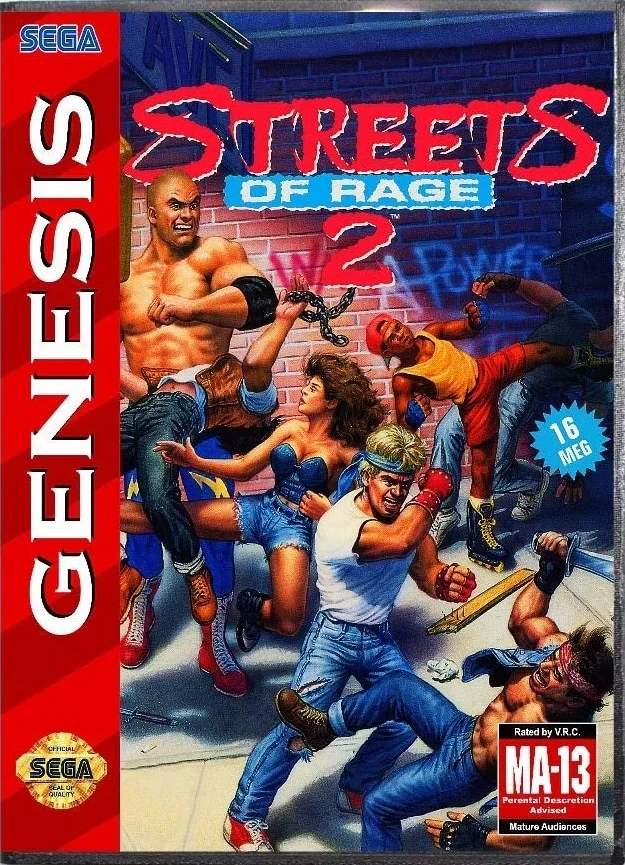
Streets of Rage 2 is the home-console beat ’em up at its most confident. It took everything the first game established and made it sharper, heavier, louder, and more iconic. The result is one of the defining Genesis games and arguably the greatest couch co-op brawler of the 16-bit era.
Axel and Blaze return, Max brings powerhouse grappling, and Skate adds speed and attitude. The enemy designs are more memorable, the stages have more personality, and Yuzo Koshiro’s soundtrack still hits like a nightclub hidden inside a cartridge. “Go Straight” alone can make an old-school Sega fan sit up straighter.
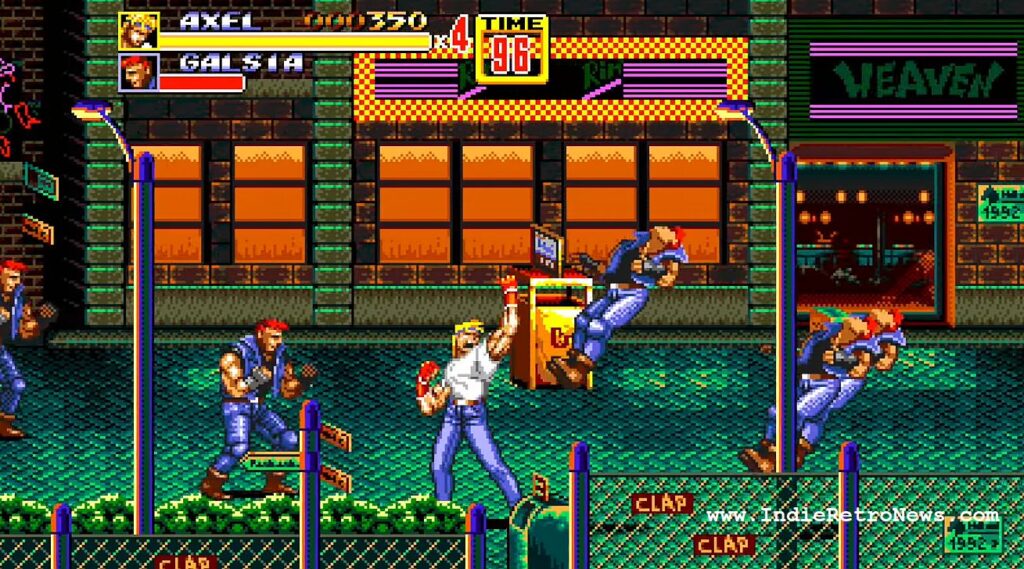
Specific moments stick forever: the bar fight, the rain-soaked bridge, the elevator chaos, the pirate-themed stage, the Mr. X showdown, and the constant dance between saving health items and accidentally grabbing them too early. It is polished without feeling sterile, challenging without feeling cheap, and stylish without losing its street-level punch.
Streets of Rage 2 still matters because it captures the entire promise of the genre: two players, one screen, great music, memorable enemies, and just enough danger to make every continue feel personal. It is the game that makes “grab Player Two” feel less like a suggestion and more like a sacred retro gaming ritual.
Worth Revisiting If: You want the gold standard for 16-bit couch co-op Beat ’Em Ups.
Best Way to Revisit These Retro Beat ’Em Ups Today
The easiest path depends on the game. Capcom Beat ’Em Up Bundle is a strong starting point for Final Fight, Captain Commando, and several other arcade brawlers, especially because it gathers seven arcade classics in one place. TMNT fans have an unusually convenient option with The Cowabunga Collection, which includes 13 classic TMNT games from Konami’s archive.
For Sega brawlers, check current availability carefully. Sega has removed some classic bundles from new digital purchase on certain storefronts, though previously purchased games may remain playable for existing owners. That means original cartridges, mini consoles, subscription libraries, or used physical compilations may sometimes be part of the hunt.
For collectors, the big caution is licensing. Games like Alien vs. Predator, The Simpsons, X-Men, and Cadillacs and Dinosaurs can be harder to revisit officially because licensed arcade games often depend on rights that change over time. Do not overpay just because nostalgia is yelling at you. Check condition, platform, authenticity, and current market prices before buying original hardware, cartridges, discs, or arcade boards.
For the full nostalgia hit, a good controller matters more than people admit. A comfortable Genesis-style pad, SNES-style controller, arcade stick, or low-lag setup can make these games feel closer to how they lived in memory. CRTs are great if you have the space and patience, but a solid HDMI solution or retro-friendly display setup can still deliver a great couch co-op night without turning your living room into a repair shop.
Final Thoughts: The Joy of Clearing the Screen Together
Retro Beat ’Em Ups endure because they are social by design. They are not just about punching through enemies. They are about arguing over character picks, laughing when a boss wrecks both players, guarding the last health item, and celebrating when the final enemy finally drops.
These games preserve a specific kind of gaming memory: arcades full of noise, cartridges swapped between friends, rental cases with worn labels, instruction manuals read in the back seat, and weekend marathons where the only real achievement system was whether you and Player Two made it to the end.
The genre is simple on the surface, but the best ones still have soul. They remind us that sometimes the greatest gaming invitation is still the simplest one:
“Grab a controller. We’re cleaning up the streets tonight.”