Posted on September 14, 2026
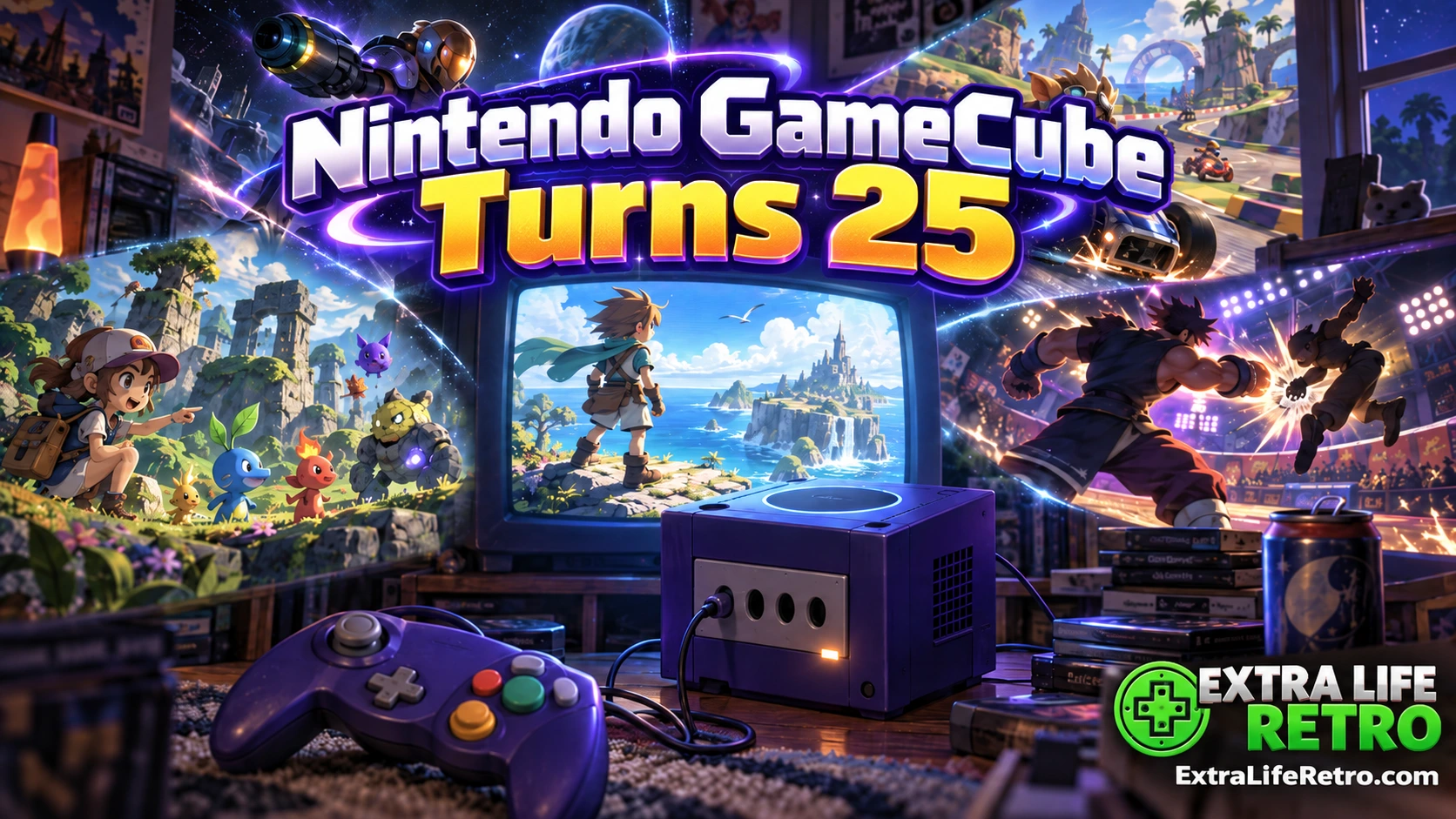
Nintendo GameCube Turns 25: The Little Purple Console That Refused to Play It Safe
Disclosure: Some of the links in this post are affiliate links. As an Amazon Associate we earn from qualifying purchases. This means if you click on the link and purchase an item, we will receive an affiliate commission at no extra cost to you. All opinions remain our own. We only recommend products or services we believe will add value to our readers.
Twenty-five years after its Japanese debut, Nintendo’s compact sixth-generation console remains one of the most distinctive machines the company ever made.
On September 14, 2001, the Nintendo GameCube launched in Japan, which means Nintendo’s little purple box officially turns 25 years old today. North American players would get the console on November 18, 2001, while Europe followed on May 3, 2002.
And somehow, 25 years later, the GameCube feels less like an old console than a wonderfully strange artifact from a moment when Nintendo seemed perfectly comfortable doing things its own way.
This was the machine with the lunchbox handle. The tiny optical discs. The giant green A button. The controller that looked almost bizarre until you actually put your hands around it. It arrived during one of gaming’s fiercest console generations, facing Sony’s PlayStation 2 and Microsoft’s brand-new Xbox while Sega was withdrawing from the hardware business.
Yet the GameCube never seemed particularly interested in pretending to be anything other than a machine built to play games.
That simplicity—and the library Nintendo and its partners built around it—is a big reason the Nintendo GameCube 25th anniversary is worth celebrating.
A Brief Nintendo GameCube Release History
Nintendo launched the GameCube first in Japan on September 14, 2001. Contemporary reporting from Tokyo described a relatively quiet hardware debut accompanied by only three launch games: Luigi’s Mansion, Wave Race: Blue Storm, and Sega’s wonderfully eccentric Super Monkey Ball.
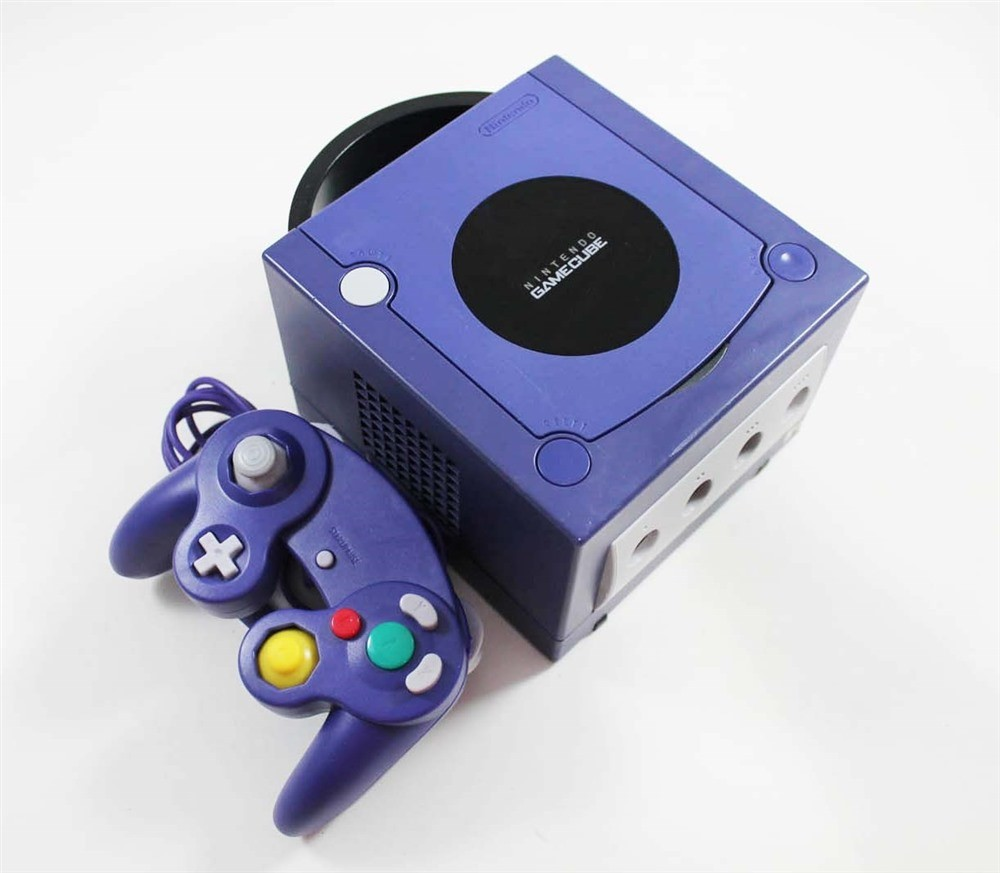
The system reached North America on November 18, 2001, before arriving across Europe on May 3, 2002.
The hardware itself represented an important break with Nintendo tradition. Nintendo describes the GameCube as its first system to use optical discs instead of cartridges, with its proprietary 8cm discs holding roughly 1.5GB. Inside sat IBM’s 485 MHz “Gekko” processor and a custom ATI/Nintendo graphics chip known as “Flipper.” Four controller ports and two memory-card slots were built directly into the console.
Those specifications sound ancient today.
The games are another story.
What Made the Nintendo GameCube Special
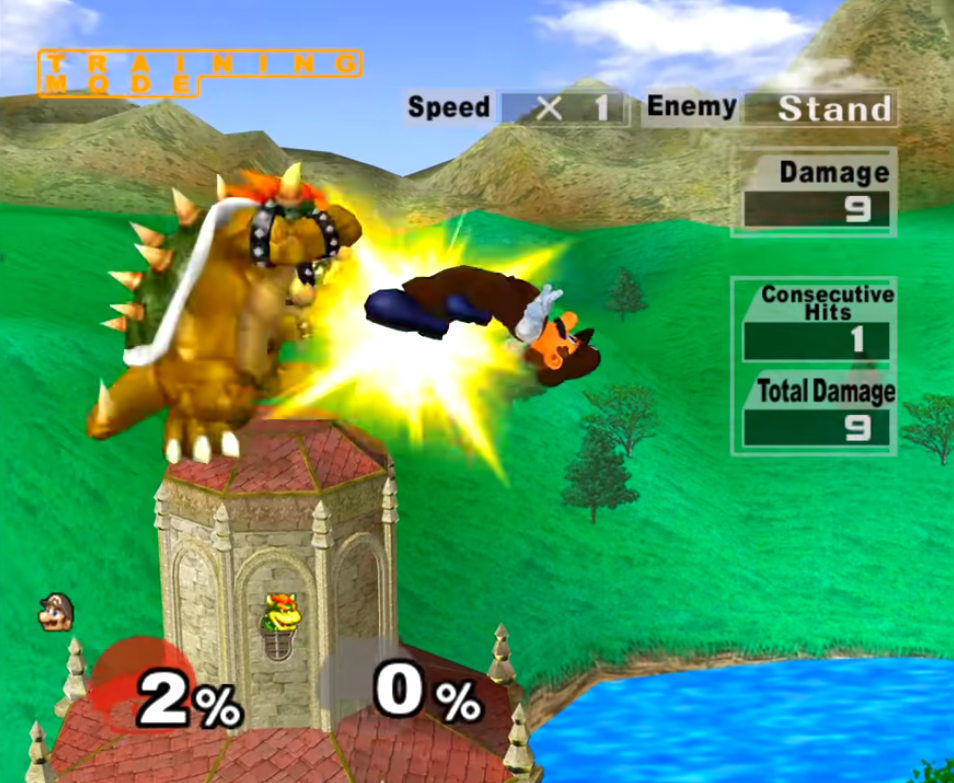
The GameCube eventually became home to the kind of library that makes discussing the console difficult without turning the conversation into a parade of favorites.
Super Smash Bros. Melee.
Metroid Prime.
The Legend of Zelda: The Wind Waker.
F-Zero GX.
Mario Kart: Double Dash!!.
Paper Mario: The Thousand-Year Door.
Animal Crossing.
Pikmin.
Eternal Darkness: Sanity’s Requiem.
Fire Emblem: Path of Radiance.
Resident Evil 4.
And that barely gets us started.
What made the system fascinating wasn’t merely quality. It was personality.
Nintendo spent this generation taking recognizable properties into unexpected territory. Mario strapped on FLUDD and cleaned tropical islands in Super Mario Sunshine. Zelda adopted a cel-shaded visual style that initially divided some fans but eventually became one of the series’ most beloved aesthetics. Retro Studios transformed Metroid into a first-person adventure without stripping away the exploration that defined the franchise.

Then there were games such as Pikmin, Chibi-Robo!, Viewtiful Joe, Billy Hatcher and the Giant Egg, Killer7, and Eternal Darkness—titles that helped make the GameCube library feel unusually experimental.
Not every experiment worked perfectly.
That was part of the charm.
The GameCube Belonged to a Very Different Console Era
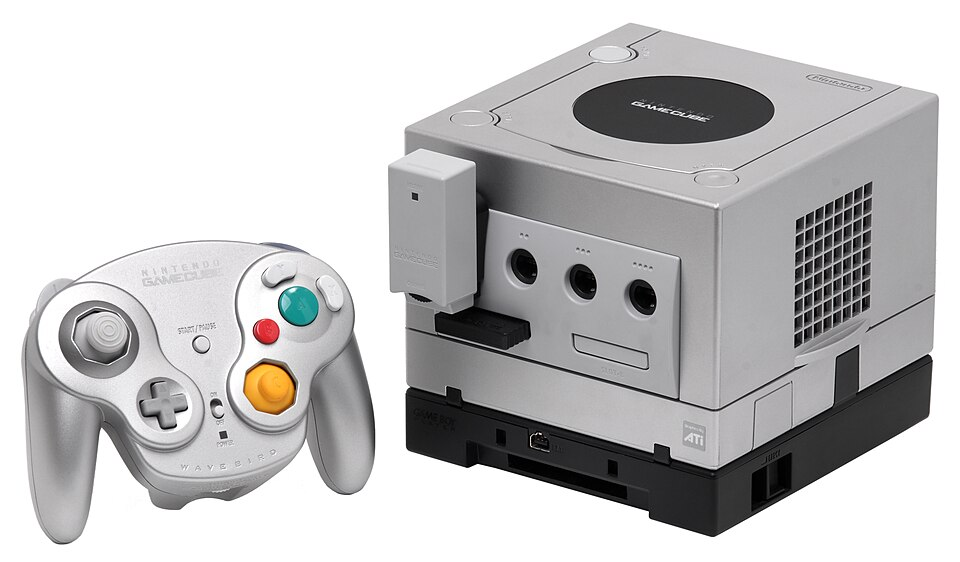
The early 2000s were an extraordinary time to be standing in the electronics section staring at game systems.
The PlayStation 2 was becoming a cultural juggernaut. Microsoft was entering console gaming with the Xbox. Sega’s Dreamcast had shown flashes of brilliance but was already reaching the end of Sega’s hardware journey.
Nintendo entered that environment with something considerably smaller, stranger and more colorful.
There was no built-in DVD movie playback competing for space underneath the television. Nintendo’s focus was games. Even Nintendo’s own 2002 financial review emphasized that the GameCube was designed not simply around increased power, but around making it easier for developers to express their ideas than had been possible on Nintendo 64.
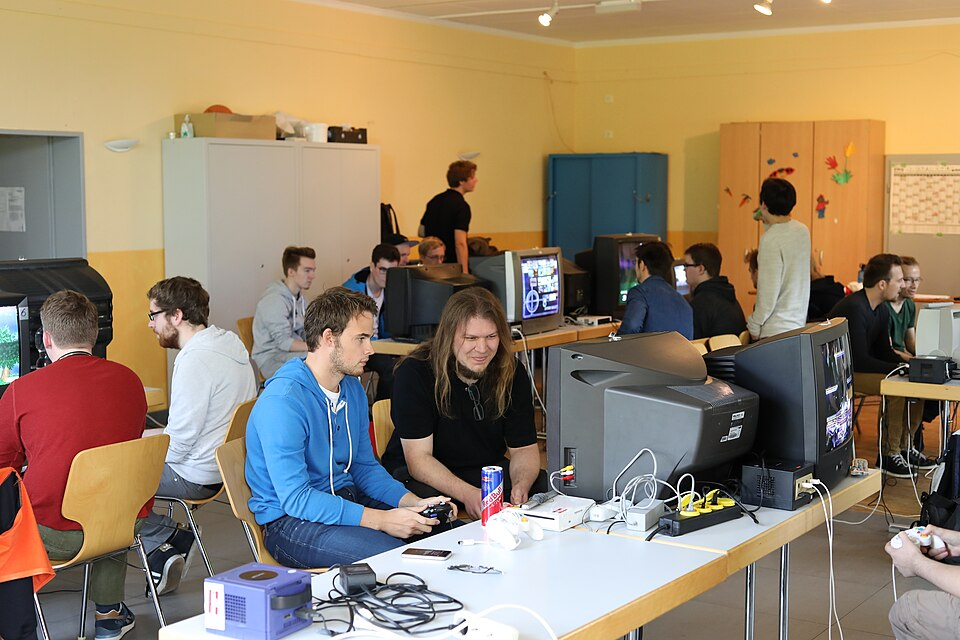
For players who lived through the era, the GameCube also belonged to one of the last great periods of mainstream couch multiplayer.
Four controller ports were sitting right there.
You didn’t need headsets, matchmaking servers or individual subscriptions. You needed controllers, friends and preferably enough pizza to survive several rounds of Mario Kart: Double Dash!!, Super Smash Bros. Melee or Mario Party.
A memory card sticking out of the front of the console completed the ritual.
A Controller That Shouldn’t Have Worked This Well
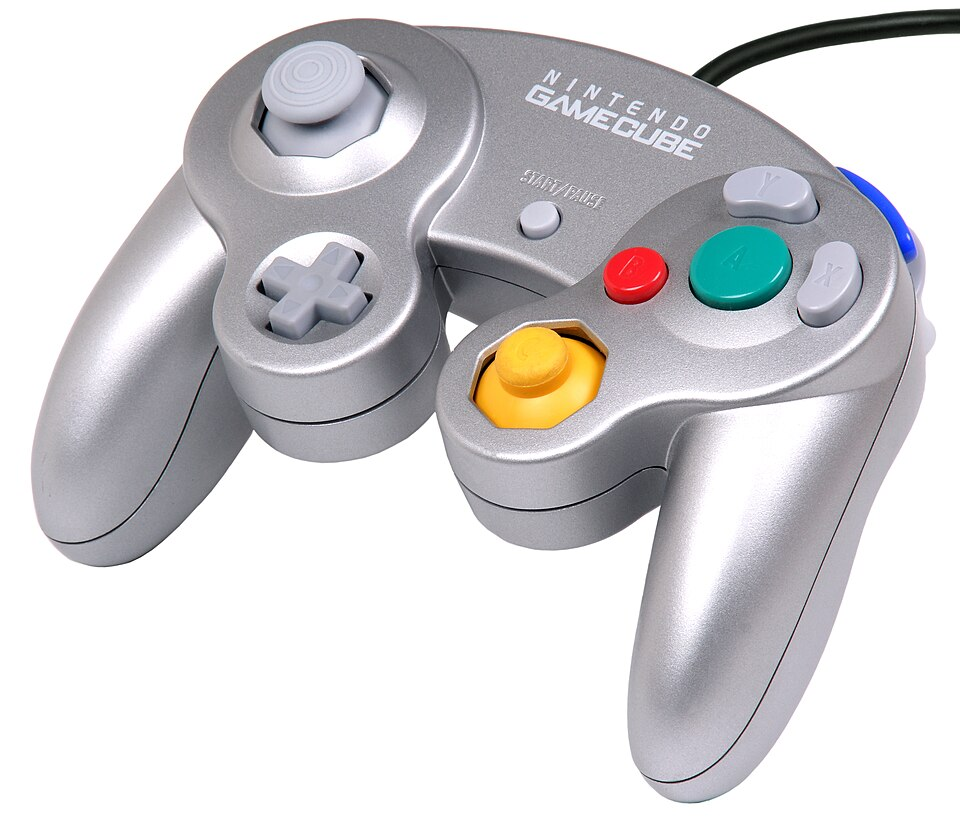
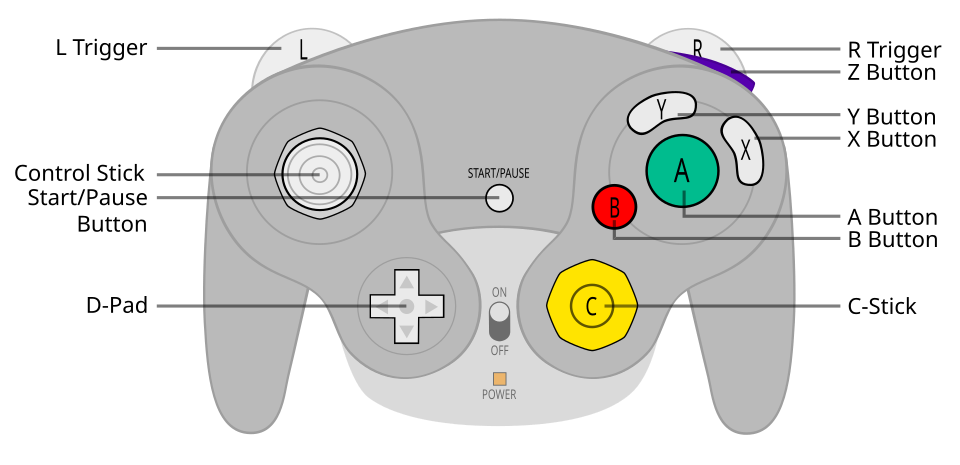
The GameCube controller deserves its own place in Nintendo history.
Instead of arranging identical face buttons into a tidy diamond, Nintendo built the design around a huge central A button, surrounding it with differently shaped secondary buttons. Two analog sticks, analog shoulder triggers and rumble rounded out the unusual layout.
It wasn’t perfect for every genre.
That tiny D-pad could feel particularly cramped, and games designed around more conventional button layouts sometimes exposed the controller’s eccentricities.
But when a game was designed around it?
Everything seemed to fall underneath your fingers naturally.
The controller became so closely associated with Super Smash Bros. that Nintendo continued supporting GameCube-style control options generations after the original hardware disappeared from store shelves.
That is an impressive legacy for a controller that looked like someone had scattered the buttons during assembly.
Why the Nintendo GameCube Still Matters
The easiest mistake when discussing old hardware is pretending that popularity and historical importance are the same thing.
They aren’t.
The GameCube did not dominate its generation. Its importance comes instead from what its library represents: a period when Nintendo and several major development partners were willing to rethink established franchises, introduce unfamiliar ideas and occasionally make wonderfully strange games.
The console also became an important bridge between eras.
Sega, once Nintendo’s great hardware rival, became a software partner. Super Monkey Ball was sitting beside Nintendo games at the Japanese launch itself.
Resident Evil became unusually intertwined with Nintendo hardware during the generation. Metroid Prime redefined what a 3D Metroid game could be. Animal Crossing, Pikmin and several other series found audiences that Nintendo continues serving decades later.
For retro fans, the GameCube now represents something else too: the moment the sixth console generation stopped feeling remotely modern and firmly became history.
Twenty-five years will do that to you.
How the GameCube Holds Up Today
Surprisingly well—although nostalgia shouldn’t prevent us from acknowledging the rough edges.
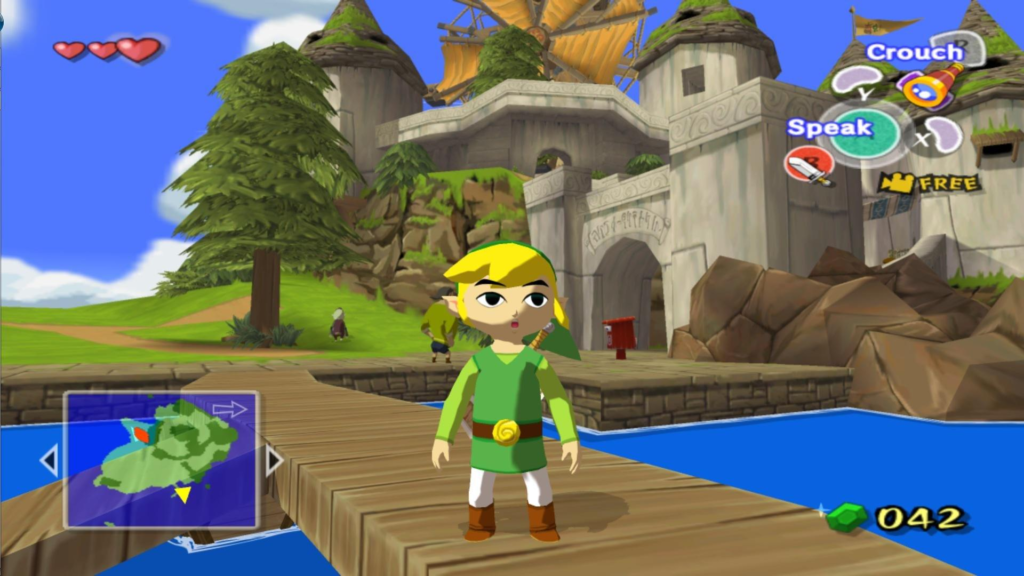
Many GameCube games remain visually attractive because strong art direction has aged better than attempts at early photorealism. The Wind Waker is the obvious example, but plenty of the console’s colorful first-party games still look clean and expressive.
Controls vary more.
Early 3D camera systems can require adjustment, particularly for players raised on standardized dual-stick layouts. Original GameCube games also came from an era when widescreen support wasn’t universal, memory cards were normal, online functionality was unusual and 480i output was still perfectly acceptable for the televisions sitting in our homes.
None of that makes the games bad.
It simply means younger players shouldn’t expect every GameCube title to behave like a modern release.
The best games usually need very little forgiveness.
Twenty minutes into F-Zero GX, Metroid Prime, Super Monkey Ball or Mario Kart: Double Dash!!, the age of the hardware quickly becomes less important than whether you’re having fun.
What This Means for Players and Collectors
The GameCube collecting scene deserves some caution.
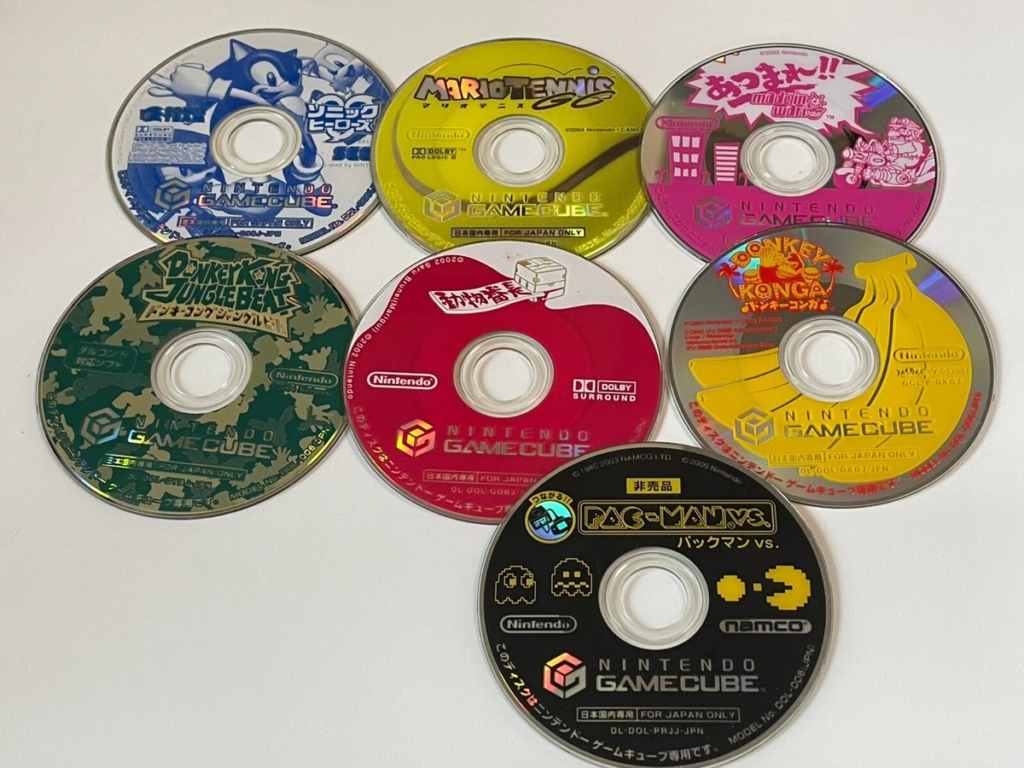
Original discs for certain games can command considerable prices on the secondary market, while others remain much easier to obtain. Values change constantly, and condition, region, packaging and completeness can all affect what buyers pay.
So check recent sold listings, not simply ambitious asking prices, before deciding what a game is actually worth.
More importantly, decide whether you’re trying to collect the artifact or play the game.
Those aren’t necessarily the same hobby.
If the original purple console, matching controller, memory card and tiny disc are part of the experience you want, original hardware remains tremendously satisfying—particularly on a CRT or through a sensible modern display solution.
But nobody needs to turn nostalgia into a financial endurance test.
Best Way to Revisit GameCube Games Today
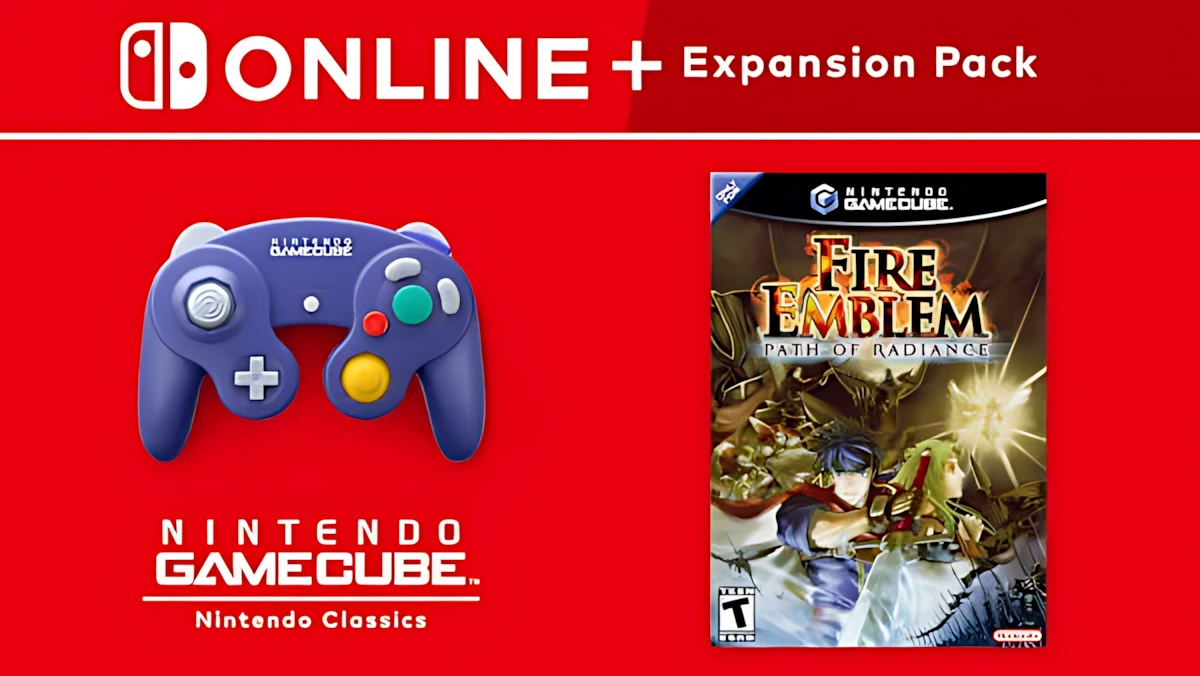
The situation has improved dramatically.
Nintendo now offers Nintendo GameCube – Nintendo Classics exclusively on Nintendo Switch 2 through a Nintendo Switch Online + Expansion Pack membership. At the time of writing, Nintendo’s official library includes games such as The Wind Waker, F-Zero GX, Soulcalibur II, Luigi’s Mansion, Fire Emblem: Path of Radiance, Pokémon XD: Gale of Darkness, Super Mario Sunshine, Chibi-Robo!, Star Fox Adventures, Wario World and others.
The service adds conveniences including suspend points, configurable button mapping, clearer output and an optional CRT-style display mode. Nintendo also sells a modern wireless GameCube-style controller for Switch 2, although it is optional.
For games available there, that may be the easiest route for someone who simply wants to play.
Original hardware remains the better choice when authenticity matters or when a favorite isn’t available through Nintendo’s current service. A quality video solution for modern TVs can make that setup considerably easier to live with.
Just don’t overpay because somebody told you that retro gaming requires owning every original disc.
It doesn’t.
Twenty-Five Years Later, the Little Cube Still Has Personality
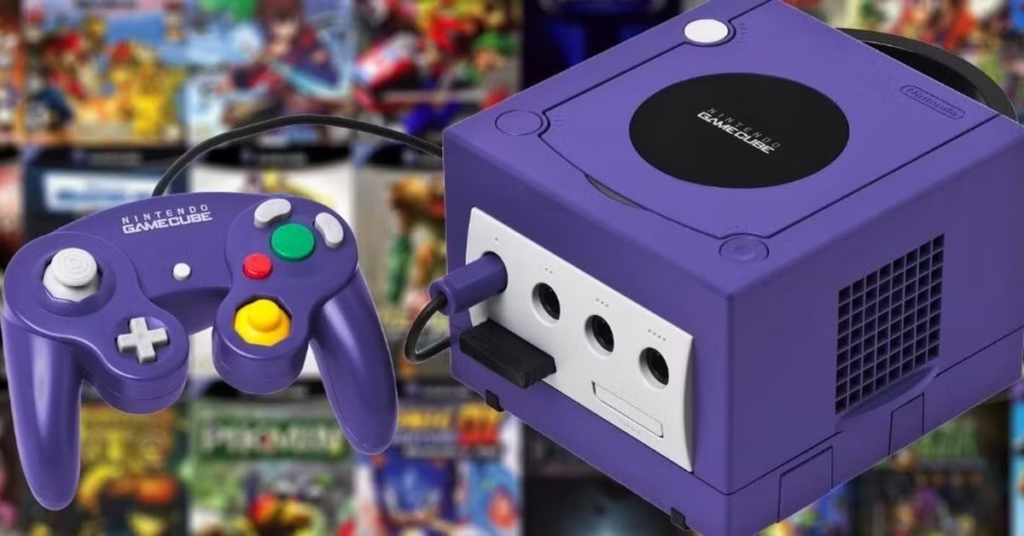
The Nintendo GameCube was never the biggest machine of its generation.
It wasn’t the console that won the sales race, and celebrating its anniversary doesn’t require rewriting that history.
What it had was identity.
You could recognize the purple box instantly. You could recognize the controller by touch. You could hear the startup sound from another room. And once the right four-player game started, you could lose an entire Saturday afternoon without noticing.
Twenty-five years after its Japanese launch, that feels worth celebrating.
The GameCube came from an era when Nintendo wasn’t afraid to be colorful, unconventional and occasionally downright weird. Its best games remain remarkably playable, its strangest experiments remain fascinating, and modern re-releases are finally making portions of its library easier for another generation to discover.
Maybe that’s the best birthday present the little purple lunchbox could get.