
Posted on September 11, 2026
25 Retro Shooters That Still Test Your Reflexes And Your Nerves
Disclosure: Some of the links in this post are affiliate links. As an Amazon Associate we earn from qualifying purchases. This means if you click on the link and purchase an item, we will receive an affiliate commission at no extra cost to you. All opinions remain our own. We only recommend products or services we believe will add value to our readers.
From arcade cabinets that ate quarters to cartridge-era shooters that punished one bad jump, these games can still make your thumbs sweat decades later. There is a particular kind of tension that only great retro shooters seem to produce.
The screen fills with enemies. Something starts blinking. Bullets arrive from three directions at once. Your brain knows there is probably a safe route through the chaos, but your hands have about half a second to find it.
And then you die.
One more try.
That rhythm powered some of the best arcade cabinets, cartridges and discs of the 1980s, ’90s and early 2000s. These games weren’t all difficult in the same way, either. Some demanded twitch reactions. Others tested positioning, target recognition, pattern reading or the ability to keep your composure while the screen became absolute nonsense.
That’s the angle behind this list.
We’re ranking these 25 games by a mixture of reflex pressure, enduring playability, memorable design, influence and that wonderful old-school ability to make you lean toward the screen without realizing you’re doing it.
It isn’t a ranking of historical importance alone. It’s about which shooters can still make a seasoned retro player sit up straight.
Let’s see how quick those thumbs really are.
25. Galaga

Platform: Arcade
Released: 1981
Galaga doesn’t overwhelm you with hundreds of projectiles. It doesn’t need to.
Its tension comes from watching formations break apart and dive toward your ship while you try to squeeze one more shot into a rapidly closing opportunity. The distinctive descending enemy sounds alone can trigger memories of dim arcades, pizza restaurants and tabletop cabinets glowing in the corner.
Then there’s the famous risk-reward decision: deliberately allowing your fighter to be captured so you can recover it and create a dual fighter with twice the firepower — and twice the target width.
Simple controls. Almost no clutter. Three buttons aren’t required when one joystick and one fire button can expose every bad decision you make.
24. Tempest

Platform: Arcade
Released: 1981
Nothing else looked quite like Tempest.
Atari’s vector graphics turned the screen into a glowing geometric tunnel while enemies crawled outward toward the player. Instead of freely moving through space, you rotated around the edge of the playfield, firing inward and desperately keeping threats from reaching your position.
The spinner controller was part of the magic. That rapid physical movement made Tempest feel less like steering a ship and more like wrestling with the cabinet itself.
It remains a beautiful example of arcade design built around reaction, spatial awareness and one instantly understandable idea.
23. Defender

Platform: Arcade
Released: 1981
There is difficult, and then there is Defender.
Williams gave players thrust, reverse, fire, smart bombs and hyperspace while enemies attacked across a horizontally scrolling world represented by a tiny radar display at the top of the screen.
You weren’t merely shooting aliens. You were scanning the radar, protecting humans, changing direction, managing momentum and reacting to threats that might not even be visible yet.
Its controls can feel intimidating to newcomers because they are intimidating.
But that frantic complexity is precisely why Defender became such a formative arcade experience. Mastery didn’t arrive after understanding the buttons. Understanding the buttons was merely permission to begin.
22. Space Harrier

Platform: Arcade
Released: 1985
“Welcome to the Fantasy Zone. Get ready!”
Sega’s Space Harrier immediately throws the player into a surreal landscape of checkerboard floors, stone heads, dragons and enormous creatures hurtling toward the screen.
The pseudo-3D scaling was spectacular in 1985, especially in Sega’s deluxe moving cabinet, but the spectacle never replaced the game underneath it. You are constantly reading depth, dodging incoming projectiles and repositioning Harrier while targets race toward you.
It’s chaotic without becoming visually anonymous.
For newer retro fans, this is one of the best reminders that Sega’s arcade identity was built on more than recognizable characters. The company was obsessed with speed.
21. Thunder Force III

Platform: Sega Genesis / Mega Drive
Released: 1990
If you wanted your new Genesis to demonstrate why the 16-bit era felt faster, Thunder Force III made a persuasive argument.
Technosoft’s horizontal shooter throws enemies at you while terrain scrolls past at aggressive speed. Stage selection gives players some control over the early route, while multiple weapons encourage switching depending on what the environment is doing.
Then there are moments like the fiery Gorgon stage, where the background itself seems determined to raise your blood pressure.
The Genesis became home to an extraordinary library of shooters, and Thunder Force III captures the machine at its most confident: fast, loud and absolutely unconcerned with your comfort.
20. M.U.S.H.A.

Platform: Sega Genesis / Mega Drive
Released: 1990
Most vertically scrolling shooters give you a spaceship.
M.U.S.H.A. gives you a flying armored warrior and sends you over landscapes filled with giant mechanical enemies inspired by Japanese aesthetics.
That alone makes it memorable.
But Compile’s shooter backs up its visual identity with wonderfully responsive movement, upgradeable weapons and enemy patterns that keep forcing the player to reposition. Some stages create a striking illusion of enormous vertical scale beneath your character.
This is also a useful entry point for anyone exploring Genesis shooters today. The game is demanding, but it rarely feels interested in humiliating you.
It wants you moving.
19. Axelay
Platform: Super Nintendo
Released: 1992
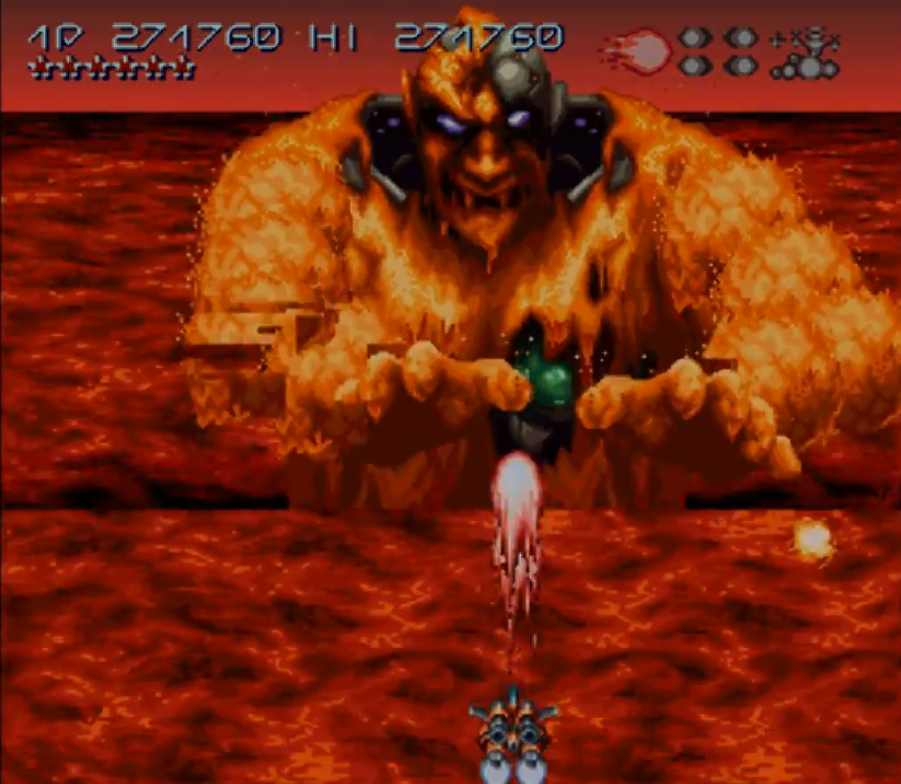
Konami alternated between vertical and horizontal stages in Axelay, and the change isn’t merely cosmetic.
Vertical stages use the Super Nintendo’s visual tricks to create the illusion that you are flying over a curved landscape, while horizontal stages feel more traditionally side-scrolling. Each weapon behaves differently enough that choosing your loadout becomes part of surviving what comes next.
The game is also surprisingly cinematic for a 1992 shooter.
Explosions blossom across huge machines. Bosses dominate the screen. Music swells dramatically.
The SNES was never as closely associated with shoot-’em-ups as the Genesis or PC Engine, but Axelay is a pretty convincing argument that it could absolutely deliver one.
18. Gradius
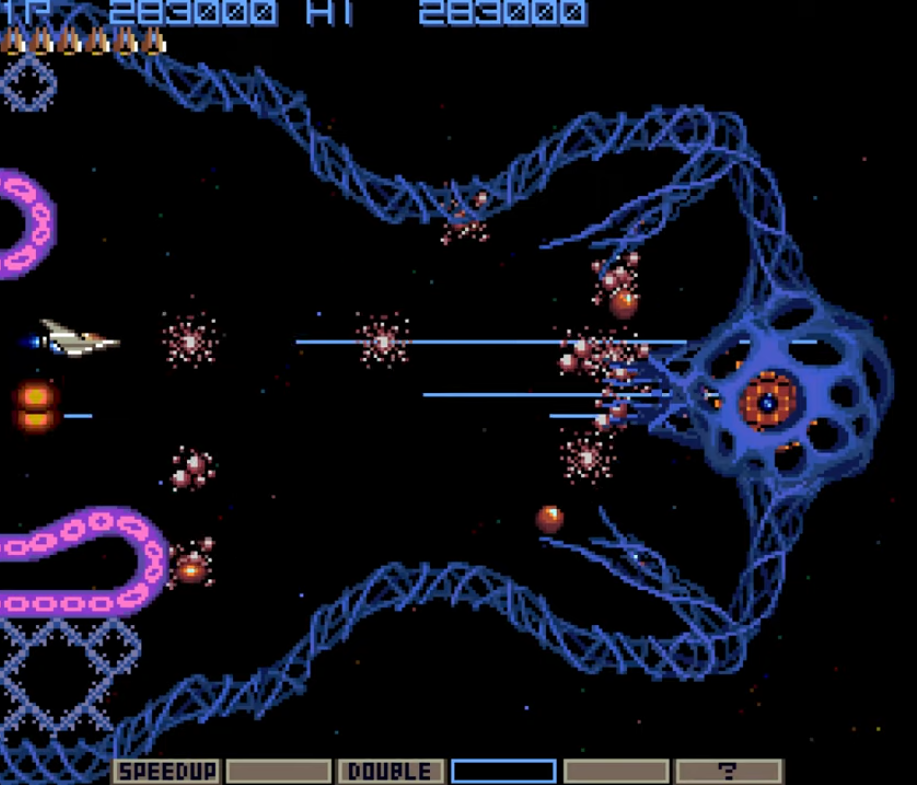
Platform: Arcade
Released: 1985
Few power-up systems have created as much stress from such a small row of words.
SPEED UP. MISSILE. DOUBLE. LASER. OPTION.
Every capsule collected moves the selector along Gradius’ upgrade bar. Activate now and take the speed boost? Hold out for an Option? Risk everything trying to reach the laser?
The system creates constant micro-decisions while the level design tries to kill you.
And death can be brutal because losing a heavily upgraded Vic Viper may leave you attempting to recover with dramatically reduced firepower.
That combination of empowerment and vulnerability became part of Gradius’ identity — along with the familiar realization that maybe adding another Speed Up wasn’t such a great idea after all.
17. R-Type
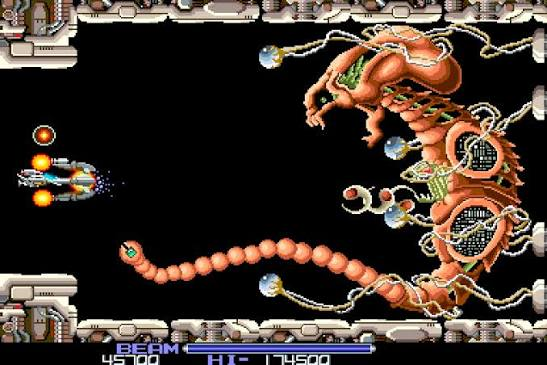
Platform: Arcade
Released: 1987
The first stage tells you almost everything.
A biomechanical nightmare fills the screen. Enemies arrive from awkward angles. Then Dobkeratops appears — an enormous creature whose tail snakes around the arena while you try to find safe space.
R-Type rewards reflexes, but raw speed isn’t enough.
The Force pod can attach to the front or rear of the R-9, absorb enemy fire and be launched independently. Charged shots reward patience. Stage layouts demand positioning.
That creates a different kind of tension from pure bullet hell. R-Type often feels like solving an action puzzle while somebody keeps throwing knives at you.
And recovering after a death?
That’s where the real character building begins.
16. Raiden II
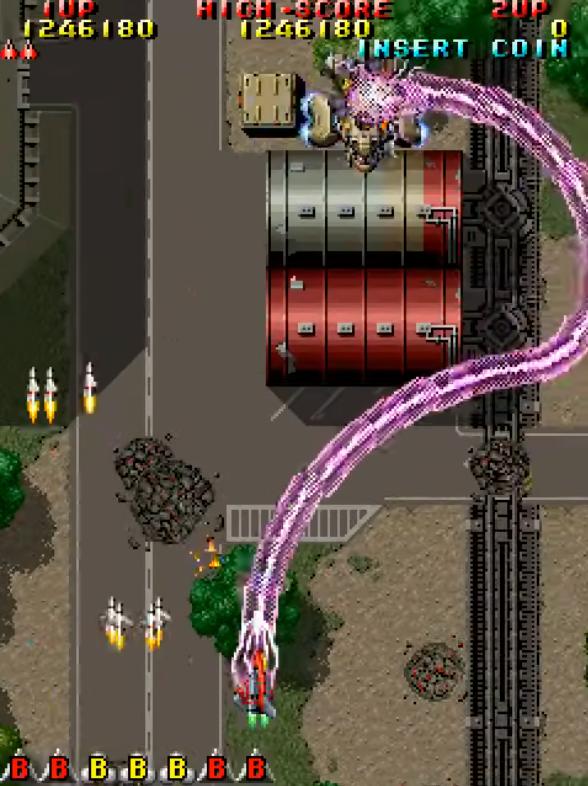
Platform: Arcade
Released: 1993
Sometimes you don’t need a complicated gimmick.
You need a powerful ship, dangerous enemies and a really satisfying purple laser.
Raiden II expanded the original game’s straightforward vertical-shooter formula with weapons including the famous toothpaste-like Plasma Laser, which bends and snakes toward targets once locked on.
Don’t let the spectacle distract you.
Enemy fire comes quickly, ground targets create additional threats and complacency is punished immediately.
There’s something wonderfully direct about Raiden II. Walk up to the cabinet, understand what you’re supposed to do within seconds and spend the rest of your credit discovering how much better the game is at doing its job than you are at doing yours.
15. DoDonPachi

Platform: Arcade
Released: 1997
Here is where the screen starts becoming genuinely unreasonable.
Cave’s DoDonPachi helped define the bullet-hell style for a generation of players: dense projectile patterns, tiny openings, scoring systems built around chaining enemies and the strange visual phenomenon of staring directly at your ship instead of the rest of the screen.
To an observer, the game can look impossible.
Then something clicks.
You stop trying to process every bullet individually. You read the flow. You make tiny corrections. You discover that the terrifying wall of ammunition actually contains routes.
That’s one reason bullet-hell shooters remain fascinating. At their best, they transform apparent chaos into readable movement.
DoDonPachi is one of the genre’s great teachers.
14. Radiant Silvergun

Platform: Arcade / Sega Saturn
Released: 1998
Treasure apparently looked at the traditional shooter weapon system and decided restraint was unnecessary.
Radiant Silvergun gives you multiple weapons from the beginning, with different button combinations producing different attacks. Enemies can be destroyed in color chains for scoring, bosses contain multiple components and encounters often feel meticulously choreographed.
It can be overwhelming.
That’s also the point.
Rather than waiting for convenient power-ups, you already possess the tools. The challenge is recognizing which tool you need while everything around you is exploding.
Its Saturn reputation gave Radiant Silvergun an almost mythical aura among Western players who encountered screenshots in import coverage but never saw a copy locally.
Today, its design is much easier to appreciate without the old import barrier.
13. Ikaruga
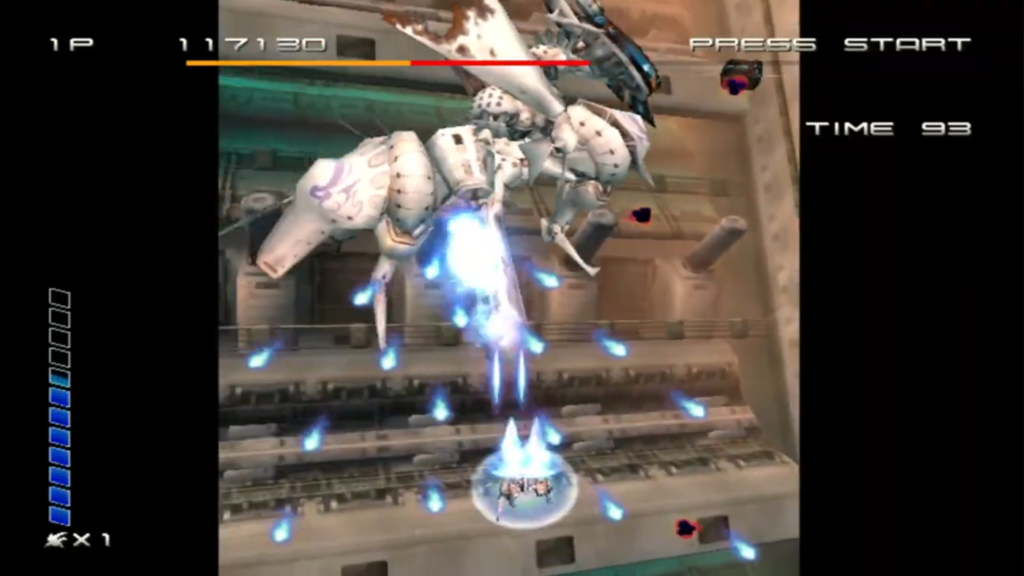
Platform: Arcade / Dreamcast
Released: 2001 / 2002
Ikaruga turns color into survival.
Your ship can switch between black and white polarity. Matching bullets are absorbed. Opposite-colored bullets kill you. Enemies follow the same system, and destroying chains of matching enemies becomes central to high-level scoring.
The genius is how quickly one rule escalates.
You’re dodging. Switching polarity. Absorbing bullets. Planning chains. Repositioning. Watching enemy colors. Trying not to think too hard about the fact that one wrong button press can convert safety into instant death.
It is shooter design reduced almost to musical rhythm.
Newcomers shouldn’t worry about chasing expert scores immediately. Survive first. Learn the language of the game.
The elegance reveals itself from there.
12. Smash TV

Platform: Arcade
Released: 1990
“BIG MONEY! BIG PRIZES! I LOVE IT!”
Few shooters embrace arcade excess as gleefully as Smash TV.
Inspired by the control philosophy of Robotron: 2084, the arcade game uses one joystick for movement and another for firing direction. Enemies swarm enclosed arenas while players blast through contestants, mutants and bizarre bosses in a dystopian television game show.
Then the announcer starts shouting about prizes.
Toasters. VCRs. Cash.
The result is frantic, funny and vicious.
Co-op makes it even better because two people can occupy the same chaos, each convinced the other person is responsible for whatever just went horribly wrong.
11. Wild Guns

Platform: Super Nintendo
Released: 1994
Cowboys.
Robots.
Explosions.
A crosshair racing around the screen while your character desperately somersaults out of incoming fire.
Wild Guns combines a shooting-gallery perspective with action-game movement, which means you are effectively managing two spaces simultaneously: where you’re aiming and where your character’s body needs to be.
That distinction gives the game its reflex-heavy personality.
It also looks gorgeous, packing expressive sprites and wonderfully strange steampunk-Western imagery into the SNES.
For players who assume every 16-bit shooter means piloting a tiny spaceship through waves of aliens, Wild Guns is an excellent corrective.
10. Star Fox 64
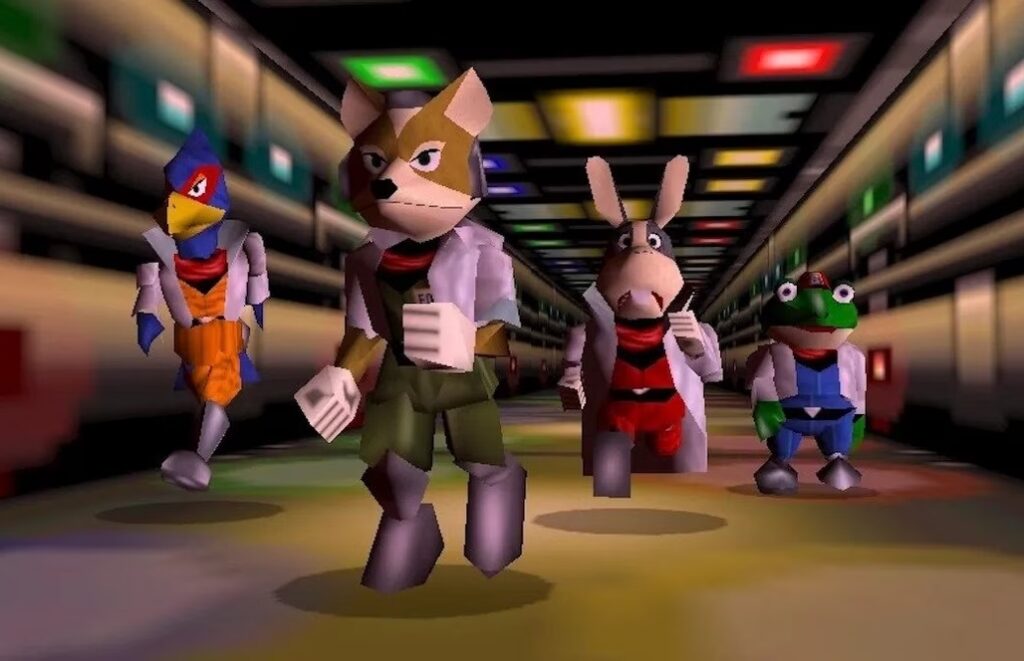
Platform: Nintendo 64
Released: 1997
“Do a barrel roll!”
Yes, technically Peppy is telling you to perform an aileron roll, but we’re not reopening that argument today.
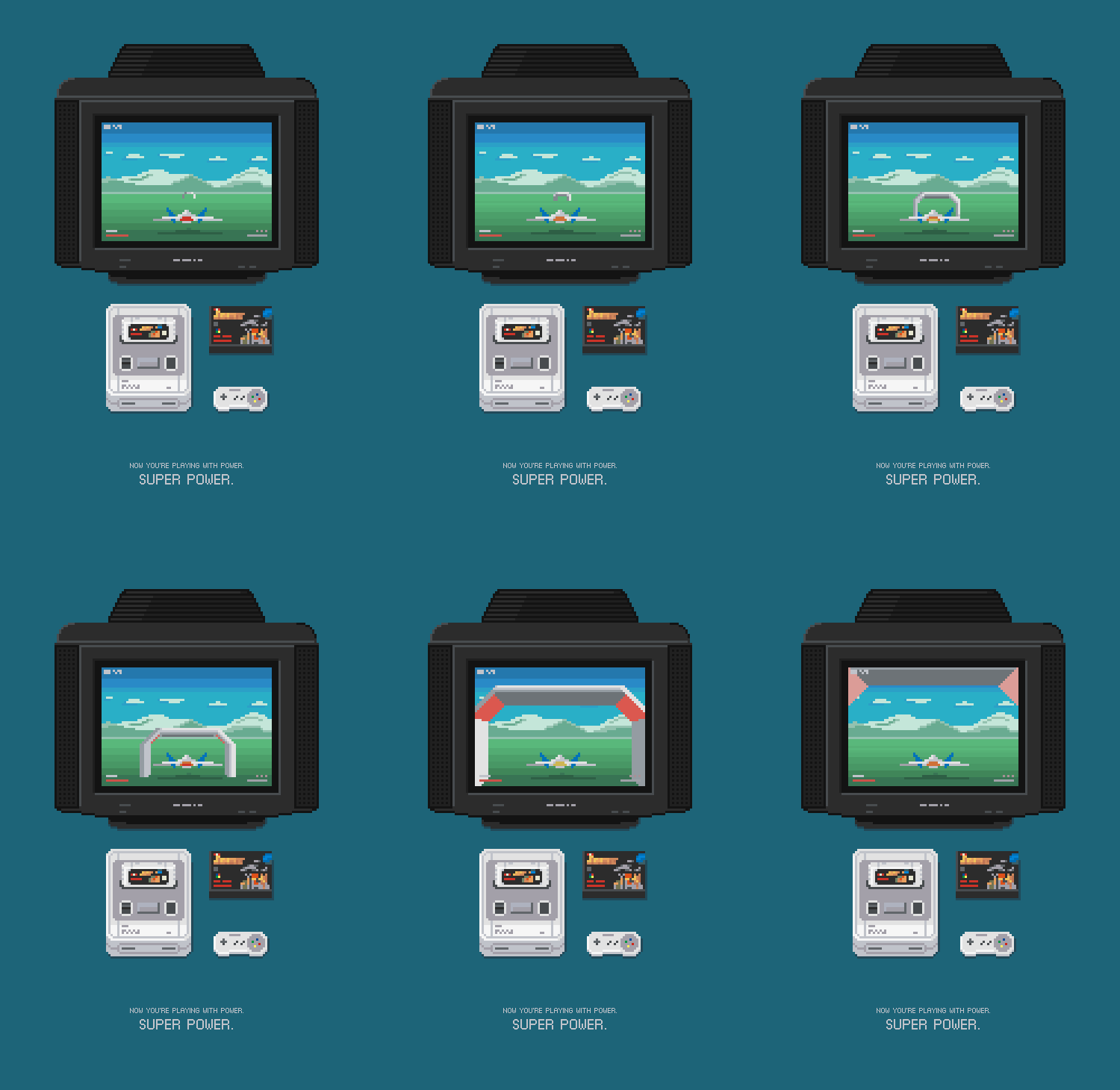
Star Fox 64 made Nintendo’s rail-shooting formula feel wonderfully immediate. Enemy formations arrive rapidly. Charge shots reward target selection. Arwing damage can affect individual wings. Alternate routes encourage replay.
And then the controller starts talking.
The Rumble Pak and the squad’s constant radio chatter gave battles an unusually physical, lively character in 1997.
Trying to keep Slippy alive while simultaneously chasing a medal is practically its own reflex test.
There are deeper shooters on this list. Few are better at making rapid-fire shooting feel this instantly inviting.
9. Sin and Punishment

Platform: Nintendo 64
Released: 2000
For years, Sin and Punishment was one of those games North American Nintendo 64 owners seemed more likely to read about than actually play.
Treasure’s shooter originally launched only in Japan, combining rail-shooting, running, jumping, aiming and absurdly fast action into something that feels like the N64 being pushed toward controlled sensory overload.
Characters move independently of the targeting reticle, so survival requires multitasking from the start.
Bosses barely give you time to admire them before the next threat arrives.
Its later digital releases helped introduce the game to a much broader audience, and that was overdue. Few N64 games ask this much of your coordination.
8. Virtua Cop 2

Platform: Arcade
Released: 1995
Part of the pleasure of a great light-gun shooter is the illusion that you’re faster than the game.
Enemy jumps through window.
Bang.
Another appears behind a car.
Bang.
Civilian.
Don’t shoot.
Virtua Cop 2 made that rhythm beautifully readable. Sega’s polygonal enemies react clearly to shots, targets appear in carefully staged sequences and the game rewards quick visual recognition rather than indiscriminate firing.
On Saturn, a compatible light gun and CRT could turn the living room into a miniature arcade.
That’s a particular kind of retro experience modern controller ports can’t perfectly reproduce: standing several feet from the television with plastic hardware in your hands while somebody behind you critiques your accuracy.
7. The House of the Dead 2
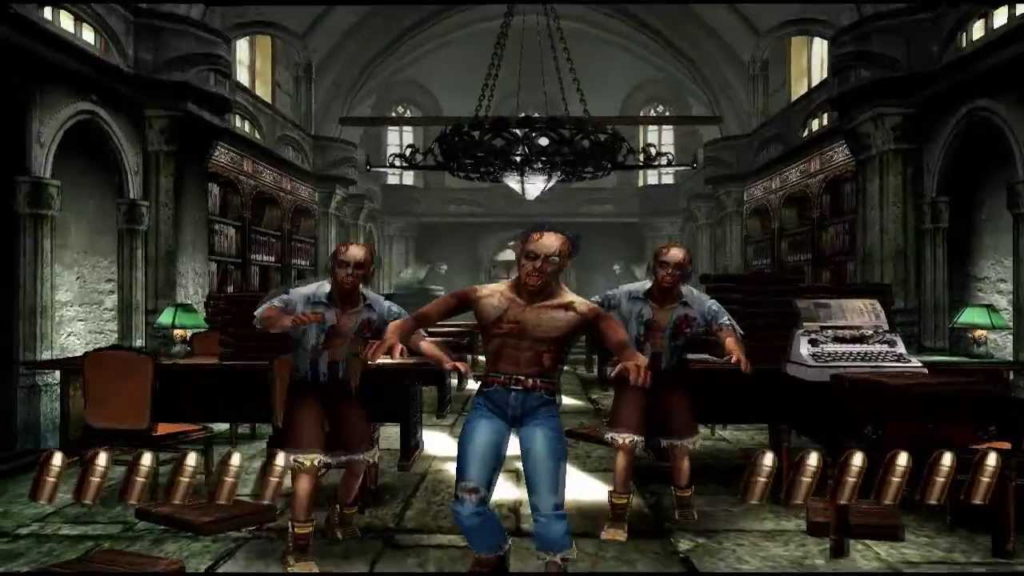
Platform: Arcade
Released: 1998
“Suffer like G did?”
The voice acting became legendary for reasons the developers probably didn’t intend.
But beneath the gloriously awkward dialogue is a terrific light-gun game.
Enemies lunge suddenly from doors, water, ceilings and blind corners. Branching routes can change portions of the journey, civilians demand fast target discrimination and bosses test specific aiming skills rather than simple ammunition dumping.
For many Dreamcast owners, The House of the Dead 2 also became one of the system’s quintessential arcade-at-home experiences.
The zombies are memorable.
The dialogue is unforgettable.
Your accuracy rating after an embarrassing run is something you may prefer not to discuss.
6. Time Crisis

Platform: Arcade
Released: 1995
The pedal changed everything.
Press it and you emerge from cover to fire. Release it and your character ducks back into safety.
That one physical action gave Time Crisis a rhythm other light-gun shooters didn’t have. Shooting wasn’t simply about accuracy. You were managing exposure.
Then Namco added the timer.
Now every cautious decision had a cost.
Arcade cabinets made the experience wonderfully physical: foot working the pedal, gun raised toward the screen, eyes scanning rapidly for the next red threat indicator.
Time Crisis proves that reflex-heavy design doesn’t require overwhelming the player with projectiles.
Sometimes all you need is a gun, a pedal and three seconds less than you’d really like.
5. Sunset Riders
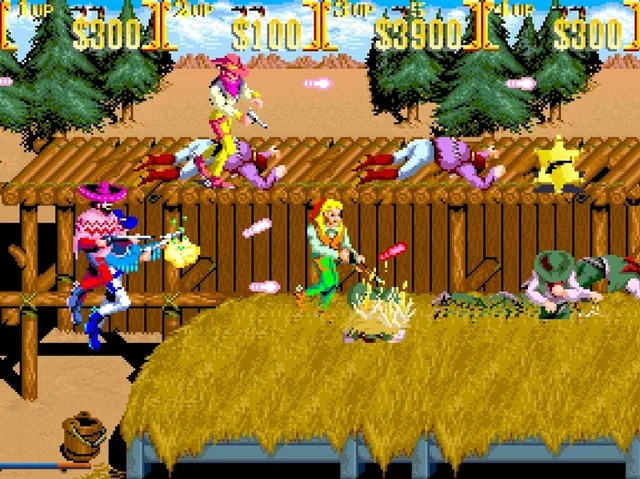
Platform: Arcade
Released: 1991
Few arcade shooters announce themselves with more personality.
Konami’s Western sends bounty hunters through saloons, stampeding cattle, moving trains and gunfights filled with colorful enemies and enormous character sprites.
Then there are the boss introductions.
“Bury me with my money.”
The arcade version supports four players, turning the screen into a wonderfully chaotic barrage of bullets, jumping cowboys and arguments about who grabbed the power-up.
Its reflex challenge comes from movement as much as shooting. Bullets arrive from windows, balconies and both edges of the screen while environmental hazards complicate your escape route.
It’s theatrical arcade action from beginning to end.
4. Metal Slug 3
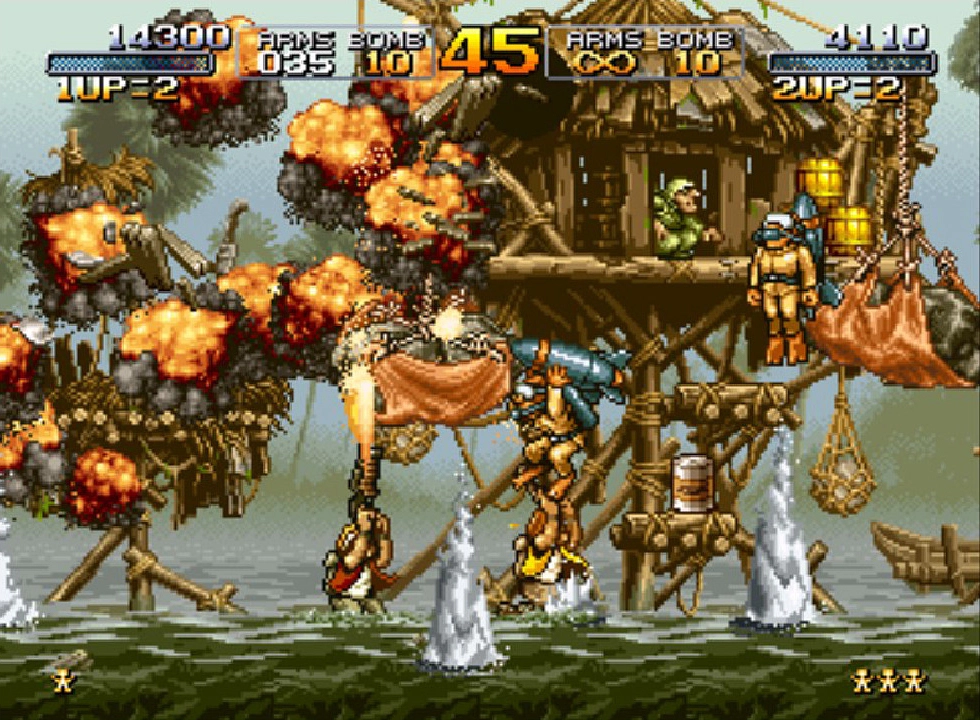
Platform: Arcade / Neo Geo
Released: 2000
Metal Slug 3 seems incapable of leaving a good idea alone.
What begins as gorgeous military run-and-gun action expands into zombies, giant crabs, underwater sequences, spacecraft, transformations, branching paths and one famously enormous final mission.
The animation gets much of the attention — deservedly so — but the responsiveness underneath all that artwork is equally important.
You jump between bullets, grab weapons, rescue prisoners and react instantly when a new enemy type crashes into the scene.
Co-op adds the usual arcade calculation: do you revive your partner with another credit, or pretend not to notice how quickly they’re burning through the stack?
This is spectacle built on precision.
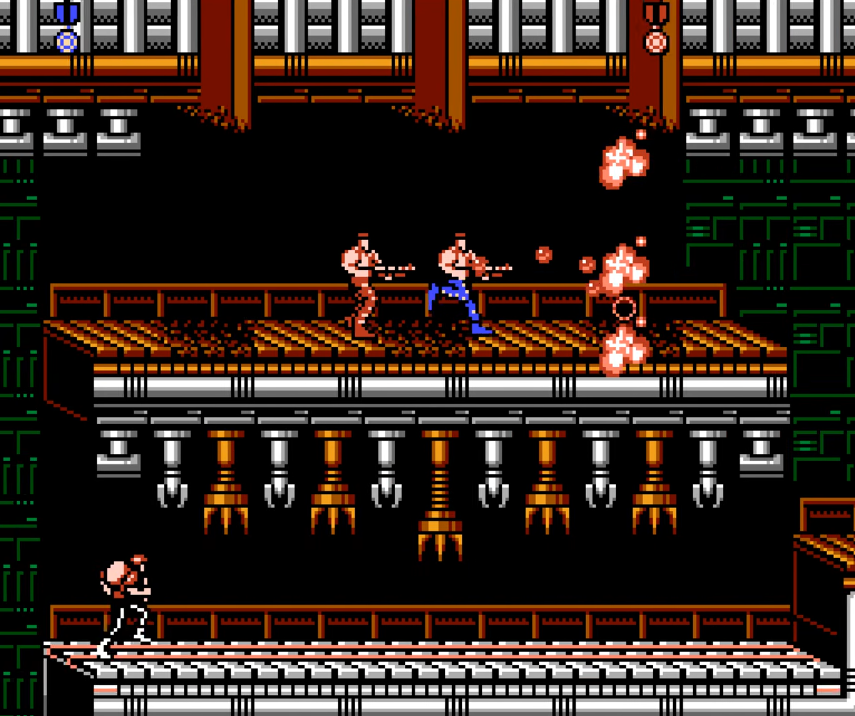
3. Contra
Platform: NES
Released: 1988 in North America
Up, Up, Down, Down, Left, Right, Left, Right, B, A, Start.
For an entire generation, that wasn’t merely a cheat code. It was practically oral tradition.
The NES version of Contra became a defining test of cartridge-era reflexes because danger never stays comfortably in front of you. Soldiers run from behind. Turrets fire from awkward positions. Bridges explode beneath your feet. Bullets cross jump arcs.
Then somebody grabs the Spread Gun.
Everything feels better.
Two-player co-op transformed the experience into an exercise in coordination, blame and controller-cord proximity. You learned where enemies appeared partly through repetition, but executing the response still mattered.
Thirty lives helped.
They certainly didn’t guarantee victory.
2. Contra III: The Alien Wars
Platform: Super Nintendo
Released: 1992
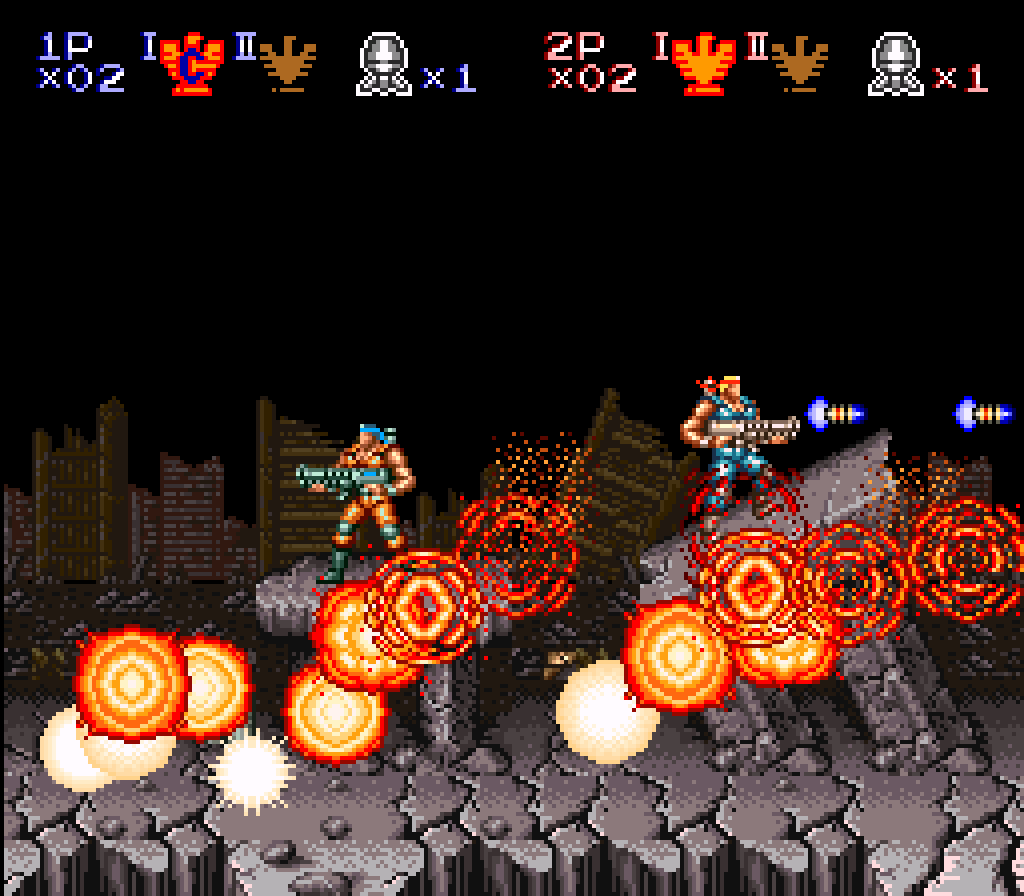
The first stage doesn’t ease you into anything.
The city is already burning.
Enemies pour onto the street. Missiles slam into buildings. A tank appears. Before long you’re hanging from airborne missiles and fighting things several times your size.
Contra III took the fundamental run-and-gun reflexes of its predecessors and turned the presentation up dramatically. Players can carry two weapons, lock firing direction while moving and spin while hanging from objects.
The overhead Mode 7 stages divide opinion, but the side-scrolling missions remain some of the most exciting action on the SNES.
On Hard difficulty, the game stops feeling like entertainment and starts resembling a personal grievance.
Naturally, that only makes beating it sweeter.
1. Robotron: 2084

Platform: Arcade
Released: 1982
There is nowhere to hide.
That’s why Robotron: 2084 takes the top spot.
You stand in a single arena surrounded by machines. One joystick moves your character. The other fires independently in eight directions. Humans need rescuing. Hulks can’t simply be shot away. Brains create additional problems. Enforcers launch projectiles. Grunts close in.
And every wave begins with the unnerving realization that the entire screen already wants you dead.
There are no elaborate cutscenes, upgrade trees or sprawling levels separating you from the challenge.
Just movement. Shooting. Prioritization. Reflexes.
Its design is more than four decades old, yet the fundamental sensation remains remarkably pure: identify the greatest threat, carve out space, keep moving and somehow survive another five seconds.
Plenty of shooters became larger.
Very few became more concentrated.
Best Way to Revisit These Retro Shooters Today

The beautiful thing about revisiting old shooters is that you don’t have to turn every game into a collecting project.
Original hardware can be wonderful — particularly for arcade sticks, CRT displays and classic light-gun games — but authenticity can become expensive or inconvenient quickly. Decide whether your goal is collecting the original artifact or playing the game before spending serious money.
For several games here, modern releases provide an easier route. Konami’s Contra Anniversary Collection, for example, includes multiple classic Contra titles on current digital platforms, while Sunset Riders has an Arcade Archives release on Switch and PS4. Nintendo’s Genesis library currently includes M.U.S.H.A. and Contra: Hard Corps, and Ikaruga remains digitally available on Switch. Radiant Silvergun also has a modern PC release.
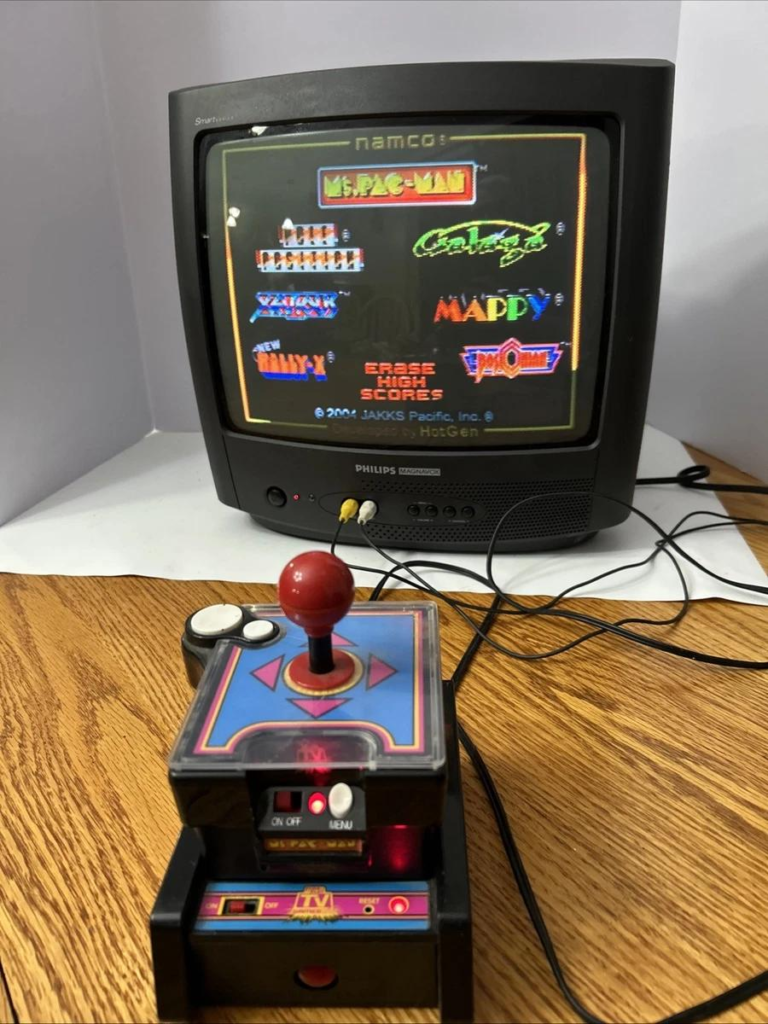
For shooters built around arcade controls, a good arcade stick can be a more meaningful purchase than chasing expensive original software. Likewise, anyone recreating light-gun gaming should research display compatibility before buying old guns and cables; period light-gun setups and modern flat-panel televisions do not automatically play nicely together.
If collecting is part of the fun, original cartridges, discs, arcade compilations, controllers and strategy material can absolutely add to the nostalgia. Just don’t let the collector market convince you that owning the most expensive version is somehow the price of admission.
Playing the game is the important part.
The Reflexes May Be Older. The Games Aren’t Slower.
One reason the best retro shooters remain so easy to revisit is that their appeal was never built entirely around technology.
A spaceship moves.
An enemy attacks.
You have a fraction of a second to decide what happens next.
That’s timeless.
Sure, some of these games ask you to learn old control conventions. Some were designed to consume arcade credits. Others will cheerfully send you back several minutes because you made one bad decision.
But once that old rhythm returns, something wonderful happens.
Your shoulders move forward.
Your grip tightens.
You stop thinking about how old the graphics are.
And suddenly it’s you, a glowing screen and one tiny opening between two bullets.
Just like it used to be.