Posted on September 16, 2026
Chrono Trigger Review: Is the SNES Legend Really That Good?
Disclosure: Some of the links in this post are affiliate links. As an Amazon Associate we earn from qualifying purchases. This means if you click on the link and purchase an item, we will receive an affiliate commission at no extra cost to you. All opinions remain our own. We only recommend products or services we believe will add value to our readers.
Thirty-one years later, Square’s time-traveling masterpiece remains one of the easiest explanations for why the 16-bit RPG era still inspires so much love.
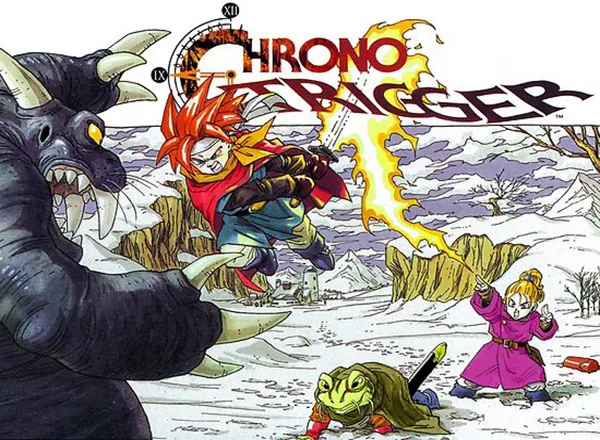
There is something wonderfully innocent about the opening of Chrono Trigger. No burning kingdom. No prophecy delivered by a hooded wizard. No twenty-minute explanation of the political situation.
Crono wakes up because his mother tells him he is going to miss the Millennial Fair.
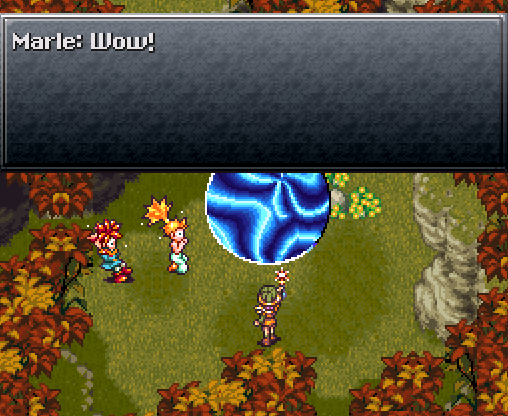
A few minutes later, you are wandering around Leene Square, ringing bells, racing soda-drinking contests, watching robots dance, and meeting a mysterious girl named Marle. Then Lucca fires up her teleportation machine, a pendant starts glowing, reality tears open, and an afternoon at the fair becomes a journey stretching millions of years across human history.
That escalation is still magical.
Released for the Super Nintendo in 1995, Chrono Trigger arrived during an extraordinary period for 16-bit RPGs. Yet its reputation has grown beyond simply being another great Square game from the era. It is now routinely treated as one of the defining Japanese RPGs—and that kind of praise can become its own problem.
Walk into Chrono Trigger for the first time today and you’re not merely playing an old SNES game. You’re meeting a legend you’ve probably been hearing about for years.
So here’s the real question behind this Chrono Trigger review: once the mythology is stripped away, is the adventure itself still worth taking?
Absolutely.
But the reasons are more interesting than nostalgia.
At a Glance
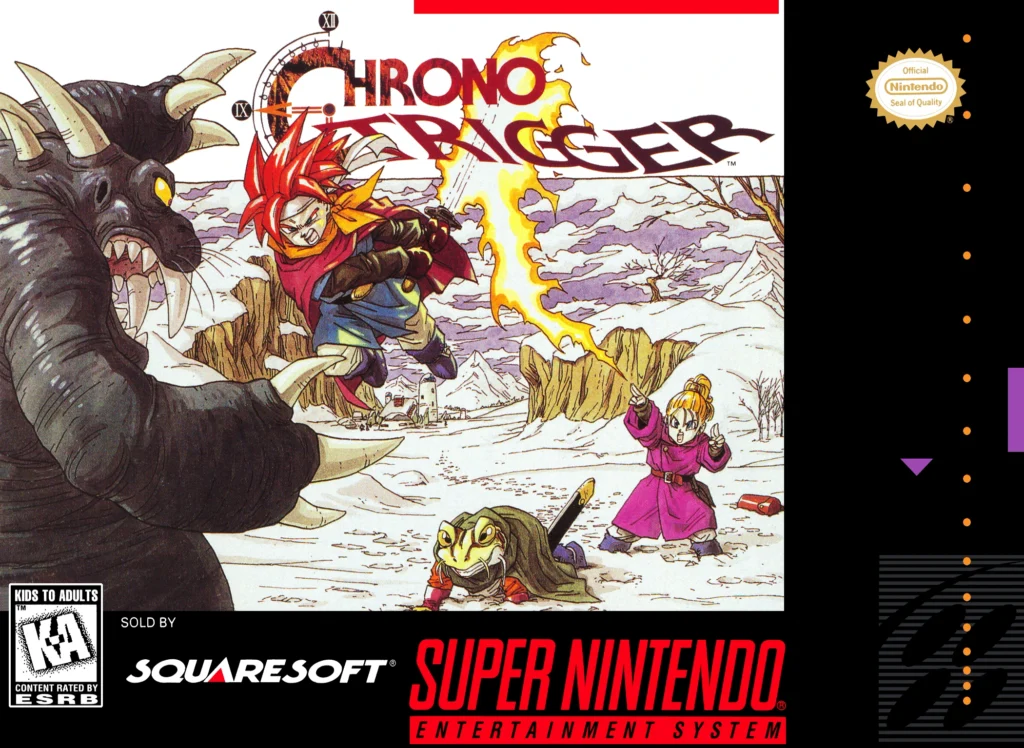
Platform: Super Nintendo originally; later PlayStation, Nintendo DS, mobile, PC and other legacy digital releases
Released: 1995 — Japan in March; North America in August
Developer: Square
Publisher: Square
Genre: Japanese RPG
Vibe: A warm Saturday-afternoon adventure that grows into a melancholy, funny, strange and surprisingly emotional journey through time.
You’ll Love It If: You enjoy tightly paced RPGs, memorable characters, expressive pixel art, great music and adventures that don’t waste your time.
Maybe Skip If: You need deep character customization, demanding tactical combat or a sprawling 80-hour RPG.
Best Way to Play: The current Steam version is the easiest official big-screen option; mobile is inexpensive and convenient, while the Nintendo DS release remains an excellent physical version for collectors.
Collector Note: Authentic North American SNES copies are expensive enough that buying one should be a collecting decision, not a prerequisite for playing the game.
When an RPG Felt Like a Major Event
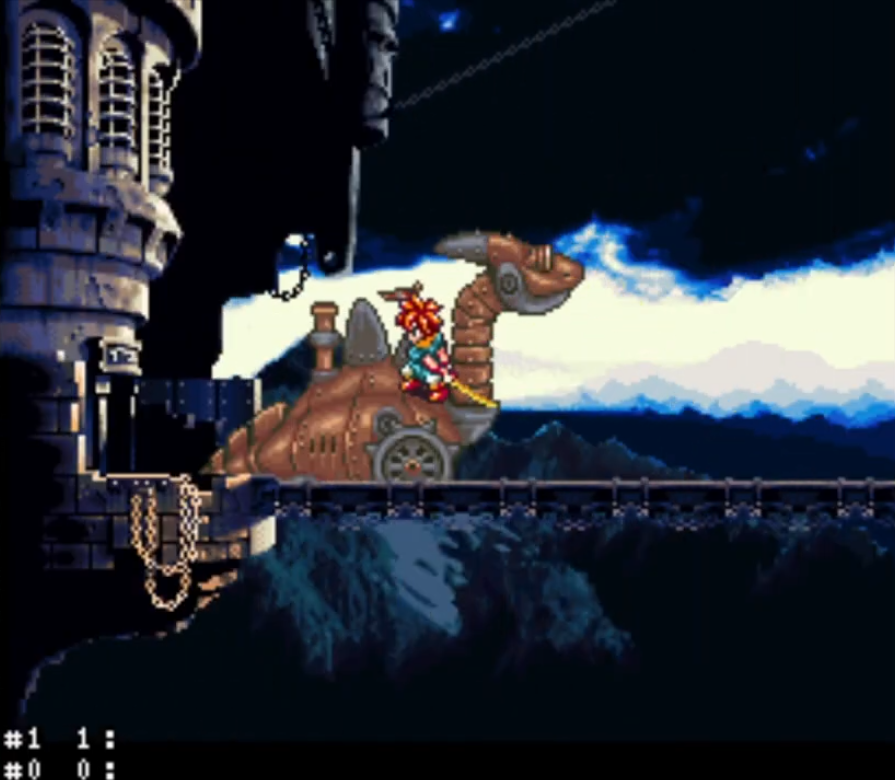
To understand the mystique around Chrono Trigger, you have to remember what Square represented to RPG fans by the middle of the 1990s.
The SNES already had Final Fantasy II, Final Fantasy III, Secret of Mana and other games that helped establish Japanese RPG fandom in North America. Then Chrono Trigger arrived carrying an almost absurd creative pedigree.
Square promoted a “Dream Team” built around Final Fantasy creator Hironobu Sakaguchi, Dragon Quest creator Yuji Horii and Dragon Ball creator Akira Toriyama, whose character designs gave the game an instantly recognizable energy. Square Enix still highlights that collaboration in its official description of the game today.
That mattered in 1995.
This was an era when discovering a major RPG could begin with screenshots in Nintendo Power, a rental-store box you couldn’t stop looking at, or somebody at school insisting that you had to see this new game where you could travel through time.
And Chrono Trigger looked enormous.
There were prehistoric jungles filled with reptiles. Medieval castles. Ruined cities under poisoned skies. Floating magical kingdoms. Knights, robots, dinosaurs, wizards and machines sharing the same cartridge without somehow turning the whole thing into nonsense.
Contemporary reception reflected that excitement. Electronic Gaming Monthly gave the SNES release 37/40, while Nintendo Power praised its graphics, depth, sound and replay value.
But the game’s enduring appeal isn’t simply that critics liked it in 1995.
It’s that Chrono Trigger understands something many much larger RPGs forget:
An adventure doesn’t need to be enormous to feel enormous.
A World Built Out of Moments
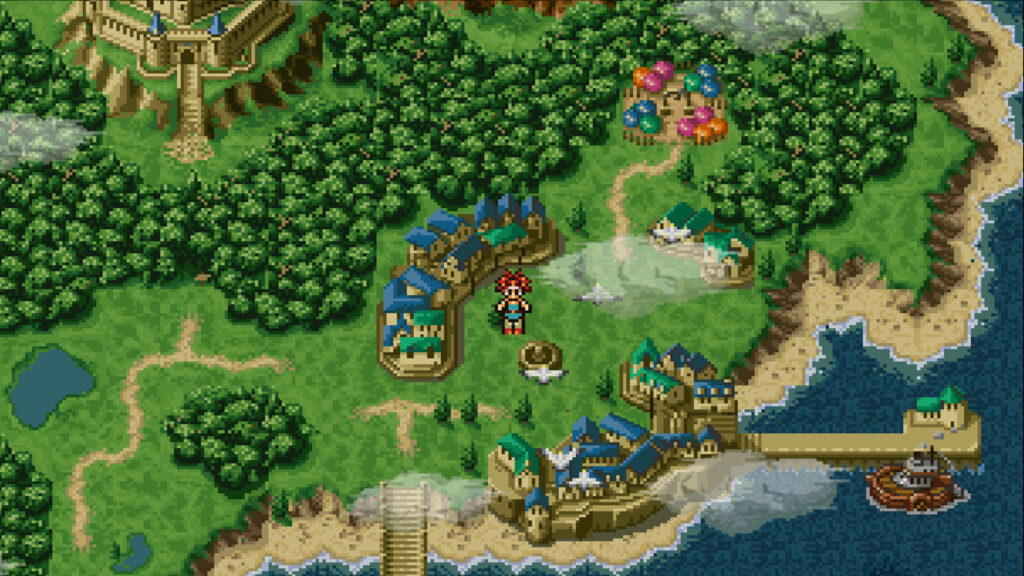
The genius of the time-travel structure is that almost every era has its own identity.
You begin in the cheerful 1000 A.D. Kingdom of Guardia. Then suddenly you’re wandering around 600 A.D., where Frog, Queen Leene and the war against Magus give the world the texture of a medieval legend.
Jump ahead to 2300 A.D. and everything changes.
The bright colors disappear. Humanity is barely surviving beneath ruined domes. Machines have inherited much of the landscape. The revelation of what happened to this future gives the party’s adventure its real purpose.
Then Chrono Trigger throws you backward into 65,000,000 B.C., where Ayla and the Reptites turn the game almost into a prehistoric fantasy adventure.
And eventually you reach 12,000 B.C.
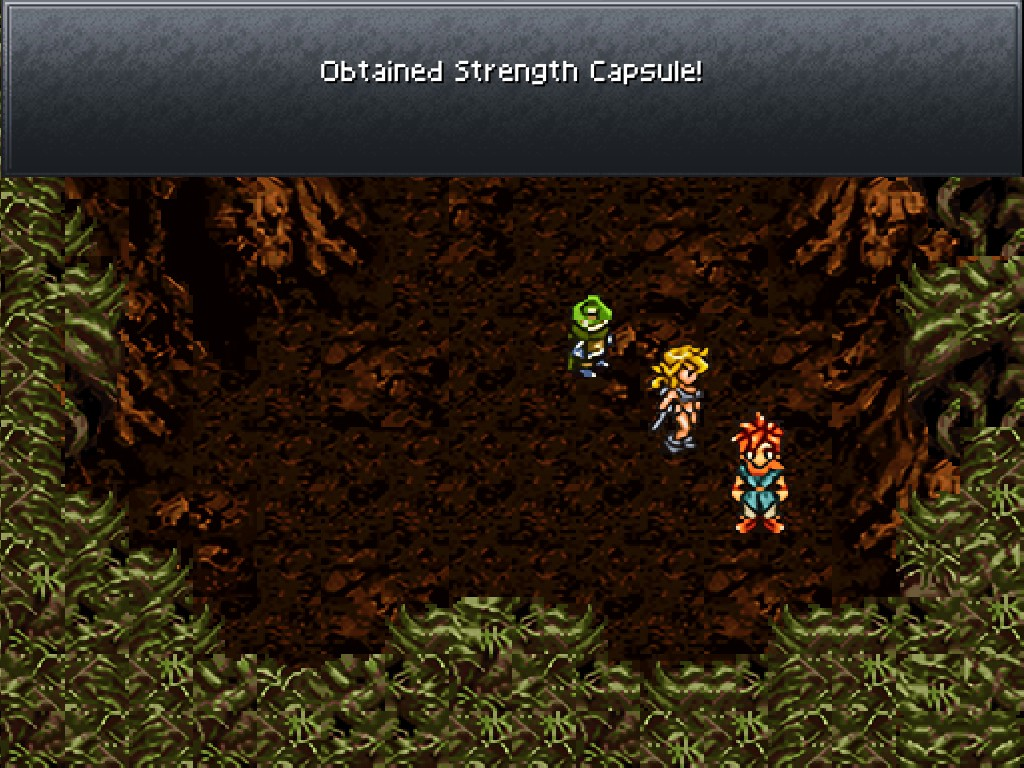
The Kingdom of Zeal remains one of the great settings of the 16-bit era: an impossible magical civilization floating above a frozen world, beautiful enough that you immediately sense it cannot possibly last.
These eras aren’t enormous. That’s important.
Chrono Trigger rarely leaves you roaming across some giant map simply because RPGs are expected to be long. You arrive somewhere, find the interesting thing, meet the people who matter, accomplish something meaningful, and move forward.
The result is an adventure packed with distinct memories rather than empty mileage.
Gameplay: The Part Your Hands Remember
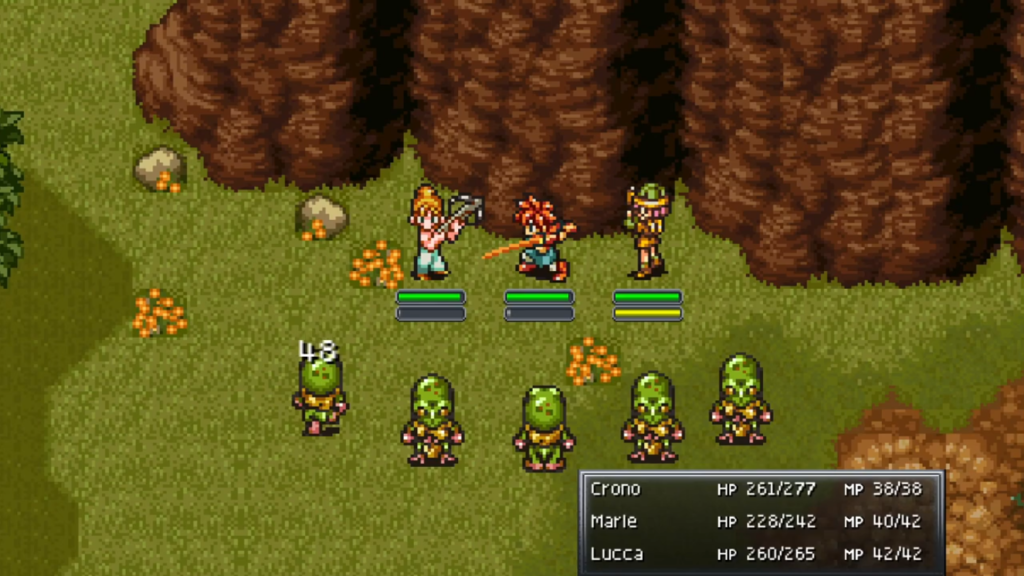
Chrono Trigger uses Square’s Active Time Battle system, but it feels faster and more physical than the menu-driven encounters people sometimes imagine when they hear “old-school JRPG.”
Enemies generally appear directly in the environment rather than attacking through constant invisible random encounters. Walk into the wrong part of a room and monsters may jump from bushes, descend from ceilings or surround the party.
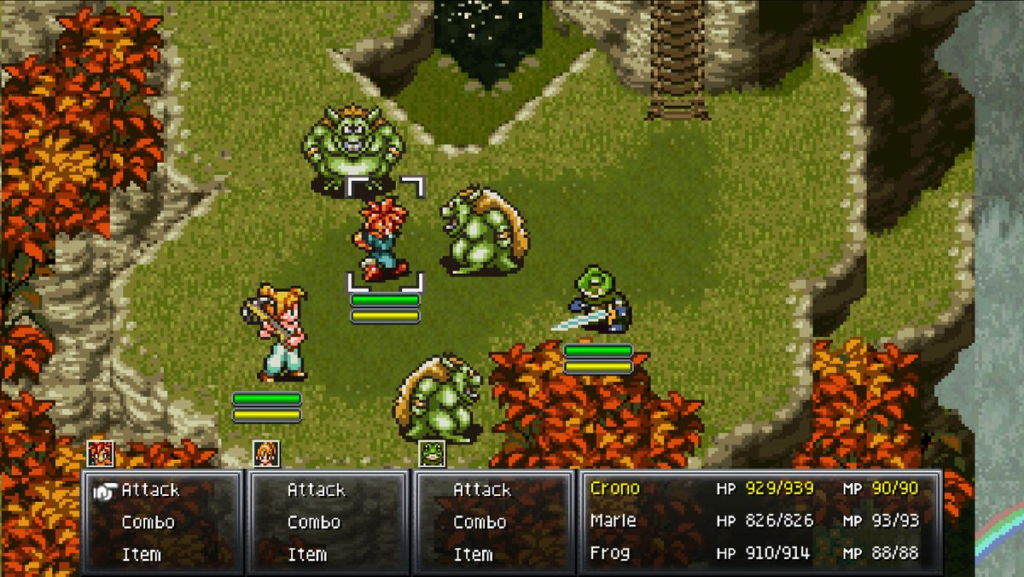
Combat then happens right there.
No swirling transition. No separate generic battlefield.
That little decision gives the world tremendous continuity.
Each character also develops individual Tech abilities. Crono has sword attacks such as Cyclone. Lucca brings fire and machinery. Marle mixes healing with ice magic. Frog fights with a sword and water abilities. Robo punches things because sometimes the correct solution to a temporal crisis really is a large robot fist.
The fun really begins when characters combine their abilities.
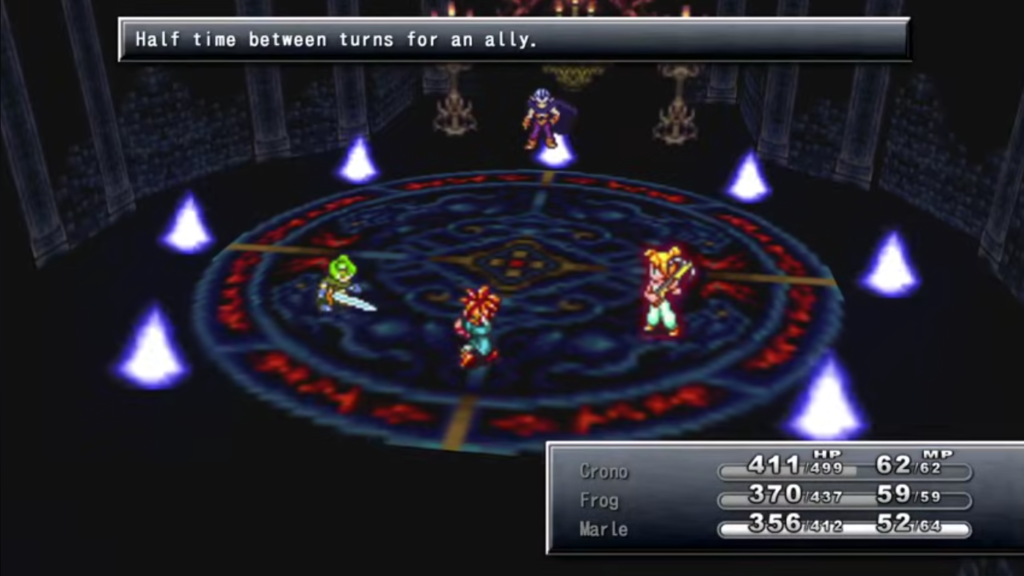
Crono and Frog can execute X-Strike. Crono and Lucca can turn Cyclone into Fire Whirl. Three-person combinations eventually produce elaborate Triple Techs.
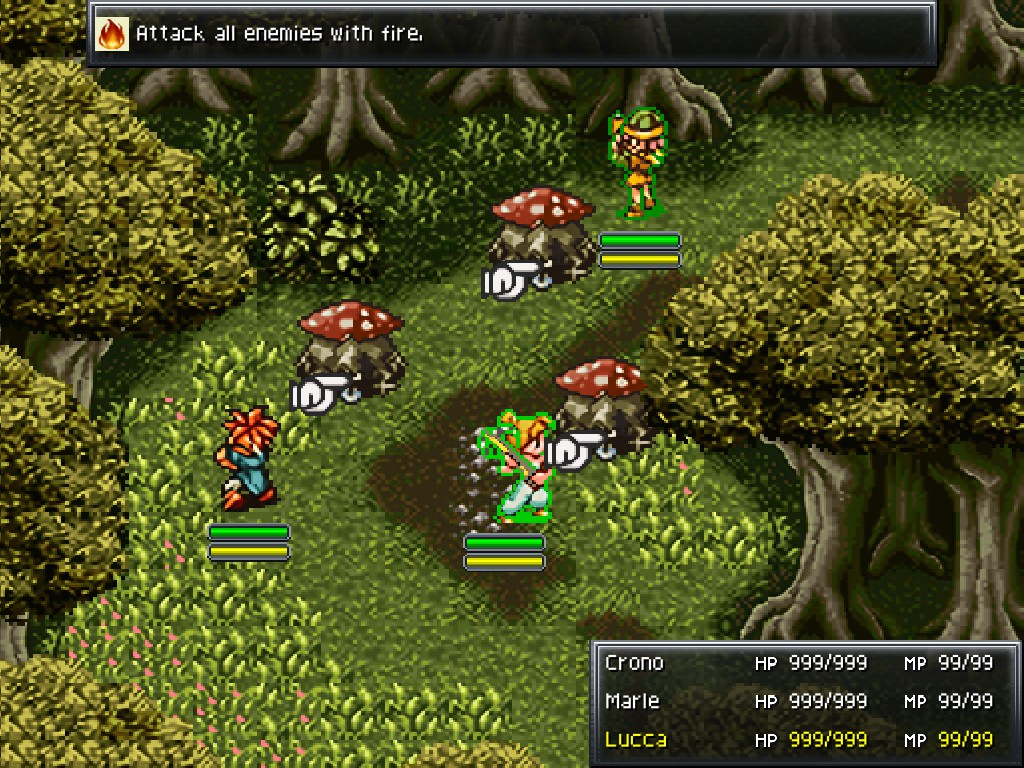
There are more than 50 Double and Triple Tech combinations in the modern release, according to Square Enix.
This system does something more important than simply adding combat variety: it makes party composition feel personal.
Swapping Frog for Robo doesn’t merely alter statistics. It changes the moves available to the entire group.
Easy to Learn Without Feeling Empty
Compared with many RPGs from its era, Chrono Trigger is remarkably welcoming.
You don’t need spreadsheets.
You don’t need to grind for ten hours before the next dungeon.
You don’t need to understand thirty interconnected crafting systems.
Menus are straightforward, equipment progression makes sense, and the game generally gives the player enough direction without constantly explaining itself.
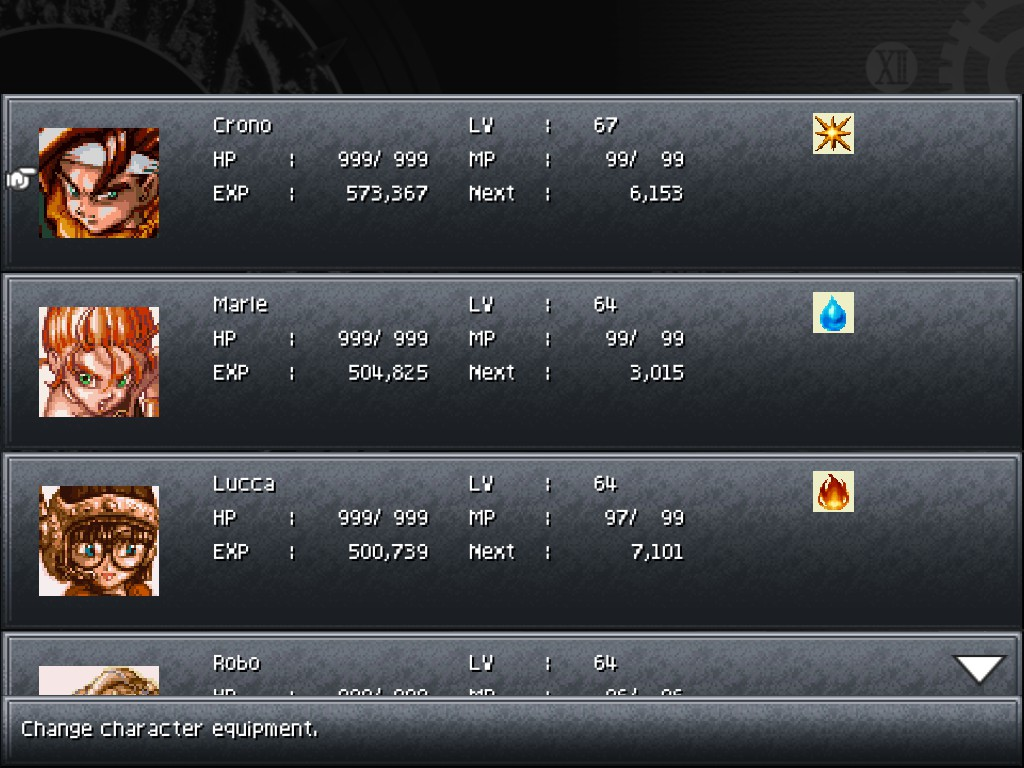
That accessibility occasionally becomes one of the game’s legitimate weaknesses. Experienced RPG players may find regular combat fairly easy, and some encounters eventually become repetitive. Recent community discussions still show this divide: some players praise the battle system’s pace and lack of grinding, while others find the combat too simple or dislike repeatedly crossing areas where enemies respawn.
Both reactions make sense.
Chrono Trigger isn’t trying to overwhelm you tactically.
It wants combat to keep the adventure moving.
Pixel Art That Still Has Personality
Akira Toriyama’s character designs translate beautifully into SNES sprites.
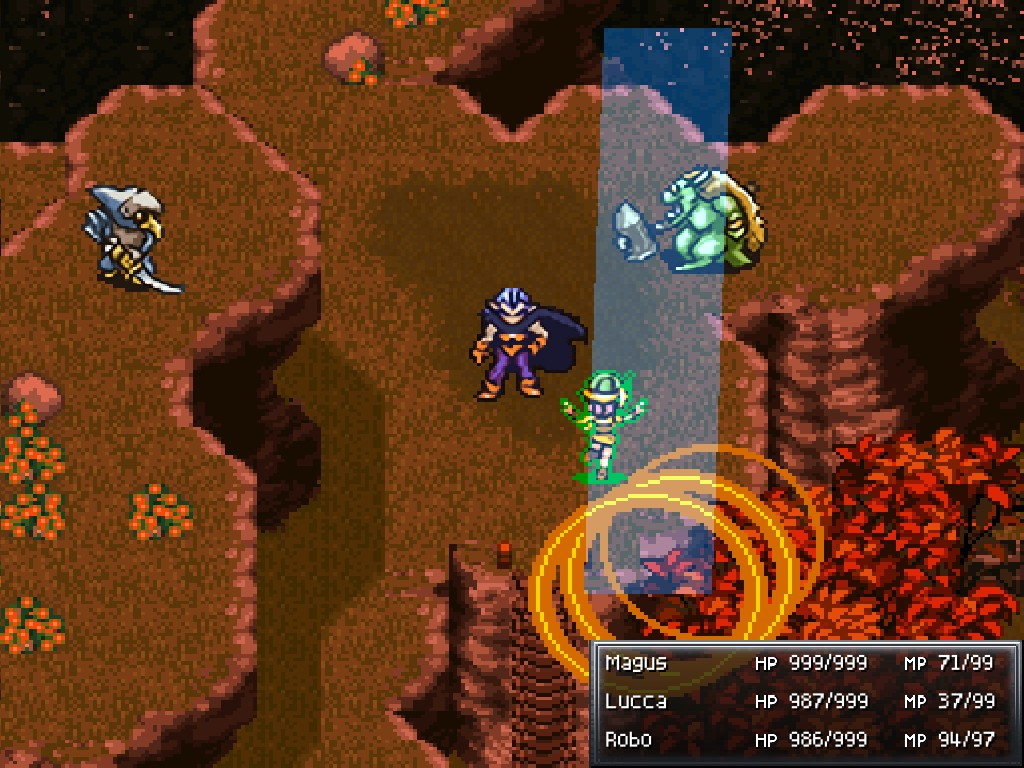
Crono’s impossible hair. Frog’s cape. Robo’s bulky frame. Ayla’s wild physicality. Magus standing there looking like he has personally declared war on happiness.
Even at tiny resolutions, you know who these people are.
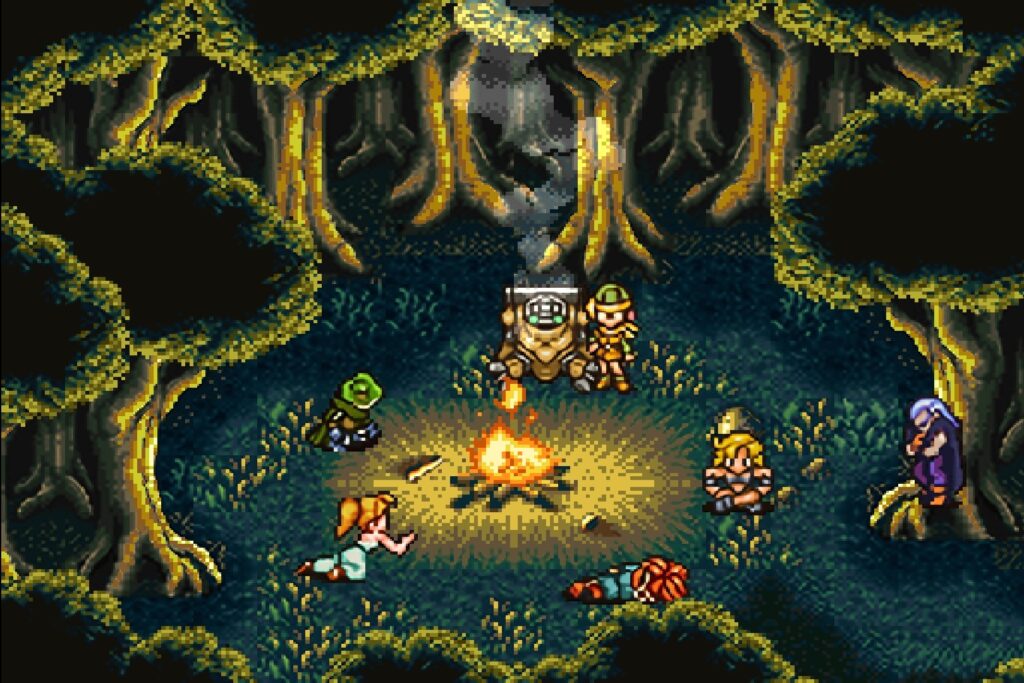
The backgrounds are equally important. Guardia’s forests look nothing like the devastated future. Prehistory is lush and explosive. Zeal uses color and architecture to communicate impossible magical abundance before the story explains much of anything.
This isn’t pixel art that survives because players politely forgive its age.
It remains readable, expressive and full of personality.
And Then There Is the Music
You could make a serious argument that the soundtrack is one of the strongest reasons Chrono Trigger remains emotionally powerful.
Yasunori Mitsuda served as principal composer, with additional music from Nobuo Uematsu and Noriko Matsueda, and the result has become inseparable from the game’s identity.
“Wind Scene.”
“Frog’s Theme.”
“Corridors of Time.”
“At the Bottom of Night.”
“To Far Away Times.”
Even players discovering the game decades later regularly single out the soundtrack; one recent first-time player described becoming attached to the music before ever playing the game.
That’s the peculiar power of great game music.
A few notes don’t simply remind you of a song.
They bring back a place.
The Story Moves Because the Characters Do
On paper, Chrono Trigger sounds dangerously complicated.
Time portals. Altered histories. Ancient civilizations. Apocalyptic entities. Paradoxes. Multiple endings.
Yet the story rarely becomes difficult to follow because the emotional stakes stay attached to a small group of characters.
Crono himself is largely silent, so much of the personality comes from the people around him.
Lucca’s scientific confidence hides some deeply human regrets.
Marle’s cheerful rebelliousness gradually reveals a complicated relationship with her family.
Frog carries failure around like another piece of armor.
Robo asks surprisingly touching questions about identity and purpose.
Ayla approaches civilization’s problems with the refreshingly direct philosophy that, when appropriate, you should probably punch the dinosaur.
And Magus remains one of the game’s most memorable figures precisely because Chrono Trigger isn’t satisfied with leaving its apparent villains uncomplicated.
The game also understands the value of small scenes.
A courtroom sequence remembers things you did earlier at the Millennial Fair.
A quiet campfire conversation can carry more emotional weight than a massive boss battle.
A robot working patiently through centuries turns time travel into something personal rather than merely clever.
This is where Chrono Trigger‘s relatively short runtime becomes an advantage. The story rarely stays anywhere long enough to exhaust the idea.
This Wasn’t How Every RPG Worked in 1995
Some of the things Chrono Trigger did are so familiar now that it’s easy to miss how refreshing they felt.
Visible encounters reduced the frustration associated with endless random battles.
Double and Triple Techs made relationships between party members mechanically meaningful.
New Game Plus encouraged replaying the story with existing character strength.
And the game’s multiple endings transformed replaying it from simple repetition into experimentation.
When can you challenge Lavos?
What happens if you do things differently?
What will another playthrough reveal?
Those questions were perfect fuel for mid-’90s gaming culture.
Before every answer was one search away, secrets gave games social lives. Players traded discoveries. Strategy guides mattered. Magazine coverage mattered. Rumors could survive because proving somebody wrong required actually trying something.
Chrono Trigger was particularly suited to that world because it felt as though the cartridge contained more possibilities than one playthrough could reveal.
What Feels Rough Today?
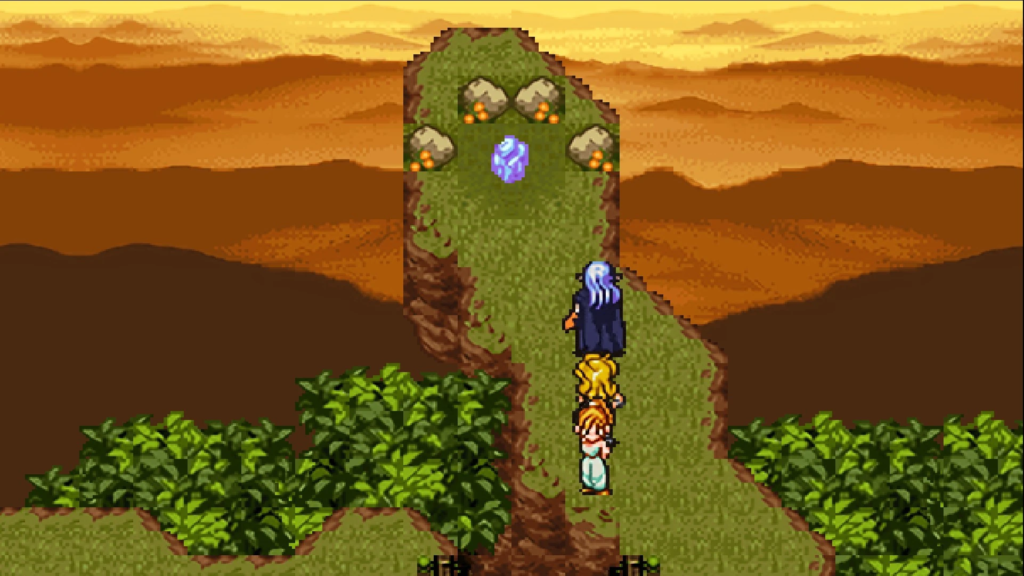
Not much of Chrono Trigger is genuinely painful to revisit, but that doesn’t mean every part is untouchable.
Combat can become easy once you understand the systems and build a strong party. Players looking for elaborate tactical customization may find character development comparatively straightforward.
Some optional late-game content isn’t as tightly paced as the central adventure.
And if you play later editions containing the Lost Sanctum material, don’t assume the extra content automatically improves the game. The original campaign’s momentum is one of its greatest strengths, and additional content can feel noticeably more repetitive.
The old PlayStation version found in Final Fantasy Chronicles is also difficult to recommend as the ideal version today. It added animated sequences, but its loading pauses became a long-running complaint. Even community opinion remains divided over whether those pauses are mildly irritating or badly overstated.
None of these problems fundamentally changes the experience.
The remarkable part is how little patience Chrono Trigger demands compared with many games of similar age.
Why New Players Can Still Understand the Hype
Nostalgia helps any retro game.
But Chrono Trigger doesn’t require it.
That may be the strongest evidence behind its reputation.
Players continue discovering the game decades later and responding to its pacing, music and characters without having any childhood attachment to it. Recent discussions include first-time players specifically praising how quickly the game gets moving and how little unnecessary grinding it requires.
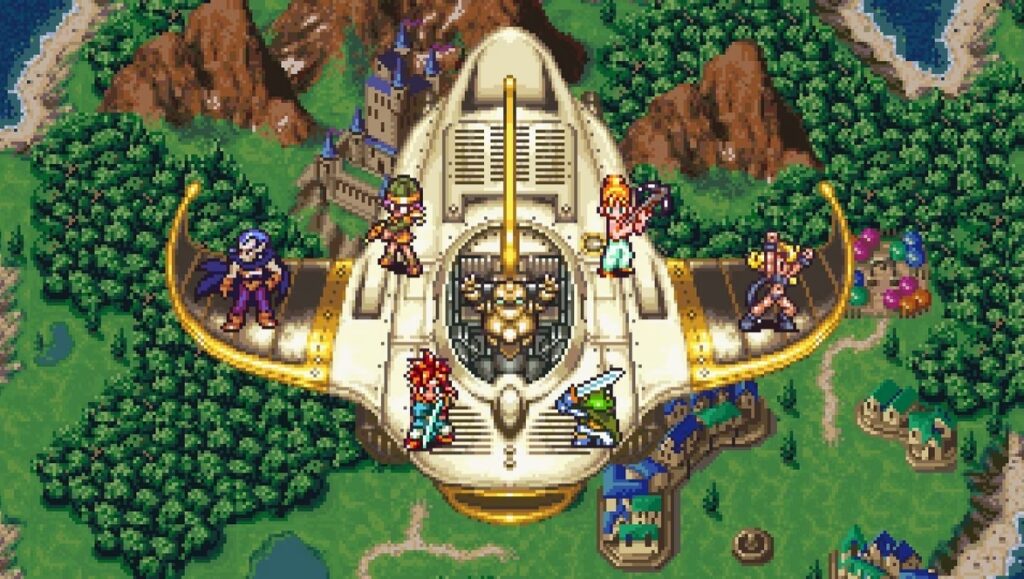
That’s because the qualities that made Chrono Trigger special aren’t dependent on remembering 1995.
Good pacing is still good pacing.
Expressive art is still expressive.
Great music doesn’t expire.
And a story about ordinary people discovering that their future has been destroyed—and deciding that this is simply unacceptable—still works.
Best Way to Play Chrono Trigger Today
As of September 2026, the easiest officially sold version for most players is Chrono Trigger on Steam.
Square Enix currently lists the PC edition for $14.99. It includes controller support, autosaving, higher-resolution presentation and additional content derived from later versions of the game. The Steam edition had a rough reputation at launch, but it received substantial updates afterward and currently carries a Very Positive overall English user rating.
Official mobile versions are also still available. The U.S. App Store and Google Play Store currently list Chrono Trigger for $9.99, and the iOS edition supports compatible game controllers.
For somebody who wants a physical copy without paying SNES prices, the Nintendo DS version remains particularly attractive. It retains the core adventure, adds portable play and extra content, and works on Nintendo 3DS-family hardware as well. But it has become collectible in its own right: PriceCharting currently estimates roughly $75 for a loose standard copy and about $130 complete, so compare recent sold listings before buying.
The original North American SNES cartridge is another matter entirely.
PriceCharting currently estimates a loose copy around $260 and a complete copy around $895, with recent individual sales varying considerably according to condition and completeness. Those numbers can change quickly, but they make the practical point clear: buy the SNES cartridge because you want to collect Chrono Trigger, not because you merely want to play it.
A Japanese Super Famicom copy can be dramatically cheaper as a display collectible, although the obvious language barrier makes it a poor recommendation for most English-speaking first-time players.
For most people, Steam is the sensible answer.
Save the hundreds of dollars for collecting if collecting is actually the part you love.
Final Verdict: Some Games Become Legends for a Reason
Thirty-one years of praise can make Chrono Trigger sound intimidating.
Don’t let it.
Underneath the rankings, retrospectives, collector prices and endless “greatest RPG ever” arguments is a wonderfully approachable adventure about a kid who goes to a fair, meets a girl, steps through a portal and eventually decides that the end of the world is a problem worth doing something about.
That’s the part worth preserving.
Chrono Trigger remembers when an RPG could give you dinosaurs, robots, sword-wielding frogs, ruined futures and magical kingdoms without becoming bloated or self-important. It moves confidently from comedy to melancholy to genuine wonder, accompanied by music that makes places you have never visited somehow feel remembered.
Longtime SNES players don’t need permission to love it again.
Younger retro fans don’t need nostalgia to understand it.
And collectors absolutely do not need to spend several hundred dollars to prove their appreciation for it.
If you’ve somehow spent three decades hearing about Chrono Trigger without taking the trip yourself, play it because you want an exceptionally well-crafted 16-bit adventure—not because gaming history assigned you homework.
The hype surrounding Chrono Trigger has become enormous.
The beautiful thing is that the game itself remains surprisingly small, warm and inviting.
Just a fair.
A pendant.
A machine.
And one step through time.