
Posted on August 3, 2026
July 2026 Retro Gaming Recap: Big Returns, Preservation Warnings, and Classic Games Finding New Lives
July brought welcome remasters, long-overdue re-releases, ambitious arcade hardware, and a sobering reminder that digital access can never be taken for granted.
July 2026 delivered the kind of retro gaming month that felt exciting and unsettling at the same time.
Argonaut Games brought Croc 2 back into the spotlight. Nintendo added several overlooked handheld favorites to its Classics library. Arcade1Up unveiled a new OutRun cabinet loaded with Sega racing history. Previously stranded arcade games finally reached modern systems, and a familiar British gaming name prepared to rise again.
Then Sony opened the month by announcing plans that directly affect game ownership and preservation: the gradual closure of the PlayStation Store on PlayStation 3 and PlayStation Vita, followed by the end of physical-disc production for new PlayStation releases in 2028.
That contrast defined July. Classic games are becoming easier to revisit in some places, while entire generations remain vulnerable in others.
For players, collectors, and preservation-minded fans, these were the stories that mattered most.
What We Know So Far

The biggest confirmed retro developments from July included:
- Sony announced regional PS3 storefront closures beginning in August 2026, with broader PS3 and Vita closures scheduled for July 2027.
- Sony also said physical production of new PlayStation games will end in January 2028.
- Argonaut Games announced Croc 2: Kingdom of the Gobbos for modern consoles and PC.
- Nintendo expanded its Classics library with Wario Land: Super Mario Land 3, Fortified Zone, The Sword of Hope II, and Dr. Mario & Puzzle League.
- Arcade1Up revealed an OutRun Supreme cabinet containing five Sega arcade racers.
- Hamster continued releasing obscure arcade titles that had never received proper home versions.
- Gremlin Graphics began returning as a heritage label connected to its original founder.
- The Super Bomberman Collection prepared to expand with another previously Japan-exclusive entry.
Here is why those announcements matter beyond the headlines.
Sony’s PS3 and Vita Store Closures Reignite the Preservation Debate
Sony began July with the month’s most consequential retro-gaming announcement.
The company confirmed that the PlayStation Store on PS3 will begin closing in Mexico, Honduras, and Nicaragua in August 2026. Other Latin American and Middle Eastern markets will follow later in the year. The PS3 and Vita storefronts are then scheduled to close across all remaining regions in July 2027.
Players will no longer be able to make new purchases after the store closes in their region. Sony attributed the decision to aging commerce systems and modern payment-processing requirements that the older platforms can no longer adequately support.

For anyone who lived through the PS3 era, this is more than an old storefront disappearing. That generation contained digital-only games, downloadable expansions, PS1 and PS2 Classics, smaller experimental releases, and a mountain of content that never received physical editions.
Sony has not said that previously purchased games will immediately become unavailable for download. However, the loss of the storefront means the legal path to buying many titles will disappear.
That is the heart of the preservation problem. A game does not need to vanish from every hard drive to become functionally inaccessible. Once new customers cannot legally purchase it, preservation becomes dependent on existing accounts, functioning servers, aging hardware, licensing agreements, and Sony’s continued willingness to maintain download access.
Collectors should also avoid treating this as a signal to panic-buy every PS3 or Vita release. Many physical games remain common, and sudden fear can inflate prices beyond what the games themselves justify. The smarter move is to identify digital exclusives, DLC-dependent titles, and games that are personally meaningful rather than chasing anything carrying a PlayStation logo.
PlayStation Plans to End New Physical Games in 2028

Sony’s second announcement was even more significant for the future of physical ownership.
Beginning in January 2028, new PlayStation releases will no longer be manufactured on physical discs. Games released before that cutoff will not be affected, but new titles launching afterward will be distributed digitally.
There are still important questions surrounding the policy. Sony has not fully explained how it will affect limited physical publishers, regional exceptions, collector’s editions, or games already in production near the deadline.
Even so, the direction is clear.
For decades, the PlayStation name has been tied to physical media: black-backed PS1 discs, blue PS2 DVDs, PS3 Blu-rays, steelbooks, greatest-hits cases, instruction manuals, rental stickers, and shelves full of box art. Ending new disc production closes a major chapter in that history.

Digital distribution is undeniably convenient. It eliminates scratched discs, reduces storage needs, and gives players immediate access. But it also changes ownership into a continuing relationship between the customer, the platform holder, the storefront, and the account system.
A physical disc is not a perfect preservation solution—patches and online dependencies have complicated that for years—but it remains a tangible copy that can often be installed, traded, loaned, displayed, and resold without asking a storefront for permission.
July therefore gave preservation fans a warning worth taking seriously: retro gaming is not only about protecting cartridges and floppy disks from the 1980s. Today’s digital libraries are tomorrow’s endangered platforms.
Croc 2 Is Getting the Remaster Treatment

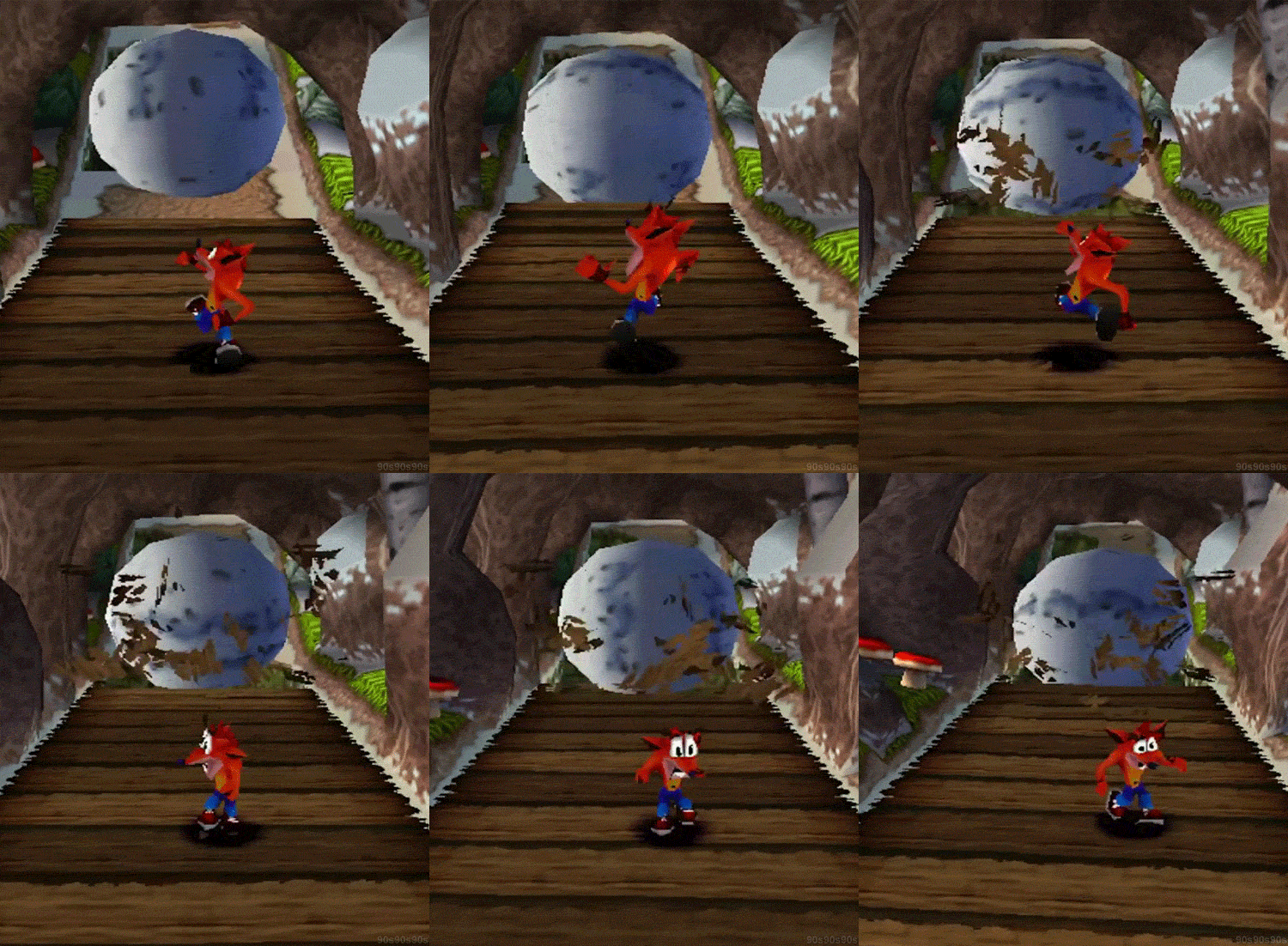
July ended on a much happier note when Argonaut Games announced Croc 2: Kingdom of the Gobbos, a remaster of its 1999 3D platformer.
The game is confirmed for PlayStation 5, PlayStation 4, Xbox Series X|S, Nintendo Switch, Steam, and GOG. No release date has been announced at the time of writing.
The remaster follows Argonaut’s 2025 revival of the original Croc: Legend of the Gobbos. It will preserve the sequel’s four village-based worlds, puzzle-platforming structure, colorful characters, and search for Croc’s missing parents while introducing modern enhancements.
Argonaut has also announced the Croc2pedia, an in-game archival feature containing development material and historical information.
That may be the most exciting part for longtime fans.

Croc 2 emerged during a crowded period for 3D platformers. The PlayStation and Nintendo 64 were full of mascots collecting crystals, rescuing creatures, exploring themed worlds, and testing how well a digital character could navigate three-dimensional space.
Not every game from that era became Super Mario 64 or Crash Bandicoot. Many titles lived in the middle ground: memorable enough to inspire fierce affection, yet not commercially dominant enough to remain continuously available.
Those are exactly the games that benefit from thoughtful remasters.
The new version gives younger players access without requiring original hardware, aging discs, memory cards, or vintage display equipment. It also allows longtime fans to revisit the game without pretending its late-1990s camera and control conventions require no adjustment.
Collectors should wait for more information before making plans. Argonaut has not confirmed pricing, a physical edition, preorder bonuses, or a release window.
Nintendo Gave Several Handheld Games Another Chance
Nintendo’s July Classics update was not built around a giant headline game. That was part of its appeal.
The company added Wario Land: Super Mario Land 3, Fortified Zone, and The Sword of Hope II to its Game Boy library. Dr. Mario & Puzzle League joined the Game Boy Advance collection.
Wario Land is the obvious crowd-pleaser. It transformed the Super Mario Land formula by placing Wario in the starring role and helped establish the slower, treasure-focused platforming identity the series would continue developing.

The Sword of Hope II is the deeper preservation win. Originally released for Game Boy in 1996, it blends first-person exploration, menu-based interaction, puzzles, and role-playing combat. It never enjoyed the broad visibility of Nintendo’s major handheld franchises, making its return especially valuable for players who missed it the first time.

Fortified Zone represents another corner of Game Boy history: compact overhead action designed around the hardware’s limitations rather than merely shrinking a console experience.

Meanwhile, Dr. Mario & Puzzle League preserves two excellent puzzle games in one package, offering a reminder that the Game Boy Advance was not simply a portable Super Nintendo. It had its own strong identity, particularly for puzzle games, tactical RPGs, and 2D revivals.

Nintendo’s subscription model still raises familiar questions. These games are available through a service rather than sold individually, and continued access requires an active membership. That is convenient for discovery but weaker from an ownership standpoint.
Still, every official reissue reduces dependence on aging cartridges and introduces overlooked retro games to a much larger audience.
Arcade1Up Put Five Sega Racers Into One OutRun Cabinet
Arcade1Up used San Diego Comic-Con to reveal the OutRun Supreme, a home arcade cabinet built around Sega’s driving legacy.
The cabinet includes:
- OutRun
- Turbo OutRun
- OutRunners
- Power Drift
- Rad Rally
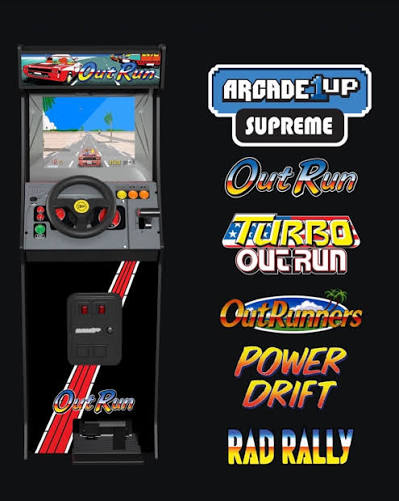
The Supreme model features a 19-inch display, illuminated marquee, steering controls, and a 67-inch cabinet. It is expected to launch exclusively through Costco in the United States during fall 2026 for $629.99. A smaller Deluxe version with a 17-inch display is planned at $599.99.
This is not an inexpensive way to play five old games. It is a nostalgia purchase built for fans who want something resembling an arcade machine in their home.
That distinction matters.
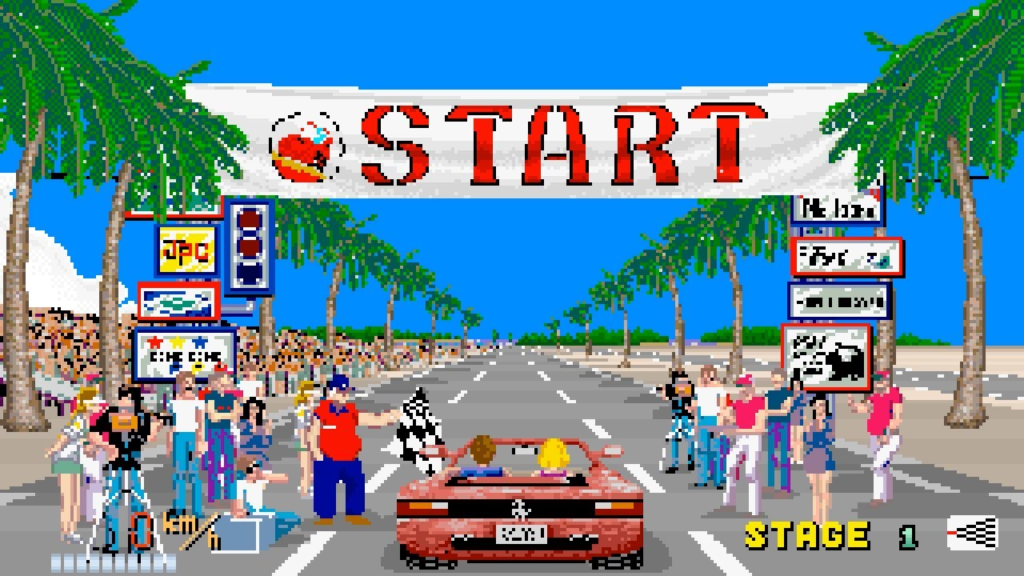
The original OutRun was never just a racing game. Its branching routes, bright coastal scenery, selectable soundtrack, red sports car, and relaxed road-trip atmosphere gave it a personality radically different from harder-edged racers.
Power Drift added chaotic elevated tracks and sprite-scaling spectacle, while OutRunners expanded the fantasy into multiplayer competition. Some of these games have received far fewer accessible home releases than their reputations deserve.
For many players, the better outcome would still be an affordable Sega racing collection on modern systems. A conventional digital release would reach more people, take up less space, and serve preservation more effectively.
For collectors with the room and budget, however, the cabinet offers something software alone cannot reproduce: sitting behind a wheel, hearing the music start, and briefly turning a spare room into the arcade you remember.
Obscure Arcade Games Continued Escaping Their Cabinets
Hamster’s Arcade Archives program quietly delivered some of July’s strongest preservation work.

Armadillo Racing, a 1997 Namco trackball racer that had never received a home conversion, arrived on modern platforms. The game was uncommon even in arcades outside Japan, making its release a genuine recovery rather than another circulation of a familiar classic.

Tatsumi’s TX-1 also received its first official reissue. The 1983 racer originally used an elaborate triple-monitor cabinet and allowed players to choose branching routes between checkpoints. Modern hardware obviously cannot reproduce the complete cabinet experience, but the software itself is no longer trapped inside aging arcade boards.
Other July releases included Konami’s aggressive 1987 racer Hyper Crash, Universal’s influential maze game Lady Bug, the PlayStation action-adventure T.R.A.G.: Mission of Mercy, and the Neo Geo fighter Ninja Master’s with modern online features.
These are not releases likely to dominate social media. They are important because preservation cannot focus exclusively on games that are already famous.
The arcade industry produced thousands of titles built for specialized controls, regional markets, short commercial lifespans, and hardware that was never intended to survive for half a century. Every carefully documented reissue keeps another small piece of that history from becoming a screenshot, a memory, or a broken board in a warehouse.
Bomberman’s Missing History Is Slowly Returning
Konami confirmed that the Super Bomberman Collection will receive another previously Japan-exclusive entry through an update scheduled for August 20.
The existing collection already brings together seven games and is available on PlayStation 5, Xbox Series X|S, Nintendo Switch, Switch 2, and PC. A physical edition is also planned for August.
The importance here is broader than one additional game.

Bomberman was one of the defining multiplayer series of the 8-bit, 16-bit, and early 32-bit eras. It could turn almost any living room into instant chaos: four players, a small grid, one badly placed bomb, and friendships suddenly being renegotiated.
Yet the franchise’s history has always been fragmented across Japanese releases, regional differences, scattered ports, and hardware-specific entries.
Collections that preserve those variations give fans a more complete picture of how the series evolved. They also provide a legal, convenient alternative to hunting down expensive imports solely to experience one missing chapter.
Gremlin Graphics Is Returning as a Heritage Label
One of July’s most culturally interesting announcements came from the United Kingdom.
Gremlin Graphics is being revived as a heritage label with the involvement of company founder Ian Stewart. The initiative is expected to support projects connected to the publisher’s history, beginning with a deluxe physical version of the new Monty Mole adventure Dreamtime Monty.
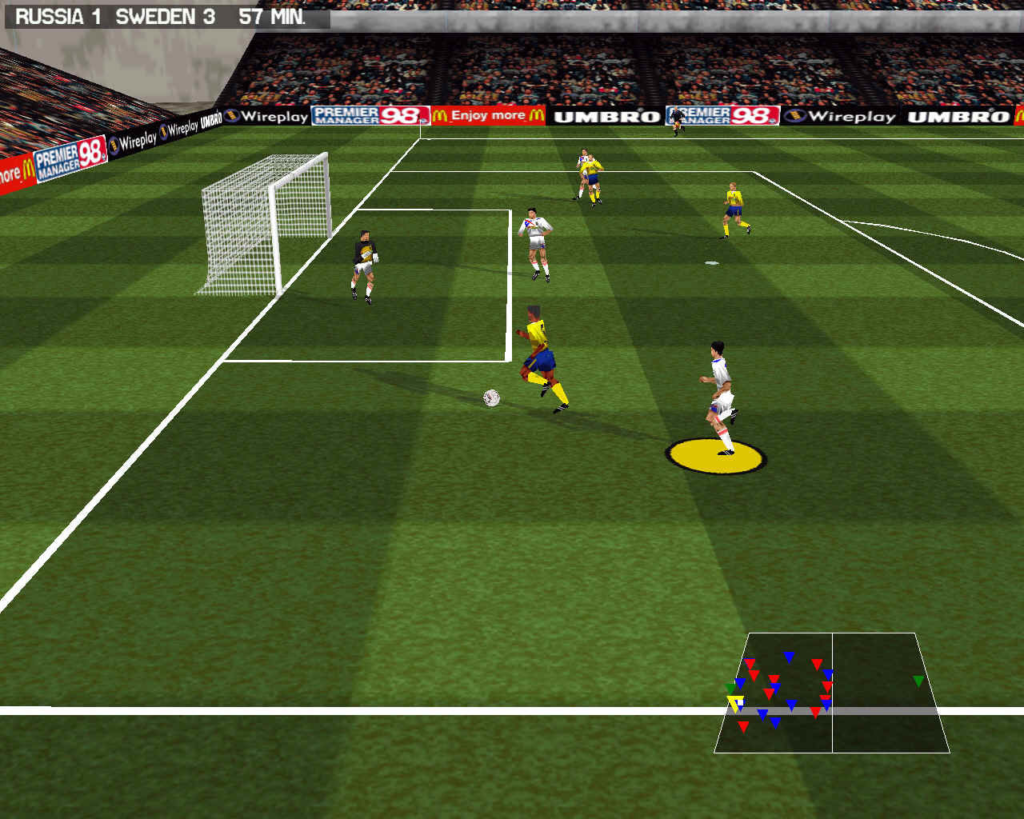
Gremlin was an important name in British computer gaming, particularly during the Commodore 64, ZX Spectrum, Amiga, and Atari ST eras. Its catalogue included games such as Monty Mole, Zool, Lotus Esprit Turbo Challenge, Premier Manager, and Actua Soccer.
The announcement does not mean the full Gremlin library is suddenly returning. Specific restoration plans, platforms, prices, and future releases remain limited.
Even so, reviving the name as a heritage operation creates opportunities for archival releases, developer stories, physical editions, and new games that respect the company’s history without simply imitating it.
Retro gaming culture often leans heavily toward Japanese consoles and American arcade history. Gremlin’s return is a welcome reminder that the British home-computer scene built its own distinct traditions, heroes, humor, and design language.
Why Retro Fans Should Care

July’s stories reveal three larger trends.
First, the retro revival is moving beyond the most obvious blockbusters. Croc 2, The Sword of Hope II, Armadillo Racing, and TX-1 are not the usual handful of games repeatedly repackaged for every platform. Their return suggests publishers are beginning to explore deeper layers of gaming history.
Second, preservation is becoming more dependent on commercial decisions. A company can restore a forgotten arcade game one week while another company announces the eventual closure of an entire storefront the next.
Third, nostalgia has become a mature market. The $629.99 OutRun cabinet, deluxe physical releases, archival museums, and revived heritage labels are designed for adults who now have more money than they did when they first encountered these games.
That growth creates opportunity, but it also requires discipline from buyers. Not every rerelease needs to be preordered. Not every physical edition will become valuable. Not every miniature cabinet provides the best way to play.
The best retro purchases are still the ones that help you experience, preserve, or meaningfully connect with the games you genuinely care about.
Best Way to Play Today
For most players, modern official releases remain the easiest place to begin.
Nintendo Switch Online provides convenient access to July’s newly added Game Boy and Game Boy Advance titles, though a continuing subscription is required. Fans interested in Croc 2 should wishlist the remaster and wait for confirmed pricing and physical-edition details.

The OutRun Supreme cabinet is best viewed as premium game-room furniture rather than an essential purchase. Players primarily interested in Sega’s racing history may be better served by existing modern ports, mini consoles, or original releases paired with a reliable HDMI adapter.
PS3 and Vita owners should review their digital wishlists before their regional storefront deadline, prioritizing digital-only games and downloadable content that has no physical alternative. There is no need to panic-buy common discs or speculate on every sealed copy.
What We Still Don’t Know
Several of July’s stories remain incomplete.
Argonaut has not announced a date, price, or physical edition for Croc 2. Sony has not fully detailed how its 2028 physical-media policy will affect specialty publishers and collector releases. Gremlin Graphics Classics has not revealed the full scope of its archival plans.

The long-term availability of previously purchased PS3 and Vita content also remains one of the most important questions surrounding Sony’s store closures.
Those details will determine whether July’s announcements become lasting preservation victories, temporary access points, or missed opportunities.
July Proved the Past Is Still Moving Forward
Retro gaming did not grow in July because one blockbuster remake broke sales records. It grew through a series of smaller but meaningful developments.
An overlooked Game Boy RPG became accessible again. A PlayStation platformer earned another chance. Arcade games that had never escaped their original cabinets reached home hardware. A British publisher’s legacy began returning to public view.
At the same time, Sony reminded everyone how quickly access can narrow when storefronts and physical media are controlled by corporate timelines.
That is the real July recap: the past is not sitting still.
Classic games are constantly being restored, repackaged, rediscovered, delisted, and redefined. Our job as players is not to buy everything carrying a familiar logo. It is to support good preservation, ask hard questions about ownership, and keep playing the games that made this hobby worth remembering in the first place.