
Posted on August 13, 2026
Metal Gear Solid: The Night PlayStation Grew Up
Disclosure: Some of the links in this post are affiliate links. This means if you click on the link and purchase an item, we will receive an affiliate commission at no extra cost to you. All opinions remain my own. We only recommend products or services we believe will add value to my readers.
Revisiting Shadow Moses, cardboard boxes, Codec calls, and one of the strangest, smartest adventures of the PlayStation era.
There are games you remember as a collection of levels, bosses, and button combinations. Metal Gear Solid is different. You remember moments.
The crunch of Snake’s footsteps through the snow. That pulsing alert siren when a guard spots you. Colonel Campbell’s face appearing on the Codec. The first time a helicopter sweeps over Shadow Moses. The increasingly ridiculous realization that hiding beneath a cardboard box is not merely a joke but an actual tactical option. And, of course, that moment when the game starts doing things that seem to reach beyond the television and into your living room.
That was the magic of Metal Gear Solid in 1998. Plenty of PS1 games were already demonstrating what Sony’s little gray console could do with 3D worlds, cinematic presentation, and CD-quality audio. Metal Gear Solid pulled those pieces together and made the PlayStation feel like it was capable of something different—a game that could be tense, funny, melodramatic, politically charged, mechanically inventive, and completely aware that you were sitting there holding a controller.
Konami released Metal Gear Solid for PlayStation in Japan in September 1998 and North America the following month, with Europe following in 1999. Directed by Hideo Kojima, it transformed the ideas of the earlier Metal Gear games into a fully 3D stealth adventure.
More than two decades later, Shadow Moses is still worth infiltrating.
At a Glance
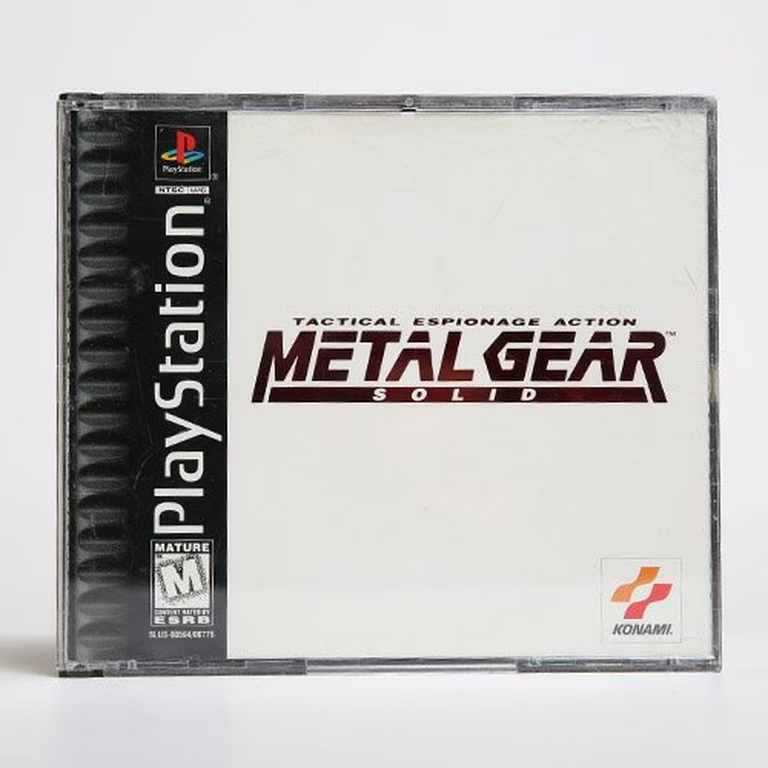
Platform: PlayStation 1
Released: 1998 in Japan and North America; 1999 in Europe
Developer: Konami Computer Entertainment Japan
Publisher: Konami
Genre: Stealth / Action-Adventure
Vibe: Snowbound espionage, conspiracy-thriller paranoia, military hardware, strange villains, and late-night PS1 atmosphere.
You’ll Love It If: You enjoy stealth, cinematic storytelling, memorable characters, boss encounters, experimentation, and games willing to surprise you.
Maybe Skip If: Long conversations, frequent cutscenes, old-school control conventions, and deliberate stealth aren’t your thing.
Best Way to Play: The original PS1 version delivers the purest nostalgia, while the modern Master Collection version is the easiest official route for most players today.
Collector Note: Original copies remain obtainable rather than prohibitively rare, although condition and edition make a substantial difference in price. PriceCharting currently places a standard complete North American copy around the $50 range, while the Greatest Hits edition trends lower.
Welcome Back to Shadow Moses
Metal Gear Solid wastes remarkably little time establishing its identity.
Solid Snake, retired legendary operative and professional owner of one of gaming’s greatest gravelly voices, is pulled back into action after the FOXHOUND special forces unit takes control of a nuclear weapons disposal facility on Shadow Moses Island.
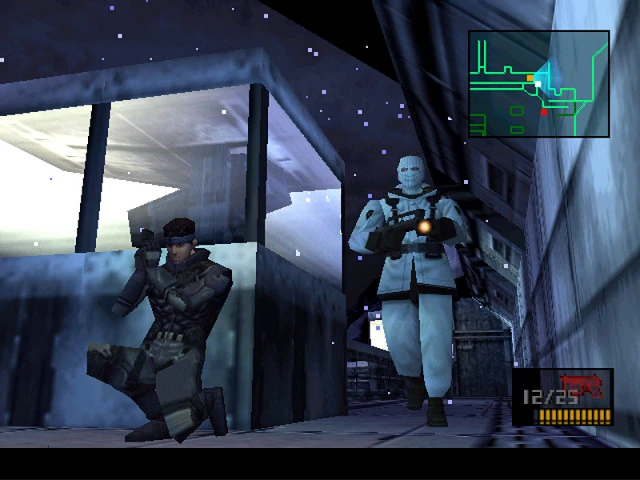
Their demands involve the remains of Big Boss. Their leverage involves nuclear weapons.
Snake’s job is supposed to be simple enough: infiltrate the facility, rescue two hostages, determine whether the terrorists can launch a nuclear strike, and stop them.
Anyone familiar with Metal Gear knows how long “simple” lasts.
Within the opening stretch, you’re crawling beneath obstacles, avoiding security cameras, watching guard patrol patterns, swimming through freezing water, riding an elevator while receiving mission information, and sneaking across a snow-covered helipad.
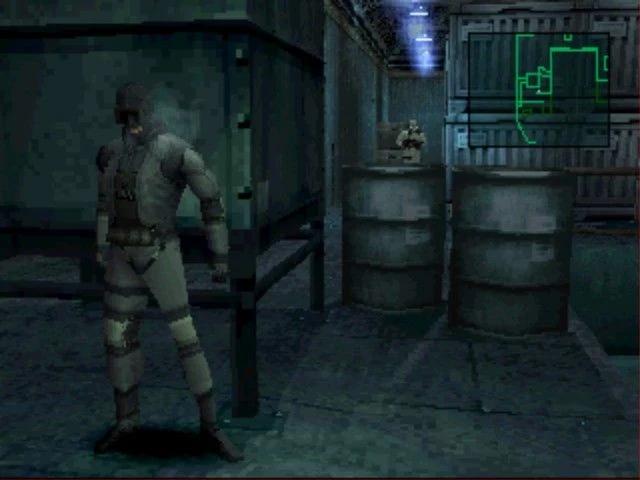
Most action games of the period conditioned players to see enemies as targets.
Metal Gear Solid asks you to see them as problems.
Can you slip behind that guard?
Wait until he turns?
Knock on a wall to draw him away?
Crawl beneath something?
Simply stay out of sight?
That distinction remains one of the game’s defining pleasures.
When a PS1 Game Felt Like an Event
Put Metal Gear Solid beside the broader PlayStation landscape of the late 1990s and its reputation becomes easier to understand.
This was the era of Final Fantasy VII, Resident Evil 2, Tekken 3, Gran Turismo, Castlevania: Symphony of the Night, and a rapidly expanding library of 3D games. Developers were still discovering what cinematic storytelling could look like on a console built around polygons and CD-ROMs.
Metal Gear Solid arrived with enormous confidence.
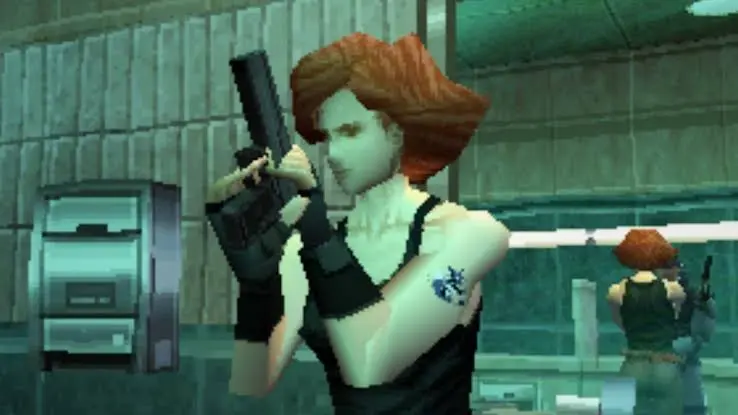
Characters spoke through extensive recorded dialogue. Cutscenes used the game’s own 3D engine. The camera swooped around scenes like someone behind it desperately wanted to direct a movie. Military terminology collided with genetics, nuclear proliferation, family betrayal, conspiracy theories, and anime-level supervillains.
Contemporary reviews noticed that ambition. GameSpot’s original review praised the presentation, animation, atmosphere, soundtrack, and sound effects, with only occasional slowdown noted as a technical blemish.
But the thing that really mattered wasn’t that Metal Gear Solid resembled a movie.
It was that it understood it was not a movie.
The game kept finding ways to make the player part of the trick.
And that’s where things got weird.
The Moments Nobody Forgot
It is almost impossible to talk about Metal Gear Solid without talking about Psycho Mantis.
The FOXHOUND psychic remains one of the defining boss encounters of the PlayStation generation because the battle doesn’t stay safely inside the fiction.

On original hardware, Mantis could react to save data on your memory card. More famously, defeating him effectively required players to think outside the game itself and move the controller to the PlayStation’s second controller port.
That sounds almost quaint today.
The modern Master Collection had to recreate parts of the gag through virtualized alternatives because the original trick was so deeply tied to PlayStation hardware.
In 1998, it felt like witchcraft.
And Psycho Mantis wasn’t an isolated burst of creativity.
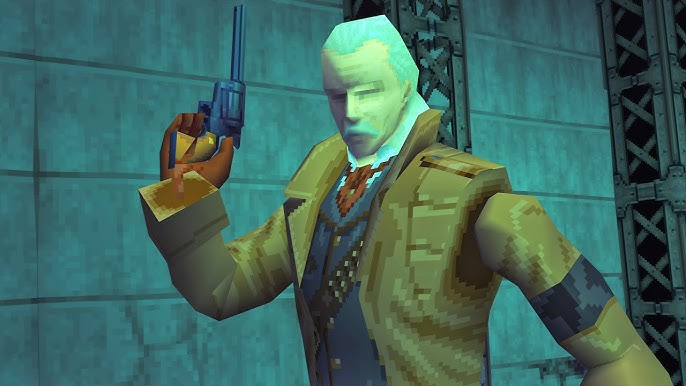
There is Revolver Ocelot’s gunfight and his obsession with ricocheting bullets.
There is the Cyborg Ninja slicing through rooms like something escaped from another game entirely.
There is Sniper Wolf, whose encounters force Snake into a very different rhythm of combat.
There’s Vulcan Raven.
There’s Liquid Snake.
There’s Metal Gear REX looming over everything.
Even seemingly mundane items become memorable. Cigarettes have a gameplay purpose. Cardboard boxes become disguises. Codec frequencies matter. Thermal goggles reveal things the naked eye cannot.
The game repeatedly rewards curiosity.
Metal Gear Solid doesn’t merely give you mechanics. It gives you stories about mechanics.
That’s why people still talk about them.
Gameplay: The Part Your Hands Remember
The strange thing about returning to Metal Gear Solid is how quickly its basic rhythm comes back.
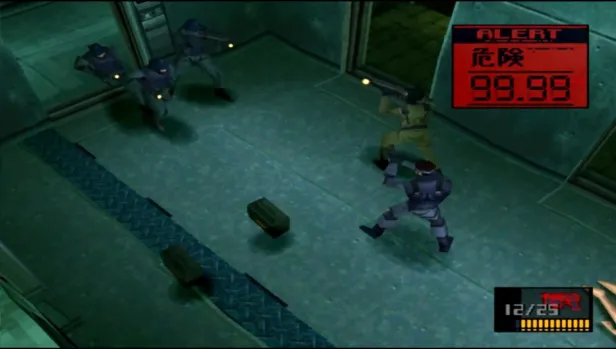
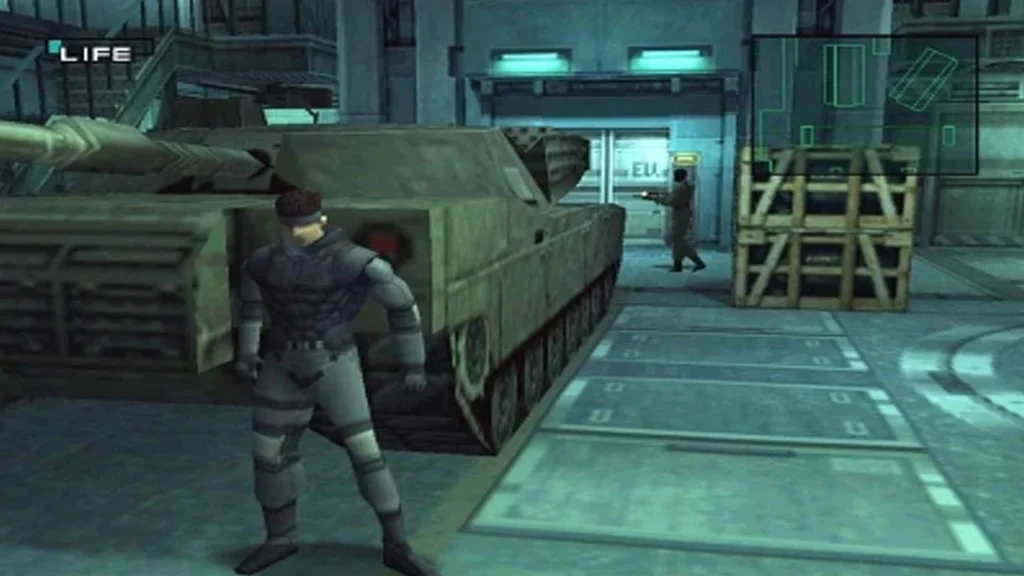
Snake normally moves through environments from a mostly overhead perspective. Guards follow recognizable patrol routes, with vision cones displayed on your Soliton Radar under normal conditions. Remaining unseen is usually safer than treating every hallway like a shooting gallery.
Getting discovered changes everything.
That familiar alert sound fires.
The radar disappears.
Enemies converge.
Suddenly your careful infiltration becomes a desperate scramble for somewhere—anywhere—to hide.
It’s an elegant feedback loop because getting caught doesn’t necessarily mean reloading a save. Sometimes escaping your own mistake is half the fun.
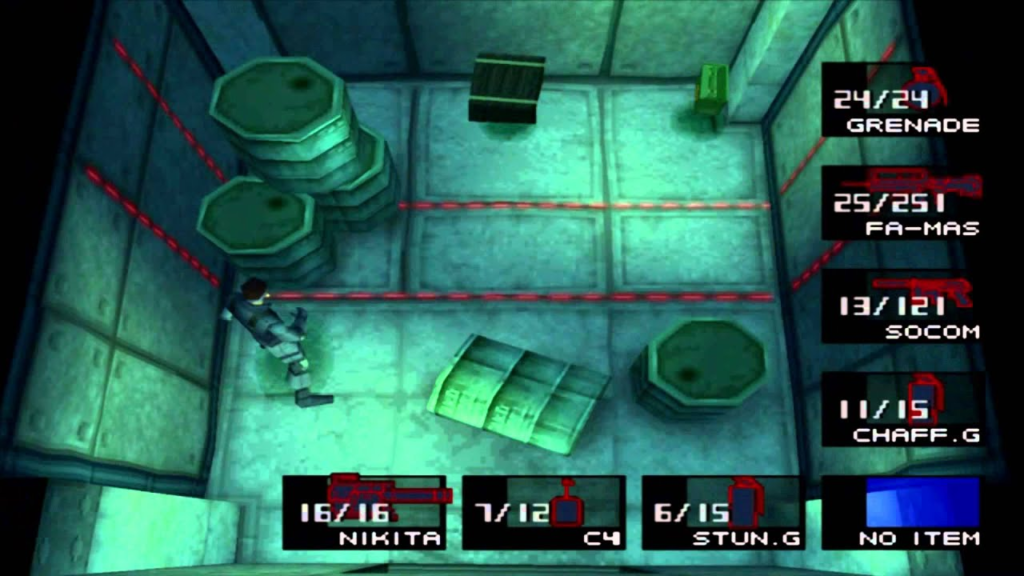
Snake has access to firearms, explosives, mines, grenades, remote-controlled missiles, chaff grenades, stun grenades, and assorted gadgets, but Metal Gear Solid rarely feels like a conventional shooter. Positioning and awareness matter more than twitch aim.
The controls do require a little recalibration today.
There is no modern dual-stick camera arrangement. Shooting can feel stiff. Moving through cramped areas occasionally produces the sort of awkward little dance familiar to anyone raised on early 3D games.
But give it twenty minutes.
Your hands start speaking PS1 again.
And once they do, Metal Gear Solid reveals how much of its design remains beautifully readable.
Graphics That Let Your Imagination Finish the Job
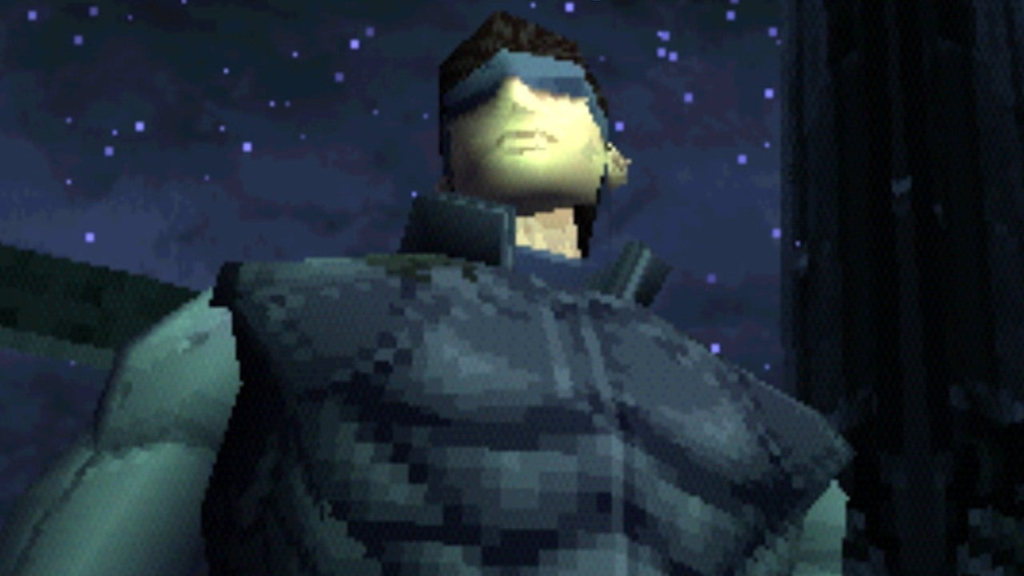
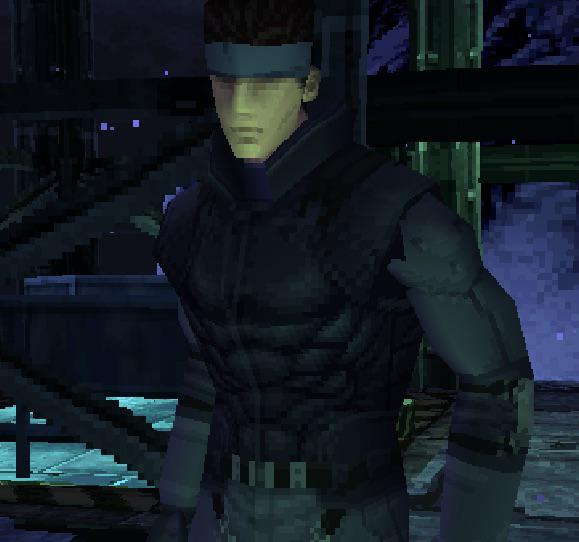
Nobody is going to mistake Snake’s original character model for a modern human being.
Faces are barely faces.
Textures wobble.
Characters have angular bodies built from chunky polygons.
Yet reducing Metal Gear Solid’s visuals to technical age misses what the art direction accomplishes.
Shadow Moses feels cold.
Industrial corridors feel oppressive.
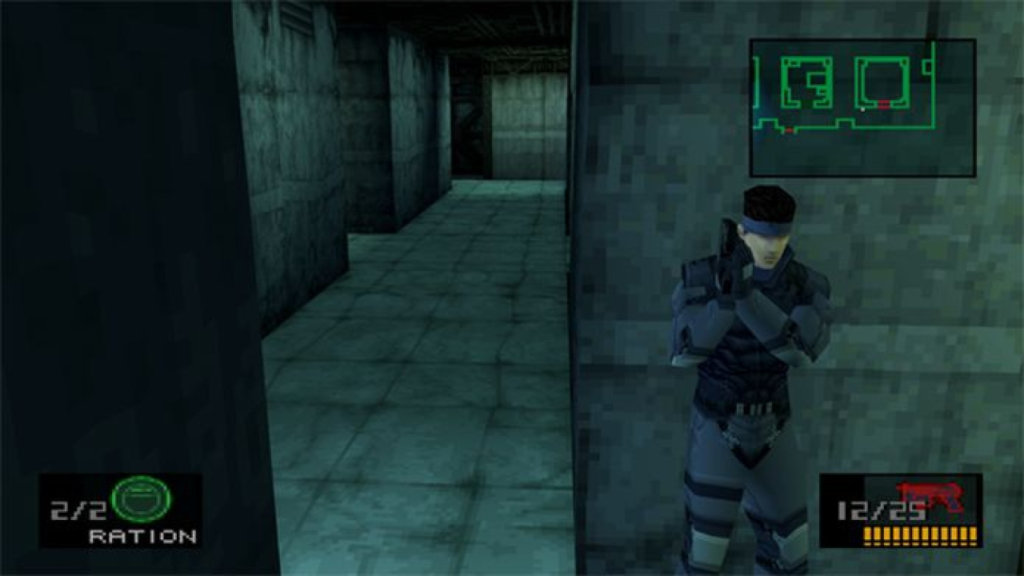
The nuclear storage facility has a sterile military loneliness to it. Snow, steel, concrete, dim lighting, machinery, security cameras, ventilation shafts, and cavernous interior spaces give the entire adventure a unified visual identity.
The limitations almost help.
You fill in the details yourself.
That’s a uniquely powerful part of returning to early 3D games: the hardware gives you just enough information for your imagination to complete the scene.
Sound Was Half the Experience
Metal Gear Solid was also one of those games you could recognize from another room.
The Codec ringtone.
The alert sound.
Snake’s footsteps.
Weapons being equipped.
Doors opening.
The shift in music when a peaceful infiltration suddenly goes wrong.
And then there is the voice acting.
Metal Gear Solid’s extensive spoken dialogue helped give its characters an unusual amount of personality for a late-’90s console game. Conversations could be lengthy—and we’ll get to that—but hearing Snake, Campbell, Mei Ling, Naomi, Otacon, Meryl, Liquid, Ocelot, and the rest of the cast made Shadow Moses feel populated by actual personalities instead of dialogue boxes. Contemporary reviews singled out the game’s audio presentation as a major strength.
The Codec Was Our Second Screen Before We Had Second Screens
You spend an extraordinary amount of Metal Gear Solid talking on the radio.
That isn’t an exaggeration.
The Codec is simultaneously tutorial system, character-development device, mission briefing room, hint system, exposition dump, emotional confessional, and occasionally a delivery mechanism for complete nonsense.
For impatient players, this remains one of the game’s biggest hurdles.
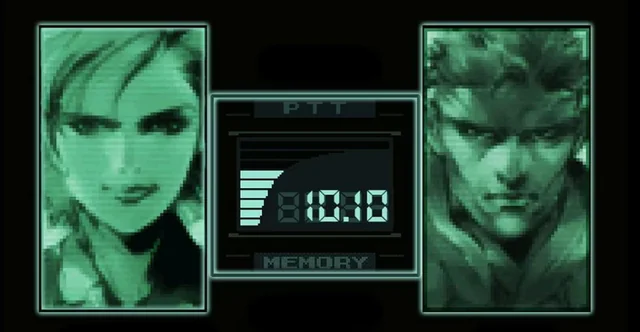
People talk.
And talk.
And then Snake asks a question.
And they talk some more.
Yet the Codec is also essential to what makes Metal Gear Solid feel intimate.
Your support team isn’t standing beside you. Snake is physically alone for much of the mission, so those little portraits and conversations become his connection to the outside world.
You begin recognizing people by voice.
You develop favorite contacts.
Calling someone just to see what they say becomes part of the experience.
Few interface screens have ever carried this much personality.
A Story That Refuses to Stay Small
At its core, Metal Gear Solid begins as a military rescue mission.
It does not remain one.
The story expands into nuclear deterrence, genetic engineering, military exploitation, inherited identity, political manipulation, loyalty, trauma, and the question of whether someone’s origins determine who they become.
And yes, it can be ridiculous.
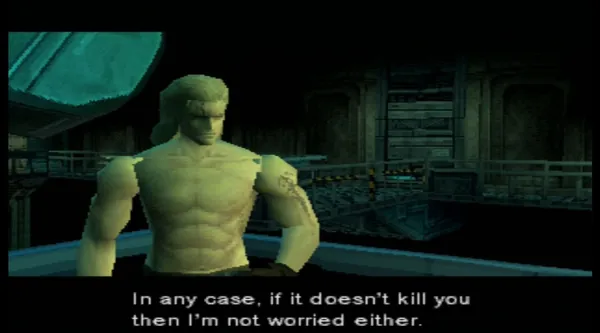
Metal Gear Solid may move from serious discussion about nuclear weapons into a scene involving a psychic supervillain wearing a gas mask without showing the slightest embarrassment.
That’s part of its personality.
Kojima’s approach wasn’t restrained realism. It was military thriller filtered through action movies, anime, science fiction, conspiracy fiction, and an obvious fascination with cinema.
What makes it work is commitment.
Characters believe in what they’re saying.
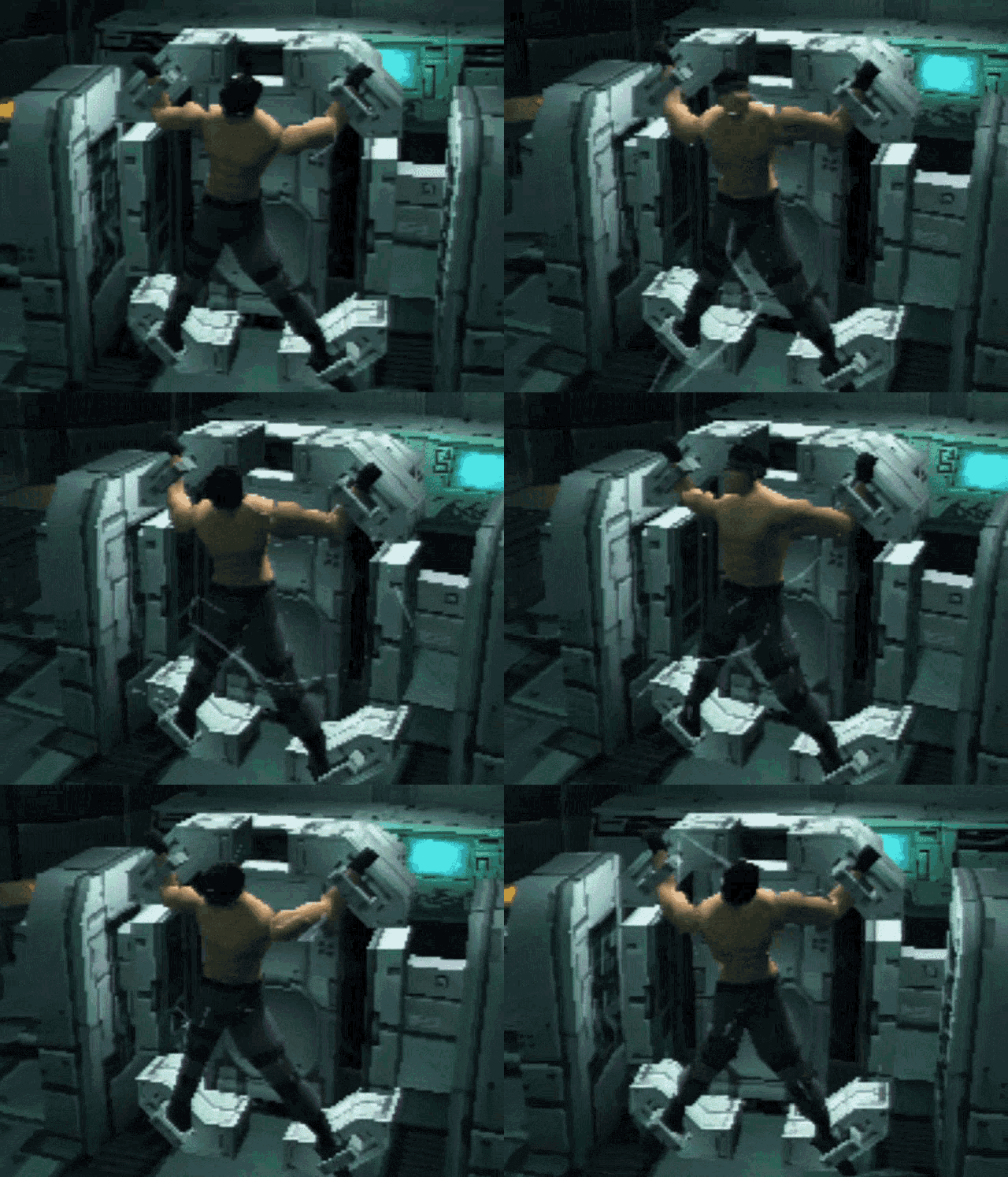
Emotional scenes are allowed to be emotional.
Villains receive surprisingly human moments.
Even enemies who initially appear to be cartoonish boss characters often leave behind stories about war, identity, manipulation, or loss.
That willingness to stop the action and make you listen is one reason Metal Gear Solid became so memorable—and also why players who hate long exposition scenes may find the pacing frustrating today.
The Rough Edges Are Still There
Affection shouldn’t turn into amnesia.
Metal Gear Solid has rough spots.
Backtracking becomes excessive in portions of the second half. Certain action sequences expose how much better the game is at stealth than conventional combat. Long Codec conversations and cutscenes can interrupt momentum. Some objectives expect the kind of player experimentation—or outside-the-game thinking—that modern design tends to explain more directly.
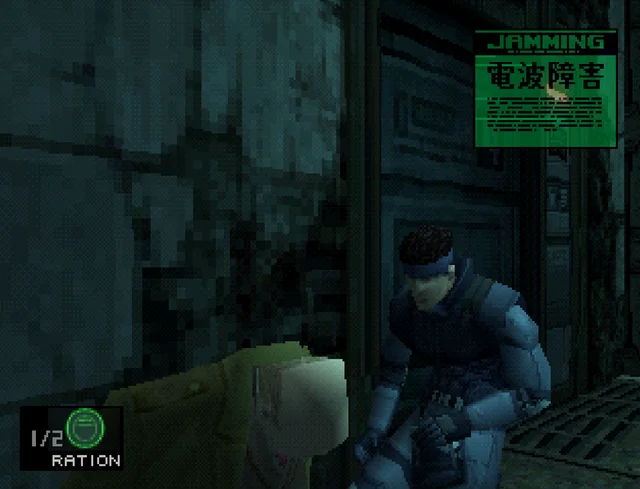
The camera can also betray you.
Because your view is restricted, the radar often becomes as important as the environment itself. Experienced players learn to mentally combine the two, but newcomers may initially feel like they’re navigating using an overhead diagram rather than watching Snake.
The gunplay isn’t especially elegant either.
This is not a game to revisit because you want silky analog shooting mechanics.
You come back because all those systems work together to create situations.
Sneaking beneath a camera.
Distracting a guard.
Making a mistake.
Hearing that alert.
Running around a corner.
Finding somewhere to disappear.
Watching the countdown until the guards return to normal.
That tension still works.
Why Metal Gear Solid Still Matters
Calling Metal Gear Solid “cinematic” is accurate but incomplete.
Lots of games became cinematic.
Far fewer understood that interactivity could become part of the storytelling itself.
Metal Gear Solid plays with the boundary between player and character. It references controller hardware, memory cards, physical packaging, save data, television behavior, and game conventions themselves. The game continually asks you to rethink what counts as part of its world.

That experimentation became one of the signatures associated with the series.
Its broader reputation remains formidable as well. Modern retrospectives continue to place Metal Gear Solid among the most significant games associated with the original PlayStation, particularly because of its marriage of stealth gameplay, cinematic storytelling, and unconventional design.
But historical importance isn’t the best reason to play it.
Play it because Shadow Moses still has personality.
Playing Metal Gear Solid Today
A newcomer approaching Metal Gear Solid in 2026 has a much easier decision than someone trying to track it down a decade ago.
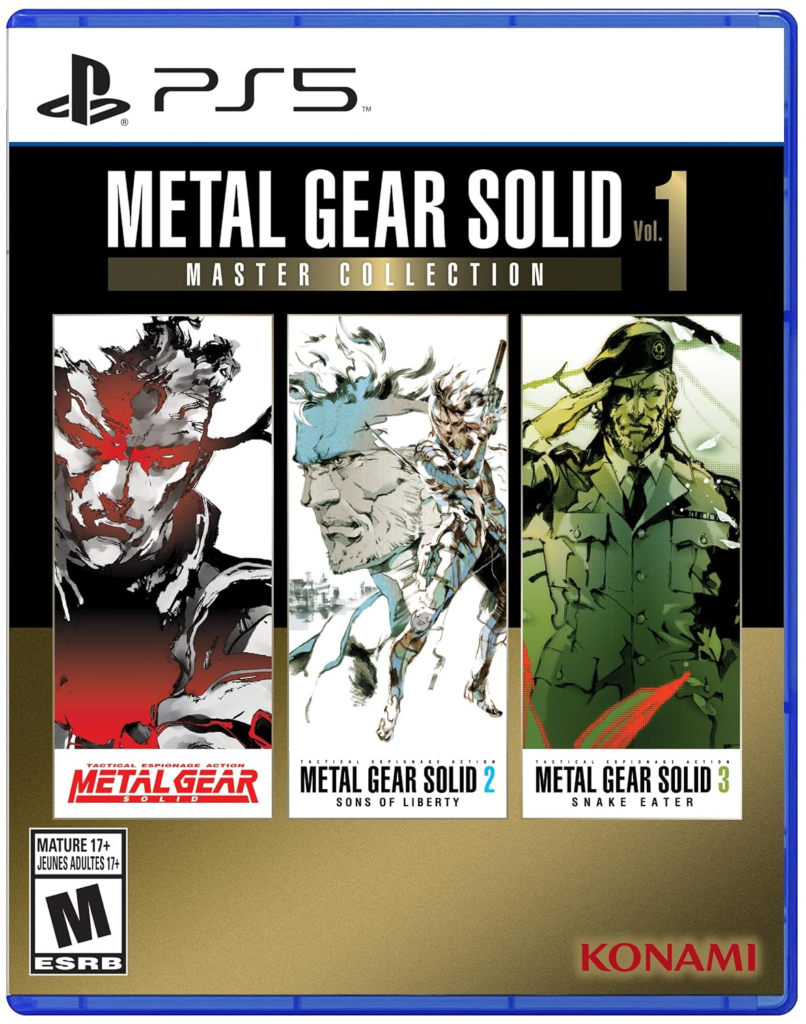
Konami’s Metal Gear Solid: Master Collection Vol. 1 provides an official modern release encompassing the early Metal Gear games and the first three numbered Metal Gear Solid titles. The collection is available across PlayStation 4, PlayStation 5, Nintendo Switch, Xbox Series X|S, and PC/Steam. Metal Gear Solid can also be purchased separately on supported storefronts.
For someone interested primarily in playing the game, that’s the sensible starting point.
If you’re after the memory—the jewel case, black PlayStation discs, physical manual, memory card, original controller, and CRT glow—nothing quite replaces original hardware.
Just don’t convince yourself you need it.
As of this writing, PriceCharting tracks a standard complete North American PS1 copy at roughly $50, with loose copies around $30 and Greatest Hits copies generally cheaper. Those numbers fluctuate with condition and marketplace activity, so treat them as a snapshot rather than a fixed retail price.
That makes Metal Gear Solid considerably more approachable than some PS1 collectibles.
Best Way to Play Today
Want convenience?
Start with the Master Collection version. It’s officially available, doesn’t require aging hardware, and keeps the original game’s basic identity intact.
Want the full nostalgia experience?
Find an original PlayStation copy, a memory card, and ideally a CRT. Some of the game’s famous tricks make their most natural sense in that original environment.
Want to collect without overspending?
Don’t ignore the Greatest Hits release. If your goal is playing rather than shelf aesthetics, there’s little reason to pay a premium simply to get the original black-label packaging.
Want everything in one place?
Master Collection Vol. 1 makes more sense than buying Metal Gear Solid alone if you also want to explore the earlier Metal Gear games plus Metal Gear Solid 2 and 3.
Final Takeaway: A Game That Knew You Were There
Metal Gear Solid survives because people don’t merely remember finishing it.
They remember discovering it.
They remember realizing the guards could follow footprints.
They remember the Codec.
They remember Psycho Mantis.
They remember the cardboard box.
They remember Gray Fox appearing out of nowhere like he’d invaded from a completely different video game.
They remember Snake growling someone’s name back at them as a question.
They remember sitting in front of a PlayStation and gradually realizing that the rules were not quite what they thought they were.
That’s the piece worth preserving.
There are smoother stealth games now. There are bigger espionage stories, more elaborate cinematic productions, smarter enemy systems, and infinitely more sophisticated 3D worlds.
But there is still only one first trip through Shadow Moses.
For longtime fans, revisiting Metal Gear Solid is less like testing whether an old game can survive modern scrutiny and more like opening a box you haven’t touched in years and discovering that the strange little world inside still has a pulse.
For younger players exploring classic PS1 games, expect some friction. Give the controls time. Accept the long conversations. Resist the urge to search for every solution immediately.
Let the game surprise you.
Because beneath the polygons, Codec screens, military jargon, and cardboard boxes is something retro gaming does better than almost anything else:
the memory of a moment when nobody quite knew what games were capable of becoming.
Metal Gear Solid felt like one possible answer.
And Shadow Moses is still waiting.